
Recent Posts

Dog Food Ingredients 101: Tocopherols


#AtoZChallenge 2023 letter T How many times have you looked at the back of a dog food bag and seen “tocopherols” or “mixed tocopherols” and had no idea what that is or why it’s in your dog’s food?  Well, you’re in luck, because today for my April blogging from A to Z Challenge I had to find a dog food ingredient to write about that begins with the letter “t”.  Unlike other days in the challenge, finding a topic for “t” day was easy.  I had a few options to choose from.  I ultimately decided to write about tocopherols today, because I feel like they are one of “those” ingredients that probably many people have heard of.  But many know what tocopherols actually are.

This post is part of our 2023 April blogging from A to Z Challenge!Opens in a new tab.  Join us this month as we go through the alphabet, A to Z, learning more about some of the ingredients that are commonly (or not so commonly, in some cases) found in our dog’s food!

What are Tocopherols?

Tocopherols are fat-soluble compounds that make up different forms of vitamin E.  There are 8 total forms of vitamin E, four of which (alpha-tocopherol, beta-tocopherol, gamma-tocopherol, delta-tocopherol) are tocopherols.  Although the four tocopherols are similar, each one has a slightly different chemical structure.  When a dog food bag lists “mixed tocopherols” as an ingredient, it means that multiple forms of vitamin E are added into the food.

Tocopherols are found naturally in oils, such as sunflower and olive oil, fish, seeds, nuts, and leafy greens.
Tocopherols dog food
Why are Mixed Tocopherols Added to Dog Food?

Tocopherols are commonly added to dog food because they act as a natural preservative.  Mixed tocopherols have the ability to inhibit the oxidation of fats.  This means that they can help protect the fats in dog food from going rancid.  Mixed tocopherols are often considered to be a healthier alterative to other types of potentially unhealthy food preservatives.

Cons of Feeding Tocopherols to Dogs:

Vitamin E, in the form of mixed tocopherols, are often touted to have additional health benefits beyond just preserving food.  However, it’s somewhat questionable whether or not the amounts of tocopherols present in most dog foods would be enough for dogs to experience significant benefits.  Mixed tocopherols are almost exclusively added to dog foods as a preservative.

Although tocopherols are safer than other food preservatives, such as BHA, BHT, and ethoxyquin, they are less effective than artificial preservatives.  Dog foods preserved exclusively with natural tocopherols will normally have a shorter shelf life.  This isn’t the end of the world, but it’s something that’s important to take note of.  If your dog food is preserved with mixed tocopherols, it’s best to use the bag of food before it’s ‘best by’ date.

Benefits of tocopherols for Dogs:

Vitamin E is an antioxidant that can help protect your dog’s body from free radicals.  Free radicals are associated with diseases such as cancers.  Vitamin E helps the immune and circulatory systems work optimally, and helps to maintain healthy muscles, eyes, skin, and coat.

The main benefit of mixed tocopherols in dog food, however, is the fact that using them as natural preservatives in dog foods means that companies can avoid using potentially unhealthy/detrimental preservatives to keep their foods fresh.

So What’s the Verdict on Tocopherols?  Are They Safe as a Dog Food Ingredient?

Mixed tocopherols, which are basically just varied forms of vitamin E, are used as natural preservatives in dog food.  Tocopherols are seen more commonly in higher quality dog foods.  While the amount of tocopherols/vitamin E used in dog food likely isn’t enough for your dog to experience any significant benefits from the ingredient, their main benefit is the fact that they are often used in place of potentially unhealthy artificial preservatives.

Mixed tocopherols as a preservative do not work as long as other preservatives.  If your dog food is more natural and is preserved exclusively with mixed tocopherols, it’s best practice to finish each bag of food before it’s ‘best by’ date.  Pet food hoarders take note.  If you like to keep stores of your dog’s food in stock at home, it’s a good idea to rotate stock so you are using older bags first.

Comment below!  Does your dog’s food contain mixed tocopherols?  Did you know what they were or what they were used for?  Do you try to make sure you’re using your dog’s food before the expiration date on the bag?
tocopherols dog food

We’ve, unfortunately, been dealing with content scrapers stealing our articles lately. You shouldn’t be seeing this article on any site other than pawprintpetblog.comOpens in a new tab.! If you’re reading this article on any other site, we’d love for you to take the time to contact usOpens in a new tab. and let us know and, if you have the time, stop by and visit us on our official site! Thanks you.

Dog Food Ingredients 101: Spelt


#AtoZChallenge 2023 letter SWhen I was looking for a dog food ingredient that started with the letter “s”, I came across “dried spelt” listed on a bag of dry dog food.  I imminently thought “oh the fish, that won’t be bad to write about”.  Many of you are probably already thinking “No, smelt is the family of fish!”.  And you would be right!

This post is part of our 2023 April blogging from A to Z Challenge!Opens in a new tab.  Join us this month as we go through the alphabet, A to Z, learning more about some of the ingredients that are commonly (or not so commonly, in some cases) found in our dog’s food!

What is Spelt?

Spelt (Triticum spelta) is also known as dinkel wheat or hulled wheat.  It’s an ancient species of wheat that isn’t super common but can sometimes be found in health food stores.  Spelt is closely related to common wheat.  It’s more popular in countries such as Germany, Austria, Poland, and Belgium.  It is sold, like common wheat, as flour and used in baked goods.  It can also be distilled to create beer and vodka. 

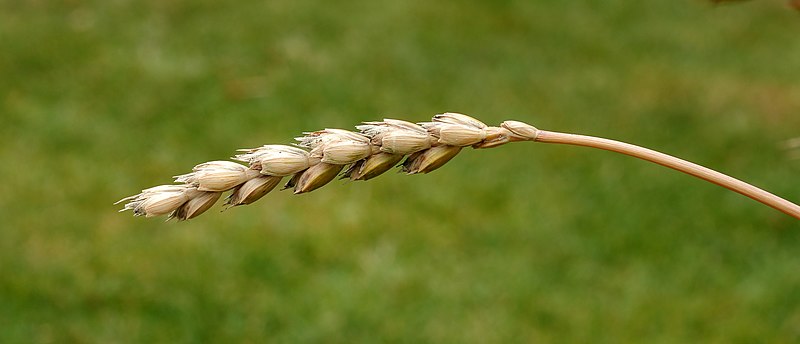
Photo Credit: Dominicus Johannes Bergsma. This file is licensed under the Creative Commons Attribution-Share Alike 4.0 International license.

Why is Spelt Added to Dog Food?

Spelt, like the more widely known common wheat, is a grain.  Although it’s somewhat common for dogs to be allergic to common wheat and other grains, many animals who are allergic to common wheat can tolerate spelt.  This is thought to be due to the fact that spelt is an ancient grain that was first cultivated in the bronze age.  People, and thus the dogs they share their lives with, have evolved alongside spelt.

Spelt is a good source of B vitamins and is high in fiber.  Like other grains, it is likely added to dog food as what is sometimes referred to as a filler.  Although, especially in recent years, ‘filler’ has been seen as a negative term, fillers are added to dog foods as sources of fiber.  They are usually high in fiber but low in calories, so they can help your dog feel full and promote GI health without adding a lot of additional calories to the food.

spelt dog food

Cons of Feeding Spelt to Dogs:

Although it’s not as common as wheat allergies, some dogs can be allergic to spelt.  Spelt also contains gluten.  It should not be fed to dogs with celiac disease (gluten intolerance).

Benefits of Spelt for Dogs:

Spelt is high in fiber and can help promote health digestion.  It can help your dog feel full and satisfied with their meals, but doesn’t add a lot of excess calories to the diet.  Spelt can also provide protein, B vitamins, and iron.  It contains amino acids.  Sometimes, dogs with grain allergies to other types of grains are able to tolerate spelt.

So What’s the Verdict on Spelt?  Is it Safe as a Dog Food Ingredient?

Spelt is dog safe as long as your dog is not allergic to it, or suffering from celiac disease.  Spelt should be fully cooked when offered to dogs, as it can be very hard for them to digest otherwise.  This isn’t a concern when feeding a commercial dog food containing spelt,  however, as most dog foods are heavily processed.

Comment below!  Did you know what spelt was before seeing it as a dog food ingredient?  I didn’t!  It’s funny how learning more about our dog’s food and nutritional needs can sometimes help us live healthier lives as well.  I’ve never purchased spelt flour before, but am going to try to find some now that I know more about it!

spelt dog food
We’ve, unfortunately, been dealing with content scrapers stealing our articles lately. You shouldn’t be seeing this article on any site other than pawprintpetblog.comOpens in a new tab.! If you’re reading this article on any other site, we’d love for you to take the time to contact usOpens in a new tab. and let us know and, if you have the time, stop by and visit us on our official site! Thanks you.
Dog Food Ingredients 101: Riboflavin


#AtoZChallenge 2023 letter R Waiting for a doctor or vet to call with test results is always a bit nerve-wracking.  I cheated a bit on yesterday’s post because I had to take my senior dog, KitsuneOpens in a new tab., to the vet.  We’ve been keeping an eye on some elevated liver numbers in his bloodwork.  So now I’m waiting for the vet to call with the results of his most recent test.  I’m keeping my fingers crossed that we get the news we’re hoping for.  Kit seems to be doing really well lately, thankfully!  Anyways, onward to today’s post for our April blog challenge.  I’ll likely post a full update post on Kit sometime soon.

This post is part of our 2023 April blogging from A to Z Challenge!Opens in a new tab.  Join us this month as we go through the alphabet, A to Z, learning more about some of the ingredients that are commonly (or not so commonly, in some cases) found in our dog’s food!

What is Riboflavin?

R is for riboflavin!  You’ve probably heard of riboflavin before, but do you know what it is?  Riboflavin is another word for vitamin B2.  Like Niacin (vitamin B3)Opens in a new tab., Riboflavin is a water-soluble vitamin.  This means that excess amounts of riboflavin taken in by the body is excreted through the urine rather than stored.  Vitamin B2 is naturally found in many foods, including dairy products, meat, eggs, nuts, and green vegetables.  It plays a role in many important body functions, such as the formation of skin and the lining of the GI tract, the formation and repair of DNA, as well as the proper function of blood cells and the brain.  Riboflavin is also essential for energy production, and the metabolism of fats and steroids.

riboflavin dog food

Why is Riboflavin Added to Dog Food?

The recommended dosage of riboflavin for adult dogs is 0.1 to 1 mg per kg of body weight a day.  Since this vitamin is found in things like dairy products and meat, it’s not usually hard for dogs to acquire the amounts of riboflavin they need to keep their bodies healthy.  However, like when I wrote about vitamin B3, amounts of water-soluble vitamins, including riboflavin, can degrade when dog food is processed.  Riboflavin is light sensitive, which means that just being exposed to too much light for too long can degrade it.  For these reasons, and because riboflavin is so important for our dog’s health, pet food companies commonly add additional, supplemental riboflavin to dog foods.

Cons of Feeding Riboflavin to Dogs:

Riboflavin, even in high doses, has not been shown to be toxic to dogs.  Because it is a water-soluble vitamin, any excess amounts that your dog consumes will be eliminated through their urine.

Benefits of Riboflavin for Dogs:

Dog’s bodies require riboflavin to function properly.  Some of the roles it plays include the following…

  • Riboflavin is essential for dogs to metabolize fats, proteins, and carbohydrates.
  • Riboflavin can fight free radicals, reducing the damage they cause.
  • This vitamin is essential for the production of red blood cells.
  • It also plays a role in the formation of skin, and is important for skin health and wound healing.
  • Riboflavin is also involved in the formation of the lining of the GI tract.
  • It is essential for the creation and repair of DNA.
  • Riboflavin is important for brain health.

Since it plays so many important roles, riboflavin deficiency, although rare, can be serious.  Symptoms can include general weakness, dermatitis, hair loss, anorexia, sores in mucous membranes such as in the mouth, and loss of consciousness.  If not treated, deficiency can eventually lead to blindness and even death.

So What’s the Verdict on Riboflavin?  Is it Safe as a Dog Food Ingredient?

Yes!  Riboflavin is safe for dogs.  In fact, they require it to stay healthy.  Although it can be found naturally in many foods, many dog food companies supplement their food with additional riboflavin.  This can help boost levels, and make up for some of the vitamin being destroyed in the manufacturing process.  Riboflavin, even in dosages higher than what’s recommended daily, has not been shown to have a toxic effect on dogs.  Excess riboflavin is simply excreted through the urine.

Comment below!  Did you know what riboflavin was, and how important it is for dogs?  I bet some people interested in human health knew already, because vitamin B2 is just as important for people!  It’s interesting how similar we can be, in many ways, to our animal companions.

riboflavin dog food
We’ve, unfortunately, been dealing with content scrapers stealing our articles lately. You shouldn’t be seeing this article on any site other than pawprintpetblog.comOpens in a new tab.! If you’re reading this article on any other site, we’d love for you to take the time to contact usOpens in a new tab. and let us know and, if you have the time, stop by and visit us on our official site! Thanks you.
Dog Food Ingredients 101: Quinoa


#AtoZChallenge 2023 letter Q Q is always a hard letter to come up with post ideas for when it comes to the April Blogging from A to Z Challenge!  But there’s just something about the letter Q.  When you come to it, it feels like you’re almost at the end of the alphabet.  It’s hard to believe that after today, there are only 9 letters left in the A to Z challenge and only 10 days left in April.  This year is just flying by!

I’m going to cheat a bit today for Q, because I’ve actually already written about quinoa here before.  I wrote about quinoa for dogs during last year’s (2022) April challenge.  I’m allowing myself a bit of a pass today, though, because in a little bit I have to take KitsuneOpens in a new tab. to the vet.  No worries, he’s ok!  We’re just repeating his bloodwork to keep an eye on his liver numbers.

This post is part of our 2023 April blogging from A to Z Challenge!Opens in a new tab.  Join us this month as we go through the alphabet, A to Z, learning more about some of the ingredients that are commonly (or not so commonly, in some cases) found in our dog’s food!

Quinoa dog food

What is Quinoa?

Well, to quote myselfOpens in a new tab.

Quinoa (pronounced keen-wah, by the way) is a plant in the goose-foot family.  Although quinoa is often thought of as a grain, it is not technically one.   It’s a bit hard to classify – quinoa is a seed that is harvested from plants classified as pseudo-cereals.  It’s actually closest in relation to leafy greens such as spinach and Swiss chard.

Why is Quinoa Added to Dog Food?

Quinoa is a super food.   It’s a complete protein, which means that it contains all 9 essential amino acids. It also contains iron, phosphorous, magnesium, vitamin B, vitamin E, and omega 3 fatty acids, among other nutrients.  It’s high in fiber, and cancer fighting antioxidants.  While being high in good stuff like protein and nutrients, quinoa is low in fat and cholesterol.

If you haven’t figured it out yet – yes, quinoa is safe for dogs.  In fact, it’s increasingly being used as an ingredient in higher quality dog foods.  Being a plant based food, quinoa is not as easy for dogs to digest as meat, but they can still derive benefits from eating it.

Cons of Feeding Quinoa to Dogs:

Quinoa contains oxalates.  Oxalates, or oxalic acid, is a compound found naturally in some plants.  Oxalates can cause GI upset, and are thought to increase  inflammation.  Feeding dogs with arthritis or other inflammatory issues high amounts of quinoa is probably not a good idea.  Oxalates can also increase the risk of developing kidney and bladder stones, because they bind calcium.

Although it is not technically a grain, some dogs can suffer from allergies to quinoa.

Benefits of Quinoa for Dogs:

Quinoa is a super food packed full of beneficial nutrients such as amino acids, iron, phosphorous, magnesium, vitamin B, vitamin E, and omega 3 fatty acids.  Because it is so nutrient dense, it can be a good alterative to grains such as corn or soy in dog food.  Quinoa is low in calories but high in fiber.  This means that while it can provide your dog with many nutrients and help them feel full, it doesn’t add a ton of additional calories to dog foods.  It can be an especially great nutrient source for dogs who require a low calorie diet.

So What’s the Verdict on Quinoa?  Is it Safe as a Dog Food Ingredient?

As long as your dog is not allergic to quinoa, it is safe in moderation.  If your dog has arthritis or another inflammatory condition, or is prone to developing bladder or kidney stones you might want to discus with your vet/vet nutritionist whether or not quinoa should be a healthy part of your dog’s diet.  The effects of oxalates in quinoa are decreased with processing.  The amounts of processed quinoa found in commercial dog foods should not lead to issues such as GI upset.

Comment below!  Do you like quinoa?  Does your dog?  Have you ever fed a commercial dog food that contained quinoa?

quinoa dog food

We’ve, unfortunately, been dealing with content scrapers stealing our articles lately. You shouldn’t be seeing this article on any site other than pawprintpetblog.comOpens in a new tab.! If you’re reading this article on any other site, we’d love for you to take the time to contact usOpens in a new tab. and let us know and, if you have the time, stop by and visit us on our official site! Thanks you.

Dog Food Ingredients 101: Pomegranate


#AtoZChallenge 2023 letter P I’ve barely even started working on today’s post and already I’m craving pomegranate!  I love snacking on pomegranate seeds.  I always prefer eating snacks that are dog safe.  Snacks get dropped, and I don’t like having to play that potentially dangerous game of racing to the dropped food with my dogs.  They’re faster than I am!  That’s why grapes, while delicious, are pretty much banned in our house.  But what about pomegranate seeds?  There seems to be some conflicting information out there about whether or not pomegranates are dog safe.

This post is part of our 2023 April blogging from A to Z Challenge!Opens in a new tab.  Join us this month as we go through the alphabet, A to Z, learning more about some of the ingredients that are commonly (or not so commonly, in some cases) found in our dog’s food!

What are Pomegranates?

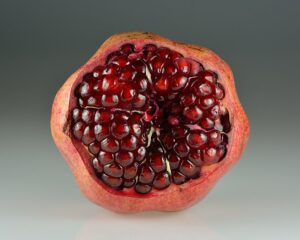
pomegranate
Image credit: Ivar Leidus. This file is licensed under the Creative Commons Attribution-Share Alike 4.0 International license.

Pomegranates are officially (according to me) the world’s second-best fruit.  Pomegranate fruit grows on deciduous shrubs that were originally native to the Mediterranean.  They have since been introduced to other areas, and are cultivated in many areas including California, the Middle East, Africa, Iran, Asia, and in their native Mediterranean.

Pomegranates are commonly eaten fresh, as well as used in baked goods, juices, smoothies, and alcoholic beverages.  The fruit consists of a thick outer husk, and a thinner inner membrane where seeds are attached.  Each pomegranate seed is contained inside a juice-filled seed coat.

Pomegranate dog food

Why are Pomegranates Added to Dog Food?

My senior dog, Kitsune’s, food contains dried pomegranates.  Pomegranates are packed full of healthy nutrients such as potassium, vitamin C, potassium, and antioxidants.  They are high in fiber and low in calories, which means they can help your dog feel full without adding a lot of excess calories into their diet.

Cons of Feeding Pomegranates to Dogs:

Pomegranates are non-toxic to dogs.  However, there are a few concerns when it comes to feeding dogs pomegranates.  The biggest issue is the fact that pomegranate husks, and the seeds themselves, are very hard, if not impossible, for dogs to digest.  Your dog getting into pomegranate husks, or eating too many of the seeds at once, can lead to a potentially deadly impaction.

Pomegranates, in excess, are also known for causing stomach/GI upset in dogs.

For these reasons, pomegranates should only be offered to dogs in small amounts.  Never allow your dog to consume the thick outer husks of a pomegranate.

Benefits of Pomegranates for Dogs:

Pomegranates are a superfood!  A 2012 study found that…

taurine, L-carnitine, pomegranate extract, and soy isoflavones exert antioxidant and cytoprotective activities through different mechanisms of action. Multi-component antioxidant treatment directed to counteract pivotal ROS-activated pathways appears as a rational intervention in heart failure.

Pomegranate extract is sometimes given to dogs to help promote heart health.

Pomegranates are high in fiber and antioxidants.  Pomegranate juice is sometimes included as an ingredient in dog dental products, as it is thought to potentially help improve oral health.  Polyphenol in pomegranates may help reduce inflammation and help dogs who are suffering from arthritis.

So What’s the Verdict on Pomegranates?  Are They Safe as a Dog Food Ingredient?

I’d say pomegranates themselves are a ‘feed with caution’ type of food.  Pomegranate seeds are not toxic for dogs, but the skin or too many of the seeds consumed at once can lead to intestinal blockage.  I wouldn’t worry if you drop a pomegranate seed and your dog finds it before you do, but keep the skin away from them.  Seeds should only be offered in moderation.

Pomegranates are so high in antioxidants that they are somewhat notorious for causing GI upset in dogs.  This is another reason they should be offered in moderation only.  However, I don’t personally worry about pomegranates being an ingredient in my dog’s food.  Pomegranates, in low amounts, are safe for dogs and can provide beneficial nutrients.  They may even help support things such as heart health, oral health, and arthritis.

Comment below!  What is your favorite fruit?  Has your dog ever tried a pomegranate, either fresh or as an ingredient in their dog food?

Pomegranates dog food
We’ve, unfortunately, been dealing with content scrapers stealing our articles lately. You shouldn’t be seeing this article on any site other than pawprintpetblog.comOpens in a new tab.! If you’re reading this article on any other site, we’d love for you to take the time to contact usOpens in a new tab. and let us know and, if you have the time, stop by and visit us on our official site! Thanks you.
Dog Food Ingredients 101: Oats


#AtoZChallenge 2023 letter O Do you feed your dog a grain-free diet?  I feel like the grain-free versus grain-inclusive dog food argument is one dog owners just might be having till the end of time.  My dogs are currently 14 and 7 years old.  Throughout my dogs’ lives, especially so for my 14-year-old, I’ve tried offering them quite a few different types of diets.  Yes, including both grain-free and grain-inclusive dog foods.

This post is part of our 2023 April blogging from A to Z Challenge!Opens in a new tab.  Join us this month as we go through the alphabet, A to Z, learning more about some of the ingredients that are commonly (or not so commonly, in some cases) found in our dog’s food!

What are Oats?

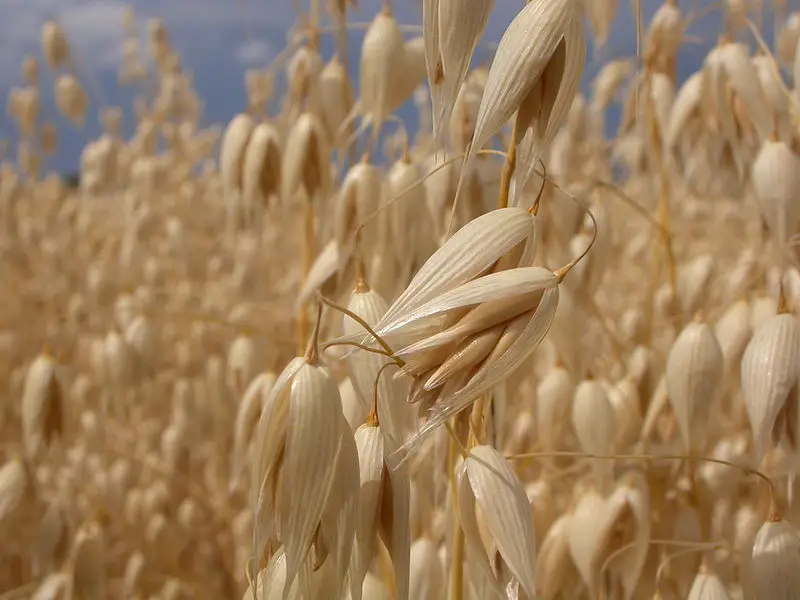
Oats (Avena sativa) is a species of cereal grain, similar to wheat, rye, and barley.  Humans commonly eat oats in the form of oatmeal and rolled oats.  Oats are also very commonly used as animal feed.

oats
Photo Credit: Matt Lavin. This file is licensed under the Creative Commons Attribution-Share Alike 2.0 Generic license.

Why are Oats Added to Dog Food?

Oats are often included as a dog food ingredient to provide fiber and carbohydrates.  They add bulk to the food, and can help your dog feel full without adding a ton of additional calories.  Oats are high in soluble fiber, making them good for your dog’s GI system.  Oats are also surprisingly high in protein, and also contain many nutrients, including the following…

  • Magnesium
  • Copper
  • Calcium
  • Zinc
  • Iron
  • Phosphorus
  • B vitamins
  • Vitamin A

oats dog food

Cons of Feeding Oats to Dogs:

Uncooked oatmeal is hard for dogs to digest and shouldn’t be offered.  Non-organic oats, unfortunately, are often exposed to herbicides such as GlyphosateOpens in a new tab..

Dogs can be allergic to oats and other grains.  Grain allergies in dogs are more common than other types of food allergies, such as to meats.  Symptoms of oat allergies can include a wide array of issues such as asthma like symptoms, skin issues (bumps, itching, thickened skin, ulcered skin, redness), coughing, ear infections, hair loss, congestion, sneezing, shortness of breath, red/itchy eyes, obsessive licking, etc.  If your feeding your dog a commercial dog food, it can be hard to pinpoint exactly what ingredient(s) are causing allergic symptoms.  Vets will usually recommend eliminating grains from the diet first, as they are one of the most common food allergens in dogs.

Benefits of Oats for Dogs:

For dogs who can tolerate them, oats can be a beneficial addition to their diet.  Oats can be used as a source  of protein, fiber, and the nutrients listed above.  Oats contain a compound called b-sitosterol that is thought to help fight against tumors.  Like in humans, offering oats to dogs may help fight inflammation and lower cholesterol.  They can help promote heart health and are also beneficial for dog’s skin, lungs, liver, GI tract, nervous system, and urinary system.

So What’s the Verdict on Oats?  Are They Safe as a Dog Food Ingredient?

As long as your dog doesn’t suffer from grain/oat allergies, oats, in moderation, can be a beneficial addition to dog food.  If you make your own dog food, using organic oats is preferred since organic oats aren’t treated with herbicides.  Dogs don’t require oats, so if your dog food doesn’t contain them that’s perfectly fine.  And if it does, then know that many dogs tolerate oats without any issues.

Comment below!  Does your dog’s food contain oats?  Have you ever tried feeding grain free dog food?

oats dog food

We’ve, unfortunately, been dealing with content scrapers stealing our articles lately. You shouldn’t be seeing this article on any site other than pawprintpetblog.comOpens in a new tab.! If you’re reading this article on any other site, we’d love for you to take the time to contact usOpens in a new tab. and let us know and, if you have the time, stop by and visit us on our official site! Thanks you.