Recent Posts

Review of the Palfur IN01 Pet Grooming Kit


I’ve written here before about grooming my dogs at home.  It can be a lot of work, but it’s the perfect opportunity to really look my dogs over and make sure they don’t have anything going on that I might have missed.  Both of my dogs are pretty furry, and all that fur can sometimes hide health issues such as injuries and lumps.  It’s an added perk that I also save a lot of money by grooming my dogs at home.  Groomers aren’t cheap.  Half the battle of grooming your dogs yourself is finding the right, high-quality, tools.  Clipping your dog’s fur with dull clippers that don’t work well is not a fun experience for man or beast, believe me.  Been there, done that.

The Palfur Pet Grooming Kit

Recently I’ve gone down the rabbit hole of watching dog groomers on YouTube.  Anyone else?  Just me?  I was getting quite jealous of the groomers with clipper vacs.  Imagine being able to clip your dog’s fur inside and not having to clean mounds of fur up off the floor afterward!?

Affiliate Disclosure

Palfur Pet Grooming KitEnter the Palfur Pet Grooming Kit!  When the people over at PalfurOpens in a new tab. first told me about their new grooming kit, I have to admit I was immediately intrigued.  Could it be, a real way to trim your pet’s fur at home without getting hair all over the place?

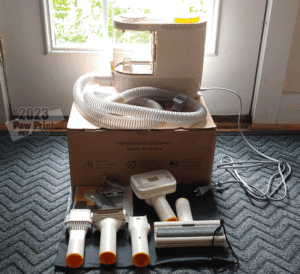
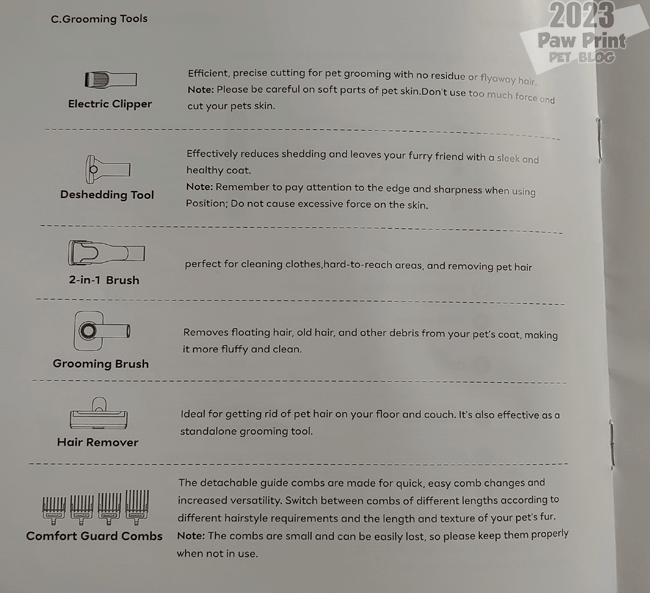
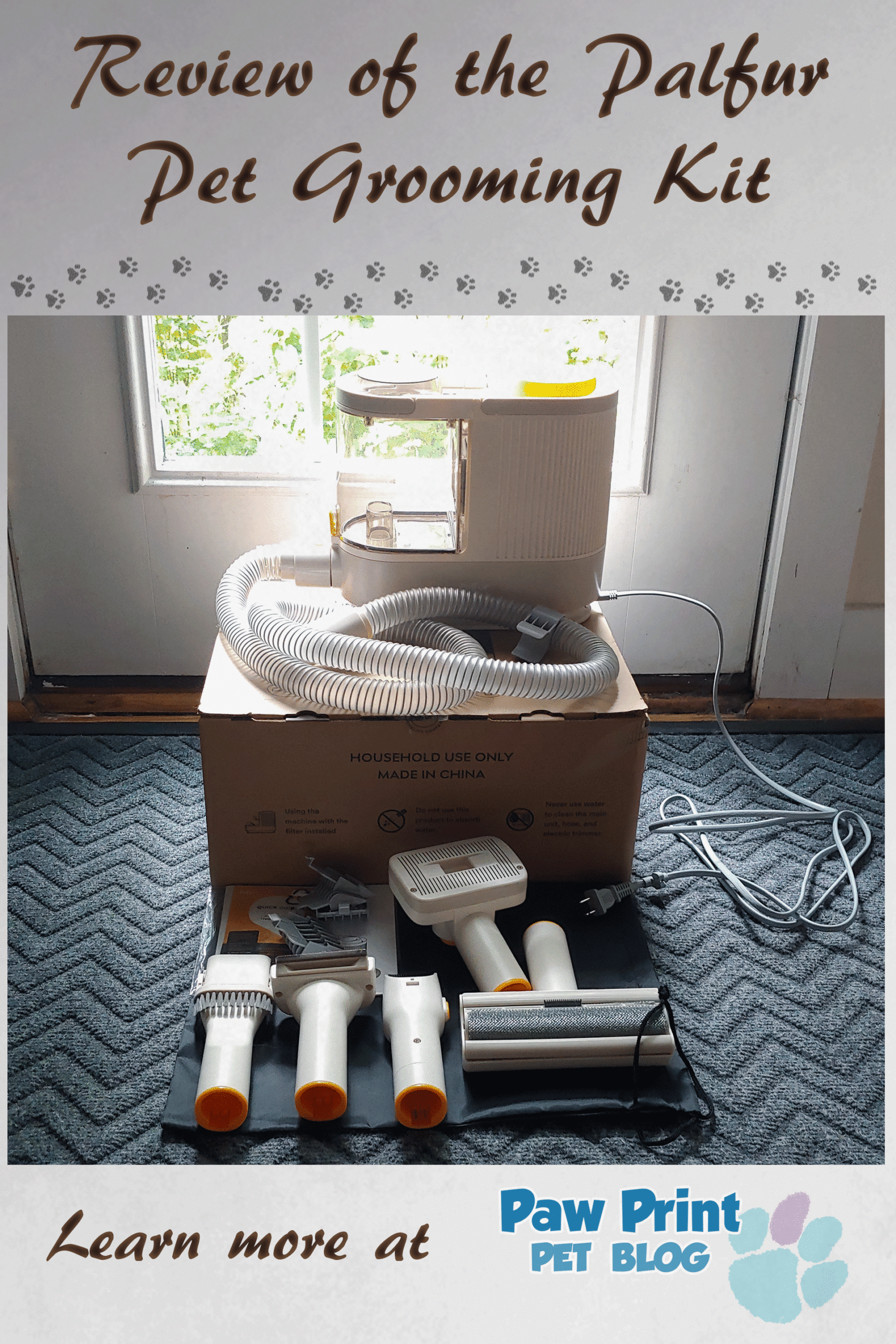
The Palfur Pet Grooming KitOpens in a new tab. is a compact, versatile handheld vacuum designed specifically for use around pets.  The grooming kit comes with five attachments including my favorite, an electric pet clipper!  The kit also comes with guard combs so you can use the clippers to clip your pet’s fur to different lengths.
Palfur Pet Grooming Kit

Features of the Palfur Pet Grooming Kit

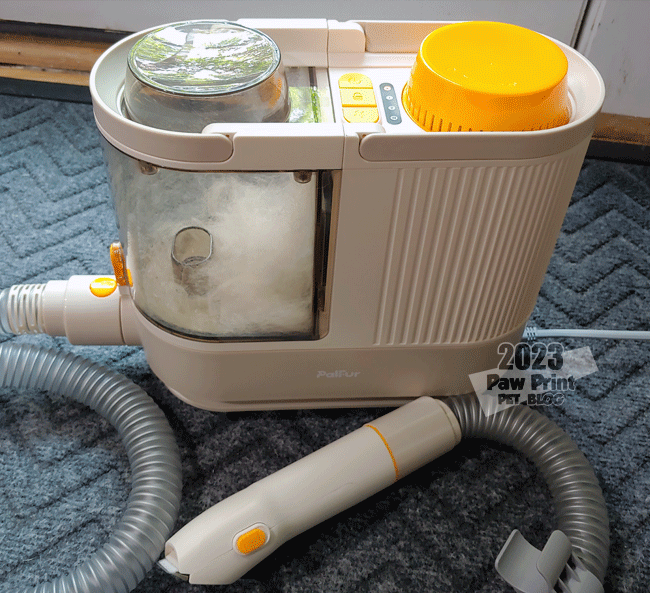
  • The Palfur Pet Grooming Kit contains a HEPA outlet filter that helps protect your family from breathing in contaminates such as fine dust and bacteria!
  • The vacuum body contains a dual-air channel cooling system.  This helps to keep the vacuum cool, even when you’re using it for longer periods of time.
  • The vacuum hose, which is very easy to detach and clean as needed, is 70% larger than the hose on competitive pet vacs.  This helps to prevent clogging, even if you’re dealing with large or tangled clumps of pet hair.
  • The vacuum chamber has a 2L hair/dust capacity.  Directional air flow inside the vacuum chamber compacts the hair during grooming.
  • The Pet Grooming Kit comes with five grooming tools.  It can be used to do everything from clipping your dog’s fur to cleaning hair off your floors and furniture.
  • Double layers of sound-absorbing shell wrapping keeps the vacuum nose level down.  This is a super important feature in a pet vac, since so many animals don’t like the sounds of vacuums.
Palfur Pet Grooming Kit

What Did We Think of the Palfur Pet Grooming Kit?
Palfur Pet Grooming KitI haven’t had our Palfur Pet Grooming Kit very long and I haven’t had a chance to try giving Kit a full haircut with it.  But my experience so far has been that it’s amazing for sanitary trims!  I trim Kit’s sanitary areas and the bottoms of his paws about every other week.  He’s a senior now and keeping the bottoms of his paw fur free helps him walk without slipping on our wood floors.  Let’s be honest, no one really wants dog butt and paw fur trimmings all over their floor.  The Palfur Pet Grooming Kit contains all the fur trimmings so you don’t have to worry about cleaning your floors after grooming your pet.

I’m excited to try out the electric clippers the next time I want to give Kit a full haircut.  Until then, the other attachments are really useful too.  Fenrir doesn’t need haircuts, but he shedsOpens in a new tab..  The various other tools should help me keep the dog fur dust bunnies at bay.

Does the Sound Bother my Dogs?

Kit is one of those dogs who doesn’t like the vacuum cleaner.  I was worried that he wouldn’t let me use this grooming kit on him, but was pleasantly surprised that the sound didn’t seem to bother him at all.  Fen doesn’t mind it either!

Do I Recommend the Palfur Pet Grooming Kit?
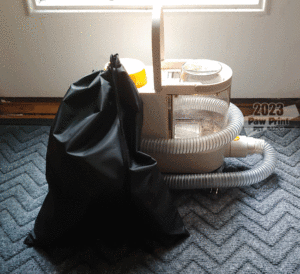
Palfur Pet Grooming KitWe’ve had a good experience with our Palfur so far!  The tools, especially the clippers, work well.  The vacuum itself is compact, so it’s easy to carry around and doesn’t take up too much storage space.  Because it compacts the dust and hair down into the chamber, it holds more than you’d think it would despite it’s small size.  I appreciate that it has a HEPA filter to help remove small particles such as pollen and other pollutants.  Having a larger hose is a really smart feature!  My regular household vacuum hose clogs all the time, and I hate having to clean it out.  That doesn’t seem like it will be an issue with the Palfur vacuum.

This could be a great kit for someone just starting out with home grooming.  For one price you get a couple of grooming tools, plus other attachments that you can use around the house.  The Palfur Pet Grooming Kit currently retails for $179.99Opens in a new tab., which I feel is a fair price.  Especially when you take into account how expensive it can be to take your dog to a groomer on a regular bases.  At the time of writing this the Pet Grooming Kit is a bit cheaper if you buy it on Amazon.  Opens in a new tab.Or you can use the code “64YSD2QR16NM” to get 10% off your purchase through the Palfur website!Opens in a new tab.

What do you think?  Comment below!  Do you groom your pet(s) at home?  Have you ever tried an at home pet grooming vacuum?  What did you, and your pet, think of it?

We received our Palfur Pet Grooming Kit for free in exchange for our honest review.  As always, Paw Print Pet Blog strives to only share products we feel comfortable using with our own pets, and that we feel will be useful for our readers.  All opinions expressed are our own.
Palfur grooming kit

We’ve, unfortunately, been dealing with content scrapers stealing our articles lately. You shouldn’t be seeing this article on any site other than pawprintpetblog.comOpens in a new tab.! If you’re reading this article on any other site, we’d love for you to take the time to contact usOpens in a new tab. and let us know and, if you have the time, stop by and visit us on our official site! Thanks you.
Tips for Hiking with Small Dogs in Bear Country


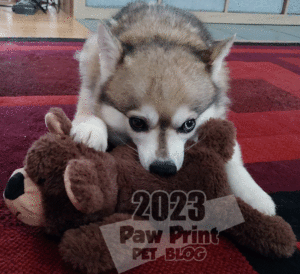
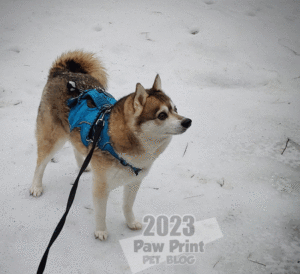
Last fall I experienced my first super close encounter with a black bear.  Both of my small dogs, Kitsune the papillonOpens in a new tab. and Fenrir the Alaskan Klee KaiOpens in a new tab., were with me at the time.  Despite being toy/small breed dogs, Kit and Fen promptly positioned themselves between me and the bear.  They stood their ground and barked until the bear turned around and sauntered off.  Thankfully, the bear seemed like a younger one who was more curious than anything else.

We live in rural New England, where encounters with bears and other wildlife species are common.  It’s for sure something I keep in mind, especially while hiking or exploring in the woods with my two fuzzy sidekicks.  Especially after our close encounter last year, I have no doubt that Kitsune and Fenrir would both throw themselves into the line of fire to attempt to protect me.  Anyone who doubts the bravery of a little dog never met my two!

Are Bears Afraid of Dogs?

hiking dog bear countryNot always.  It depends on the bear.  Black bears are more likely to run from barking dogs than grizzly (brown) bears are.  But in the midst of a bear encounter, most people probably aren’t paying much attention to exactly what type of bear they’re face to face with.  And neither, of course, is your dog.  While some bears may run from dogs, others, especially grizzly bears, may do the opposite.  I’ve heard more than one story about a dog owner letting their pet run loose in bear country, only to experience Fido frantically running towards them with a grizzly in hot pursuit.
In a 2014 edition of “International Bear News” (page 19), researchers Hank Hristienko and Stephen Herrero pointed out that, in many cases, dogs actually provoke bear attacks.  Between 2010 and 2014 they looked at 92 reported back bear attacks on humans.  49 out of the 92 attacks involved dogs.  That’s just over half of all the reported black bear attacks within that time frame!  In addition, 21 out of 23 attacks that involved female bears with cubs also involved dogs.

So what can you do to keep yourself, and your dog(s) safe while hiking in bear country?

Safety Tips for Hiking with Dogs in Bear Country

  • Always keep your dog leashed!  This is SO important!  Believe me, I understand how tempting it can be to give your dog a bit of freedom when the two of you are (seemingly) alone in the woods.  But you’re not really alone.  Uncontrolled dogs can easily wander out of sight and provoke wildlife.  This is not only dangerous for your dog and the wild animal involved, but potentially for you as well.  Your dog may lead provoked bears or other angry wild animals directly towards you.
  • Keep food and trash items contained.  If you’re going for a longer hike and will be carrying food, it’s important to keep any food and trash items you bring, for you or your dog, well contained.  Consider using a bear canister or bear proof containerOpens in a new tab. to carry items that may grab the attention of a bear.
  • Keep an eye out for signs of bears.  Be proactive.  If you notice signs of bears, such as foot prints, fresh scat, overturned logs, or new scratch marks on trees, avoid that trail.
  • Stay vigilant.  It can be tempting to listen to music or an audio book while hiking, but it’s important not too, especially in bear country!  Stay alert and use all your senses to check for signs of dangerous wildlife.  Be especially careful when you’re  hiking near loud, flowing, bodies of water as the sounds of the water can sometimes mask approaching wildlife.  Approach blind turns carefully and keep your dog(s) close to you at all times.
  • Make noise!  I’m planning on buying bear bellsOpens in a new tab. to attach to my dogs’ harnesses.  Talking, singing, or humming while hiking with your dog can serve the same purpose.  Make noise to alert local wildlife to your location.  This gives a chance for animals such as bears to flee an area before an encounter occurs.
  •  Carry bear spray.  Bear sprayOpens in a new tab. can deter bears in the event of an encounter, and is safer than carrying a firearm.  But it’s important to practice using bear spray, to familiarize yourself with how to use it before an encounter occurs.  An active bear attack is not the time to realize that you never looked at the directions for your bear spray!  Bear spray should be carried somewhere very easy to access, such as clipped to a belt loop, during hikes in bear country.  It won’t help you during a bear attack if it’s buried at the bottom of your backpack.
  • Hike during the day.  Bears are most active at dawn and dusk.  Timing your hike appropriately can help you to avoid encounters.
  • Never corner a bear.  Don’t allow your dog to either!  If you come across a bear, slowing back away.  Ensure that you are giving the bear plenty of escape routes.  Animals that feel trapped or cornered are more likely to attack.
  • Learn what to do if you encounter a bear.  Most experts recommend slowly, and calmly, backing up if you find yourself overly close to a bear.  Put as much space as possible between you and the bear, but don’t overreact or try to run.  Avoid sudden movements and don’t make direct eye contact with the bear.  You don’t want to startle the bear or make yourself look like prey.  Stand up tall and use your arms to make yourself look as large as possible and make noise.  If the bear charges use your bear spray.  Read more about how to react in the event of an attack here.Opens in a new tab.

Keep Your Dogs Leashed!

hiking dog bear  countryThis tip bears (haha) repeating!  Always keep your dogs leashed if you hike with them in areas with bears.  While many a brave dog would probably try to save their humans in a bear attack, oftentimes unleased dogs are the ones provoking such attacks in the first place.  Under normal circumstances, wild animals, bears included, want to avoid encountering humans just as much (if not more) than we’d like to avoid coming into contact with them.  But wild animals who feel threatened are much more likely to feel the need to react aggressively.

I get it.  When you’re hiking in the wilderness you want your furry best friend to be able to experience feeling wild and free.  But safety is more important.  Protect your dog, and yourself, by keeping your dog under control and close to you while adventuring in the great outdoors.  Believe me, your dog will love spending time hiking with you even if they are on a leash!  Hikes are always the most fun when everyone gets to return home safe and sound.

Comment below!  What potentially dangerous animals live near you?  Do you carry bear spray or other means of protection when you hike with your dog?  Have you ever had a close encounter with a bear, or other threatening wild animal?  How did your dog react to the encounter?

hiking dog bear country

We’ve, unfortunately, been dealing with content scrapers stealing our articles lately. You shouldn’t be seeing this article on any site other than pawprintpetblog.comOpens in a new tab.! If you’re reading this article on any other site, we’d love for you to take the time to contact usOpens in a new tab. and let us know and, if you have the time, stop by and visit us on our official site! Thanks you.

Kitsune’s Happy Dinner Dance!


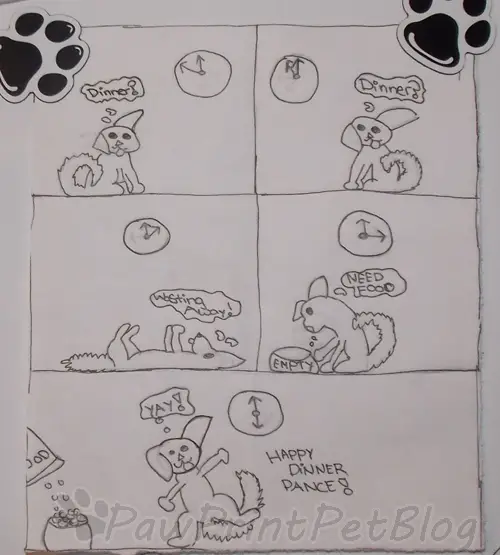
Kitsune, my 14-year-old papillon, Opens in a new tab.is VERY enthusiastic about his meals!  I feed my dogs their dinner at around 6 pm each evening, and like clockwork every day just before 6, Kitsune starts getting excited!  He does what we fondly refer to as the “happy dinner dance”!

HappyDinnerDance!

The happy dinner dance consists of moves such as jumping around, sometimes in circles, and waving your front legs in their air.  There’s a lot of running about, and even, oftentimes, an accompanying “song” to go along with this dance.

This video is from 2014 (9 years ago), when we still lived in our city apartment.  Kit must have been around 5 when this was recorded!

http://www.youtube.com/watch?v=oy0SAPa3Kvg

Despite everything my little man has been through, especially his more recent health issuesOpens in a new tab., and the fact that he’s officially a senior dog now at 14, Kitsune still dances for his dinner!  This is a pretty much daily occurrence at our house, and it never fails at making me smile.

Not bad moves for a senior dog right?  Kitsune has been doing SO well lately.  It took awhile, but I think he’s finally feeling 100% again after his brush with IVDDOpens in a new tab..  I’ve been experimenting (carefully) with a few new supplements and tweaked his diet recently.  I’ve finally been successful at getting him to lose a few pounds so I’m sure that’s helping him feel a bit more spry.  More and more often lately I’ve seen him pick up toys to play with, something he hasn’t really done in a long time.  He’s also been attempting to wrestle with Fenrir again!

It makes me so, so happy to see my little guy enjoying life so much.  Kit’s always been such a sweet, happy dog.  But his illness/injury late last fall really seemed to take a toll on him.  I was so worried that his life, and ours, wasn’t going to look the same again after his IVDD diagnosis.  But I am happy to report that he seems to be better than ever, very much back to his crazy, sassy, fun loving, playful self.

Can your pets seemingly tell time (at least when it’s dinner time)?  Do they have happy dinner dances of their own, or do they do something else cute while waiting for their meals?

dog happy dinner dance

We’ve, unfortunately, been dealing with content scrapers stealing our articles lately. You shouldn’t be seeing this article on any site other than pawprintpetblog.comOpens in a new tab.! If you’re reading this article on any other site, we’d love for you to take the time to contact usOpens in a new tab. and let us know and, if you have the time, stop by and visit us on our official site! Thanks you.

What is Pancreatitis in Dogs?


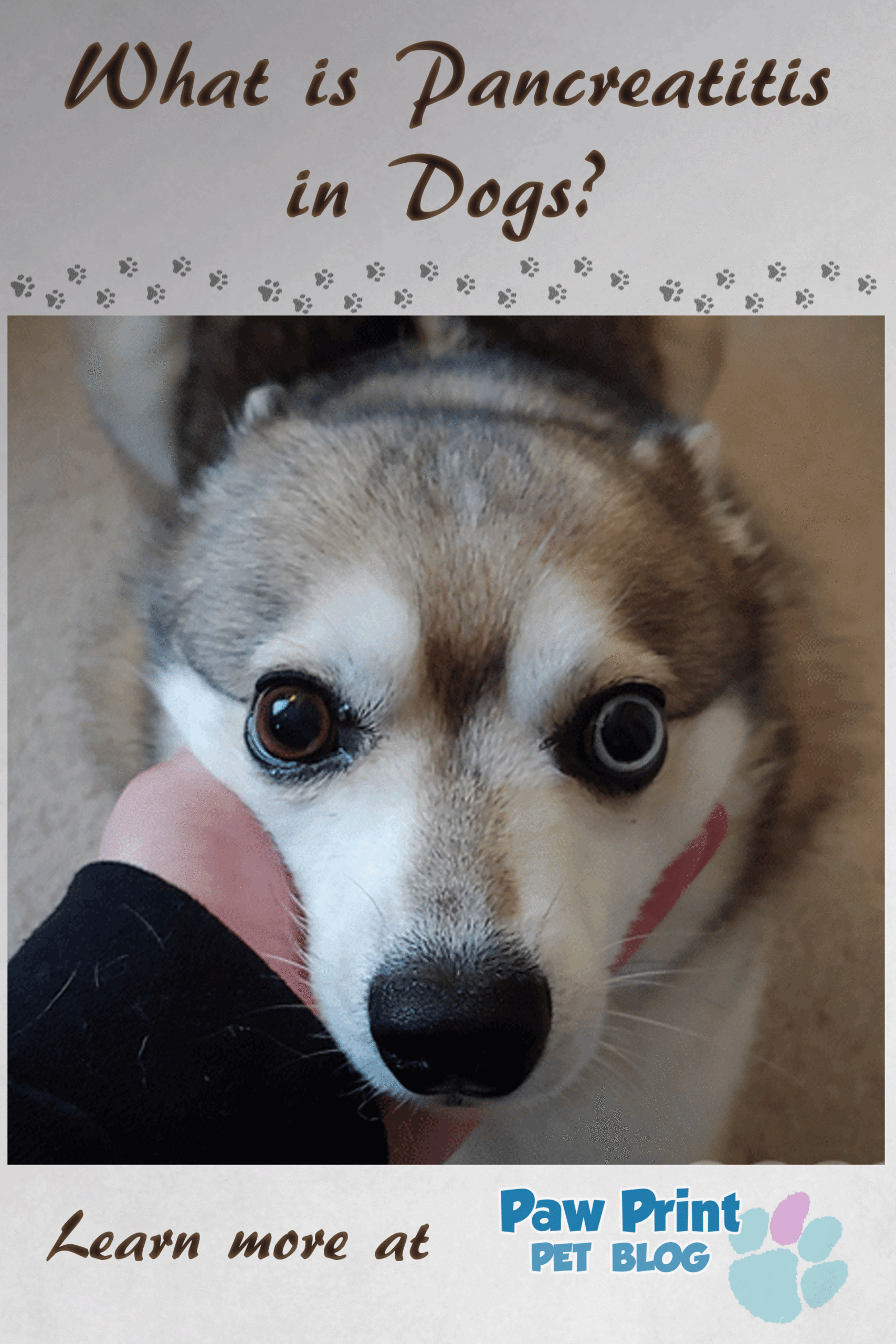
Around the end of September of last year my papillon, Kitsune, was diagnosed with cervical IVDDOpens in a new tab..  They say when it rains it pours, and that certainly felt true when, not even a full month later, we ended up in the emergency vet again, this time with my Alaskan Klee Kai, FenrirOpens in a new tab..  Little Fenrir had been throwing up, not wanting to eat anything, and just generally seemed unwell.  Long story short, Fenrir ended up being diagnosed with pancreatitis.  I had heard about pancreatitis before and had a general knowledge of what it was, but experiencing it for ourselves was a learning experience for sure.

pancreatitis in dogs

What is the Pancreas?

It would be hard to go into detail about pancreatitis without first making sure everyone knows what the pancreas is!  Some of you may already know, especially since people have a pancreas as well as dogs.  The pancreas is an organ that is located near the stomach and intestines.  It functions as a gland and plays a part in both the endocrine and digestive systems.

The pancreas plays many important roles, including helping to regulate blood sugar, secreting hormones such as insulin, glucagon, and somatostatin, as well as pancreatic polypeptides.  When it comes to the GI tract, the pancreas secretes pancreatic juice that helps to neutralize stomach acid, as well as digestive enzymes that are responsible for breaking down proteins, fats, and carbohydrates.

What is Pancreatitis?

pancreatitis in dogsVery simply put, pancreatitis is inflammation of the pancreas.  While that, in itself, doesn’t sound so horrible, pancreatitis in dogs can be a life-threatening condition.
Pancreatic inflammation, at its core, is caused when digestive enzymes that are normally released from the pancreas instead activate while still inside the pancreas.  These enzymes begin digesting and destroying pancreatic tissue.  Pancreatitis is, as you can imagine from that explanation, a very painful condition.

The most common symptoms of pancreatitis can include nausea, vomiting, abdominal pain, general signs of pain such as walking with a hunched back or laying in a “praying” position, lethargy, fever, diarrhea, dehydration, and decreased appetite or unwillingness to eat.

Causes of Pancreatitis:

Pancreatitis can happen to any dog, no matter their age, breed, or sex.  The exact cause of pancreatitis is often unknown, but the following are thought to be risk factors:

  • A high-fat diet is thought to be the number one risk factor when it comes to dogs developing pancreatitis.  Often, just one very high fat meal can trigger the condition.
  • Dietary indiscretion, ie eating out of the trash or otherwise getting into things they shouldn’t can lead to pancreatitis.
  • Obesity.
  • Trauma to the pancreas can cause pancreatitis.
  • Medications and prior abdominal surgeries can be risk factors.
  • Exposure to toxins.
  • Hypothyroidism or other endocrine diseases.
  • Diabetes.
  • Cancer.
  • Biliary stones.
  • Hereditary disorders that impact how fat is metabolized.
  • Some dogs are thought to be genetically predisposed to developing pancreatitis.  This often includes small, toy, and terrier breeds of dogs.

When your dog is diagnosed with pancreatitis, your vet may tell you that it is either chronic or acute.

Acute Pancreatitis:

Acute pancreatitis is what most dog owners think of when they think of pancreatitis.  This is when pancreatitis symptoms come on suddenly in an otherwise seemingly healthy dog.

Chronic Pancreatitis:

Chronic pancreatitis, as the name suggests, develops slowly over time.  The symptoms of chronic pancreatitis may be more mild but persistent.  Chronic pancreatitis can lead to permanent changes in the pancreas, and can make dogs more likely to develop diseases such as diabetes, pancreatic insufficiency, and pancreatic cancer.

Pancreatitis is a Medical Emergency.

Severe acute pancreatitis can, unfortunately, lead to death.  Treatment often involves spending time in intensive care at the vets.  Thankfully, not all cases of pancreatitis are severe and mild cases, with treatment, generally come with an optimistic prognosis.

Like with many other medical condition, the faster pancreatitis is treated the better the outcome.  If your dog is displaying symptoms of pancreatitis contact your vet.

Dogs that recover from pancreatitis may suffer from permanent damage to the pancreas.  They should be monitored for diabetes and exocrine pancreatic insufficiency.

More Info Coming Soon!

pancreatitis in dogsI’m planning on covering topics such as how pancreatitis is diagnosed and treated in future posts.  Until then, if you have any questions please feel free to comment below.  However, keep in mind that I am not a vet and pancreatitis should be considered to be an emergency situation.  If you have reason to believe that your dog is suffering from pancreatitis, please contact your vet.
In case anyone is wondering, though, I won’t leave you hanging and will let you all know that little Fenrir is doing really well!  Thankfully he suffered from a mild case of pancreatitis that our vet was able to help us treat him on an outpatient bases.  It’s been 8 months now since Fen’s bout of pancreatitis and he, thankfully, hasn’t suffered any side effects and hasn’t had to deal with pancreatitis again in that time.

Comment below!  Has your dog ever suffered from pancreatitis?  What changes, if any, did you make to their lifestyle after being diagnosed?

pancreatitis in dogs

We’ve, unfortunately, been dealing with content scrapers stealing our articles lately. You shouldn’t be seeing this article on any site other than pawprintpetblog.comOpens in a new tab.! If you’re reading this article on any other site, we’d love for you to take the time to contact usOpens in a new tab. and let us know and, if you have the time, stop by and visit us on our official site! Thanks you.

Pet Parents – Corny or Cool?


I don’t have any human children.  Just my partner and, of course, KitOpens in a new tab. and FenOpens in a new tab..  I love my little pack just the way it is.  I’ve personally never felt like my little family was incomplete due to the lack of little humans.  I don’t feel like I use my dogs to replace human children, either, as childless couples with pets are so often accused of.  I know that my dogs are dogs, and love them all the more for it.  After all, you can’t put a kid in their crate when you need a little bit of ‘me’ time, and I’ll never have to worry about saving to send my dogs to college.  Kitsune, my papillon, turned 14 last December, and, despite being a teenager now, he hasn’t told me a single time that he hates me!

What’s in a name?

pet parentsI assume because of Mother’s Day, I’ve been reading a lot of pet articles about whether or not it’s acceptable for pet owners to call themselves “pet parents”, or to refer to themselves as their pet’s “mom” or “dad”.  What do you think?  Do you refer to yourself as your pet’s parent, owner, or something else?  I’d love to read your response in the comments below.  I know this can sometimes be a hot-button issue, so please keep it civil!
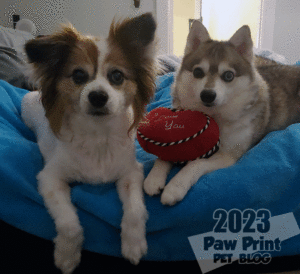
When we still lived in the city, I pretty much became known as “Kit’s mom”.  People in our neighborhood could seemingly remember Kit’s name, but not my own.  It’s ok, I get it.  He’s a lot cuter than I am!  Being referred to as Kit and Fen’s mom has never been something that’s bothered me.  Owner, or some similar sentiment, always felt so cold to me.  I own a lot of things, but I don’t spend countless hours taking care of them.  Worrying about them doesn’t keep me up at night, nor does snuggling with them bring me the same sense of calm that snuggling with Kit and Fen does.  My dogs are not things, they are living,  breathing beings.  I never felt like ownership adequately described the relationship I have with them.

I’m not alone in this, either…

There’s no doubt about it, a large majority of pet owners consider their pets to be part of the family.  A survey conducted by YouGov back in 2019Opens in a new tab. reported that a whopping 88% of American pet owners consider their pets to be members of their families.  An older survey, conducted in 2011Opens in a new tab. revealed that 58% of American dog owners reported that they refer to themselves as their pet’s parents.  35% said that they refer to their dog as their son or daughter, and 10% of surveyed dog owners said that they celebrate Mother’s and Father’s Day with their dog(s).  The term “pet parent” is pretty mainstream now, appearing everywhere from vet offices to product promotions.

However, apparently not everyone feels that parenthood extends to the furry members of our family.

pet parentsThe biggest argument against referring to the furriest members of our family as our sons or daughters is that it is apparently demeaning to some people.  Even some pet owners seem to feel that referring to pet owners as parents is a bit cheesy, and/or isn’t respectful to parents who care for actual human children.
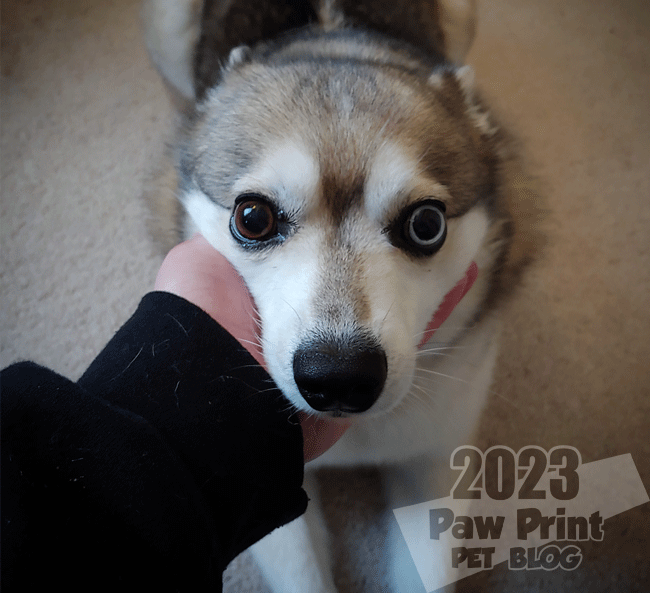


I’ve seen some mothers of human babies argue that there are facets of motherhood that pet owners will just never experience.  Their babies growing up and going to college, or getting married, for example.  But do those things define motherhood?  After all, not all children go to college, or get married, and we would never say that a mother of a child who decided to remain single is in fact not a mother.  The experience of motherhood is something that is beautifully unique to each mother.

A parent is a hard thing to define.

When a dog has puppies, we refer to that dog as a mother, despite the fact that her babies are dogs and not humans.  People who adopt human children are still considered to be mothers, despite the fact that they didn’t give birth to the kids they are raising.  So dogs can be mothers, and humans who have never given birth can be mothers.  How far of a stretch is it to consider people who care for dogs to be moms?  I guess it depends on who you are asking.

Human or animal, caring for others can be hard.

Whether you are a mother, a dog mom, a pet owner, etc., dedicating ourselves so fully to the care of another living being can be tough.

So those of us who aren’t fully satisfied with being considered pet owners are left with a dilemma.  At the risk of sounding a bit silly, or possibly stepping on some toes, do we refer to ourselves as pet parents?  Although pets are technically considered property, “owner” doesn’t seem to do much to convey the bond that can exist between people and their pets.  After all, you can own a car, own a television, but caring for another living creature is a whole different ball game.

pet parents

Does it even matter what we choose to call ourselves?  Sure, we may sometimes sound a bit corny, and occasionally some people may take issue with what we choose to call ourselves, but in the end, if our pets are happy and healthy, and we’re not actually hurting anyone else, isn’t that all that really matters?

Some people choose to care for pets.  Others have children.  Some have both, and some fall into their rolls rather than actively choosing them.  No matter how we come to care for our charges, no matter how our relationships with them differ, we all have something in common.  Our hearts reside not in one body, but two (or more).  We love another living being, and because there often aren’t words to describe the love we feel for our charges, we call ourselves mothers.  I think that’s a similarity we should embrace and celebrate.

Live and let live.  Pet guardians choosing to refer to themselves as their dog’s parents really shouldn’t diminish the relationship anyone has for their human child.  It’s just a word, and at the end of the day, there are much much more important issues we should be focusing our efforts on than what other people choose to call themselves.  Comment below!  What do you call yourself in relation to your pet(s)?

pet parents

We’ve, unfortunately, been dealing with content scrapers stealing our articles lately. You shouldn’t be seeing this article on any site other than pawprintpetblog.comOpens in a new tab.! If you’re reading this article on any other site, we’d love for you to take the time to contact usOpens in a new tab. and let us know and, if you have the time, stop by and visit us on our official site! Thanks you.

Reflecting Back on The April A to Z Challenge & Blog Updates


#AtoZChallenge 2023 badgeLast April (2022) I took part in the April Blogging from A to Z ChallengeOpens in a new tab..  Our theme was “Snacking from A to Z”, which (especially) Kitsune, Fenrir, and I had a lot of fun with!  Around the same time, I was participating in a blogging course.  Although I’ve been blogging here since 2010, I learned a lot.  I decided that it would be worthwhile to go back through my previous 12(!) years of blog posts.  I deleted quite a few posts that just weren’t getting views anymore.  There were many others that I took the time to edit, update, and repost.  After our April challenge ended, I decided to keep up the momentum.  For an entire year now I’ve been posting new blogs at least every other day!

Blogging that often for so long has been a lot of fun although, as you can imagine, challenging too.  Thankfully I’ve felt like my hard work has paid off, as I’ve watched my view count here grow exponentially.  2023 is shaping up to be Paw Print’s best year ever!  I sincerely hope that means that this blog is now helping more dog owners than ever before.

Blogging from A to ZI’ve now gone through every single post on Paw Print and edited/updated many of them.  I’ve added more new content to the site in the last year than any year previous.  While I love working on this site, I’ve decided that it’s time for me to scale things back a bit.  Don’t worry!  I’ll still be posting regularly.  But instead of daily/every other day I’ll be going back to a once-a-week posting schedule.  I’ll always strive to keep all my content as up-to-date and relevant as possible, so I will continue going back to update old posts often.
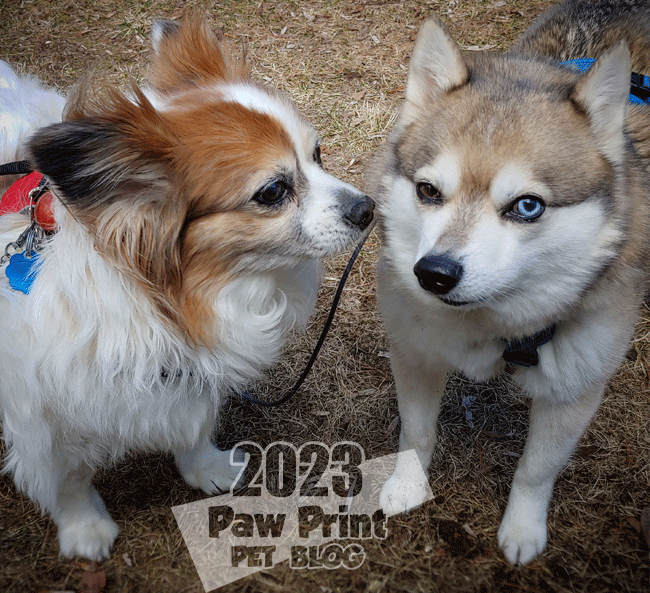
I love posting here, but posting as often as I was takes up a lot of time.  I have other projects I’d like to pursue more going forward, some of which are related to this site, such as going back to posting videos on our YouTube pageOpens in a new tab. more often.  I just need more time to get more stuff done, and of course to spend as much time as possible soaking up the puppy love from Kitsune and Fenrir!

It felt fitting to end my “year of content” on a high note with this year’s April Blogging from A to Z Challenge.  One more month of crazy posting, and (almost) daily new content before I scale things back a bit.  I had a lot of fun working on this year’s challenge, writing about some of the ingredients used in commercial dog foods.

Blogging from A to Z

I hope you’ll continue to follow our adventures despite a reduction in the number of new posts.  I’m hoping that by stepping back from blogging, just a bit, I can find more time to do other things that make me happy.  Some of those things will undoubtedly include adorable pictures of Kit and Fen, and videos of them too.  For those of you want even more Kit and Fen, and how could I blame you, be sure to follow Kit’s and Fen’s Instagram accounts, as well as our YouTube channelOpens in a new tab. and Facebook pageOpens in a new tab..  I’ll continue to update our social media pages on a regular basis.

Thank you SO much to our faithful readers who come back again and again to read about the adventures of Kit and Fen, or to just learn as much as you can about sharing our lives with amazingly awesome dogs.  The entire Paw Pack really does appreciate each and every one of you!  I hope you will all continue to stop by often.  🙂

Blogging from A to Z