Recent Posts

Tips for Hiking with Small Dogs in the Summer


Has this summer been crazy where you live?  We got an insane amount of rain.  It felt like we lived in a rainforest!  It rained almost daily, which caused a lot of issues with flooding.  Then, once the rain totals finally started to somewhat return to normal, we got about a week of super hot and humid weather.  Immediately after that, it started to feel like fall!  As you can imagine, all the rain, and then the super hot weather put a damper on summer hiking.  Luckily for us, summer isn’t quite over yet!  Now that Mother Nature has seemingly decided to give us a bit of a break in the crazy weather, we’ve been trying to get in as much summer hiking as possible!

Can You Hike with Dogs in the Summer?

The key to a fun, safe hike with your pooch, no matter the time of the year, is vigilance and preparation.  I know, I know, boring, right?  But each season can present different dangers to your dog that you should be aware of.  An enjoyable hike is one where everyone comes home safely, albeit probably exhausted.  You can hike safely with dogs in the summertime, as long as you prepare and follow safety precautions.

Honestly Assess Your Dogs’ Hiking Abilities

If you haven’t taken your dog hiking for a while, don’t just jump into summer hikes head first.  Hey, I get it.  The warm sunny weather makes most people want to spend more time outdoors.  But, like people, dogs who have not exercised much in a while may not physically be up to embarking on a long hike right off the bat.  Hiking with dogs who are not (yet!) physically up to the challenge is a good way for your dog to get injured.  Start small and work your way up to more rigorous/longer hikes.  Over time your dog will build up stamina and be able to take on more intense hikes.

Be realistic about your dog’s physical condition.  Keep in mind that some dogs, for numerous reasons, just may not be able to tolerate really intense or long hikes.  Be especially careful with older/senior dogs, and young dogs who are inexperienced with hiking.  Older dogs can be especially sensitive to high heat and humidity.  Dogs with long hair or double coats, or those with short muzzles can also overheat easily.  Dogs with very short coats, however, are more prone to sunburn.  Be honest when assessing your dog’s physical condition and hiking abilities, so that you don’t push them too hard during hikes.
hiking small dogs summerKeep a Close Eye on the Weather

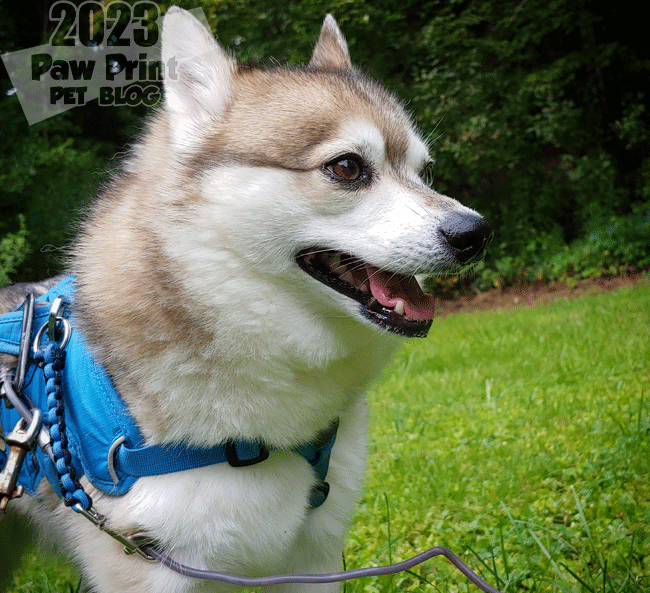
This seems like common sense, but how hot is too hot for a dog?  It can depend on a lot of factors, some of which I’ve already mentioned.  Different dogs respond to different temperatures…well…differently!  You have to keep an eye on other factors too, such as the humidity.  This chartOpens in a new tab. shows a general recommendation for what temperatures/humidity levels are too high for dogs.  But, again, think about your individual dog!  My double coated Alaskan Klee Kai, FenrirOpens in a new tab., for example, has a pretty low heat tolerance.  He starts getting uncomfortably hot in temperatures that other dogs seem to tolerate well.

Keep an eye on other types of weather as well, such as whether it’s  going to rain or be excessively windy.  We live in an area where a lot of the hiking trails are quite rocky.  I personally avoid hiking on days when I know it’s going to rain because the wet rocks often become slippery.

Hike During Cooler Times of the Day

In the summer the mornings and evenings are usually the coolest parts of the day.  On days that are supposed to get hot, but I really want to hike, I’ll opt for a nice early morning hike.  Just before sunrise seems to be the coolest time of the day.  As an added benefit, not many other people are up that early so you don’t have to worry as much about traffic on the roads or hiking trails!

Choose Terrain Carefully

We live in an area with lots of mountains, which I love!  But when the temperatures are raising I generally try to stick to easy, low elevation hikes.  High altitude hikes are usually more strenuous, and the heat can feel more intense at higher elevations.  Lower elevation hikes have the added benefit of often being closer to bodies of water!  Just be careful to avoid blue-green algaeOpens in a new tab. if you allow your dog to play in, or drink from, bodies of water during hikes.

On warmer days, try to select trails with more tree cover.  Temperatures are usually cooler in the shade, and avoiding being out in intense sun can help prevent sunburn (for you and your dog!).

Pack Appropriately

I don’t usually love bringing a ton of things with me when I hike, but when it comes to summer hiking with dogs there are for sure some essentials.

  • Water: And plenty of it!  This is, in my opinion, the most important thing to bring on a summer hike.  Make sure you have enough water for yourself as well as your dog.  Water can be used to help cool your dog down if s/he overheats, so bring extra if you can.
  • Food:  Especially during longer hikes, I always pack at least a snack for my dogs.  Hiking in the heat can deplete energy faster.  My dogs always seem thankful for their hike snacks.
  • Pet First Aid Kit: In the summer I always make sure to include bandanas in my dog first aid kits.  The bandanas can be soaked in water and tied around your dog’s neck to help them cool down.
Protect Your Dog’s Paws!

Affiliate Disclosure

Did you know that dogs can burn their paw pads if they’re exposed to hot surfaces?  In the summer certain surfaces can heat up enough to burn dog’s paws.  Pay special attention to dark surfaces such as pavement and rocks, especially if they are located under direct sun.  You can use products such as Musher’s Secret or dog bootiesOpens in a new tab. to help protect your dog’s paws from burns.

I don’t normally but boots on my dogs while we’re hiking, but I keep a few pairs of Pawz disposable dog bootsOpens in a new tab. in my dog first aid kit.  They are small and easy to carry, fit my small dogs well, and are waterproof.  They work great if you’re on the trail and your dog gets a paw injury that you need to protect from the elements.

Know What Dangers to Look Out For in Your Area

Depending on where you live, you may have location dependent dangers to look out for while hiking.  It’s always a good idea to learn about potentially dangerous animals in your location, such as venomous snakes or large predators.  Some plants, such as poison ivy, oak, and sumacOpens in a new tab. are potential threats too.  If you haven’t already, do your research to learn about potential threats to you and your dog that are relevant to your location.
hiking small dogs summer

Know the Signs of Heat Related Illness

Keep a close eye on your dog while spending time outdoors in the heat.  If your dog is acting slow or tired, that’s usually a good sign that they, in the very least, need a bit  of a break.

Heatstroke can be deadly, so it’s important to know the signs.  If your dog experiences any of the following symptoms it’s important to get them inside in a cool location and contact your vet ASAP:

  • Excessive,  hard panting
  • Extreme fatigue
  • Rapid heart rate
  • Excessive drooling and/or thicker than normal saliva
  • Disorientation or confusion
  • Dizziness
  • Red or pale mucous membranes such as gums, lips, or tongue
  • Vomiting or diarrhea
  • High temperature (over 104*F)
  • Collapse, seizure, or coma
Check Out Some of My Other Hiking & Summer Safety Posts:

Comment Below!

Do you hike during the summertime with your dog(s)?  What are some safety tips you follow to keep your own hikes safe and fun?

Kit, Fen, and I hope that everyone enjoys what’s left of the summer.  Happy hiking! 🙂
hiking small dogs summer

We’ve, unfortunately, been dealing with content scrapers stealing our articles lately. You shouldn’t be seeing this article on any site other than pawprintpetblog.comOpens in a new tab.! If you’re reading this article on any other site, we’d love for you to take the time to contact usOpens in a new tab. and let us know and, if you have the time, stop by and visit us on our official site! Thanks you.
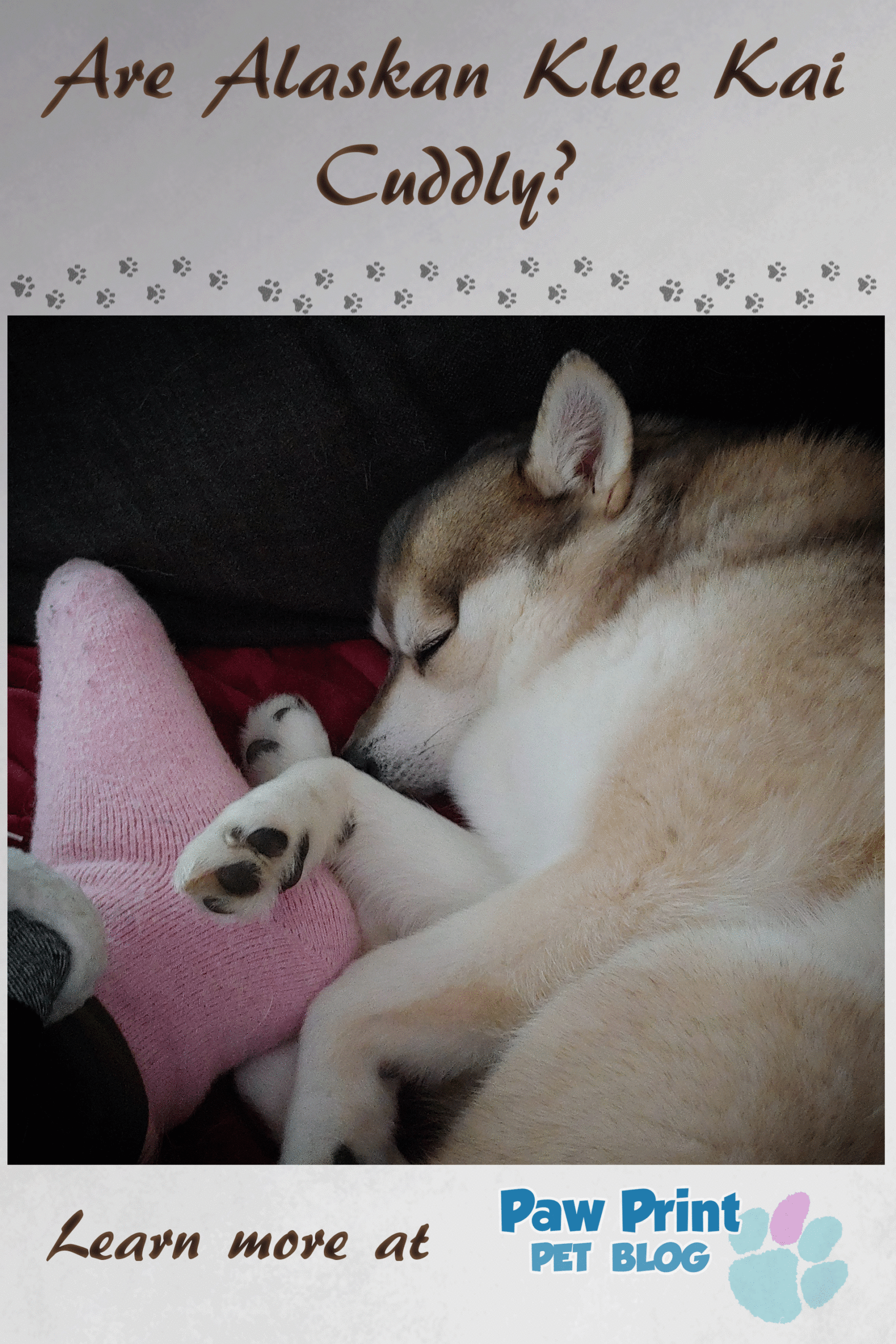
Are Alaskan Klee Kai Cuddly?


Do you prefer dogs who are cuddly?  Or maybe you prefer breeds who are more independent?  I have to admit, I’m kind of a sucker for a cuddly pup.  There’s nothing I love more than snuggling up with my dogs and a good book at the end of a long day.  I lucked out with my first dog, Kitsune, a papillon.  He loves cuddlesOpens in a new tab.!  But what about my second dog, Fenrir?  Are Alaskan Klee Kai typically cuddly dogs?

More Than Just “Mini” Huskies

Although they may look it, Alaskan Klee Kai are not, in fact, just miniaturized Siberian huskies.  The breed was originally created by mixing both Siberian and Alaskan huskies with smaller American Eskimos and schipperkes.  Because of this, the personalities of Alaskan Klee Kai (AKK) tend to be all their own.  A mix, if you will, of all the breeds that went into creating them more so than miniatured versions of any one breed.

Alaskan Klee Kai cuddly

If you know anything about northern breeds such as Siberian and Alaskan huskies, you can probably start to surmise that Alaskan Klee Kai can be pretty high energy little dogs.  Siberian and Alaskan huskies are working sled dog breeds.  Schipperkes are a small breed of dog that were traditionally used as ratters and watchdogs.  American Eskimos are known for being intelligent, versatile dogs that can expertly play many rolls.  Everything from companions to farm dogs.

So what does that mean for Alaskan Klee Kai?  Can a breed made up of such driven, hard working, high energy breeds ever enjoy a good snuggle?

First Thing First, What Do I Mean By “Cuddly”?

As I wrote in my past post about papillonsOpens in a new tab.

Dogs can be affectionate without being snuggly.  To me, a snuggly or cuddly dog is one that enjoys laying in my lap or next to me, receiving attention, for an extended period of time.  Does “cuddly” mean the same thing to you?  I’d be interested to hear if other people would define a cuddly dog differently.

One Person Dogs

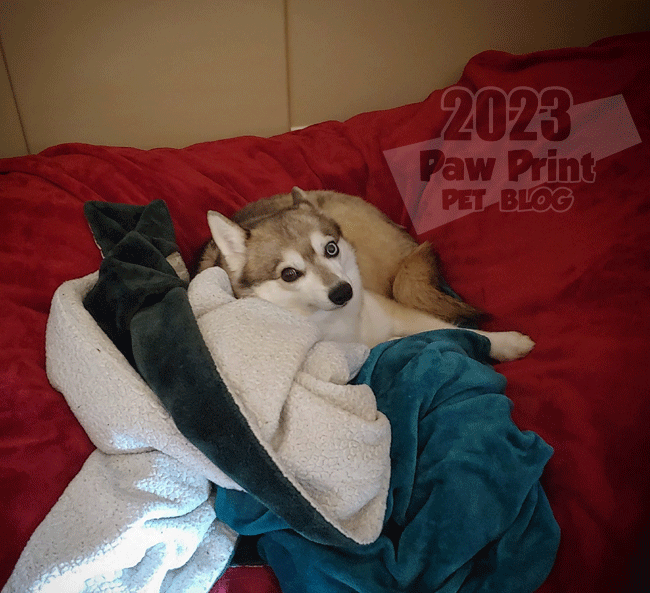
Alaskan Klee Kai CuddlyI think one thing that’s important to keep in mind when it comes to AKK is that these dogs are very often “one person dogs”.  My AKK, Fenrir, loves my partner but there is 100% no doubt that I am Fenrir’s person.  While Fen enjoys spending time, especially playing, with my partner, he isn’t usually as affectionate with my partner as he is with me.  Fen is basically my little shadow, following me around the house, always by my side.  Fen snuggles with me quite often, but almost never cuddles with my partner.

That doesn’t mean, though, that he’s not affectionate in other ways with people besides me.  Although he doesn’t often snuggle with my partner, Fen still often initiates play and asks for ear scratches and belly rubs from my partner.

Klee Cats?

AKK are sometimes affectionately referred to as “Klee cats” due to their tendency to be quite cat like.  I see this most in my own AKK in his tendency to really only want attention on his own terms.  Snuggling has to be Fen’s idea for him to want to do it for any length of time.  He’ll snuggle with me all night sometimes, as long as he wants too.  But there are other times when, no matter how hard I try to convince him, he’d just rather not cuddly up next to me.

Funny enough, even when Fen doesn’t feel like snuggling he’s still usually not far from my side.  But I’d for sure say that he can be more independent, when he wants to be, than my papillon KitsuneOpens in a new tab..

One Size Doesn’t Fit All

Of course dogs, even when they are the same breed, are not always the same.  Each dog is an individual!  I’m sure there are some AKK who are snuggle fiends, and others who don’t like to snuggle at all.  Most probably fall somewhere in-between those two extremes.  In general, other AKK owner’s who I’ve spoken with have said things similar to what I’ve written here.  That their AKK like to snuggle sometimes, especially so with their chosen person, but that these dogs also tend to be somewhat high energy as well as independent.  Traits that don’t always lend super well for long, drawn out snuggle sessions.

Conclusions

I love Alaskan Klee Kai.  However, they are a high maintenance breed that is not for everyone.  If getting a cuddly small dog is one of your number one requirements in a companion I’d suggest you think very carefully before getting an AKK.  While my own experience has been that my own AKK is pretty snuggly, he only cuddles with me.  I can see how that might be an issue in bigger families where everyone would appreciate some doggy snuggle time.  My AKK also really only snuggles with me on his own terms.  If it’s his idea, and he feels like cuddling, than great!  Otherwise, lets just say that I’m happy my other dog, a papillonOpens in a new tab., is super cuddly because if he wasn’t I probably wouldn’t be getting in my required dose of dog snuggles.  

Comment below!  Is having a dog that likes to cuddle important to you?  Does your dog like to cuddle, or is he/she oftentimes more independent?

Alaskan Klee Kai Cuddly

We’ve, unfortunately, been dealing with content scrapers stealing our articles lately. You shouldn’t be seeing this article on any site other than pawprintpetblog.comOpens in a new tab.! If you’re reading this article on any other site, we’d love for you to take the time to contact usOpens in a new tab. and let us know and, if you have the time, stop by and visit us on our official site! Thanks you.
Treating IVDD in Dogs


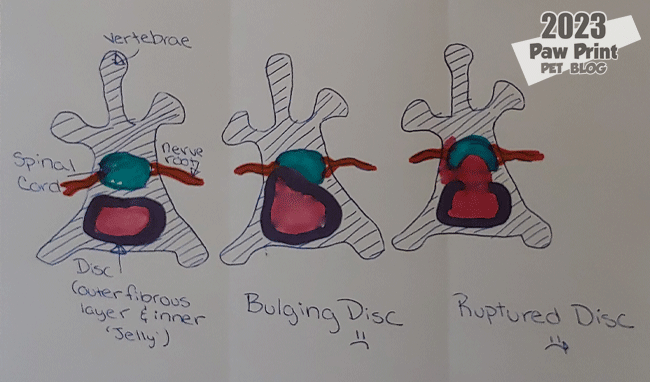
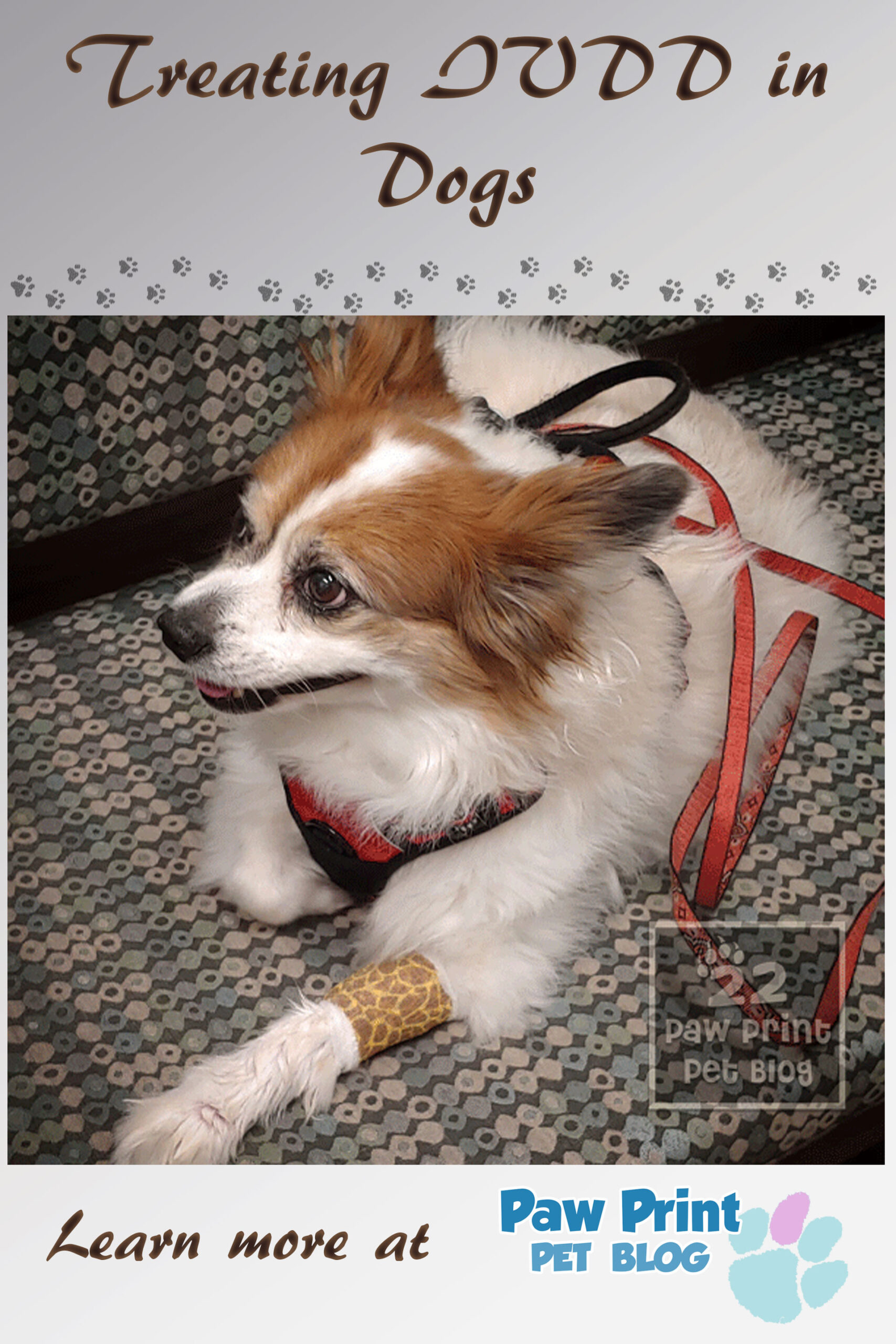
If you found your way here because your beloved dog was recently diagnosed with intervertebral disc disease (IVDD) you are not alone!  Late last year my senior papillon, KitsuneOpens in a new tab., was diagnosed with cervical IVDD.  It was certainly a stressful time for our little pack.  It was really hard watching Kit deal with being in pain.  He required more care than usual, which was exhausting.  The vet bills were piling up.  Thankfully, all that stress was worth it!  A few months short of a full year since his original diagnosis, Kit is doing amazingly well!

treating IVDD dogs

If you are new to IVDD you might want to check out some of our previous posts:

Because I already covered a lot of the basics, such as what IVDD is, signs your dog has it, and how IVDD is diagnosed in dogs, today I wanted to focus on the aspect of IVDD that most owners probably want to know about most – How is IVDD in dogs treated?

Can IVDD in Dogs be Treated?

In the, in this case not so good, ol’ days, IVDD was commonly a death sentence for dogs.  A dog would present to the vet often times in a lot of pain, with some degree of paralysis.  Veterinary technology was not as advanced as it is today.  Despite vet costs being cheaper in the past, spinal surgery to repair the damage done by ruptured discs has always been expensive.  Owners who couldn’t afford expensive diagnostics and surgeries were often counseled to humanly euthanize their pets, to spare them from the pain and paralysis that can come with IVDD.  Thankfully, for IVDD dogs and the families who love them, we have more options today.

Surgery is Still an Option

For some dogs diagnosed with IVDD, and owners who can afford it, surgery is still the best IVDD treatment option.  Dogs with severe or progressive IVDD, or IVDD that does not respond to less invasive treatment options, may be good surgical candidates.  Depending on your dog’s unique situation, your vet may recommend one, or a combination, of the following types of surgeries.

  • Laminectomy: A laminectomy involves your dog’s surgeon removing part, or all, of impacted vertebral bones in order to relieve pressure on the spinal cord and/or surrounding nerves.
  • Hemilaminectomy: This type of spinal surgery is less invasive, and involves removing only a piece of the impacted vertebra.  During a hemilaminectomy, more of the vertebra is preserved.
  • Ventral Slot: Ventral slot surgeries are preformed on dogs suffering from cervical (neck) IVDD.  Holes are drilled into the impacted vertebra so that offending disc material can be removed.
  • Fenestration: This surgery is often preformed in conjunction with a laminectomy or hemilaminectomy.  Disc material from discs surrounding the ruptured disc or in areas of compression are removed to prevent them from rupturing in the future.

Whatever type of surgery your vet recommends, the goal is to decompress the spine and surrounding nerves as quickly as possible.  IVDD surgery has a higher success rate if it’s preformed soon after the initial onset of IVDD symptoms.  24 hours after the initial onset of symptoms, surgery success rates begin to decrease.  Success rate is also higher (90%) in dogs who do not lose full mobility.  In dogs who present with stage 5 IVDD (full paralysis with no deep pain sensation) the success rate of immediate surgery is thought to be between 50% to 60%.  Surgery success is measured by the dog recovering to be pain free and mobile.  Dogs with “failed” surgeries may not regain full function of their (usually rear) legs but should still be able to recover and live pain free.

Conservative IVDD Treatment (Treating IVDD without Surgery)

IVDD in dogsTreating IVDD without surgery is called conservative IVDD treatment.  For many reasons, this is the route most IVDD dog guardians opt to take.  Conservative treatment for IVDD is less invasive, and much less expensive.  It, basically, involves using medications to keep your dog relaxed and pain free, and forcing them to rest for the duration of time it takes for their bodies to heal the bulging or ruptured disc(s) on their own.
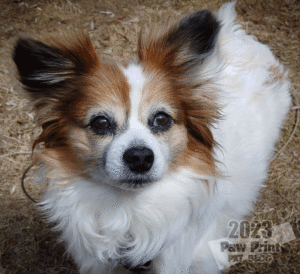
Conservative IVDD treatment usually involves the use of medications such as pain medications, anti-inflammatories, muscle relaxers, and sometimes sedatives.  The most important aspect of conservative IVDD treatment, however, is rest.  Most vets will recommend very strict crate rest for at least 8 weeks.  If dogs are allowed to resume normal activities before their damaged disc has enough time to fully heal they risk rupturing the disc again.

Dogs going through the initial 8 weeks of conservative IVDD treatment should especially not be allowed to jump on or off any surfaces.  “Walks” should be limited to very quick bathroom breaks only.

Think about what happens when your dog breaks a bone.  A cast is used to keep the healing bone stable.  If the bone was able to constantly move around, out of place, it wouldn’t be able to heal correctly.  A dog’s spine is a very mobile area.  Every time your dog walks, moves around, jumps, there is some amount of movement of the spine.  Normally this is not a problem, as the vertebra and spine are designed to move with your dog.  However, when you are trying to heal a spinal injury this constant movement can greatly delay natural healing.  Unfortunately there is really no way to fully immobilize a dog’s spine.  What we can do, however, is to limit movement of the spine as much as possible.  This is why very strict rest is so important when treating IVDD conservatively.

How to Decide Between Conservative IVDD Treatment and Surgery

There are a lot of different factors that will go into determining what course of treatment is right for your dog.  Here are some of them.

  • Finances:  This one is unfortunate, but the fact of the matter is that IVDD surgery, and the diagnostics that will be required prior to surgery, are very expensive.  It’s not unusual for IVDD pre-surgery diagnostics (MRIs, and/or CT scans) and the surgery itself to, combined, top out at $10,000 or more.  Not all, or even most, pet owners can afford that.  If you are reading this and your dog hasn’t yet been diagnosed with IVDD but you are concerned about it occurring in their future, consider looking into pet insuranceOpens in a new tab. now before your furry friend develops pre-existing conditions.
  • Pain Control: If you try treating your dog with conservative methods but cannot get his/her pain managed, surgery may be your dog’s best option.  Keep in mind, though, that finding the “perfect” pain control for your dog may take a bit of trial and error.  It did for my dog.  For the first couple of days after his IVDD diagnosis his vet had to adjust his frequency of pain medication.  Your vet may also experiment with your dog’s dosage, and type of medication.
  • Returning Pain: If, after a period of time, you cannot wean your dog off of pain medications and anti-inflammatories with their pain returning, surgery may be the best option.
  • Progression of Symptoms: Surgery is usually recommended if dogs who are treated conservatively continue to experience a progression of symptoms.  For example, if they experience worsening neurological functions, progressive loss of mobility, or loss of bladder control.
  • Frequent Reinjury: Vets may recommend surgery for dogs who experience IVDD episodes multiple times in the same disc.
  • General Health of the Dog: Dogs with other health issues, advanced age, etc., will probably not be the best surgical candidates.  For dogs who are at risk when put under anesthesia, or are otherwise not healthy enough to undergo a major surgery, conservative treatment would be best.
  • Level of Impairment: Dogs with mild cases of IVDD, who do not experience paralysis and loss of deep pain sensation, are typically more likely to make a full recovery with conservative treatment alone.  In these dogs, it makes sense to try conservative treatment before opting for much more invasive surgery.

What Worked for My Dog

IVDD dog treatmentWe opted to go the conservative treatment route for my dog, Kitsune’s, cervical IVDD.  Between keeping Kit medicated around the clock, and having to force him to rest, we had a rough couple of weeks.  But it was well worth it!  Before his 8 weeks of mandated rest were even up it was obvious that Kit was starting to feel much better.  Almost a year out at the time of writing this (he’ll be a year out from his original diagnoses in Sept of 2023) you would never even know that anything was ever even wrong with Kit!
No matter what treatment option you chose, I’m not going to lie, IVDD treatment and recovery is rough.  It’s stressful, and sad, and, even if you opt for conservative treatment, not exactly cheap.  But, as long as you can get your dog’s pain managed appropriately, it’s so very much worth it.  I’d spend money at the vet, and 8 weeks babying Kit around the clock a million times over if I knew that the outcome was going to turn out as good as his conservative IVDD treatment did.  Once he recovered, Kit was right back to being his happy, silly self.

Thankfully, almost a year later, so far we haven’t had to deal with another IVDD flare up (knock on wood).  Many dogs, yes even those treated conservatively, are able to recover from IVDD and go on to live healthy, happy lives.  Some IVDD dogs do end up with permanent neurological issues, but this is something they can oftentimes live with as long as they are no longer experiencing any pain.

More Info to Come

If you’re walking through the weeds of IVDD with your dog and wondering what comes next, stay tuned.  I’m planning on posting other IVDD articles, including one that focus on IVDD rehab and everything that comes after treatment is complete.

For now comment below!  What is your experience with IVDD?  If you treated, or are treating, your dog for IVDD what are some of the factors you and your vet took into account when selecting what type of treatment to go with?

treating IVDD dogs

We’ve, unfortunately, been dealing with content scrapers stealing our articles lately. You shouldn’t be seeing this article on any site other than pawprintpetblog.comOpens in a new tab.! If you’re reading this article on any other site, we’d love for you to take the time to contact usOpens in a new tab. and let us know and, if you have the time, stop by and visit us on our official site! Thanks you.

5 Of My Favorite Dog Friendly House Plants


Believe it or not, I have interests besides just doting on my two dogs!  One of them is gardening.  But I’ve found keeping a garden to be quite challenging with my current living situation.  We rent the house we live in.  So I can’t exactly tear up the lawn to start a giant garden.  I’ve tried growing small container gardens, and utilizing the small garden areas that were already established before we moved in.  But we basically live in the woods.  Critters keep coming into our yard and eating my plants!  The deer eat my sunflowers long before they ever have a chance to flower.  The chipmunks steal my ripe strawberries, if, that is, the groundhog doesn’t just eat the entire strawberry plant first.  You get the idea.  So what’s the next best thing if you love growing plants but can’t, for whatever reason, keep a garden?  House plants!

House Plants and Dogs

While my dogs may not be my sole interest in life, of course I take their safety and wellness seriously.  Fenrir, my Alaskan Klee KaiOpens in a new tab., has a habit of picking up random things that he finds on the floor.  He’s the main reason I’m super careful about what types of houseplants I keep.  I’m careful to keep my plants up and away from my dogs.  But even people with the greenest of thumbs know that, every now and then, house plants drop flowers or leaves.  I would hate for little Fenrir to find a leaf on the floor and get sick from playing with it.

While keeping only houseplants that are dog-safe means that I miss out on keeping some really amazing plant species, it gives me peace of mind to know that my plant obsession hobby doesn’t pose any health risks to my fuzzy best buddies.  Over the years I’ve amassed quite a collection of dog-safe house plants.  These are 5 of my current favorites.

Affiliate Disclosure

Phalaenopsis Orchids

dog friendly houseplantsDespite not having a lot of them (yet!), orchids are my current plant obsession.  I’ve always loved orchids, but up until recently was afraid to try keeping them myself.  They can be on the more expensive side as far as houseplants go.  I had also heard that they can be finicky and somewhat difficult to keep alive indoors.  Despite all that, just over a year ago now I got my first orchid.  My “trial” orchid, if you will.  It was a discount plant for sale in the plant section of my local grocery store.  I told myself that if I could keep it alive for at least a year, I’d allow myself to look into keeping more expensive orchids in the future.
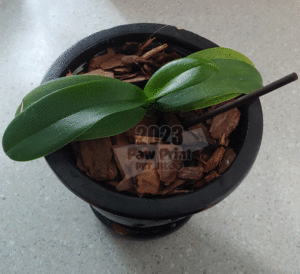
Phalaenopsis, sometimes called moth or moon orchidsOpens in a new tab., are known for their beautiful, usually large, long lasting flowers.  These are typically the easiest type of orchids to find for sale, commonly being sold in places such as grocery and hardware stores.  Moth orchids are nontoxic to dogs.Opens in a new tab.  Keep in mind though, that this does not apply to all types or orchids.  Some types, notably the wild lady slipper orchid, can cause issues if ingested by dogs.

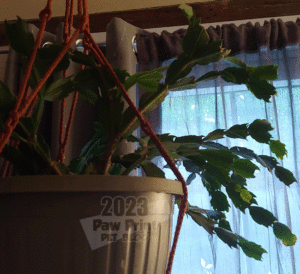
Spider Plants (Chlorophytum comosum)

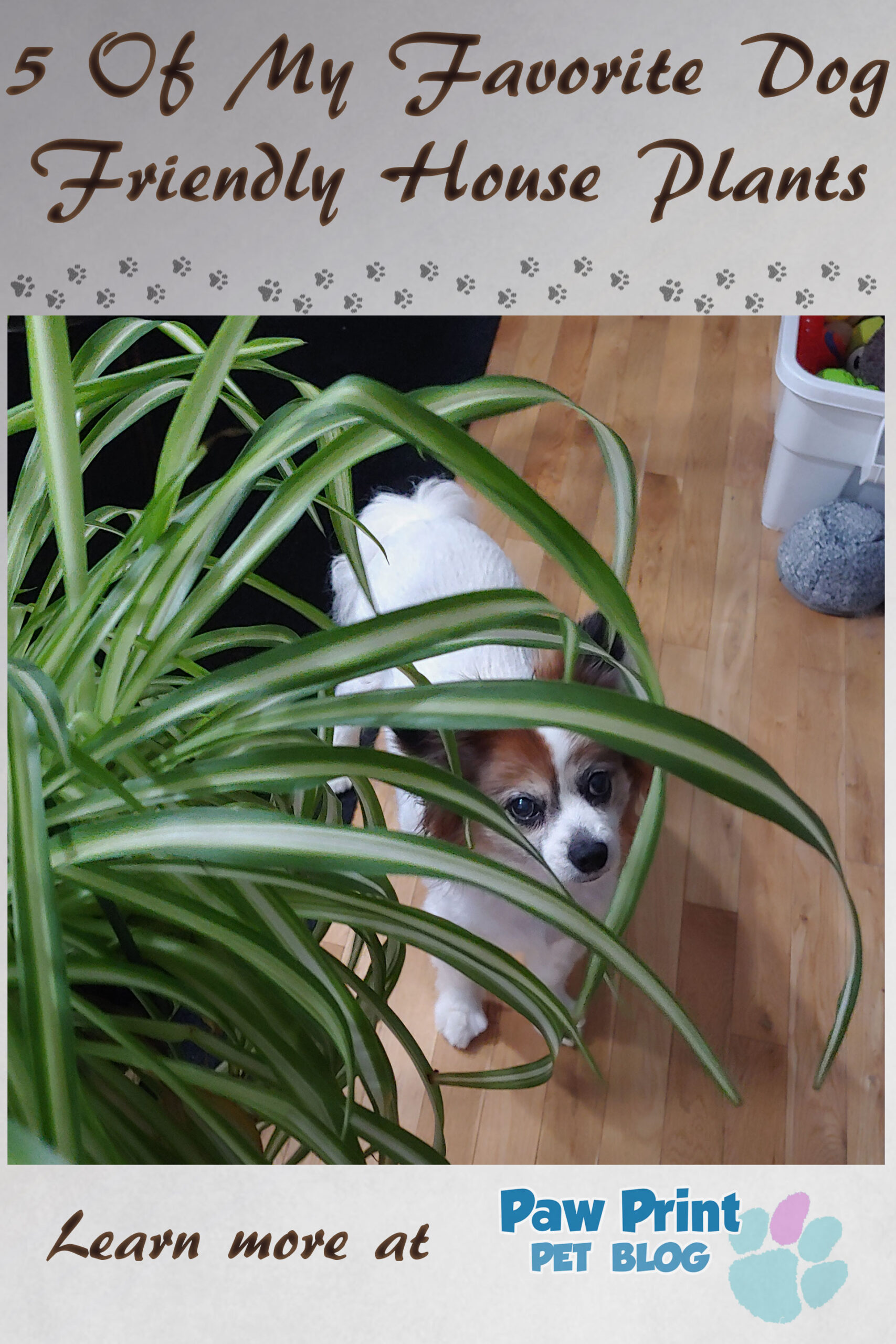
dog friendly houseplantsI am a serial spider plant murderer.  I love them to death.  Strange to some, I seem to do better with higher maintenance species of plants.  Spider plantsOpens in a new tab. are generally more of a “set it and forget it” type of plant.  I’ve learned through more trial and error than I care to admit that spider plants don’t appreciate being over watered.  With the spider plant I have now, which I’ve miraculously managed to keep alive for quite some time, I only water it when the leaves start to droop.
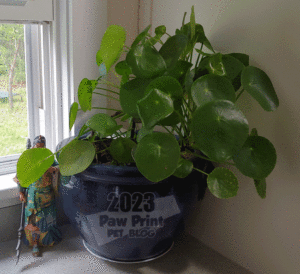
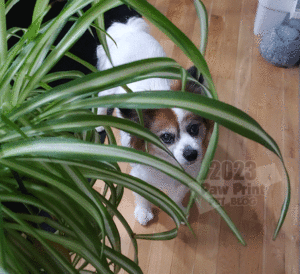
Spider plants are, you guessed it, nontoxic to dogsOpens in a new tab..  They are a classic houseplant that looks especially awesome in hanging pots.

Pilea Peperomioides

dog friendly houseplantsThese plants go by many common names, including the Chinese money plant, the pass it on plant, missionary plant, pancake plant, or UFO plant.  No matter which common name it goes by, Pilea PeperomioidesOpens in a new tab. is nontoxic to dogs.  It’s important to pay attention to what type of plant you are actually buying, though.  There are other species of plants that are commonly called money plants or money trees that are toxic to pets.
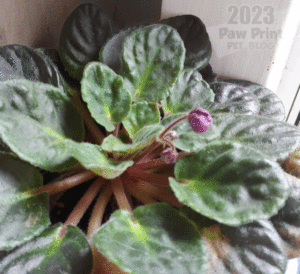
Pilea Peperomioides are native to China.  They have large, circular leaves and are thought to bring good luck to those who grow them.  This plant is known for being easy to grow.  Mother plants commonly produce many offshoots making this plant easy to propagate.  This accounts for the plant often being sold as “pass it on plants”, “friendship plants” or “pass-along plants”.  Because once you have one, you’ll eventually have many!

African Violets (Saintpaulia spp.)

dog friendly houseplantsAfrican violetsOpens in a new tab. are another common type of house plant that can often be found for sale in big box stores.  They are nontoxic to pets.Opens in a new tab.  African violets are beautiful, easy to care for house plants.  I have one that I’ve had for many, many years now.  It’s been with me through two moves so far, and still flowers multiple times per year despite receiving pretty minimal care.  As their name suggests, African violets most often produce groupings of beautiful purple flowers.  Their flowers, however, can range in shades of purples, pinks, and white.  I have two African violet plants currently.  One has beautiful deep purple flowers, and the other is a very pretty light pink.

Christmas Cactus (Schlumbergera bridgesii)

dog friendly houseplantsChristmas cactiOpens in a new tab. are high up there on my list of favorite house plants.  I love the beautiful, uniquely shaped flowers.  It’s fun to keep a plant that is supposed to bloom around the winter holiday season, although thus far my Christmas cactus seems confused and likes to bloom whenever she darn well pleases.  Truly a plant after my own heart.

Christmas cacti are nontoxic.Opens in a new tab.  They come in a wide array of flower colors, so there’s likely to be one for you!  I’ve found my holiday cactus to be very easy to care for.  They are easy to propagate from cuttings if you care to share with a friend, or grow more for yourself!

Do You Keep Houseplants Too?

I love my house plants and especially look to keep species that are nontoxic to dogs.  It means that I sometimes have to pass on keeping plants that I’d otherwise love to grow.  But knowing that my plant hobby doesn’t pose any risks to Kit and Fen makes keeping my houseplants way less stressful.  This way, if one of my plants drops a flower or a leaf and my mischievous pups mistake it for a fun new toy, I don’t have to sweat it.

Comment below!  Do you have a favorite type of dog friendly, nontoxic house plant?  There are more than these 5 that I keep and enjoy, but these are 5 of my current favorites.  Let me know if you want to learn about more.  For now, this post is getting kind of long so I think I’ll leave it at 5.  I may come back and update some of my photos when my plants are actually flowering.  Of course luck would have it that out of the three flowering plants I mentioned in this post, none of mine were actually flowering at the time of writing this.

dog friendly houseplants

We’ve, unfortunately, been dealing with content scrapers stealing our articles lately. You shouldn’t be seeing this article on any site other than pawprintpetblog.comOpens in a new tab.! If you’re reading this article on any other site, we’d love for you to take the time to contact usOpens in a new tab. and let us know and, if you have the time, stop by and visit us on our official site! Thanks you.

At-Home Pet Services: Your Ultimate Guide to Pet Care at Home


Pet Care at Home

Do you often find yourself overwhelmed with work or childcare, struggling to squeeze in time for your beloved pet’s appointments? You’re not alone. Many pet owners face similar challenges. That’s why at-home pet services are transforming pet care in towns across America. This article delves into various at-home pet services and how they revolutionize how we care for our loved pets.

At-Home Pet Vet 

One such service that has made life considerably more manageable is the “at-home pet vet” concept. Imagine your pet’s medical expert at your doorstep, offering everything from routine check-ups to emergency care. It’s already a reality, with, for example, the at-home pet vet in Roosevelt WA, and it’s transforming pet healthcare, making it stress-free and convenient for both the pet and the pet owner alike. 

Mobile Pet Grooming Services

If you thought home services were only for medical emergencies, think again! Mobile pet grooming is another growing trend, providing various grooming services right from the comfort of your home. Say goodbye to stressful trips to the groomer. From hair trimming to nail clipping, your pet can now receive premium grooming services at home.

In-Home Pet Training Services

Training your pet at home provides a familiar and comfortable environment for them to learn new tricks and behaviors. With in-home pet training services, professional trainers come to your home, using positive reinforcement techniques to help your pet become a well-behaved member of the family. 

Pet Sitting and Boarding Services at Home

Are you planning a vacation but worried about leaving your pet behind? At-home pet sitting and boarding services are your answer. Experienced pet sitters care for your pet at home, ensuring their routine remains uninterrupted. Your pet enjoys the familiar surroundings, and you want peace of mind, knowing they’re in safe, capable hands.

Home-Delivered Pet Supplies

Everything your pet needs, from pet food to toys, can now be delivered to your doorstep. With home-delivered pet supplies, you don’t need to worry about running out of your pet’s favorite treat or essential supplies. It’s another way at-home pet services are simplifying pet care.

We owe it to our pets to give them the best, most comfortable, and stressless care possible. By embracing these at-home pet services, we can do just that. Not only will our pets thank us, but we’ll also find more time in our schedules and less stress. The future of pet care is convenient, efficient, and tailored to our and our pets’ needs – and it’s already here.

Why Dogs Wipe Their Paws After Going To The Bathroom


The other day, I came across this question and decided to write about it here.  Not all dogs, but many, will wipe or scratch their paws on the ground after using the bathroom.  Apparently, a lot of dogs only wipe their hind paws.  My two dogs, Kitsune the papillonOpens in a new tab. and Fenrir the Alaskan Klee KaiOpens in a new tab. can be quite enthusiastic paw wipers.  Some only do this after they defecate.  Others do it after urinating.  Some, like my dogs, do it after both.  Have you ever wondered why?

This is what I’m talking about for anyone who doesn’t know…

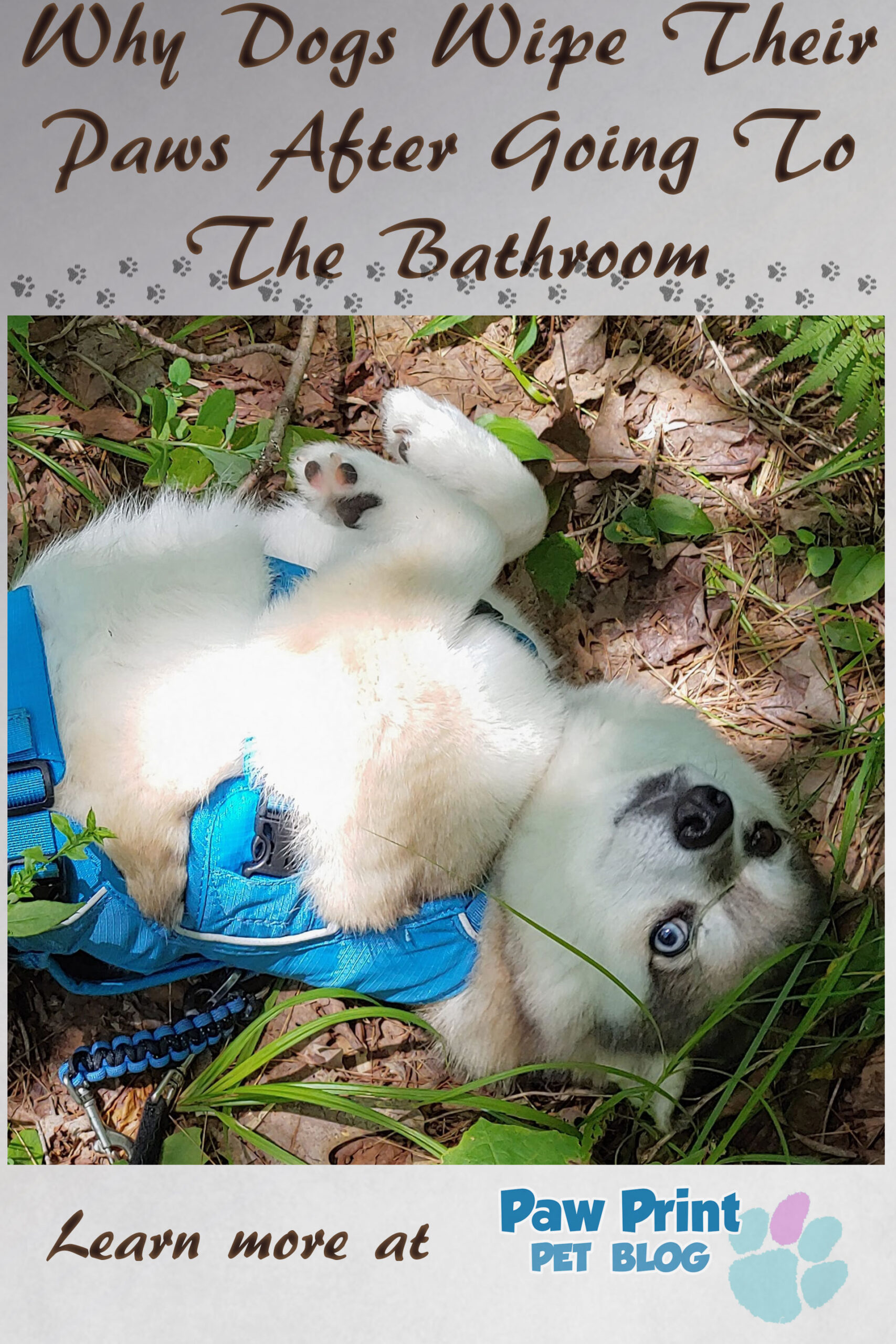
I usually refer to it as wiping their paws, but I’ve seen other owners refer to it as scratching the ground or kicking up dirt.  Whatever you call it, dogs all do it for the same reason – to mark territory.

Dogs’ Paws Produce Pheromones

Dogs’ adorably cute paws are actually covered in glands that produce pheromones.  Scent-producing glands are located both on the paw pads themselves, as well as between dogs’ toes.  It’s believed that by scratching or wiping their paws against the ground, dogs can leave scent signals for other dogs to pick up on.  Experts also believe that the scratch marks themselves left on the ground can act as a visual cue for other dogs.  It’s like leaving a sign, readable by other dogs, that says “Hey look what I did over here!  Smell how awesome I am!”.

No Two Dogs Smell the Same

Like human fingerprints, each dog has his or her own unique smell.  Humans may not be able to tell dogs apart by their smell, but other dogs can.  It may sound kind of gross, but dogs can tell what other dogs have been in an area by utilizing these visual (ground scratches) and scent (pee, poop, and pheromones) cues.  They can even take it a step further, and learn things like another dog’s sex, health status, and even mood, just by scent!

Imagine being able to tell how another human is feeling just by the way that they smell!  You can think of dirt kicking as being similar to a social media site for your dog.  While us humans may visit FacebookOpens in a new tab. to catch up with what our friends and neighbors are up too, dogs just have to smell an area where another dog has been.  What an interesting perspective of the world dogs must have, being able to learn so much about the world around them just by the way that it smells!

dogs kick dirt

We’ve, unfortunately, been dealing with content scrapers stealing our articles lately. You shouldn’t be seeing this article on any site other than pawprintpetblog.comOpens in a new tab.! If you’re reading this article on any other site, we’d love for you to take the time to contact usOpens in a new tab. and let us know and, if you have the time, stop by and visit us on our official site! Thanks you.