Post Contents:
Since We Moved Out Of The City, I’ve Really Had To Expand My Culinary Repertoire.
 There is exactly 1 take out place that will deliver to our house now – Domino’s. I think one of the biggest things my partner and I (and probably Kitsune too!) miss about living in the city is the food! In the city, we had all kinds of different types of restaurants within walking distance from our apartment. Here in the country we have, well, Domino’s.
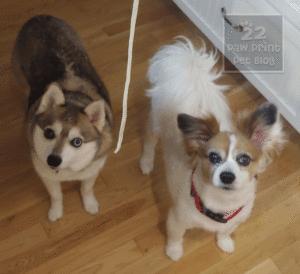
But it’s not all bad! We’ve been home cooking more, even experimenting with recipes we’ve never tried before. I enjoy cooking, when I have the time for it, if you can’t tell by how much I cook for my dogs! One of the recipes I’ve been trying to perfect lately is a stir fry dish that uses udon noodles. As always, when I’m cooking, I have my two little sidekicks at my feet – Kitsune, the papillon , and Fenrir, the Alaskan klee Kai. They just beg me, with those little puppy dog eyes of theirs, to drop a little something on the floor for them while I’m cooking. And, I often do. As long as what I’m cooking is safe for them to eat, that is. So, are udon noodles dog safe?

What Are Udon Noodles?
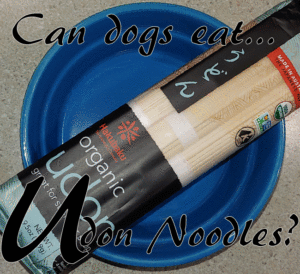
I’m not an expert. But, udon is a Japanese noodle made out of wheat flour. The brand I use most often lists only one ingredient on the ingredient list – organic wheat flour. Udon noodles, on their own, have a very bland flavor. They are often used in dishes such as soups and stir fries, where they pick up flavor from the other ingredients they are cooked with.

So, Can Dogs Eat Udon Noodles?
 As long as your dog doesn’t have any issues with wheat, they shouldn’t have any problems eating udon. Plain udon, that is. Keep in mind, like mentioned above, that udon is often cooked in some type of broth or sauce. These accoutrements are often high in sodium, and may contain other ingredients that are not dog safe. So be careful feeding your dog udon prepared at a restaurant, or prepared at home in any type of broth or sauce. I usually cook my udon first just in plain water, similar to how you’d cook dry spaghetti. That way I can share some of the plain udon with Kit and Fen, and can add the rest to my stir fry sauce separately for the people in the pack.
I don’t know if it’s still on the market, but apparently a company called Seimenya, based in Kagawa, released udon make specifically for dogs. I couldn’t find much about it, which made me question if it’s still available. Perhaps it is, but not in the US? Apparently it was made with a broth that contained low sodium, to make it tasty but healthier for our furry friends.
My dogs enjoy udon noodles plain, though. No broth needed. It’s not something I feed to them often, so is by no means a part of their regular diet. However, it’s a fun snack every now and then that I don’t mind sharing with them when I’m cooking udon for dinner.
Any Precautions To Feeding Dogs Udon?
 Udon should really be a treat food only for dogs. Feed it in moderation, and preferably plain. Don’t feed udon to dogs with wheat allergies, or those who are sensitive to grains. While, for most dogs, udon and other pastas won’t hurt them, it also doesn’t really do anything to help them either. I know some people use pastas as part of their dog’s home cooked diet, but it’s used mostly as a bulking agent to help their dogs feel full. Udon, and other pastas, don’t contain much in terms of nutritional value and, like in humans, feeding too much of it to dogs can cause unwanted weight gain.
Does your dog enjoy udon, or any other type of pasta?
Looking for more ideas for healthy “human” foods you can share with your dog? Check out my other blogging from A to Z challenge posts!
 As for Kitsune, Make His Tea!
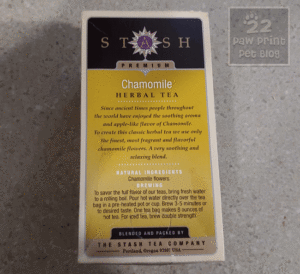 Chamomile tea, as mentioned above, is safe for dogs (and rabbits too). This is the type of tea I occasionally give my pets, although there are others that are safe. Generally teas that are safe will be herbal teas that contain no caffeine. Echinacea, Licorice root, ginger, peppermint, and Rooibos tea are all suppose to be not only safe for dogs, but beneficial as well.
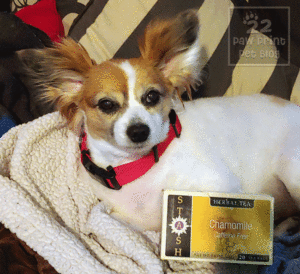 The benefits of giving your dog tea really depends on what type you are offering. Chamomile tea can be as soothing to dogs as it is to people. Chamomile tea is good for helping to heal upset stomachs. It can also be applied topically to help reduce itching and inflammation.
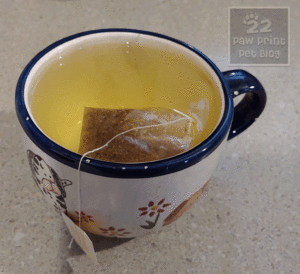 My dogs have their own teacup. How adorable is that?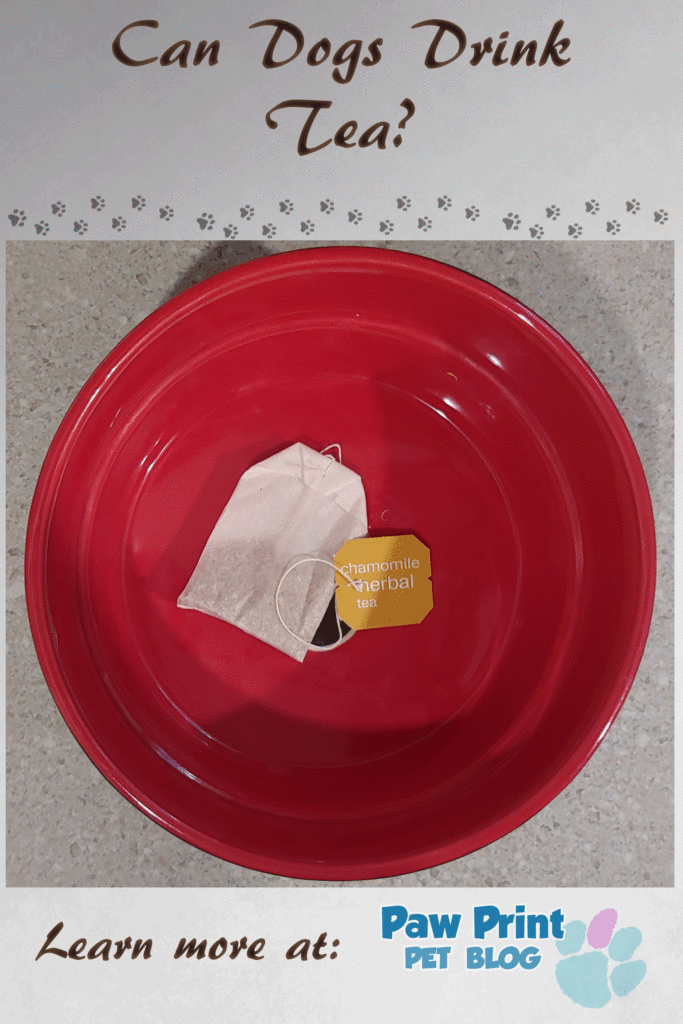
 Today Is Quite Possibly My Dogs Favorite Day Of The A to Z Challenge!
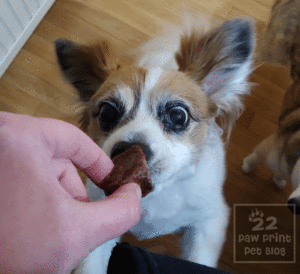 For people who raw feed, or home cook, for their dogs, muscle meats (such as steak) usually make up a large percentage of their dog’s diet. I think, at least for me personally, one of the huge draws of cooking or preparing meat for your dog is that you are able to give them a biologically appropriate food that is not only good for them, but that they really enjoy eating as well!
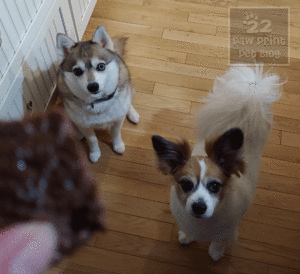 If you are cooking steak for your dog, or perhaps sharing a bit of your own dinner, cook the meat plain. Dogs don’t need things like sauces and seasonings to enhance the flavor of meat – they think it’s pretty awesome on its own. Plus, depending on what seasonings you’re using, they can be unhealthy for dogs and may cause GI issues.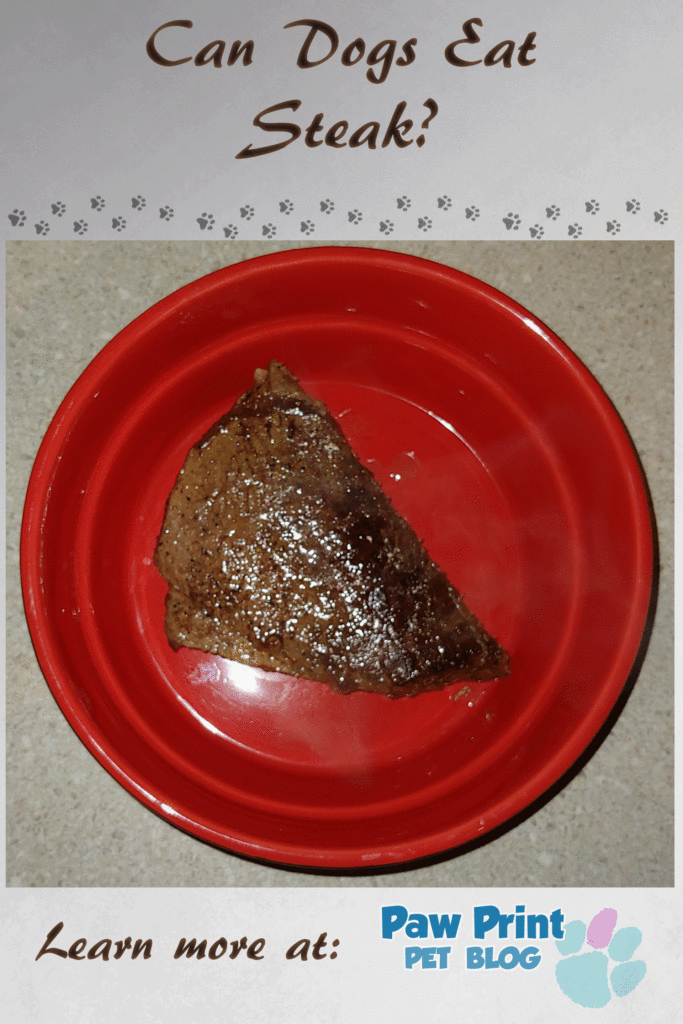
 Insert Some Witty Remarks About Rice Here…
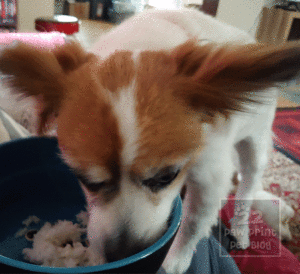 Precautions
 The Ultimate Q Food…
 Quinoa is a super food. It’s a complete protein, which means that it contains all 9 essential amino acids. It also contains iron, phosphorous, magnesium, vitamin B, vitamin E, and omega 3 fatty acids, among other nutrients. It’s high in fiber, and cancer fighting antioxidants. While being high in good stuff like protein and nutrients, quinoa is low in fat and cholesterol.
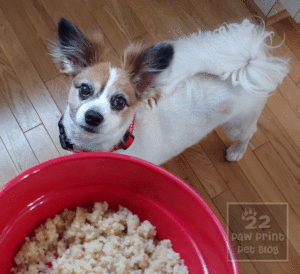
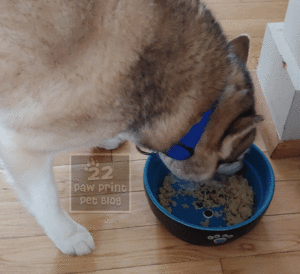 Both my dogs, even Mr. Picky Puppy Fenrir, will eat cooked quinoa plain. It has a very mild flavor that reminds me a lot of pasta. One of my favorite ways to eat quinoa is with cheddar cheese and broccoli which, as you can imagine, my dogs also love.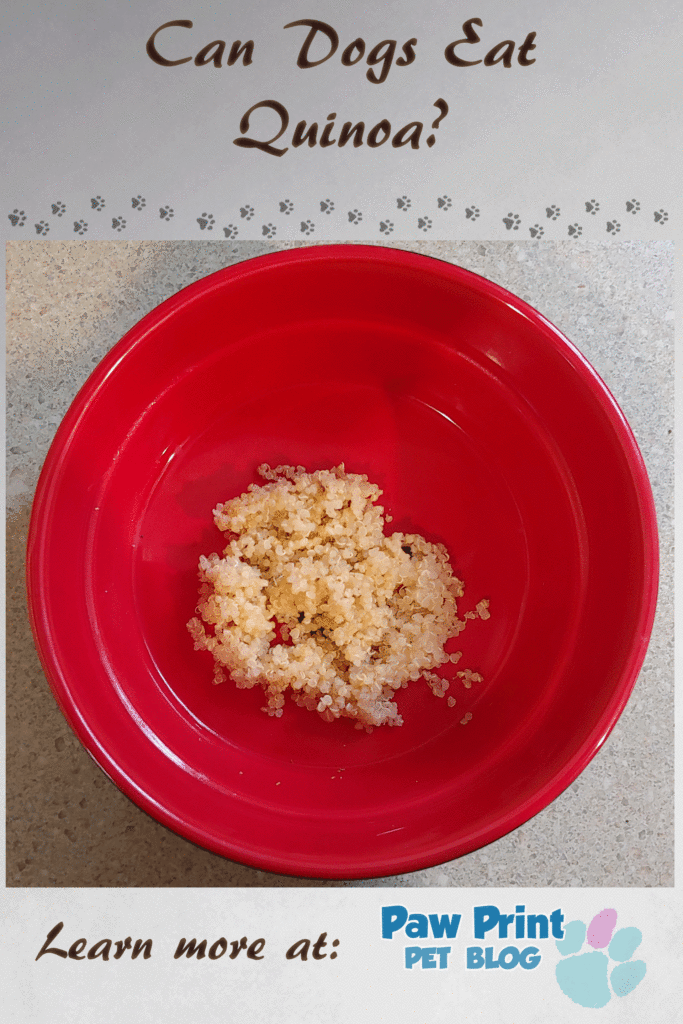
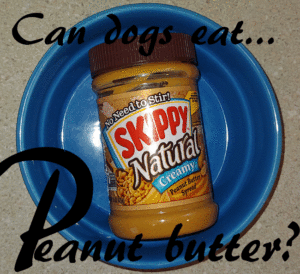 Right off the bat I’ll say – be careful, some brands of peanut butter now contain xylitol. This sugar substitute is safe for humans, but deadly for dogs. It goes without saying (but I’ll say it anyways), if you’re going to give PB to your dog, make sure it does not contain xylitol.
 Other than the fact that most dogs love it, that is. And seriously…those peanut butter faces! Too cute!