 Putting a collar on your dog is something so common place that you probably don’t even think much about doing it. Collars and leashes can save lives! They keep pets away from dangers such as traffic and other animals. And they can be central to helping lost pets find their way home again. But what a lot of dog owners don’t always realize, or realize too late, is that collars can also be dangerous.
Post Contents:
- 1 A sad story…
- 2 Unfortunately, Damsel is not the only dog who’s lost her life this way.
- 3 What can you do to help protect your furry friend from collar injuries?
- 4 It’s important, no matter what your dog is wearing, to supervise your pet.
- 5 If you are worried about leaving your dog without any form of ID, you can consider getting your pet micro-chipped.
A sad story…
Kelly M. never used to think twice about putting a collar on her 5 lb chihuahua, Damsel. All that changed in early 2008, when an unfortunate accident involving her collar cost 6 year old Damsel her life. Kelly explains…
“I had left food out to defrost on the table when I went to work that day. I kissed Damsel good bye and left her home alone. It’s the same routine that we had followed for the past 4 years. When I got home that night, I found Damsel hanging about two feet from the ground off of one of our decorative metal kitchen chairs. Her collar had gotten caught on part of the chair. She hung herself to death in our kitchen. I was devastated. We think that she was trying to jump up onto the chair, probably to try to get the food off the table, when her collar got caught. I thought I was doing the right thing by leaving her collar on. I wanted her to have ID on in case she ever got out. But instead, my mistake cost my best friend’s life.”
Unfortunately, Damsel is not the only dog who’s lost her life this way.
A quick search of the internet and you could turn up hundreds of stories of dogs, large and small, who where killed or injured because of their collars. Some of the stories are about dog’s getting their collars caught on things, like Damsel did. Some of them involve dogs playing and getting their collars caught around the mouths of other dogs. No matter the situation, the stories are not usually happy ones. Even in the best of cases, where someone is around to free the dog, the dogs involved are left frightened, stressed, and sometimes injured. That’s not even getting into the mental anguish that an incident like this can place on the dog’s owners.

What can you do to help protect your furry friend from collar injuries?
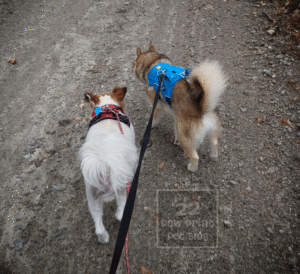 Some owners, especially small dog owners, prefer to use a harness on their dogs. Harnesses usually go around a dog’s chest and midsection, leaving their necks free. They can be great for walking. You don’t have to worry about putting any pressure on your dog’s sensitive neck.
It’s a misconception that all dogs who wear a harness will pull on the leash. Like with many other things, the key is training. Dogs can be trained to walk on a loose leash while wearing a harness. Most harnesses will have a spot where owners can clip their dog’s ID tags, much like a collar would. If a dog’s harness gets caught, since most harnesses do not go around dog’s necks, the chance of strangulation is reduced. However, dogs may still injure themselves due to caught harnesses.
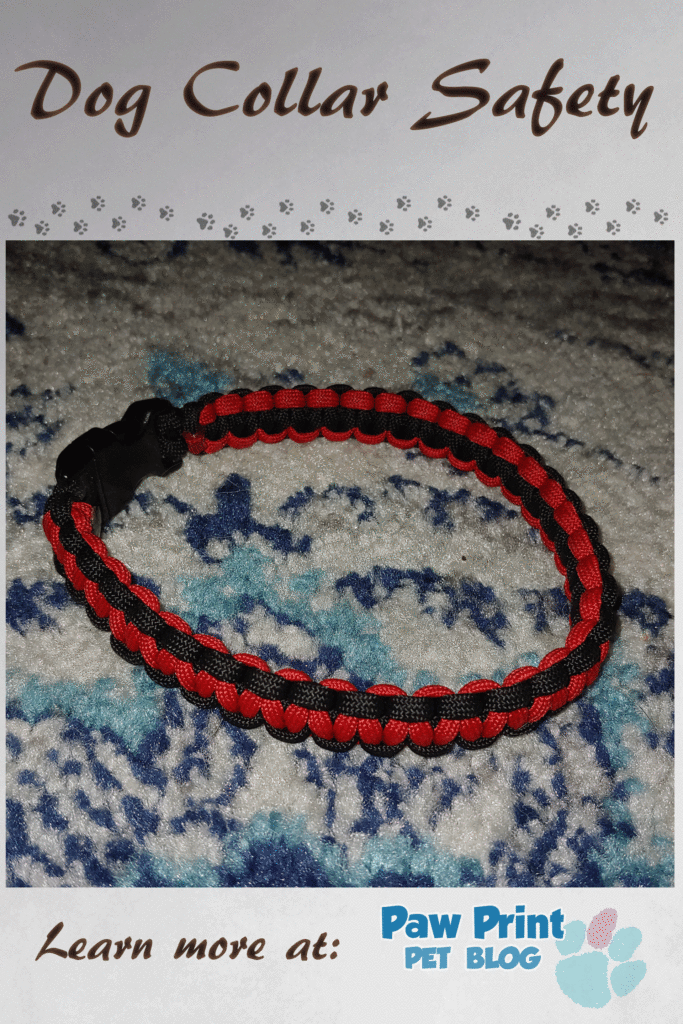
Did you know that you can also purchase breakaway collars for dogs ? Breakaway collars, more commonly seen for cats, are specially designed to come off when pressure is applied. The dog collar I linked too features two D rings on each side of the buckle. You can basically bypass the breakaway buckle with a leash clip, for those who walk their dog by their collar.
It’s important, no matter what your dog is wearing, to supervise your pet.
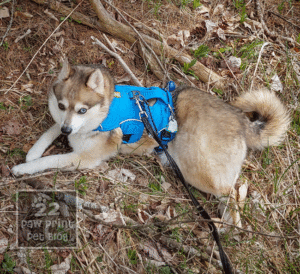 Do not leave dogs unattended while they are wearing collars, harnesses, or clothing of any sort. During times when you cannot provide supervision, it’s usually best to let your dog remain al natural. This could mean when you leave your dog home alone, when you are sleeping, or even when you are home but just too busy to keep an eye on your pooch.
Both of my dogs, Kitsune the papillon and Fenrir the Alaskan Klee Kai, wear collars as a form of ID, despite the fact that I do walk them exclusively with harnesses. But, as you can image, talking to Kelly about what happened to her sweet little chihuahua all those years ago left a lasting impression on me. I make sure to never leave my dogs home alone, or otherwise unsupervised, with collars on. At night, and when my partner and I both leave the house, the collars come off.
If you are worried about leaving your dog without any form of ID, you can consider getting your pet micro-chipped.
Micro-chipping is a permanent form of ID that doesn’t pose the type of risks that leaving your dog in a collar can. If you absolutely need to leave a collar on your dog, opt for a safety collar. Some of them have safety buckles that will unclip under pressure (like the one I linked too above), while others feature portions of elastic that will stretch under pressure. Both these types of collars will allow your dog to escape in the event that it gets caught on something.
Collar safety is something that is often times overlooked by pet owners. But choosing the correct collar, and remembering to always supervise your pet while they’re wearing a collar, can mean the difference between life and death. Luckily, safety collars and harnesses come in many shapes, sizes, and colors, so you can choose a safer option for your pet without hampering your pooch’s style.
This post originally went up on 6/13/2016. It has been edited for readability and to add relevant information. 🙂
 I kind of already answered this question the other day, when

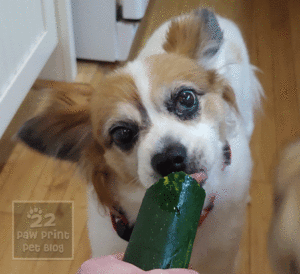 Zucchini is relatively low in calories. If your dog enjoys it and needs to shed some pounds, grated zucchini could make a good food topper. If your dog will chew on it raw, it can also be used as a healthy, low calorie snack.
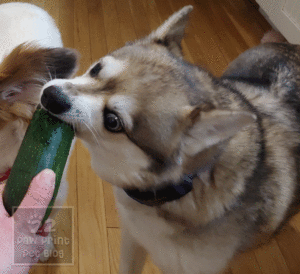 And with that – Z is for zucchini, we have reached the end of the April 2022 Blogging from A to Z challenge! It’s been real, and it’s been fun – but has it been real fun? I’m sure my dogs, Kitsune and Fenrir would say so! I normally give them bits of dog safe ‘human’ foods as snacks, but upped the snack game for sure this April so that I could get lots of pictures for my (almost) daily food posts.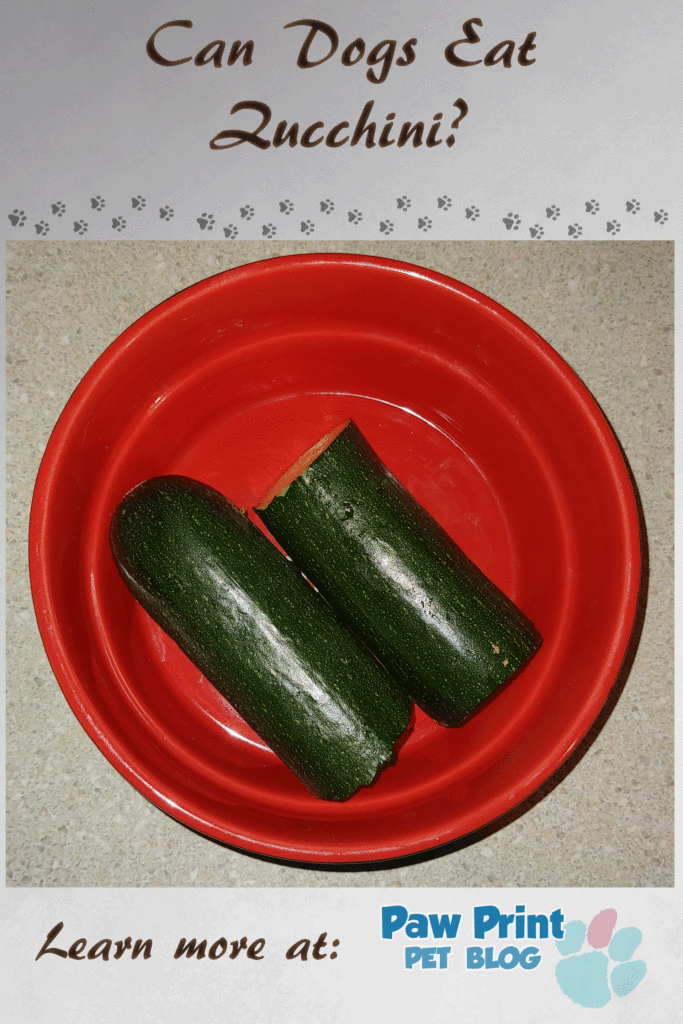
 Besides the fact that I needed a dog safe food that starts with Y, I understand why not every dog owner would want to go through the process of making kefir for their dogs. Most people are much more open to the idea of feeding yogurt verses fermenting milk in their own kitchen. It may not be the powerhouse of a probiotic that kefir is, but is yogurt still beneficial?
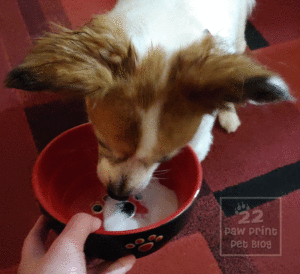 Most people feed yogurt for its probiotic properties. It’s thought to be able to help with intestinal issues such as gas and upset stomach. There are a couple of potential problems with this theory. One is that, like I mentioned in my kefir post, the beneficial bacteria found in yogurt doesn’t normally colonize the intestinal tract. They act more as helpers, providing food and a proper environment for the good bacteria already in the gut to preform optimally.
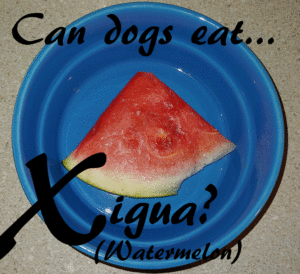 Apparently, it means “western fruit”, because watermelon is not native to China. Ok, I have to admit that I had a hard time finding a dog friendly food that started with X for the Blogging (Snacking!) from A to Z April challenge. So I’m reaching a bit today. But you have to admit, that cheating a bit for one day out of the 26 isn’t so bad!
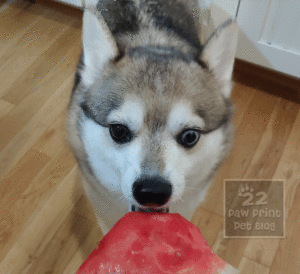 Chilled watermelon is one of my favorite summertime snacks. Of course at our house, you can’t eat without an audience. If I’m eating something healthy, and pet safe, I’ll often share a bite or two of my snack with my little buddies. I had pet rabbits long before I ever got my first dog, and most of my rabbits over the years have loved watermelon. Sometimes I seriously wonder if Kit thinks he’s a bunny. He begs for fruit and veggies just as enthusiastically as he does meats.
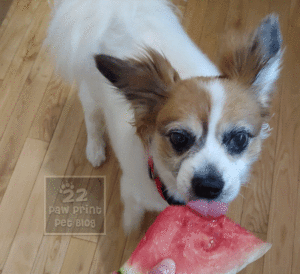 As the name suggests, watermelons are mostly water. This is one of the reasons why they make such good summer snacks. Munching on watermelon is a sweet way to re-hydrate when it’s hot outside.
 I love butternut squash. Oh, and pumpkin pie! Any type of plant based dish that I can add lots (and lots) of sugar to sounds good to me! Did you know that botanically, squashes are fruits? A lot of people think of them as vegetables, but, like other fruits, they contain seeds and develop from the flower of a plant.
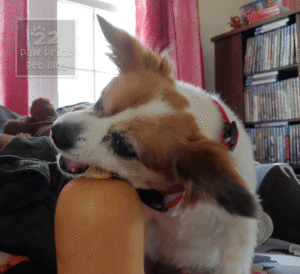
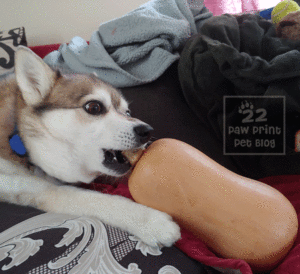 You mean besides the fact that my dogs apparently think that squashes are really fun new toys? Squashes are packed full of healthy nutrients for our pups! What, exactly, the benefits are can vary based on the type of winter squash you’re feeding. However, in general, winter squashes are rich in vitamins such as A, B and C, Beta Carotene, potassium, magnesium, calcium, copper, and manganese. Winter squash contains immune system boosting antioxidants, and lots of fiber. Being high in fiber, in particular, makes more common winter squashes,
  Remember the rinds and seeds I wrote about earlier? Those should be left out when feeding winter squash to dogs. More so the rinds than the seeds. While there is nothing toxic in winter squash skin or seeds, their hard texture makes them difficult for dogs to digest. If consumed in large quantities, there is a risk they can lead to a blockage or other GI issues.
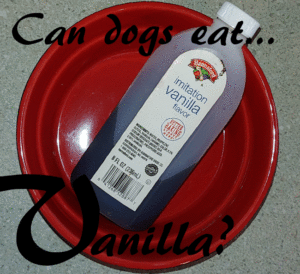 It’s well known that dogs cannot eat chocolate. What about vanilla? I’ve mentioned countless times that I like to make my dogs treats at home. While most of our culinary creations are our own recipes, I do occasionally scour the internet for recipes to try. I’ve come across quite a few treat recipes that use vanilla extract as an ingredient. When making dogs treats at home, it’s important to be sure that each and every ingredient you are using is safe. Is vanilla extract safe for dogs?
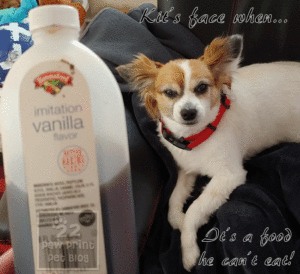 I’ve spoken with owners who make dog treats using vanilla extract and their dogs suffer no ill effects. If the amount of extract you use in a recipe is very small, you could argue that your dog isn’t getting enough alcohol to make him/her sick. But why risk it? Especially when you can buy
 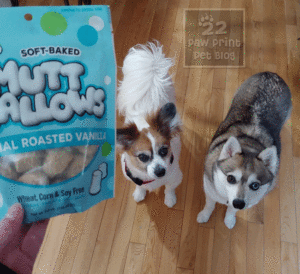 Vanilla beans and vanilla bean extracts do contain some good stuff like essential oils, vitamins, and minerals. Vanilla extract contains B vitamins, calcium, zinc, iron, potassium, magnesium, etc. However, most of these are present in very small amounts. Also, most recipes will call for using vanilla in only small amounts – which means your dog really isn’t going to get much in the way of benefits from consuming treats made with vanilla.