Recent Posts

Signs Your Dog Has IVDD


The other day I wrote a pretty lengthy post about what IVDD is.  Opens in a new tab.In September of last year my beloved, now 14-year-old, papillon KitsuneOpens in a new tab. was diagnosed with cervical IVDD.  Thankfully Kit is doing really well now.  It took me a while, but I’ve been wanting to share some of what I’ve learned about IVDD over the last 7 months, both from learning from experts as well as from our own personal experience.  I felt like it was too much to put everything into one post, so I’ll likely share information over the course of a handful of posts.  Now that I’ve gone over what IVDD is, I figure it might be helpful to start at the beginning, so to speak, and go over the signs and symptoms of IVDD in dogs.

My Own Experience – Signs Kitsune Had IVDD
IVDDOn the night of Friday, September 16th, I noticed that Kitsune wasn’t acting completely normal.  These types of things always seem to happen late at night, on a weekend or a holiday.  Go figure.  Kit just seemed a bit slower than usual.  He was walking with his head held down.  At first, I thought he just had an upset stomach.  Rarely in the past, when Kit has had a stomach ache, he has walked with his head held down for a short time before throwing up.

He still took a treat when I offered him one and settled down in his bed like normal when it was time to sleep.  But early the next morning, between 4 and 5 am, Kit woke me up.  I took him outside thinking he just needed to use the bathroom but pretty quickly realized that something was wrong.  Kit was clearly in a lot of pain.  He was shaking and walking very slowly with his head held down and his back arched.  By 9 am that morning we had him at the vet’s.  So began our “adventures” with IVDD.

Other symptoms I noticed after Kit was already diagnosed included a reluctance to eat or drink out of bowls placed on the floor, and it clearly caused him pain when he’d try to scratch himself or shake off.  He’d get an itchy ear and go to scratch it, then stop very abruptly as if he was in pain.  He did something similar when he wanted to shake off.  He’d start to shake a little bit, then realize that it hurt and stop abruptly.  I was determined to serve as Kit’s official ear scratcher while he recovered!

Kit’s Diagnosis
IVDD symptoms in dogsKit was diagnosed with cervical (neck) IVDD.  This is important to note because IVDD can occur in any of the intervertebral discs along a dog’s spine, in their necks or their backs.  Cervical IVDD is, generally, more painful than IVDD that occurs in the back because of how much movement occurs around the neck.  Basically, every movement a dog makes will cause their head and neck to move too, which is quite painful when you have a bulging or ruptured disc in your neck.

If there’s a positive to be found, it was that Kitsune, thankfully, only had stage 1 IVDD.  He was in a lot of pain, but was fully mobile and never lost any motor function.  There are five stages of IVDD ranging from stage 1, which causes pain only, to stage 5 which is full paralysis with no feeling in the legs/paws.

As you can imagine, IVDD symptoms will vary a bit based on where the disc rupture occurred (on the back or neck), what type of IVDD your dog is suffering, and what stage.  You can read more about the different types of IVDD and the 5 stages by clicking here.Opens in a new tab.

Symptoms of IVDD

Although the signs of IVDD can vary slightly based on the factors mentioned above, the general symptoms are similar and include:

  • Pain in the neck or back.  Signs of pain may vary and include the following:
    • Reluctance to walk
    • Walking/moving at a slower pace than usual
    • Shaking or trembling
    • Holding the head/neck low
    • Inability or reluctance to turn head
    • Inability or reluctance to fully raise or lower head
    • Excessive panting
    • Hunched back
    • Stiff appearance or movement (tense muscles)
    • Tense belly
    • Unwillingness to jump or climb stairs
    • Anxious behavior such as hiding more than normal, or acting restless
    • Lethargy
    • Avoiding a full body shake
    • Avoiding rolling around on their back
    • Avoiding scratching and licking themselves
    • Decreased appetite
    • Difficulty getting into position to go to the bathroom
    • Muscle spasms
    • Yelping, especially when moving, or when being picked up/moved
  • Neurological Symptoms.  Dogs with stage 2 or higher IVDD will begin showing neurological symptoms.  They can include any of the following:
    • Knuckling paws (walking on or dragging the knuckles, not correcting the paw position quickly when the knuckles are placed against the ground)
    • Limb weakness (inability to support own weight)
    • Uncoordinated movements
    • Limping or lameness
    • Crossing back legs while walking, walking like a “drunk sailor”
    • Urinary and/or fecal incontinence
    • Paralysis (usually in the back legs when IVDD has occurred in the back.  Severe cervical IVDD can cause paralysis of all 4 limbs)
    • Difficulty breathing (in severe cervical IVDD cases)
    • Inability to feel deep pain sensations in the limbs/paws/tail
    • Limp tail
    • Dilated anus
    • Abnormal reflexes

What to Do if Your Dog Displays Signs of IVDD
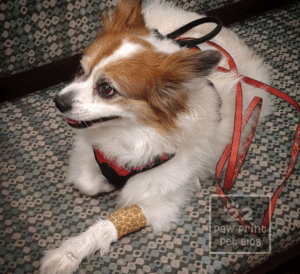
IVDD symptoms in dogsIf your dog displays any of these signs of IVDD, it’s important to get them to a vet as soon as possible.  Depending on your dog’s situation, IVDD can get worse over time without treatment.  IVDD is also very painful, as you can imagine.  Leaving your dog in the extreme pain that can be caused by IVDD is inhumane.  If your dog turns out to be a surgical candidate, surgical treatment for IVDD has a higher success rate the quicker you can get it done after symptoms appear.  With IVDD time is very much of the essence.

While you’re waiting to get your dog in to see a vet, keep him/her as calm as possible.  To much movement can make your dog’s situation worse, and usually causes pain.  If you have a crate, it’s recommended to crate your dog as soon as possible after the onset of IVDD symptoms.  If you don’t have a crate, any small confined area that will prevent too much movement and jumping should work.  Keep your dog as still as possible, this includes during car rides to/from the vet.  You want to keep the spine as stable as possible to avoid further injury.

Remain Hopeful!
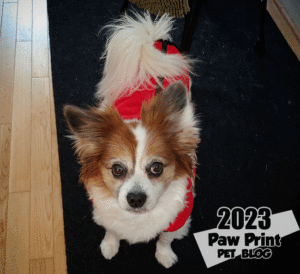
IVDD recoveryIf there’s one message I really want to get across with all my IVDD posts it’s that IVDD does not have to be a death sentence.  7 months out from Kitsune’s IVDD diagnoses you would never know now that anything was ever wrong with him.  He’s back to being his happy, sassy self.  It makes me so happy now to see him rolling around on the floor to scratch his back, or shaking off after a bathroom break in the rain.  Things I used to never put much thought into, but now are clear indications that Kit’s doing so much better after his bout of IVDD.

I realize that we were lucky that Kit “only” had stage 1 IVDD.  In the 7 months since Kit was diagnosed I’ve been blessed to meet other IVDD warriors.  Many of them had IVDD at higher stages than Kit did and are also doing very well now.  I’ve heard so many stories of dogs recovering, even from being paralyzed, and going on to live happy lives.  In the past many vets didn’t give IVDD dogs much of a fighting chance and would recommend euthanasia.  Luckily we know now that with proper treatment, many of these dogs can recover from IVDD.  So if you are here because you and your dog are dealing with this horrible disease have hope!  The road to recovery isn’t easy, but it is so, so worth it to see your dog pain free and happy again.
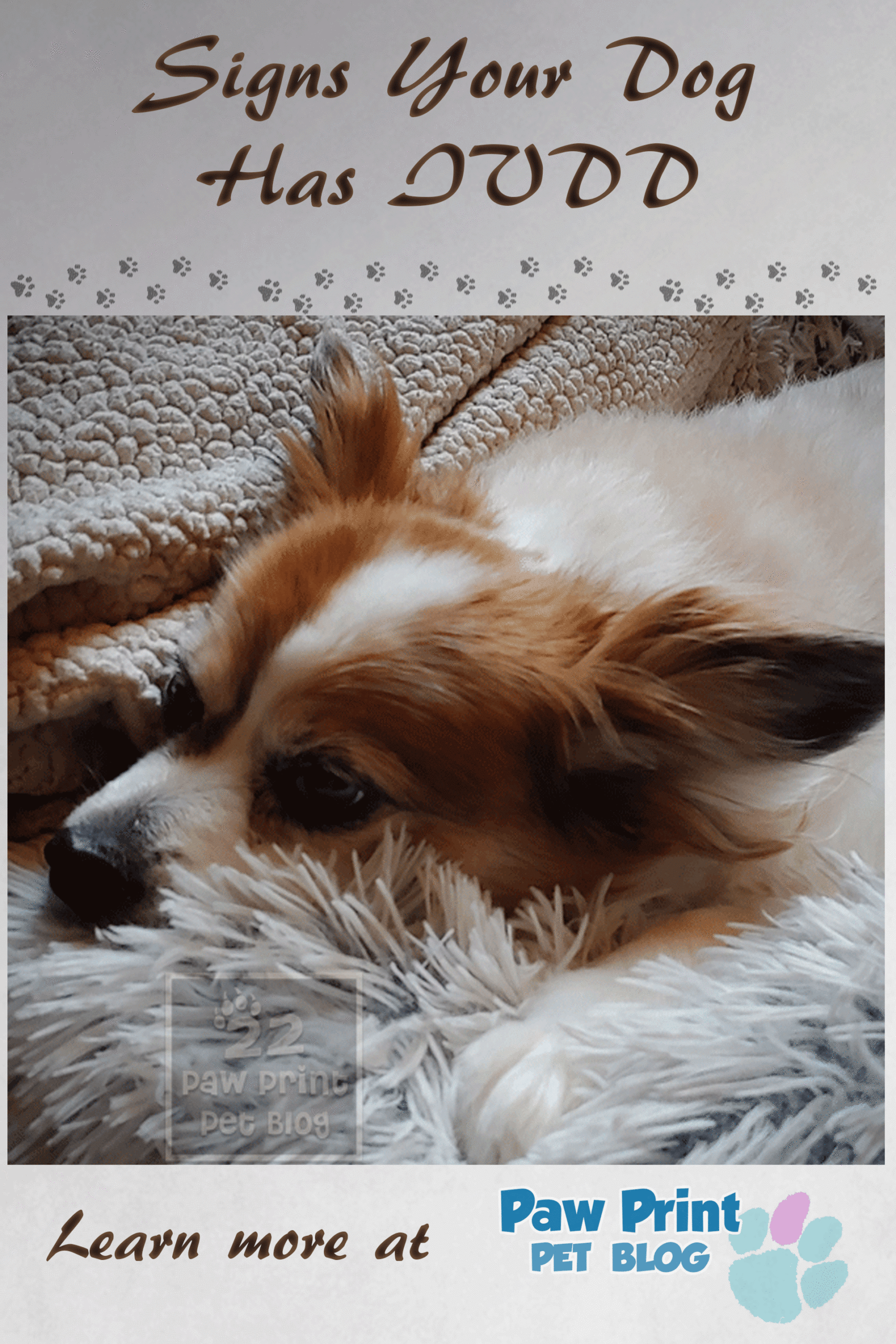
symptoms IVDD in dogs

Tips for Defeating the Puppy Blues


14 years ago today, my partner and I first met arguably the cutest member of our little pack for the first time – Kitsune!  He was just 9 weeks old when he joined our pack in 2009 and was, essentially, both my partner’s and my first dog.  We both had family dogs growing up, but Kitsune was the first puppy that we were tasked with caring for on our own.  Adding a new puppy to your family is exciting!  I had loved papillonsOpens in a new tab. since I was little and was so happy to finally be getting one to share my life with.  But puppies can be stressful too.  The “puppy blues” are a real thing!  If you recently added a new furry friend to your life, and have unexpectedly found yourself feeling overwhelmed, stressed, upset, or maybe even regretful, know that you are not alone.

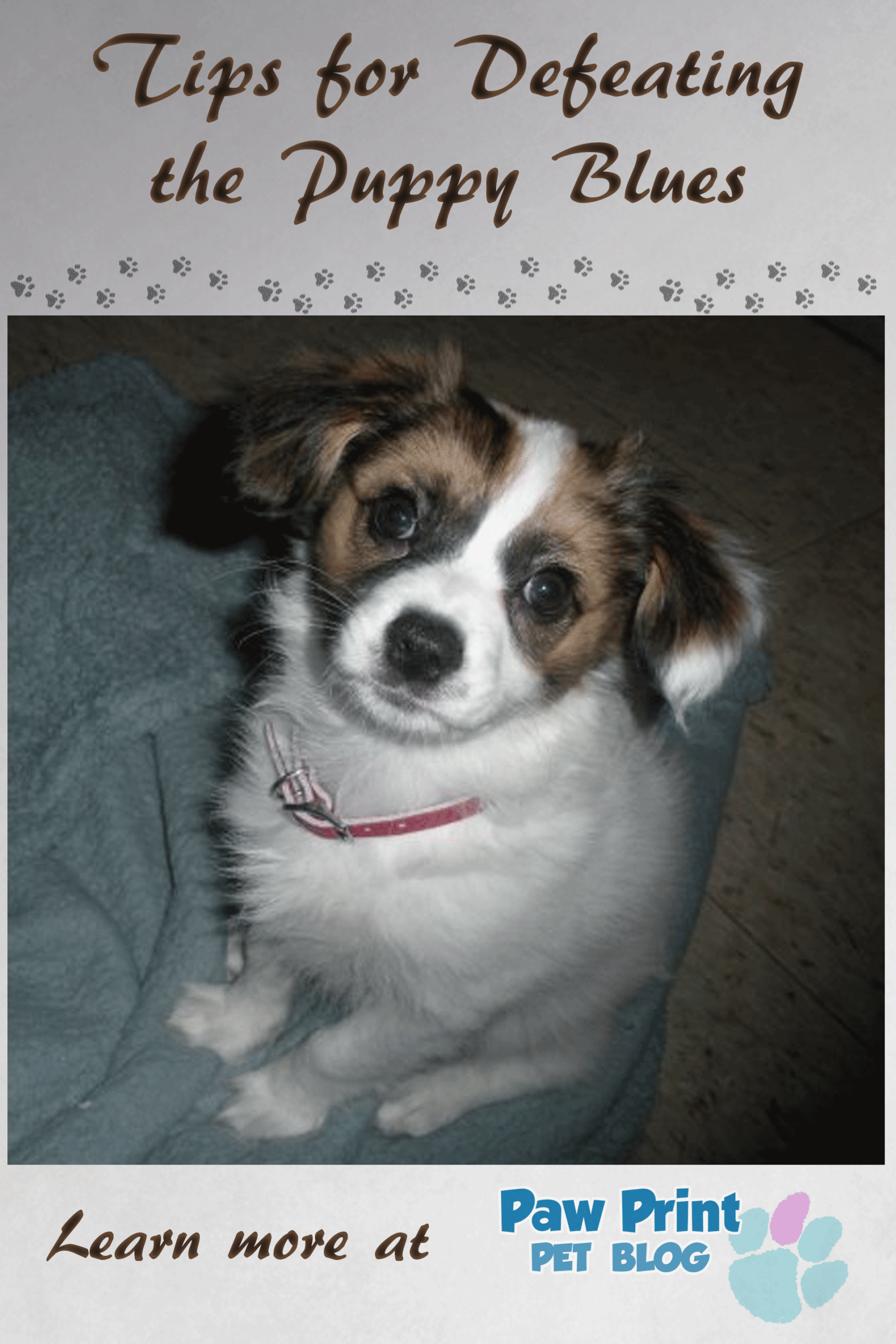
puppy blues
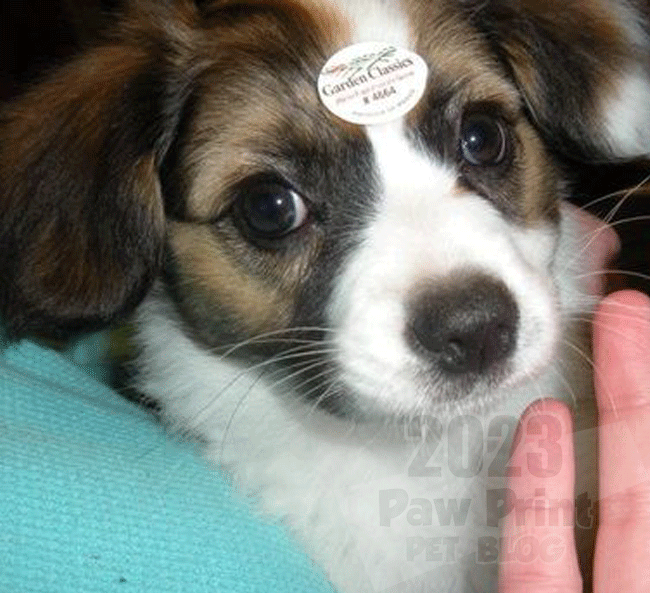
Puppy Kitsune, so new he still has the tags on him!

What are the Puppy Blues?

When I was a kid and my family got a puppy, a black and white cocker spaniel named Naomi, I wasn’t really responsible for taking care of her.  I don’t remember adding her to our family as being stressful for me.  I got an adorable puppy to play with, but, for the most part, didn’t have to actually worry too much about taking care of her.  Things were quite different when I got a dog of my own, though.  It was just my partner and I living in an apartment together, and he worked long hours outside of the house most days.

puppy bluesI was SO excited to bring Kitsune home.  I wouldn’t have to spend my days alone anymore.  I had been wanting a puppy for years but wasn’t in a position to actually get one until a few months before we got Kit.  You’d think I would have been really happy when I finally got my papillon puppy.  In many ways I was.  But it turned out that raising a puppy was a lot harder than I thought it would be.  I very distinctly remember breaking down crying, sitting on the kitchen floor, and telling my partner that getting Kitsune had been a mistake.
That came at the end of a week when I had gotten precious little sleep.  Raising a puppy was especially hard for me in an apartment.  I felt like I constantly had to worry about little Kitsune annoying the neighbors.  Puppy Kit wasn’t crate trained, and hated being left alone even for a few minutes at a time.  He made this hatred known by screeching surprisingly loudly for such a small little baby.  I didn’t know all the puppy-raising tricks that I do now, and Kitsune was an especially difficult puppy.

The puppy blues are, basically, negative feelings associated with a new puppy.  These feelings can include sadness, stress, anxiety,  helplessness, guilt, feeling trapped, regret, etc.  The puppy blues are sometimes compared to postpartum depression.  Raising a puppy might not be quite as hard as a new human baby (I wouldn’t know), but it’s still really hard!  Adding a new puppy to your home changes your entire life, and it’s a lot of work!  If you’ve recently added a new puppy to your family and are feeling any of these negative emotions, know that you are not alone.  Developing a case of the puppy blues is actually quite normal.  And, thankfully, it’s also usually quite temporary.     

Causes of the Puppy Blues

The puppy blues can be caused by a number of factors.

  • A common one seems to be the disconnect between what you thought owning a puppy would be like, and what it’s actually like.  New owners likely have preconceived notions about what living with their new dog will be like.  It can feel very frustrating when your new little bundle of fluff isn’t living up to any of your expectations.  For a lot of first time puppy owners especially, caring for a puppy turns out to be a lot harder than they expected it to be.
  • Of course the sleepless nights don’t help anyone any!  I know I’m personally never at my best when I haven’t gotten enough sleep.
  • Suddenly being responsible for another living thing can be stressful.  When I got Kitsune, all of a sudden I went from basically just having to take care of myself, to being responsible for a precious little life.  That can feel quite overwhelming at times, especially when your new charge seems pretty determined to find new and interesting ways to hurt themselves.
  • A new puppy can cause big changes to your daily schedule.  Suddenly your routine doesn’t revolve around just you anymore.  Now you have to constantly think about taking care of your dog.  When does he need to eat, be walked, go outside?  Puppies are especially overwhelming because they are especially needy.  They usually need to eat more often, use the bathroom more oftenOpens in a new tab., and just generally demand more of your attention.
  • You may find it harder to relax when you constantly have to manage what your puppy is doing.
  • As much as you may have wanted your new dog, a lot of new owners grieve the freedom they lost now that they have a pet.  Your time isn’t just yours anymore.  It’s a lot harder to go out and do something fun at the drop of a hat, or to travel.  Sometimes even just stepping outside to take out the trash or check the mail feels like a task and a half when you have a puppy to deal with.
  • If you are already prone to any mental health issues such as anxiety or depression, getting a puppy can be especially stressful.  

Tips for Dealing with the Puppy Blues

  1. Remind yourself that the puppy stage is temporary.  Dogs grow up entirely too fast.  Look at me, somehow my “puppy” is already a senior!  Depending on your dog, the puppy stage is officially said to last a year or two.  But that doesn’t mean you’ll be dealing with issues like sleep deprivation, bathroom accidents, and puppy biting for that long.  Your dog will grow up, it’s inevitable.
  2. Focus on the positives.  It’s easy to feel down when you’re focusing on the fact that your puppy still isn’t fully potty trained, or that he just ruined your favorite pair of shoes.  But what about the fact that he slept through the night last night, and didn’t bark when you stepped out of the house for a few minutes!?  Focusing, as much as you can, on any progress being made can help you see your puppy in a better light.
  3. Train your puppy!  The sooner you can eliminate unwanted behaviors, the sooner you can stop feeling stressed about them.  Don’t expect miracles, training takes time.  But you have to work at it to make progress.
  4. Don’t be afraid to ask for help.  Talk to friends, family members, trainers, a therapist, your vet.  Don’t be afraid to ask for help when you need it.
  5. Prepare as much as possible.  If you can learn to understand why your puppy is acting the way she is, it can sometimes make it a bit easier to deal with.  Puppies don’t purposely to make our lives miserable.  There are reasons behind their actions.  Most dogs go through a lot before going to their new homes.  They’re taken away from their mothers and littermates.  They don’t always understand the new expectations being put upon them.  Teething is painful.  Looking at life from our puppy’s point of view can give us new perspective as to why they are doing some of the behaviors that drive us nuts.
  6. Adjust your expectations.  You’re setting yourself, and your puppy, up for failure if you constantly expect things from him that he can’t live up too.  Learn about what you can reasonably expect from your puppy based on the life stage he/she is currently in and set your expectations towards reaching reasonable goals.
  7. It’s ok to admit to negative feelings.  Admitting that there are things you’ll miss out on because of your puppy can go a long way towards acceptance.  It’s normal to feel guilty about having negative feelings about your new furry family member, but you are far from alone in having them.  Learning to admit and accept the negative feelings and changes in your life can make dealing with them less stressful.
  8. Take time for yourself.  It’s ok, even beneficial, to take breaks away from your puppy for a while.  Don’t feel guilty for doing so.  Even just a short break, if you can’t manage a longer one, will be beneficial.  Probably the best, most helpful thing I did for myself when I was getting stressed over dealing with Kitsune was to ask my partner to watch him for awhile so I could take a break.

How Long Do the Puppy Blues Last?

puppy blues
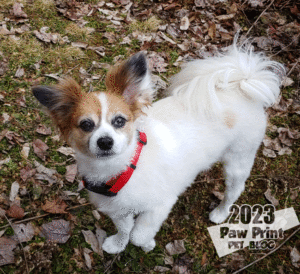
Kitsune, all grown up!

This will depend.  Generally, the puppy blues will last anywhere from a couple of days to a couple of months.  As you get more used to your new puppy, and them to you, you will start to build a new life together.  Things that once caused stress will fade away, or become more routine.  Your puppy will outgrow many of the behaviors that can trigger the puppy blues, especially if you’re committed to training and working with them.

Take if from someone who had a serious case of the puppy blues, it gets much better!  14 years ago I was seriously questioning whether I had made the right decision when I got my puppy.  Now, all these years later, I couldn’t imagine my life without him.  That’s not to say that I don’t fully acknowledge the fact that puppies are hard!  Be kind to your puppy, and to yourself, as you both learn and adapt to living together.  Embrace the puppy stage, hard as it is, as much as you can because someday your puppy will be a white faced senior, and the time passes a lot faster than you could ever imagine it will.

Comment below!  If you’re here because you’re experiencing the puppy blues, share your experience!  What is your new puppy like?  If you have an older dog, did you experience the puppy blues when you first got him/her?  Do you have any tips you would share with new dog owners?

puppy blues

Pet Easter Safety


Easter can be a lot of fun, but can also present some dangers to our furry friends. Here are a few holiday safety tips, to ensure that every member of your family, even the ones with paws, enjoys this spring holiday!

pet Easter safety
Zeus (RIP) Forever in our hearts!
  • Remember that any type of pet you bring into your house is a living, lifelong commitment. Rabbits, chicks, etc. are sometimes given to children as Easter gifts on a whim, only to later find themselves dumped in shelters or worse, outside to fend for themselves. A cute fluffy bunny may look adorable in your child’s basket on Easter morning, but healthy pet rabbits can live a typical life span of around 10 – 12 years and they are not the low-maintenance, cuddly pets that many people assume them to be. If you have your heart set on bringing a new animal into your home, please make sure to do your research first. Consider adopting a homeless animal from a shelter rather than buying one from questionable sources. If in doubt, stick to giving chocolate or stuffed animals as holiday gifts. They can be just as cute as the real thing, without the responsibility.
  • Remember that chocolate and candy is not safe/healthy for pets. Keep all sweets out of their reach. Consider getting your pet a special treat of his/her own to celebrate the holiday.
  • Many types of flowers and plants included in holiday bouquets are poisonous to animals. You can view the ASPCA’s list of toxic and nontoxic plants for a comprehensive list of plants that are toxic to cats, dogs, and horses. Keep in mind that many of these plants are also toxic to other types of pets such as reptiles, rabbits, etc. Just to be safe, keep all floral arrangements out of your pets’ reach.
  • Watch out for things like Easter decorations and plastic Easter basket grass. These types of things may look like fun new toys to a pet, but are not digestible and can cause issues such as choking or intestinal blockages if consumed by your pets.
  • With all the excitement of greeting guests, making new friends, and possibly trying out new foods, your pet is likely to work up quite a thirst! Always make sure to provide your pet with clean, fresh water.
  • Overfeeding your pet can cause upset stomachs, vomiting, and diarrhea. Feeding large amounts of fatty foods can be dangerous to pets. Pancreatitis is a painful and potentially dangerous condition that can be caused by a diet too high in fats.  Advise any guests not to feed your pet, and always avoid foods high in fat, sweets, and cooked bones.
  • With all the food scraps being thrown out, your trash can is likely to be very tempting to your pet. Make sure your can is secured and pet proof.
  • To most people, keeping food out of their pets’ reach is common sense. But it’s important to keep an eye on your drinks as well, especially if your drinking something potentially dangerous to pets such as alcohol.
  • The holidays can be stressful for humans and animals alike. Minimizing your pets stress level will go a long way towards making sure your pet is comfortable throughout the holiday season. Maintain your pets regular schedule as closely as possible.
  • If you are expecting guests for the holidays, make sure they treat your pet with respect. Be extra careful around children who may not know how to handle your pet properly. Inform all guests of your house rules regarding pets, including making sure they are aware of what holiday foods shouldn’t be given as treats.
  • Give your pet a ‘safe zone’; a place where they can go to escape the hustle and bustle of the holiday excitement if they need some time to relax. If you can, set aside a room in your house that is off limits to guests, so that your pet has a nice peaceful area it can retreat too if the need arises
  • If your pet is a cat or dog, or other uncaged pet, make sure they are wearing their collar and ID tags, and/or that they are micro-chipped. With guests going in and out of the house frequently, your pet may decide to take advantage of an open door. Make sure to tell your quests to be careful around the doors, and keep a careful eye on your pet so he/she doesn’t attempt to make an escape.

I hope everyone, humans and animals alike, have a safe and happy Easter!

Easter pet safety

What is IVDD?


Last September my now 14-year-old papillon, KitsuneOpens in a new tab., was diagnosed with cervical IVDD.  I posted a whole series of articles going over his 8-week recovery.  I hope that reading about Kitsune’s recovery gives hope to other dog guardians who are dealing with a new IVDD diagnosis.  Because as I sadly know firsthand, it’s a pretty stressful health condition to help your dog through.  Despite posting quite a bit about IVDD and our experiences with it, I never actually went into detail about what, exactly, IVDD is.  Until now!

IVDD

Intervertebral Disc Disease

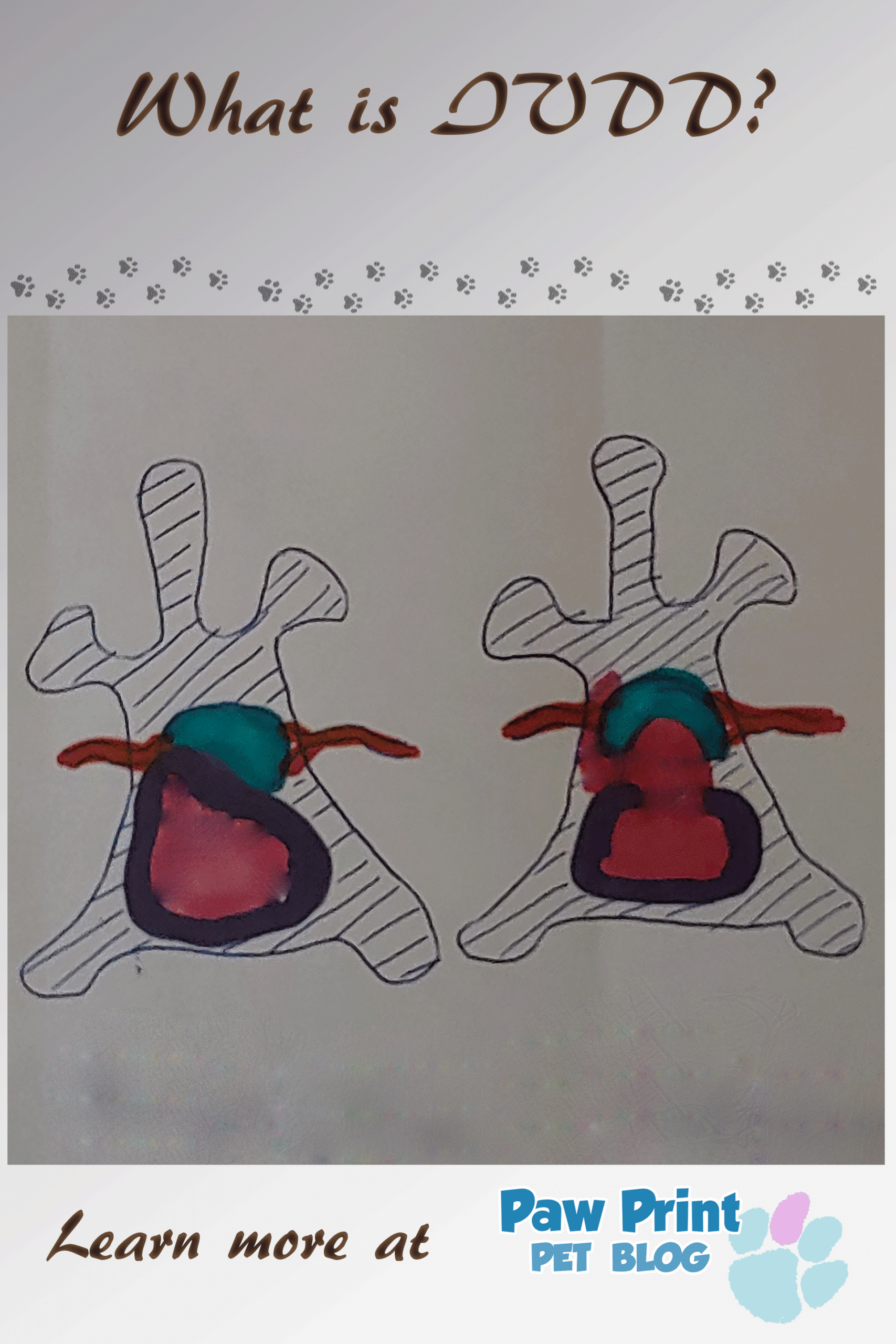
IVDD is short for intervertebral disc disease.  It is, basically, equivalent to what would be called a slipped, bulging, ruptured, or herniated disc in humans.  IVDD is the most common spinal disease seen in dogs.  Thousands of dogs are diagnosed with IVDD yearly.  Sadly, once a dog is diagnosed with IVDD the chances that they will experience another occurrence or flare up sometime during their life is high.

So What, Exactly, is IVDD?

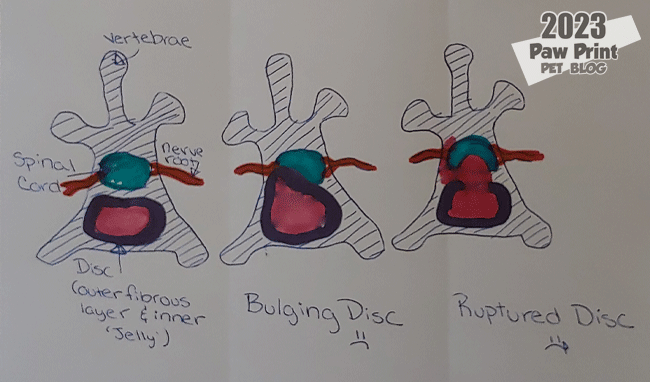
Dogs have cushioning (intervertebral) discs that sit in between the vertebrae, just below the spinal cord.  These discs are each made of a fibrous outer layer, and an inner layer that has a jelly like consistency.  When healthy, these discs act as shock absorbers.  They prevent the vertebrae from rubbing together and help to protect the spinal cord.  Sounds like a pretty important job right?

It is!  Dogs’ spinal cords, like humans, are made up of delicate nervous tissue that transmits signals back and forth between the brain and the rest of the body.  The spinal cord is responsible for everything from conscious movement to unconscious bodily functions such as breathing.

When problems occur in dogs’ intervertebral discs it can be, as you can imagine, a big problem.  This is mostly due to their proximity to the spinal cord.  There are three types of IVDD, all of which cause problems by impacting a dog’s spinal cord and/or the sensitive nerve roots that branch out from the spinal cord.  The three types are called Hansen type I, Hansen type II, and Hansen type III.

IVDD

Hansen Type I IVDD (Ruptured Discs)

Hansen type I IVDD can be thought of as a ruptured disc.  Your vet may also refer to it as a disc extrusion or herniation.  This type of IVDD is more common in long backed and small breed dogs, and can sometimes occur even in younger dogs.  In this type of IVDD, the “jelly” inside a dog’s disc becomes harder than normal.  In this hardened state, it doesn’t move and compress normally.  Because of this, normal movements, such as jumping on or off furniture, for example, can put enough stress on the hardened intervertebral disc that the jelly like center of the disc ruptures through the fibrous outer layer.  Once the disc ruptures, the inner jelly can press against the spinal cord and/or surrounding nerve roots.

Hansen Type II IVDD (Bulging Discs)

Hansen type II IVDD can be thought of more as a bulging disc.  In this type of IVDD, the disc does not rupture but instead bulges up against the spinal cord.  Dogs with this type of IVDD may show a progression of symptoms more slowly over time rather than suddenly.

Hansen Type III IVDD (Traumatic IVDD)

Type III IVDD is caused by a sudden tear in the outer fibrous disc layer that can be caused by a traumatic event or very heavy exercise.  In this type of IVDD, disc material essentially shoots out of the disc space into the spinal cord at a high velocity.  Unlike the other types of IVDD, type III does not cause ongoing spinal cord compression.  However, it can cause bruising of the spinal cord that can cause pain and other symptoms similar to the other two types of IVDD.

Diagnosing IVDD

Depending on what type of testing your vet uses to diagnose your dog with IVDD, they may not be able to tell you what type your dog has.  Actually being able to tell whether your dog has a bulging disc, a ruptured disc, or experienced a traumatic injury with no ongoing spinal compression usually requires either a CT scan or an MRI.  Because these types of imaging can be quite expensive, many vets will make a more general IVDD diagnoses (without knowing the exact type) without doing extensive imaging.

IVDD is often diagnosed based on symptoms, physical exams, less costly diagnostic testing such as Xray’s, and basic neurological exams.  More expensive testing options, usually MRIs, are often reserved for dogs who will undergo spinal surgery to treat their IVDD.

Your vet may tell you that your dog has cervical IVDD, like my dog Kitsune did.  This means that the disc causing issues for your dog is located in his/her neck rather than their back.  Dogs with cervical IVDD often experience more intense symptoms of pain, due to the fact that the neck is a highly mobile area.  Whether or not your vet tells you what type (I, II, or III) of IVDD your dog has, they should be able to tell you what stage he/she is at based on symptoms and a neurological exam.

The stages of IVDD are as follows:

  • Stage 1: Dogs with stage 1 IVDD will generally experience pain but no loss of mobility.  Dogs with stage 1 IVDD will be able to walk and stand relatively normally but may show signs of pain.  These signs can include stiffer than normal movement, a reluctance to move their head (especially with cervical IVDD), holding their heads low, reluctance to move, hunched back, reluctance to eat or drink (especially out of a bowl placed low), shaking, etc.
  • Stage 2: Dogs with stage 2 IVDD will show slight neurological deficits and usually more severe pain.  Dogs with stage 2 IVDD will be able to walk but may appear weak, especially in the hind limps, or wobbly.  Paw knuckling (dragging or walking on the knuckles of their paws) is common in dogs with stage 2 IVDD.
  • Stage 3: Dogs with stage 3 IVDD with have more severe neurological deficits.  Dogs at this stage will still be able to move their legs, but will not be able to walk independently without falling over.  Paw knuckling while standing or walking assisted is very common.
  • Stage 4: Dogs with stage 4 IVDD will be experience complete paralysis, but will maintain deep pain sensation.  This means that while they will not be able to walk or move their legs, they will respond to their toes being pinched.  Dogs at this stage may also lose control of their bladder and bowels.
  • Stage 5:  Dogs with stage 5 IVDD will also be paralyzed, and will no longer feel deep pain sensation.

There is Hope!

papillons IVDD

No matter the type, no matter the stage, IVDD is a stressful diagnoses to deal with.  It can be easy to feel discourage when your dog is in extreme pain, potentially paralyzed,  and your vet tells you that the cause involves his/her spinal cord.  It’s important to remember that there is hope!  Once upon a time it was more likely for dogs diagnosed with IVDD to be euthanized.  But, these days, countless dogs are not only surviving IVDD, but thriving after their diagnoses.  My Kitsune is one of them!

IVDD recovery is long, and it isn’t always easy.  But in many cases, it is very much worth it!  Speaking for myself, caring for Kitsune while he healed from his cervical IVDD was really stressful.  I hate seeing my dogs in pain!  He, thankfully, didn’t require surgery.  But the price for conservative treatment, for multiple vet visits, diagnostic testing, and medications, can add up too.  Making sure he rested strictly for 8 weeks wasn’t easy, especially once he started feeling better and resenting being cooped up.  But everything – the money, the time, the stress, was worth it in the end to see my Kitsune feeling better and happy after his recovery!

I know there’s so much I didn’t go over in this post.  All the symptoms of IVDD, treatment options, etc.  I’m going to save those for another day.  You can check out this link to read all our IVDD related postsOpens in a new tab..  It will update in the future as I add more IVDD related content.  And I’ll leave this post off with this.  If you’re reading this because you’re facing an IVDD diagnoses with your beloved dog please remember that there is hope!  There are options.  IVDD does not have to be a death sentence!

IVDD

What is Snow Nose? Can Alaskan Klee Kai Get Snow Nose?


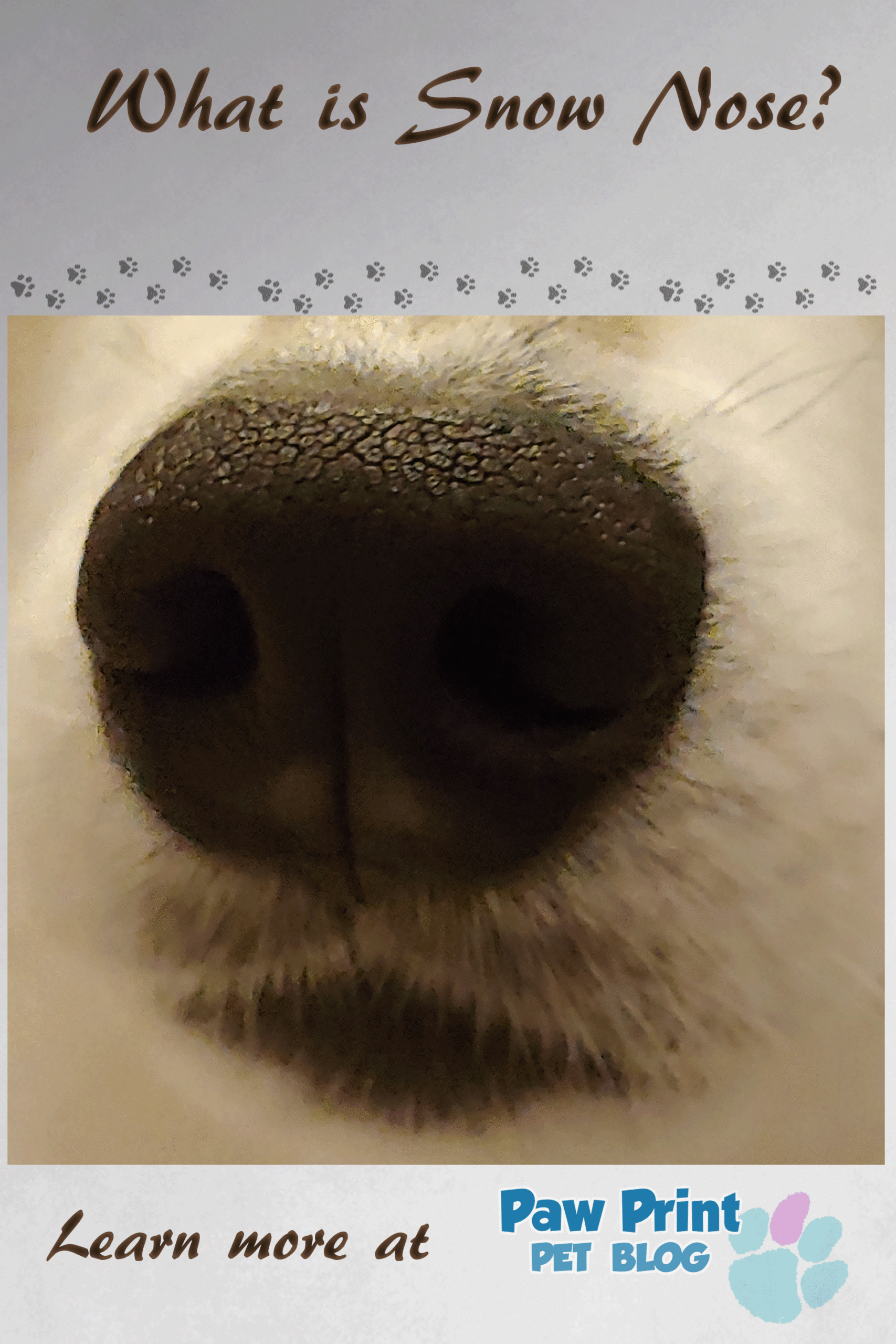
What is “snow nose” in dogs?  And here’s a hint, the term doesn’t refer to when dogs adorably get bits of snow stuck to their noses while playing outside in the winter.  Snow nose, sometimes called winter nose, is when a dog’s normally dark-colored nose turns lighter usually, as the name implies, in the winter.  What, exactly, is snow nose?  What causes it?  What dog breeds are impacted?  Read on to learn more!

Alaskan Klee Kai snow nose

Dog Breeds Prone to Snow Nose

Snow nose is a common phenomenon in northern breeds of dogs such as Siberian huskies, malamutes, and, yes, Alaskan Klee KaiOpens in a new tab.!  However, it can occur in any dog with a dark colored nose, no matter their breed.

What is Snow Nose?

If you notice your healthy, dark nosed dog’s snoot is suddenly starting to look like it’s losing color, it’s most likely snow nose!  Dog’s with black noses who develop this condition noses will go from being black to pink or tan/brown.  Dogs who naturally have lighter, brown, colored noses may also experience color change, usually to a lighter brown or pink.  How much of the nose changes color may vary.  Some dogs only develop small spots of lighter colors on their noses.  Others noses may completely, or nearly completely, change color.

Snow nose is hypopigmentation that impacts only the nose.  It’s, basically, a loss of melanin, or pigment in the nose.

Does Snow Nose Only Occur in the Winter?

Although the names may suggest that snow nose is a winter condition, and for many dogs it is, snow nose can sometimes occur during other times of the year, and in climates that do not experience cold winters.  Many dogs that develop snow nose will do so during the winter, then regain the normal pigment in their noses again in the spring/summer.

What Causes Snow Nose?

Because snow nose is a completely harmless condition, scientists have not spent a lot of time studying it.  The exact cause of snow nose is still unknown!  There is a prevailing theory, though.

The most plausible theory is that snow nose is caused by a decrease in the amount of sun that dogs are exposed to.  This would explain why most dogs develop snow nose in the winter, even when temperatures are mild.  The color change is theorized to not be caused so much by cold temperatures, but by decreasing amounts of day light.  It’s thought that snow nose may be caused by an enzyme caused tyrosinase.  Tyrosinase is important for the production of melanin.  It is known to work more efficiently when it’s exposed to sunlight.  Tyrosinase is the same enzyme that can cause hyperpigmentation, such as age spots, in humans.

Snow Nose is a Cosmetic Issue Only

Alaskan Klee Kai snow noseTrue snow nose is, thankfully, not a condition owners should be worried about.  It doesn’t harm our dogs and, in most cases, it is a temporary condition that eventually reverses on its own over time.
Snow nose should only impact the color of your dog’s nose.  If you notice other changes to your pup’s snoot, such as a change in texture, moisture levels, or if you notice any irritation then your dog is probably dealing with something other than snow nose.  There are conditions, such as lupus, dermatitis, cancer, and trauma, that can cause color change as well as other issues to your dog’s nose.  If you are concerned at all, or you notice any symptoms besides just a simple pigment change, consult your dog’s veterinarian.

Do Dogs Require Treatment for Snow Nose?

Because the exact cause is not known, there is currently no known treatment to reverse or prevent snow nose.  Most cases of snow nose will reverse on their own over time.  Most commonly, dogs will develop snow nose during the winter, then their nose pigment will go back to normal again in the spring/summer.  In some dogs the color change may last longer.  Snow nose is, luckily, harmless.  So whether your dog’s nose goes back to normal with the warmer weather or not, as long as you are truly dealing with snow nose and not another condition, then you don’t have anything to worry about!

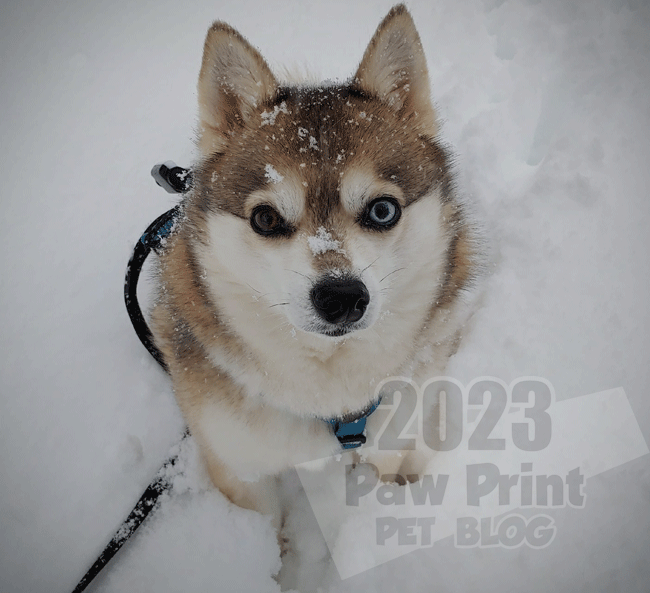
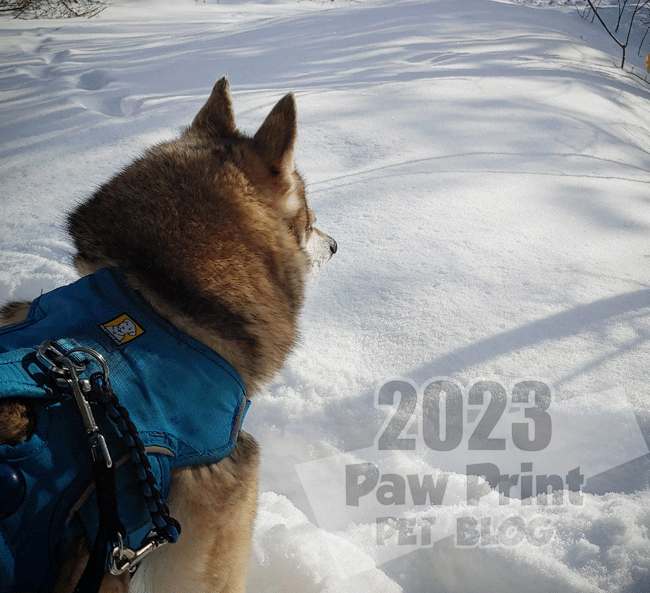
Comment below!  Does your dog ever develop snow nose?  My Alaskan Klee Kai, Fenrir, is 7 now and for the first time ever this winter I noticed his nose develop a few small pink spots.  Thankfully it’s just snow nose and not anything I have to worry about!  I’m interested to see whether or not his nose goes back to normal this summer, and how long it will take for the color change to occur.  And to see if he gets his cute little pink spots again next winter!  I’ll have to come back and update this post in the future.

Alaskan Klee Kai snow nose

50 Unique Name Ideas (with Meanings) for Female Alaskan Klee Kai


The other day I posted my list of 50 Unique Name Ideas for Male Alaskan Klee KaiOpens in a new tab..  Although I’ve personally, so far, only kept male dogs, I couldn’t forget the girls!  Naming a new pet can be hard.  Especially with puppies, since you’ll likely have to use that name for the next 10+ (hopefully lots more) years.

The word “Klee Kai” comes from the language of indigenous Athabaskan and means “little dog”.  Alaskan Klee Kai are, quite literally, Alaskan little dogs!  They are northern/spitz-type dogs that basically look like miniaturized huskies.  Because of this, snow/winter, wolf, or husky-related names may be fitting for your Klee Kai!  If you’re searching for the perfect name for your new little dog, here are some names I think could be fitting for a female Alaskan Klee Kai!

female Alaskan Klee Kai names

Snow/Winter-Themed Names Ideas

  1. Siku: An Inuktitut word for “ice”.
  2. Nilak: An Inuit word that means “freshwater ice”.
  3. Crystal: Like an ice crystal.
  4. Lumi: Finnish word for “snow”.
  5. Olwen: A Welsh name meaning “white footprint”.
  6. Fuyuko: A Japanese name meaning “winter child”.
  7. Talvi: A Finnish and Estonian name that means “winter”.
  8. Skadi: The Norse goddess of winter, mountains, and of the hunt.
  9. Firn: Snow that is more than a year old, usually found on glaciers.
  10. Neve: The Latin word for “snow”.

Location-Related Names

  1. Alaska: Where Klee Kai were founded!
  2. Juneau: A city in Alaska
  3. Dakota: After the Dakota’s in the US, also means “friend” in Lakota.
  4. Montana: After the US State.
  5. Sierra: From the Sierra Nevada mountain range.
  6. Shasta: Mount Shasta is a mountain in Northern California.
  7. Eismitte: A German word that means “middle of the ice”.  Eismitte was an artic  expedition site in Greenland in the 1930’s.
  8. Cheyenne: A city in Wyoming, based of a Sioux Dakota word that means “one who speaks incoherently”.  Perfect for a talkative AKK!
  9. Phoenix: A city in Arizona, also a mythological bird.
  10. Astana: Astana, Kazakhstan is super cold and can get as low as -61* F in the winter!

Nature Inspired Names

  1. River: This would be an especially cute name for a blue-eyed AKK.
  2. Ainsley: Means “one” or “Only” “woods” or “meadow”.
  3. Clover: From the wild flower.  Four-leafed clovers are good luck!
  4. Dahlia: The dahlia is a very pretty perennial flower.
  5. Flora: Means “flower”, and is also the Roman goddess of flowers and springtime.
  6. Hazel: Is a type of tree, and also refers to a light brown color.
  7. Iris: This is a type of flower, and also means “rainbow” in Greek.
  8. Juniper: A type of tree in the cypress family.
  9. Maple: Maple trees are common in colder climates and used to make maple sugar.
  10. Primrose: This is a flower whose name means “first rose” Primrose are commonly the earliest spring flower to bloom.

Wolf/Husky Inspired Names

  1. Tala: Means “wolf” in Sioux
  2. Amarok: A giant wolf in Inuit mythology.
  3. Asena: A wolf from the Oghuz Turkic foundation myth.
  4. Rieka: A German name that means “A woman who has the power of the wolf”.
  5. Ylfa: An Icelandic name that means “a female wolf”.
  6. Lupita: Means “river of the wolf”.
  7. Sassaba: A native American name that means “the wolf”.
  8. Lovota: Means “good natured, a fast wolf”.
  9. Ashina: A Muslim name that means “she-wolf”.
  10. Lupa: An Italian name that means “wolf”.

Random Name Ideas

  1. Aurora: After the northern lights.
  2. Luna: Means “moon”.
  3. Elsa: After the snow princess from the Disney movie.
  4. Nymeria: Arya Stark’s direwolf on Game of Thrones.
  5. Sansa: A character from Game of Thrones who became the Queen in the North.
  6. Holly: A winter holiday inspired name.
  7. Clara: A character in the Nutcracker, a Christmas favorite.
  8. Faye: Means “fairy”.
  9. Piper: Someone who plays the pipe (instrument).  Another good name for a vocal AKK!
  10. Sadie: A name with Hewbrew origin that means “princess”.

If you decide to use any of our name suggestions for your female Alaskan Klee Kai you’ll have to comment below and let us know!  What are your dog’s named?  How did you come up with their names?

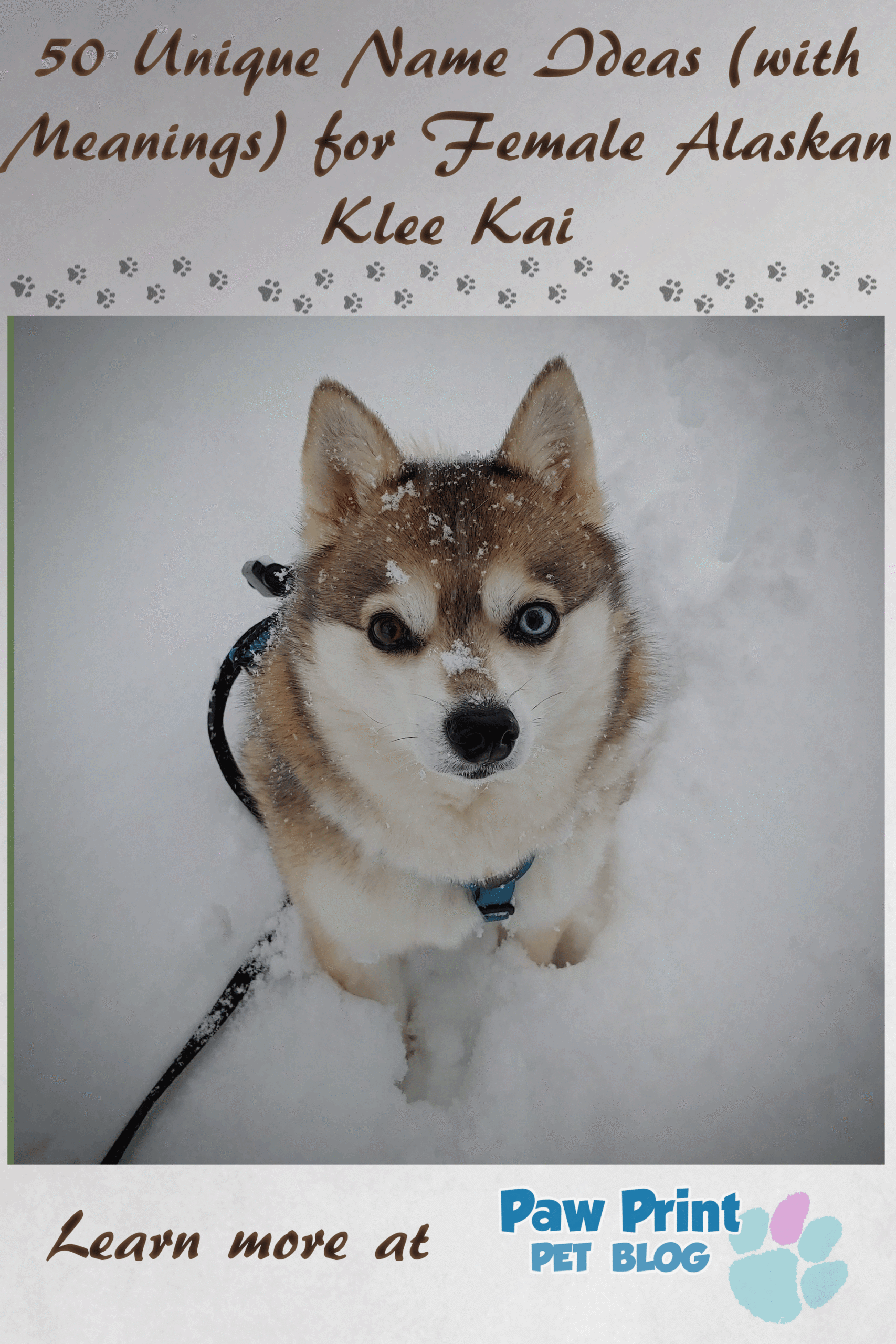
(You’ll have to excuse the photos of my Alaskan Klee Kai, Fenrir, in this post, even though he’s a boy.  He’s my only AKK!)

female Alaskan Klee Kai names