Recent Posts

Does Thuja Work for Removing Dog Warts?


It’s kind of frustrating, but both of my dogs, Kitsune the papillonOpens in a new tab. and Fenrir the Alaskan Klee KaiOpens in a new tab., have been exposed to the canine papillomavirus, aka warts.  Kitsune, my sweet social butterfly, I believe was exposed by one of his dog friends back when we still lived in the city.  It was pretty inevitable, after that, that he exposed his dog brother Fenrir too.  Luckily doggy warts have never been a huge deal for either of my dogs.  Recently Fenrir developed very small warts, one on his chin and one on his eyelid.  I did a bit of research about what, if anything, to do about it.  After discussing the situation with Fen’s vet, I decided to try a holistic treatment that is touted as being able to get rid of dog warts, thuja.

First Thing First,  Dogs Can Get Warts!?

It turns out that yes, dogs can get warts.  Warts in dogs are caused by the canine papillomavirus.  While very similar to the virus that causes warts in humans, the canine papillomavirus is dog-specific and cannot infect humans.  The canine papillomavirus is, as the name suggests, a virus that causes growths, often referred to as warts, in dogs by causing a dog’s cells to divide abnormally.  Dogs exposed to the canine papillomavirus most commonly develop cauliflower-like growths around their mouths and gums, lips, noses, paws, and eyes.  However, warts can sometimes develop in other spots too.  When my Kitsune first got one, for example, it was on his back.

How Do Dogs Get Warts?

Dogs must be exposed to the canine papillomavirus to develop warts.  Basically, warts are contagious between dogs.  A dog can become infected with the papillomavirus by playing with another dog who has warts, or by sharing items such as bowls and toys.  Not all dogs who are exposed to the virus will develop warts, or develop warts right away.  Dogs may carry the virus asymptomatically.  Actual warts appear most often on dogs who have weakened immune systems.  They are more commonly found on puppies, senior dogs, or dogs who are immunocompromised in some way.

Do You Have to Get Dog Warts Removed?

Sometimes.  In a normal, healthy dog, warts will usually resolve on their own.  Your dog’s own immune system can, eventually, learn to recognize the papillomavirus as an invader and develop an immune response against it.  This typically takes anywhere between 2 and 6 months.  Unfortunately, some dogs will have more persistent warts that don’t go away on their own.

Warts that don’t resolve on their own, especially ones that are large or bothersome to your dog, can be removed either surgically or with cryotherapy.  Treating warts this way, unfortunately, does not guarantee that the wart won’t come back.  The antibiotic Azithromycin has some anti-viral properties and is sometimes used to treat warts in humans.  It has shown positive results in treating dogs as wellOpens in a new tab..

Natural Dog Warts Remedies – What is Thuja?
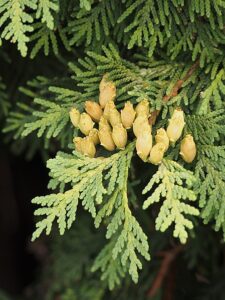
Thuja occidentalis Photo thanks to Agnieszka Kwiecień, Nova. Licensed via the Creative Commons Attribution-Share Alike 4.0 International license.

Thuja occidentalis, thuja for short, is an evergreen tree that grows natively throughout eastern Canada and the northeastern US.  Common names for thuja trees include northern white-cedar, easter white-cedar, arborvitae, and swamp cedar.  It’s a medium-sized tree in the cypress family that has red-brown bark and scaley leaves.  It’s Latin name means “tree of life”, because the sap, bark, and branches are thought to have medicinal properties.  Traditionally, herbal remedies created from the tree were used to treat conditions such as scurvy, and skin issues such as thrush, ringworm and, yes, warts.

It’s very important to note that in it’s unaltered form, Thuja occidentalis is actually toxic to both dogs and people!  In some people it can cause skin irritation, and dogs who ingest the plant itself can experience GI upset.  Do not think that, because homeopathic thuja is often recommended to treat warts, that you can just find thuja growing outside and feed it to your dog!  Homeopathic thuja is diluted to the point that actual thuja is no longer detectable.  You can read more about how homeopathic remedies are created here.Opens in a new tab.

Using Homeopathic Thuja to Treat Warts

Homeopathic remedies derived from the thuja tree can be purchased to battle wartsOpens in a new tab..  Hey, there’s even some evidence that it works for curing warts in cows.Opens in a new tab.  Why not dogs?  The instructions for using Thuja Occidentalis 30C for people is to dissolve 5 pellets under the tongue up to 3 times a day.  Recommendations on what dosages to use for dogs vary.  While researching, I came across recommendations to use anywhere from 3 to 10 pellets, once or twice per day.  Homeopathic thuja has no known side effects, and no known drug interactions.

In humans, homeopathic pellets are supposed to be held under the tongue until they dissolve.  That doesn’t exactly work for dogs.  For dogs, the thuja pellets can be placed directly into your dog’s mouth, or dissolved in water.  For both humans and dogs, I’ve read statements that suggest it can take anywhere from a week to a few months to see the results of using homeopathic thuja to remove warts.

I Tried Homeopathic Thuja on my Own Dogs Warts

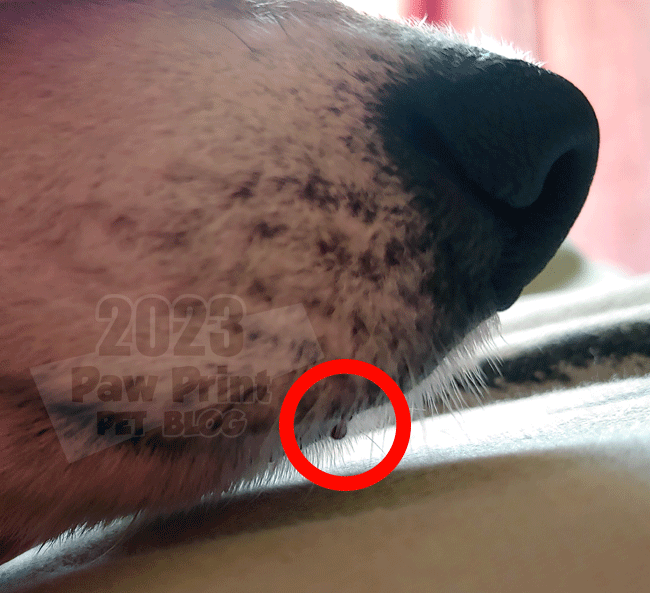
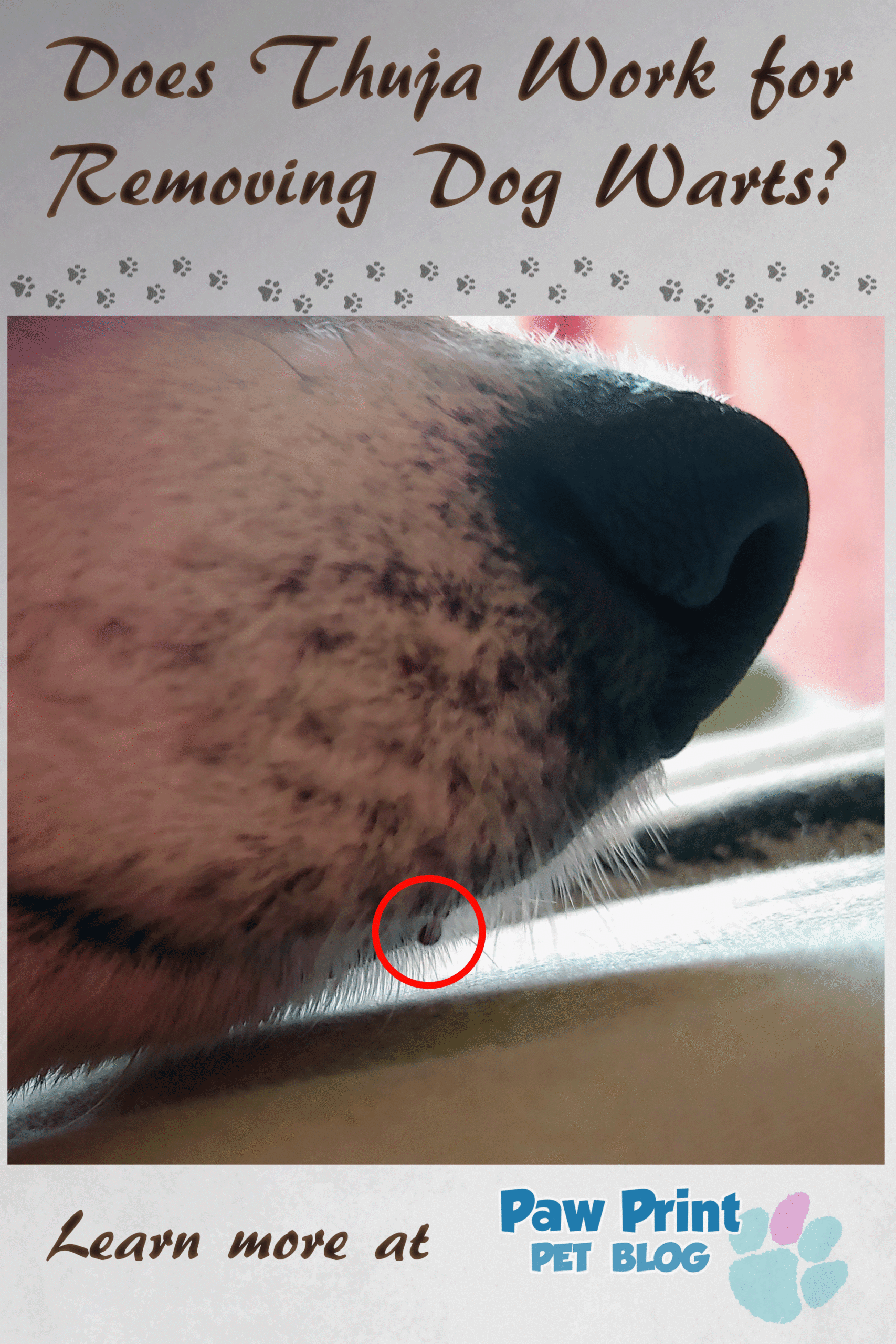
Around May of last year (2022) I first noticed that my Alaskan Klee Kai, Fenrir, had a few very small warts.  The first one that I noticed was on his lower lip/chin area.  A few days later I noticed a second, very small wart on his right eyelid.  The one on his eyelid was so small I wasn’t able to get a picture clearly showing it. His warts appearing seemed to coincide very closely with a bad bout of pancreatitis that he also experienced in May of 2022.  I believe his illness,  plus the stress of visiting the vet, weakened his immune system.

I consulted with his vet to determine that they were, in fact, warts.  This is important to do, as there are some skin issues and types of tumors that can sometimes be mistaken for warts.  Luckily Fen’s warts were very small, and not bothering him.  His vet expressed some concern that if the one on his eyelid grew too big we’d probably have to discuss removing it.  But, as they were, his vet and I both felt comfortable taking a ‘wait and see’ approach.

I discussed trying homeopathic thuja and my vet gave the go-ahead to try it.  She didn’t seem overly confident that it would work, but told me that it wouldn’t hurt Fen to try.  We decided to start Fen off on 3 Thuja Occidentalis 30C pellets per day.  Fenrir is trained to take liquids from a syringe,  so I dissolved his pellets in a bit of water and gave it to him with an oral syringe.
thuja dog warts

Did the Homeopathic Thuja Remove my Dogs Warts?

I bought a 3 pack of Thuja Occidentalis 30C pellets, enough to last around a month and a half on the 3 pellet a day dosage.  Fen did fine taking the pellets.  They didn’t cause any ill effects.  However, they didn’t do anything for his warts either.  Bummer.  After finishing the full three pack of Thuja Occidentalis 30C pellets Fen’s warts hadn’t grown any, but they didn’t shrink or go away either.  I decided not to continue giving him the thuja and went back to pretty much just monitoring his warts.

It’s now February, around 9 months since I first noticed Fen’s warts.  They never grew any bigger than they were when I first discovered them, and last week when I was grooming Fen I noticed that the wart on his lip/chin area was gone.  The one on his eyelid is still there, but looks a bit smaller than it was before.  I believe that that one’s days are numbered as well.  I stopped giving Fen the thuja around 6 to 7 months ago now, so I don’t think it had anything to do with his warts sudden disappearance.  I’m pretty sure that his own immune system was just, finally, able to fight them off on it’s own.

Does Thuja Ever Work?
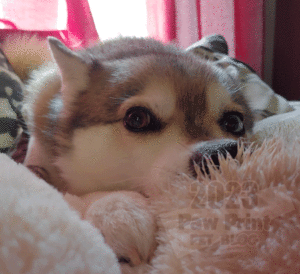
My own experience with thuja leads me to wonder how often owners think that thuja is working at getting rid of their dog’s warts, but in reality it’s just their own immune systems kicking in.  Who knows?  A lot of people seem to have good luck using thuja to eliminate warts on themselves and their pets.  I wish it had worked for us.  Part of me wonders if I should have maybe tried increasing Fen’s dosage.  Maybe it would have worked better if I gave him more pellets? Or dosed him twice a day instead of just once.  Or continued the treatment for longer?  But I’ll never know now.  At the end of the day I’m honestly just happy that his warts are finally going away.  Even though it wasn’t the thuja that made that happen.

I was worried that the wart near Fenrir’s eye would grow and irritate him.  Then I most likely would have had to have it surgically removed.  Thankfully that didn’t happen!  Going forward I’m going to work on boosting both of my dog’s immune systems.  Hopefully we don’t have to deal with warts again anytime soon.  If we ever do have to deal with them again, I wouldn’t necessarily be against trying thuja again to see if we get a different result.  Maybe it would work for Kitsune, even though it didn’t seem to work for Fen.

Of course a sample size of one dog does not a scientific study make!

If you’re interested in trying out thuja for your own dog I’d 100% say discuss it with your vet.  Just because it didn’t work for my dog doesn’t necessarily mean it won’t work for yours.  I’d love to hear from other owners if anyone reading this has also tried using thuja to cure dog warts before.  What dosage did you use?  Did it work for your dog?  If so, how long did it take before you noticed an improvement?
thuja dog warts

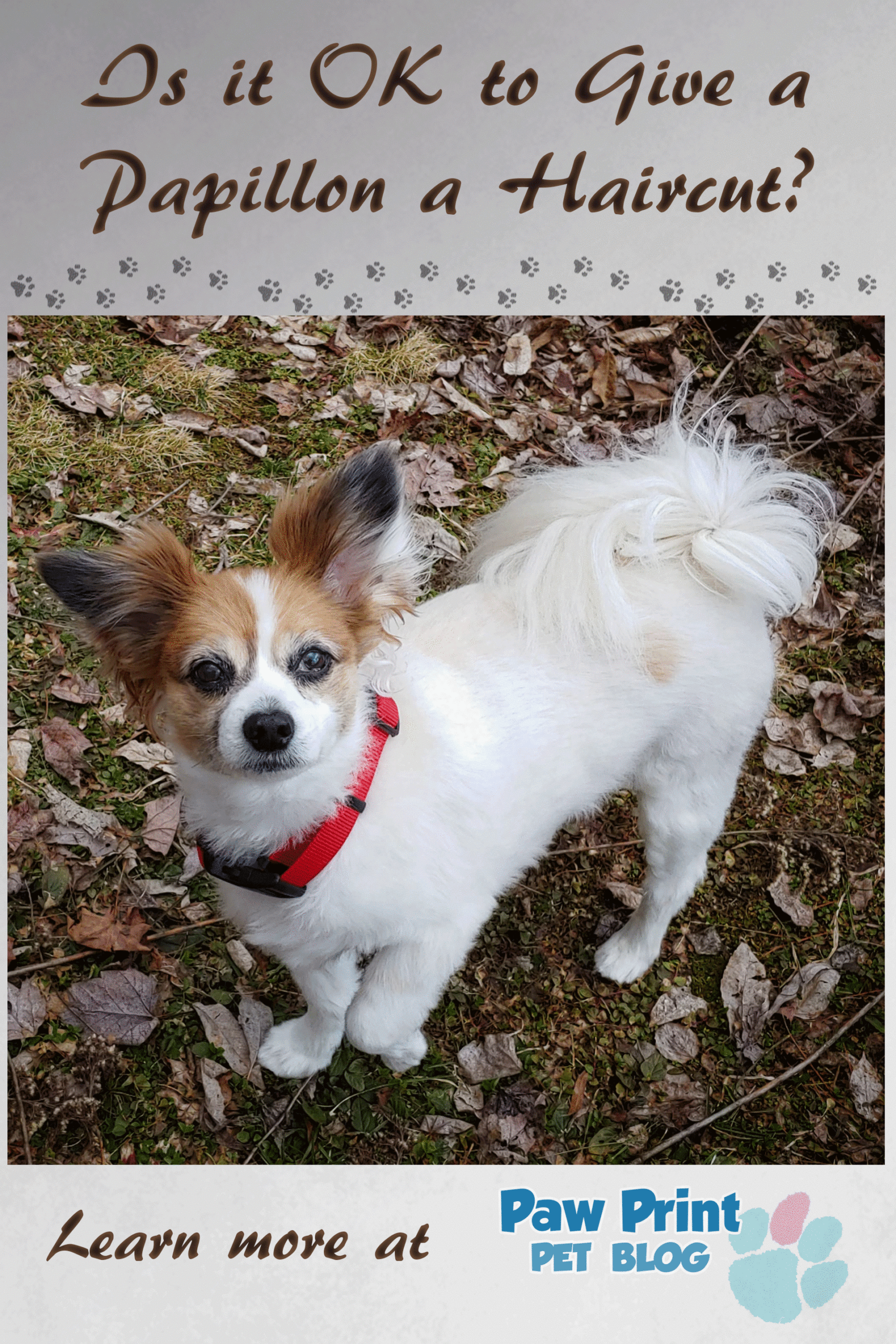
Is it OK to Give a Papillon a Haircut?


Ask this question in almost any breed-specific papillon group and the answer will be a resounding “no”.  Not only will it be a “no”, but, did you know, it’s apparently a sin to give a papillon a haircut?  Who knew?  I seemingly didn’t get that memo, because I’ve been trimming my currently 14-year-old papillon’s fur since he was a puppy!  Over the years I’ve seen people offer lots of reasons why, in their opinion, it’s not okay to cut or trim a papillon’s hair.  But I’ve never experienced any issues doing so with my own dog.  Of course you can trim a papillon’s hair – it’s hair!  While I understand why not every papillon owner will want to do so, whether or not you cut your own dog’s fur should come down to what’s best for you and your individual dog.

papillon haircut

Dispelling Myths:

I write this a lot on my blog – every dog is an individual.  Not only that, but every owner is too.  And every dog and their owner live a unique life together.  Just because dogs are part of the same breed does not mean that what’s right for one will be right for all.  Things like health concerns, past traumas, behavioral differences, personal preferences (both the owner’s and the dog’s), lifestyle, and many other factors may be taken into account when deciding whether or not keeping your dog’s fur trimmed is right for you.

PapillonsOpens in a new tab. are a breed that doesn’t typically need haircuts.  Many people consider their long fur, especially their ear fringe, to be a focal trait of the breed.  The official papillon breed standardOpens in a new tab. says their coat should be “abundant, long, fine, silky, and flowing”.  But a papillon with shorter hair is still a papillon indeed.  This leads me to my number one pet peeve comment that I’ve gotten about giving my papillon haircuts…

“You Should Have Gotten a Short-Haired Dog”

A papillon with short hair, whether it’s trimmed or just turns out that way, is 100% still a papillon!  Hey, I get it, papillons will full coats look beautiful.  But, to me at least, their fur isn’t what defines the breed.  It’s not even close to my favorite thing about them!

I’ve been told quite a few times that if I’m going to trim my papillon’s fur I should have just gotten a chihuahua instead.  But I didn’t get my papillon because of how he looks!  I love papillons because of their personalities (dogsonalities?).  They are little dogs that are just packed full of intelligence, athleticism, and sass.  I adore how social and sweet they are.  I love what amazing little adventure dogs they can makeOpens in a new tab..  Nothing against chihuahuas, they are super cute too!  But chihuahuas rank 125th, out of 138, on the list of dog breeds ranked by intelligence level.  Papillons rank in at number 8!  A chihuahua and a papillon, although they can often be similar in size, are defiantly not the same breed.

Papillons are such an amazing dog breed.  I’ve not come across another dog breed, short haired or otherwise, that I felt like could replace one.  And it’s not about their hair, at least not for me.

“But Cutting a Papillon’s Fur Will Damage it Forever”
papillon haircut
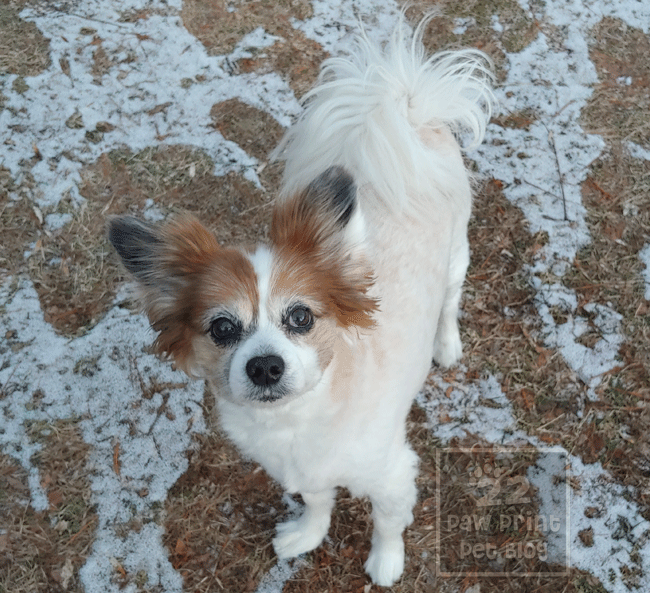
Kit a few months after a haircut.

This hasn’t been my experience at all.  I’ve been cutting my papillon, Kitsune’s, fur regularly since he was a puppy.  In his, so far, 14 years of life I haven’t had any major issues with his fur growing back just as nice, and long, as it was before.  In fact, Kit’s fur grows back surprisingly quickly!  I’ll admit that sometimes I wish it would slow down a bit so that I wouldn’t have to trim it as often.

In the rare times when I speak with owners who have issues with their papillon’s fur growth after a haircut, I always recommend they speak with their dog’s vet.  Poor hair growth can often be a sign of a health condition or nutritional deficiency.  The only time I’ve ever had an issue with Kit’s fur growing in after a haircut was rather recently when he was struggling with some health issuesOpens in a new tab..  We worked with his vet to get his health concerns more under control.  Almost immediately, his fur started to grow back normally again.

“But Papillon’s Have a Double Coat, Which You Shouldn’t Trim”

Nope!  Papillons are actually supposed to be a single coated breedOpens in a new tab..  It always shocks me a bit at the number of papillon owners who don’t seem to know this.  Apparently, some papillons do have a double coat.  However, this is not the norm and papillons with double coats do not meet the breed standards for coat type.

If my papillon did have a double coat, I’d probably think twice before cutting it.  I don’t cut my double coated dog, Fenrir’s, fur.  Mostly because growing back a healthy double coat is a bit more complex than a single coat.  But my papillon has the breed standard single coat.

Because they lack the insulating undercoat, papillon’s fur doesn’t protect them from cold temperatures the way a double coated dog’s coat does.  People against trimming dogs fur will sometimes use a viral thermal image photo in an attempt to “prove” that a dog’s fur keeps them cool as well as warm, but there’s one big problem with their argument.  They grossly misinterpret how thermal imaging works!  Not to mention that this ‘argument’ is often used against papillon owners, despite the fact that most papillons don’t even have double coats in the first place.

I’ve always found it interesting that with other breeds with single coats, such as poodles, Yorkies, cocker spaniels, and Maltese, cutting their fur on a regular bases is perfectly acceptable.  Yet papillon owners are often criticized for giving their dogs haircuts.

Reasons Why Some Papillon Owners May Trim Their Dog’s Fur

People against trimming a papillon seem to be against it no matter the owner’s reasoning.  That feels a bit unfair to me.  In my opinion, there are some very valid reasons why a papillon owner might cut their dog’s fur.

  • Health Concerns: When my papillon, Kitsune, was suffering from flea allergy dermatitisOpens in a new tab. I found it way easier to keep his hot spots clean, dry, and medicated when his fur was short.  Can you think of other health concerns that might be easier to treat if your dog had shorter hair?
  • Dogs Against Grooming: Not all dogs are used to being groomed.  Since papillons have such long hair, not grooming them frequently can lead to matting.  Matting is painful for dogs.  Owners with dogs who will not accept grooming may opt to keep them trimmed.
  • Inability to Maintain Grooming: People with health concerns may have a harder time grooming their dogs often enough to prevent matting.  For these owners, getting their dog’s fur trimmed will allow them to keep beloved pets, and keep said pets comfortable.
  • Climate Concerns: People who live in especially hot climates may find that their dogs stay cooler and more comfortable with their fur trimmed short.
  • Lifestyle: I’ve spoken with a handful of hikers who own papillons and keep their dogs trimmed short to avoid how horribly dirty full coated papillons can get on a trail.  This can be more than an aesthetic thing, since sticks, etc., getting caught in your papillon’s fur can cause injuries and pain.
  • Comfort: Believe it or not, some naturally long haired dogs do feel more comfortable when their fur is trimmed short.
  • Personal Preferences: Some owners just like the way that their dogs look with short hair.
  • Other: Can you think of other reasons I didn’t mention here?  Comment below!

Why I Personally Keep My Papillon’s Fur Trimmed

papillon haircut
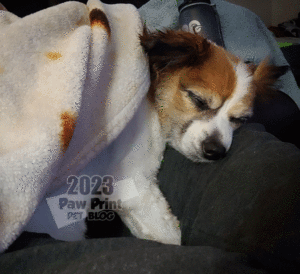
Snuggly, short haired Kitsune!

My own papillon prefers to have his hair trimmed.  He’s happier and more comfortable when his fur is shorter.  How do I know?  Well, I’ve known Kitsune for over 14 years now.  So I know him quite well!  When his fur gets too long he gets way more cautious about doing certain things, like jumping up onto furniture.  He doesn’t snuggle with my partner, our other dog, or me nearly as much when his fur is long.  He hates when his hair gets caught on things or pulled, even a little bit.  So, we think, he avoids doing things that he knows could cause his long fur to accidently get caught or pulled.  Snuggling and playing are two of his all time favorite things, and he avoids doing both when his fur grows long.

My partner and I also both prefer how Kit looks with trimmed fur.  In my opinion, personal preference is a valid reason to cut a single coated dog’s hair as long as you’re not doing it to the detriment of the dog.  Kit’s shorter hair is also way easier for me to maintain with our active, outdoorsy lifestyle.  I don’t have to worry as much about Kit getting sticks and brambles tangled up in his fur during hikes, or snowballs stuck all over his tummy and legs in the winter.

Considerations to Take Into Account Before Giving Your Papillon a Haircut

One thing I’ll always suggest to owners interested in cutting their dog’s hair is to make sure you leave enough hair to protect your dog’s skin from the sun!  I don’t recommend you shave your dog down to the skin.  Rather, trim your dog’s hair shorter but still leave some fur there.  You generally want to leave at least an inch of fur on your dog to help protect their skin.

If you trim your dog’s fur in the winter keep in mind that you may make it more likely that they will require a sweater or coat to keep warm.  However, I haven’t found trimming Kit’s fur to strongly impact his temperature regulation.  Like I mentioned above, single coated dogs lack an insulating undercoat.  Kit’s single coat, whether it’s long or short, doesn’t seem to keep him as warm as a double coated dog’s fur would.

What Do You Think?

Comment below!  Have you ever received criticism for giving your dog a haircut because it’s not a breed that is typically trimmed?  If you’re here because you’re considering giving your papillon a haircut, remember that the most important factors you should consider before making your division are your own, individual, dog’s comfort and needs.  Never let others, especially people who don’t know you or your dog, make you feel bad for making a decision with your dog’s best interest at heart.  You know your dog best!

papillon haircut

My Favorite Clothing Brands for Small Dogs


I know not everyone is a fan of dressing up dogs.  Hey, I get it!  Most of the time my own dogs, Kitsune and Fenrir, are little nudists.  I do, however, put them in dog clothing once in a while for practical purposes.  The area we live in can get really cold in the winter, and my two little ones refuse to go to the bathroom indoors.  Recently, we’ve been spending more time getting all bundled up to go outside than we actually spend outside!  It can be hard to find high-quality, functional clothing for small dogs.  There’s cute clothing a-plenty, but warm, well-fitting, functional clothing for small dogs seems to be a bit harder to find.  It’s frustrating when your best buddy is a little adventure dog!


In this post, I’m going to share my favorite dog clothing brands that I feel work really well for my two small adventure dogs!  I’ve become quite picky when it comes to buying clothing for my boys.  When it comes to buying clothing for Kit and Fen, I’ve become somewhat brand loyal, mostly because, over the years, I’ve found a few brands that really consistently seem to work well for them.

These are things I look for when selecting clothing for my two small dogs…

  • The “perfect” fit.  I look for clothing brands that have a variety of size options, especially for small dogs.  I like shirts and jackets that cover as much of their backs as possible, to keep them warm, but don’t cover up their boy parts for obvious reasons.
  • Color Options.  Even with functional clothing, it’s nice to have color options.  How else am I going to buy Kit and Fen their signature colors?
  • Easy to Get on and off. Especially now that my oldest dog, Kit, is a senior with some health issues that make me more hesitant to manipulate him in certain ways, dog clothing that is easy to get on and off is really important to me.  Kit has IVDDOpens in a new tab. and arthritis.  I am very aware of not wanting to hurt him by accident by moving his neck or legs in awkward ways to get him into clothing.  Lately, my favorite types of dog clothes have zippers across the back, so I can get them onto my dogs without having to manipulate their legs very much.
  • Warm! What’s the point of putting clothing on your small dogs if not to keep them warm, after all?
  • Lightweight.  When you have small dogs, I think sometimes getting them clothing and accessories that are light weight can be more important than it would be for other sized dogs.  If we’re going cold weather hiking, for example, my dogs will often be wearing a fleece or jacket, their harness, and a collar.  That can add up to a lot of extra, bulky, weight for a small dog if you don’t pick your items carefully.

Without further ado, here are my favorite clothing brands for my small dogs!

GoobyOpens in a new tab.:

clothing small dogsWhen you see pictures of Kit and Fen wearing clothing on my blog or social mediaOpens in a new tab., it’s very likely that they’re wearing something by Gooby!  Gooby clothing is designed especially for small to medium sized dogs.  I love their sizing.  They have sizes XS to 3XL, but because they are designed for small dogs you can really find the perfect fit for your little ones.  My Kitsune is currently 20 lbs, and Fenrir is 18.  They both currently wear size XL in Gooby clothing.  I have to admit, it still feels really weird to buy my little guys XL sized clothing!  But that size fits them both perfectly.  Plus, I love that Gooby’s sizing is so consistent.  XL fits my boys well no matter what Gooby product I buy them.
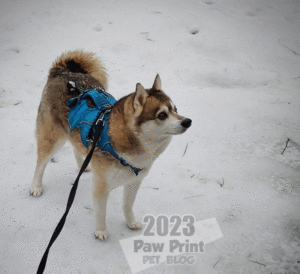
Gooby dog clothing is stylish and colorful, but functional too.  Some of my favorite items from them currently include their zip up fleece sweaterOpens in a new tab., and their doggy puffer jacketsOpens in a new tab..  But Gooby does sell other styles of clothing, plush things like harnesses and leashes too.  The fleece sweaters are lightweight and comfortable for Kit and Fen.  I’ll sometimes have them wear them around the house on cold days.  Lately, since it’s been especially cold, my dogs have been rocking their Gooby puffer jackets every time we go outside.  Thankfully, they are super easy to put on and take off, so I’m not spending too much extra time getting the boys dressed to go outside.

Gooby dog clothing is stylish, fits well, keep my dogs warm, is easy to put on and take off, and budget friendly!  What more could I ask for?

RuffwearOpens in a new tab.:

clothing small dogsI love the Ruffwear brand of dog products, but they are not as budget friendly as Gooby products are.  I’d for sure have more Ruffwear products if they were cheaper, but I love what we do have.  I’ll only use a Ruffwear Webmaster harnessOpens in a new tab. for my Alaskan Klee Kai, Fenrir, since he’s escaped from other harnesses in the past.  Ruffwear doesn’t have as many clothing options as some brands, but I really like their Climate Changer Dog FleeceOpens in a new tab..  It fits really well underneath my dogs harnesses.  Because it also has a zipper, it’s easy to get on and off even my sensitive senior boy.  Ruffwear has a newer Hemp Hound dog sweaterOpens in a new tab. that I eventually want to try out too.
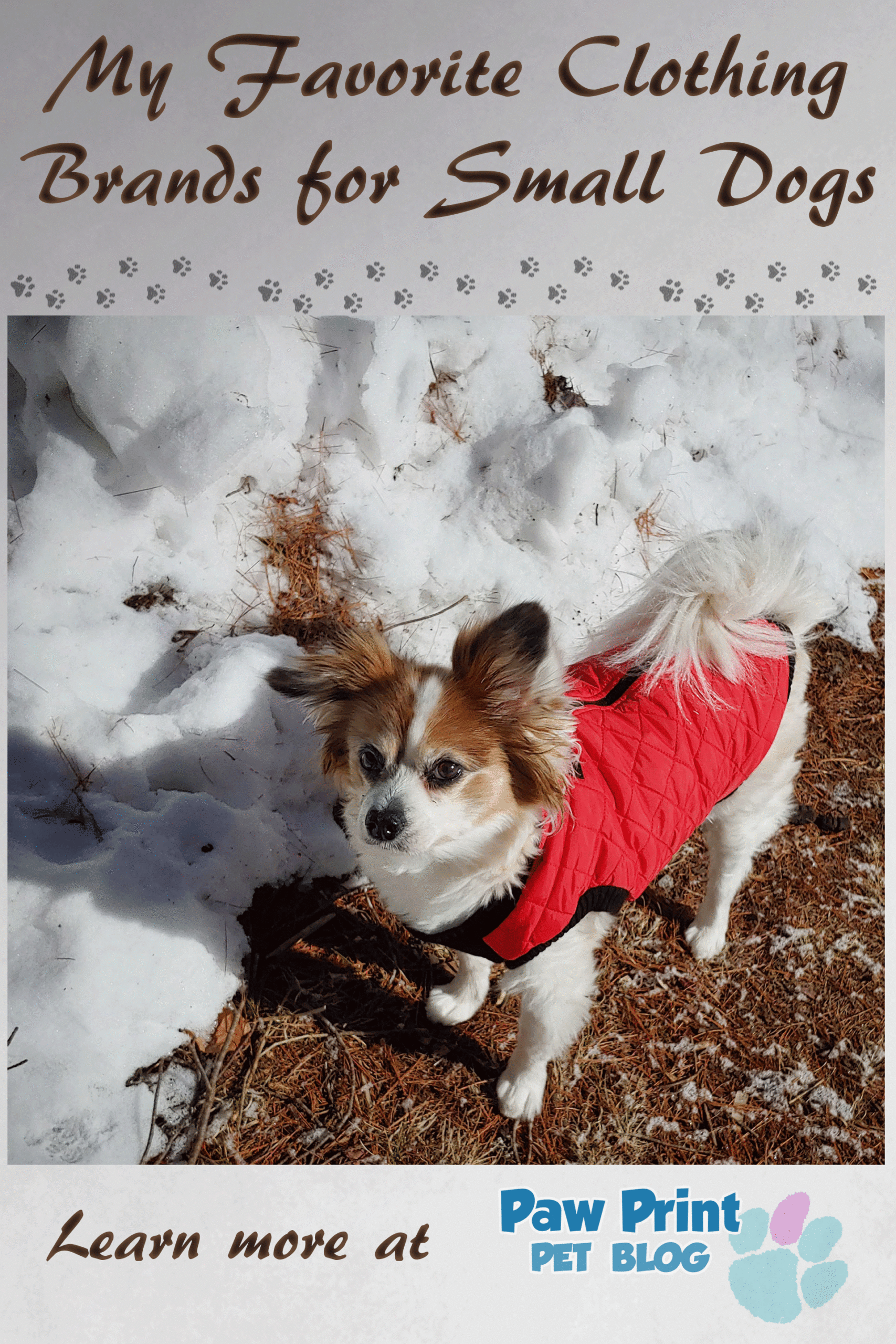
I don’t have nearly as many Ruffwear products as I do Gooby because of the difference in price.  But, what I do have has been really durable.  Fen had the same Ruffwear harness and fleece since he was young, and I doubt I would have had to replace it still, if it wasn’t for the fact that “little” Fen bulked up a bit and needed a larger size.  Ruffwear comes in sizes XX-Small to XL.  Kit and Fen both wear size X-Small across Ruffwear products.

Ruffwear is more of a rugged, adventure dog themed brand.  It’s nice to have a brand like that that has sizing that fits even small dogs well.  I wish they had more color options, and their clothing is expensive.  But they are high-quality, durable, fit my dogs well, and keep my dogs warm.  I love this brand for taking my littles on adventures, because I know I can really depend on the durability of Ruffwear products.  That’s important when you’re out in the wilderness!

There You Have It, My Two Favorite Clothing Brands for My Small Dogs!

Because of the price difference, I tend to mostly buy Gooby products for Kit and Fen when it comes to clothing.  Ruffwear is more of my go-to for things like harnesses, leashes, and lifejackets.  I know Ruffwear is expensive but, so far, nothing I’ve purchased from them has ever needed to be replaced due to damage.  I feel like their durability kind of makes up for the price.  I’ve found them to have good resale value too, in case your dog outgrows them.  I was able to sell the Ruffwear fleece and harness that Fenrir outgrew on eBay for a decent amount of money.

The Gooby dog products are awesome for small dogs, especially if you’re looking for something more budget friendly.  I had one fleece from Gooby rip once but it was Fenrir’s puppy fleece, and he got a ton of use out of it before we needed to replace it.  Gooby comes in lots of  color and multiple style options.  Both brands keep my dogs warm, even in super cold weather, without being overly heavy.  They have options with zippers that make them easy to get on and off my dogs.  And they fit my little boy dogs really well.

Comment below!  I’m always open to trying new products if anyone has a dog clothing brand they’d recommend for smaller dogs.  Do you dress your dogs up, either to deal with cold weather or for other reasons?

clothing small dogs

We’ve, unfortunately, been dealing with content scrapers stealing our articles lately. You shouldn’t be seeing this article on any site other than pawprintpetblog.comOpens in a new tab.! If you’re reading this article on any other site, we’d love for you to take the time to contact usOpens in a new tab. and let us know and, if you have the time, stop by and visit us on our official site! Thanks you.

How Cold is Too Cold for Dogs?


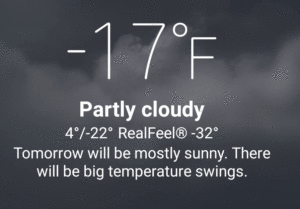
I’m writing this from my cozy, heated office with my two dogs, Kitsune and Fenrir, snuggled up in a dog bed near my desk.  But it’s currently -17*F outside.  With the wind chill, it feels like -32*F.  And it’s supposed to get even colder overnight!  Small dogs sometimes get a bad rap for being hard to potty train.  But my two littles refuse to go to the bathroom anywhere other than outside.  It’s a blessing and a curse.  I love not having to worry about cleaning up doggy accidents.  But on days like today, when the weather is especially bad, I sometimes wish they would concede to using a potty pad.  Taking the boys out for bathroom breaks today has been a task and a half.  We’ve been spending more time getting all bundled up than we actually spend outside.  If you also live somewhere cold, you may wonder how cold, exactly, is too cold for dogs?

It depends on the Dog!

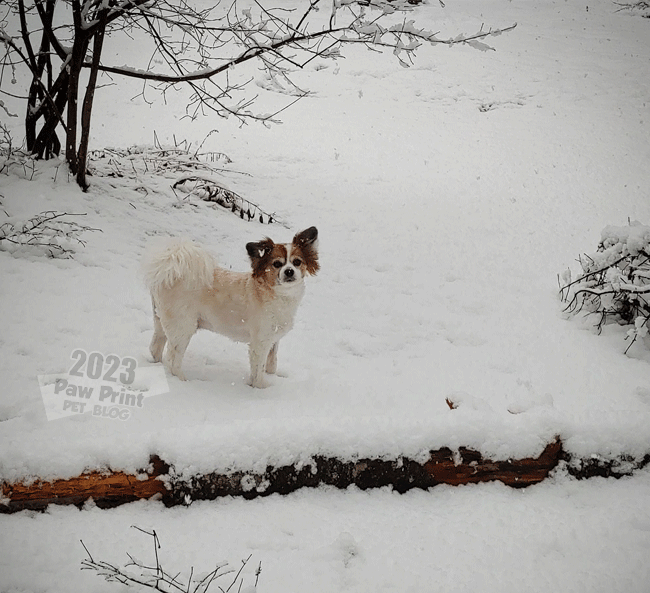
so cold!Each dog, like each person, is an individual.  There are a number of factors that can influence what temperature ranges each dog feels comfortable in.  Some dogs, just like some people, just seem to be more cold-tolerant than others.  Out of my own two dogs, most people would very much think that Fenrir would be the most cold-tolerant.  He’s half Kit’s age.  Fenrir has a dark-colored, thick double coat.  Kitsune has a mostly white single coat that I also keep trimmed.  Yet, when I take them out in cold weather it’s always Fenrir who wants to head back inside long before Kitsune!
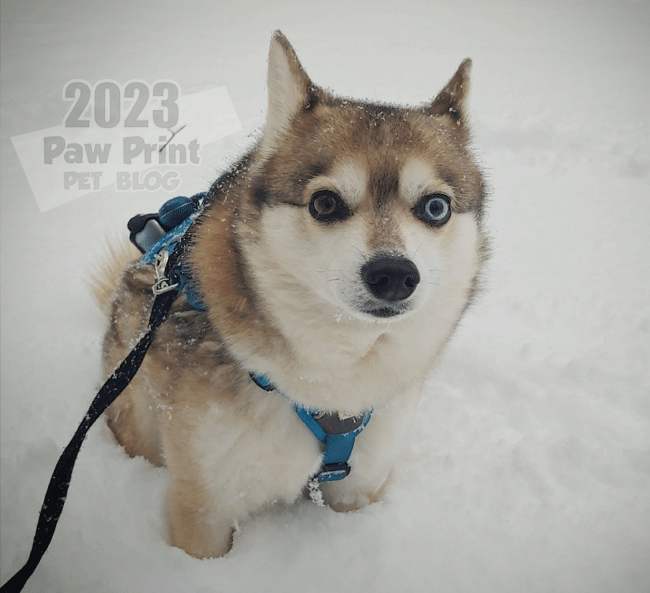
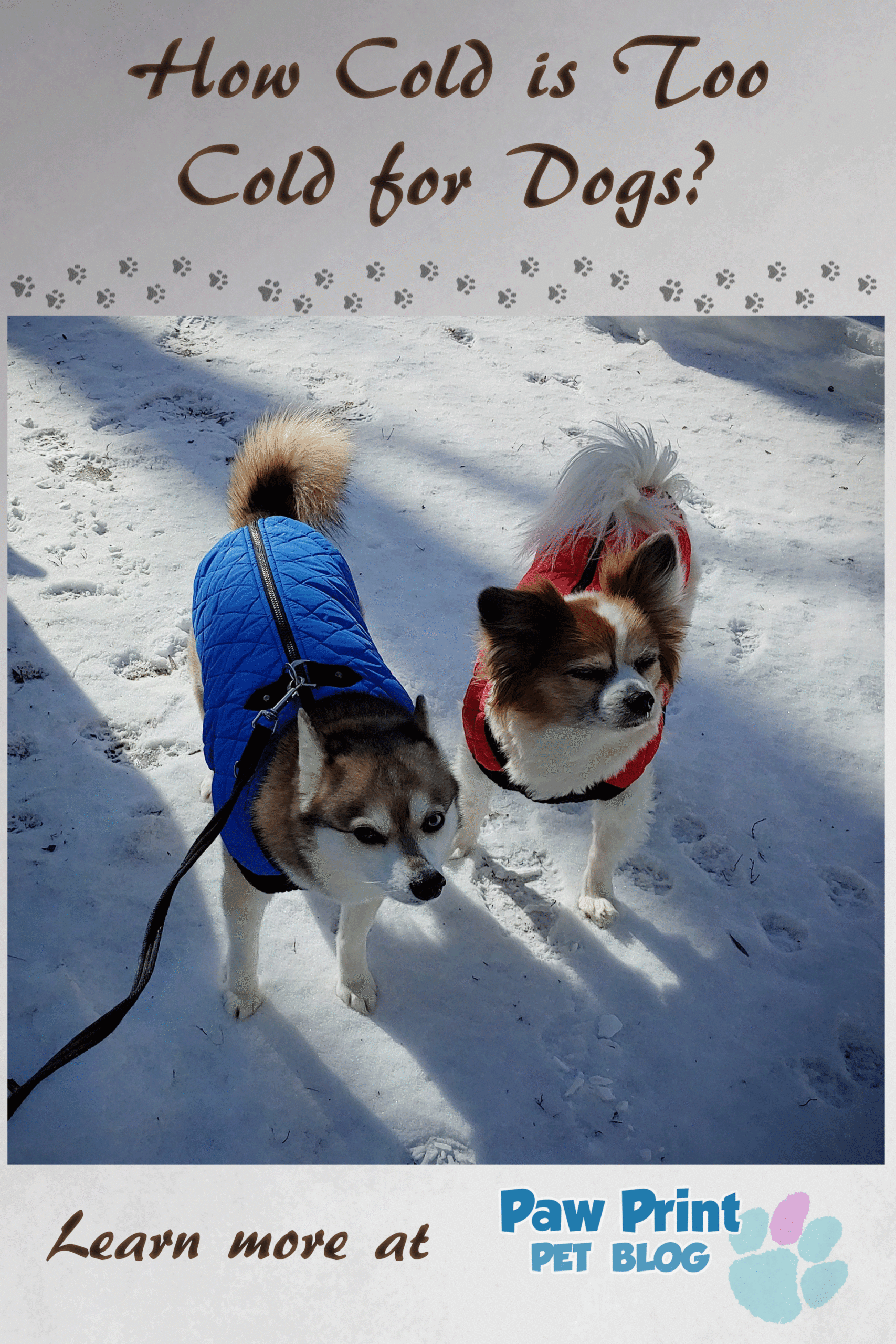
Although I already just showed that these factors can be moot, here are some traits that can help dictate how cold-tolerant your individual dog may be.

Age:

In general, dogs that are very young or very old will be less cold-tolerant than healthy, adult dogs.

Health:

Pay special attention to dogs with health conditions during extreme weather.  They may not be able to maintain their body temperature as well as a healthy dog can.

Coat Type:

In general dogs with double coatsOpens in a new tab. will tolerate cold better than single coated dogs.  Dogs with short, thin coats will generally get colder faster and may be more likely to require sweaters or coats.

Coat Color:

Darker colored dogs absorb more heat on a sunny day, and thus may be able to maintain their temperature a bit better than lighter colored dogs.

Size:

Small dogs are usually more at risk in the cold than larger breed dogs.  This is especially true if they are walking through deep snow.  A small dog in deep snow is more likely to have their belly/chest coming into contact with snow, which can make them feel colder faster.

too cold dogs

Weight:

It’s never healthy to allow your dog to become overweight.  However, underweight dogs will generally be more suspectable to the cold.

Conditioning:

I find this to be true of myself as well as my dogs.  Animals who have time to slowly adapt to the weather will usually become more used to it, and not be as bothered by cold days.

It’s Not Only About the Numbers on the Thermometer!

It’s hard to set definitive rules for how cold is too cold for dogs.  Weather is about more than just the numbers on the thermometer.  It’s important to also take into account things like the wind chill, how sunny it is, and whether or not there is precipitation.  What your dog is doing outside can matter too!  If they’re just sitting around in the snow, they are likely to get colder faster verses if they are playing or exercising outdoors.

How Cold is Too Cold for Dogs – A General Guideline

In general, dogs may start to feel effects of the cold when the temperature is below 45*F.  Dogs who are very old or young, have thin fur, or are compromised in any way may be impacted more in moderately cold weather.  When the temperature drops to below freezing, or 32*F, it’s generally a good idea to closely monitor and limit time outdoors, especially if your dog is sensitive to the cold for any reason.  At below 20*F, you risk your dog developing cold related health complications such as frostbite or hypothermia.  A quick bathroom break is usually ok in these temperatures, but monitor your dog and do not leave them outside for longer than necessary. 

too cold dogs

If you need to take your dogs outside in especially cold weather, there are some precautions you can take to keep them safe.
  • You may think dogs look silly in jackets and boots, but they can help keep them warm.  Boots can help protect paws from snow, ice, and frostbite.  Coats, jackets, or sweaters are especially helpful on cold, windy days.
  • Limit time outdoors as much as possible.  When it’s especially cold, my dogs go out for quick bathroom breaks than come right back inside.
  • If you can, keep outdoor excursions to daylight hours.  Temperatures usually drop in the night, and even on really cold days the sun can sometimes be enough to help keep your dog warm.
  • Go outside with your dog in bad weather.  It sucks, I know, but you’ll know if you’re too cold that, changes are, your dog is too.
  • Know the signs of hypothermia!  They can include shivering, lethargy, pale skin and gums, lack of coordination, and reduced breathing rates.

Learn Your Own Dog’s Cold-Tolerance Level

Although you can use the information in this post as a general guide, your best bet is to always learn what you can about your individual dog.  By all accounts, my Fenrir, who is an Alaskan Klee Kai, should be pretty cold tolerant.  But he’s always been especially sensitive to extreme temperatures, hot or cold.  Because I know this about him, I’m always extra careful about taking him out when it’s especially cold out.  I bundle him up in his coat and boots, and keep bathroom breaks as short as possible.

Comment below!  What’s the coldest weather you and your dog(s) have ever experienced?  Does your dog do well in the cold?  What are some things you do to help your dog spend time outdoors in colder weather?

too cold dogs

We’ve, unfortunately, been dealing with content scrapers stealing our articles lately. You shouldn’t be seeing this article on any site other than pawprintpetblog.comOpens in a new tab.! If you’re reading this article on any other site, we’d love for you to take the time to contact usOpens in a new tab. and let us know and, if you have the time, stop by and visit us on our official site! Thanks you.

How Thermal Imaging Works, and What it Has to Do with Dog Grooming


I’ve caught a lot of flack over the years because I cut my papillon, Kitsune’s, fur.  PapillonsOpens in a new tab. are often referred to as a “wash and wear” breed.  Meaning that, generally, papillons do not require a lot of grooming.  Although they are a long-haired breed, a bath every now and thenOpens in a new tab., perhaps a sanitary trim, and a good daily brushing are all they commonly need.  I like how my papillon looks trimmed, though.  And Kitsune is genuinely happier, and more comfortable when his hair is shorter.  Every dog, even dogs that are the same breed, are individuals.  What’s right for one won’t necessarily be right for another.  How does thermal imaging work, and what, exactly, does it have to do with dog grooming?

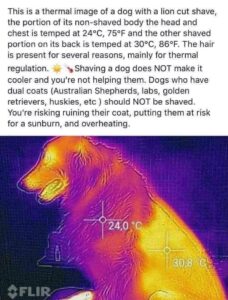
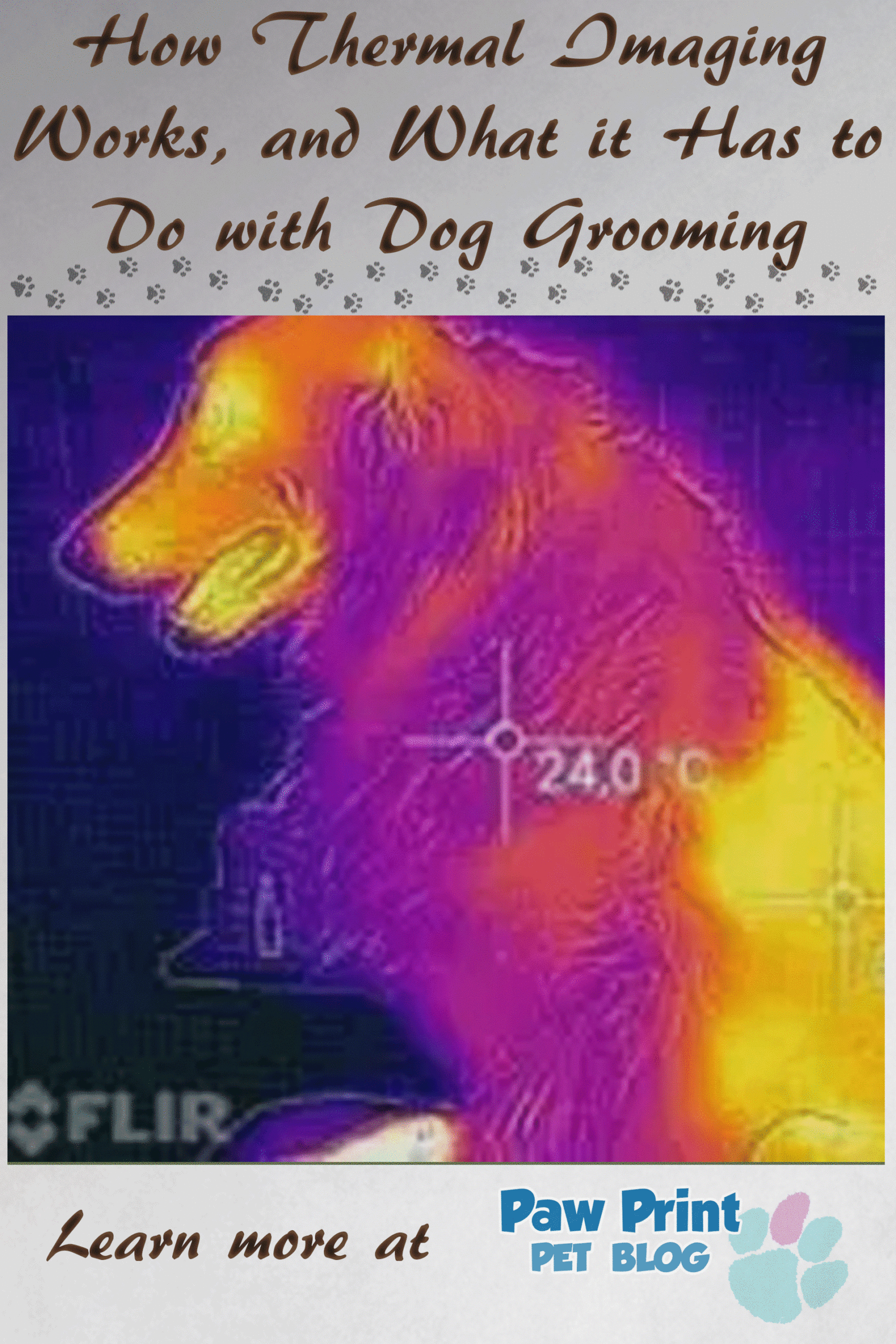
For years now I’ve been seeing a thermal image of (I think) a golden retriever with a lion cut making the rounds on social media.  The image is accompanied by text explaining why dogs, especially dogs with double coats, should not be shaved.  According to the text accompanying it, the thermal image is showing that the shaved areas of the dog are warmer than the unshaved areas.  Sadly I was unable to track down who wrote the original text.  They are implying that this temperature difference is due to the dog’s natural fur coat insulating it against hot weather.  Unfortunately, I have seen this image used again and again against owners who choose, for whatever reason, to trim or shave their dog’s fur.  The problem?

That’s Not How Thermal Imaging Works!

Thermal cameras work by detecting thermal energy rather than visible light like a regular camera.  Thermal energy is not detectable by the human eye, but thermal sensors can detect different levels of thermal energy.  In a thermal image, different amounts of thermal energy will be represented by different colors or different shades of colors.

In a thermal image, you are not looking at an accurate representation of how warm the surface of something is.  Rather, you are looking at an image that represents how much thermal energy that surface is radiating.

For example, in the infamous photo of the golden retriever, the part of the dog’s body that is covered by longer fur is not necessarily significantly cooler than the rest of the dog.  Rather, the long fur is trapping in thermal energy.  The thermal camera isn’t able to pick up this trapped thermal energy.  That makes it appear like that area of the dog is cooler.  In reality, because heat is being trapped against the dog’s body, those spots are more likely to be warmer.

The shaved areas of the dog’s body allows for thermal energy to radiate off and away from the dog.  So, although the shaved areas appear to show up as warmer on the thermal image, this is not because the dog’s skin is actually hotter in those areas.  It’s because the dog is radiating more heat, more thermal energy, from the shaved areas.  There’s nothing in the way to stop the thermal camera from detecting thermal energy near the dogs skin.

Another Example

thermal imaging dog grooming
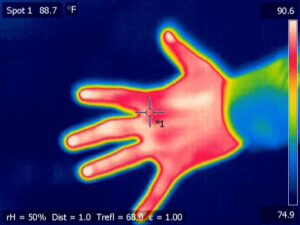
Image Credit: Alex and Jarek Tuszyński Creative Commons Attribution-Share Alike 3.0

I figured it might help if I gave an example of how thermal imaging works outside of the dog grooming world.  If you’ve ever seen a thermal image of a person, you’ve probably notice that any uncovered areas of the skin, faces and hands for example, show up “warmer” than areas of the body that are covered by clothing.  Why would this be, when our clothing is designed to keep us warm?  It’s because it is keeping us warm!  Much like dog’s fur, our clothing traps thermal energy against our bodies.  But that warmth is hidden, to an extent, from thermal cameras because less of it is radiating out and away from us, where a thermal camera would be able to pick it up.

So, Should You Shave Your Dog?

Well, it depends.  But certainly, if you decided not to shave or trim your dog’s fur, it shouldn’t be because of the false information on that social media meme.  Because, as crazy as it is, that image actually shows the opposite of the message the original creator was trying to portray.  The golden retriever in the image is loosing more heat from the areas that are shaved.  Therefor the shaved areas would be cooler than the spots where the fur was left natural.

Every Dog is an Individual!

There are a lot of factors owners should take into account before deciding whether or not to trim their dog’s fur.  I personally don’t recommend that owners shave their dog’s down to the skin.  At least a little bit of fur is required to protect your dog’s skin from sunburn.  But they certainly don’t require their full, long, fluffy coats to prevent sunburn.  Other than that, if you decide that trimming your dog’s hair is what’s right for you and your individual dog, then don’t let anyone, especially judgmental people on the internet (extra especially judgmental people who are using false information to try to “prove” their point) change your mind!  I’ve been trimming Kit’s fur for his entire life, over 14 years now, without any ill effects.

So that’s what thermal imaging has to do with dog grooming!  Comment below.  Do you cut or trim your dog’s fur?  Has anyone ever tried to use the thermal image argument to convince you that you shouldn’t?

thermal imaging dog grooming

We’ve, unfortunately, been dealing with content scrapers stealing our articles lately. You shouldn’t be seeing this article on any site other than pawprintpetblog.comOpens in a new tab.! If you’re reading this article on any other site, we’d love for you to take the time to contact usOpens in a new tab. and let us know and, if you have the time, stop by and visit us on our official site! Thanks you.

Supplements I Use for My Senior Dog with Health Concerns (IVDD, Cushing’s?, Arthritis, Heart Murmur)


This amazing little fuzz butt, for anyone who doesn’t already know, is Kitsune.  Kit for short.  Kit is an oversized papillon who turned 14 years old last December.  Shh, we won’t tell Kit that he’s a senior dog.  He doesn’t seem to realize it.  Some of his hobbies include annoying his younger brother Fenrir, eating all the things, exploring in the woods, nose work, and snuggling.  Throughout his life, I’ve used supplements to help keep Kit healthy.  I’ve always made a point to do lots of research, and supplement my dogs based on their current, individual needs.  This post is about the supplements I’m currently using for my senior dog, Kitsune.

The 411 On Kit’s Current Health: IVDD

Kit is doing pretty well now, but had a bit of a rough time, health-wise, recently.  Kitsune was diagnosed with cervical IVDD last SeptemberOpens in a new tab..  After his original IVDD diagnosis, his health kind of spiraled a bit.  He didn’t react well to taking Prednisone to treat the IVDD.  Kit started displaying Cushing’s Disease type symptoms, especially polydipsia (excessive thirst/drinking) and polyuria (frequent urination).  He had a bit of hind limb weakness.  We don’t know if it was caused by the IVDD or his medication/Cushing’s.  Bloodwork we had done was pretty good, but he did have elevated liver enzymes.

Cushing’s Disease?

During his IVDD recovery, Kit was diagnosed with idiopathic Cushing’s Disease.  That is basically Cushing’s Disease that is caused by a medication.  Normally, idiopathic Cushing’s Disease takes between 6 and 12 weeks to resolve after dogs are taken off the medication that caused it.  Kit was completely weaned off of Prednisone by October 26th.  So, as of the time I’m posting this, it’s been just over 12 weeks.  Kit’s Cushing’s symptoms have greatly decreased but are not 100% resolved.  We’re unsure currently whether he is just taking a tad bit longer to recover than normal, or if he could potentially have the beginnings of actual Cushing’s Disease that was made worse by the medication he was on.

A Heart Murmur

Kitsune also has a very mild heart murmur.  Right now, it’s just something we’ve been keeping an eye on.  So far, it hasn’t changed or gotten worse at all, and it doesn’t impact his life.  It’s not bad enough that he requires any medication at this time.  However, I am mentioning it here because it does slightly impact Kit’s supplement regime.

AND Arthritis?

Shortly after his IVDD recovery, Kit was also diagnosed with arthritis.  We started to notice that he would look stiff and sore after laying down for a while.  At first, we were worried that it was another flair-up of the IVDD, so soon after his first.  But after a workup at the vet, they said that it was actually arthritis.  We think we noticed it bothering him so much more directly after his IVDD diagnosis for two reasons.  One, because he had been on strict rest during his IVDD recovery.  The lack of exercise probably made his arthritis feel worse.  And secondly, because I had been supplementing him with TurmericOpens in a new tab., a natural anti-inflammatory, before his IVDD diagnosis.  I had to temporarily stop giving him Turmeric because it conflicted with one of his IVDD medications.

Helping Kit’s Health Issues with Supplements?

Unfortunately, it’s usually pretty inevitable that, as dogs age, they encounter more health issues.  I had hoped, of course, that this wasn’t going to hold true with my own dogs.  But it has.  I’ve always been the type to really research my options, and put a lot of thought into things before starting my dogs on medications.  It’s why, for example, I was hesitant to start Kit on Rimadyl (carprofen) for his arthritis when his vet suggested it.  I didn’t want Kit to be in pain, of course.  But Rimadyl can come with some serious side effects such as kidney and liver damage, especially when given long term.  Kit, currently, already has an impaired liver, so starting him on a med that could cause more liver damage seemed risky.

If my only options had been trying the Rimadyl or making Kit deal with daily arthritis pain, of course I would have went with the meds.  But, thankfully, I knew there were some other options on the table.  Prescription pain meds will still be an option in the future, if Kit does ever need them.  But I decided to try supplements first.  Can supplements replace prescription medication?  Sometimes.  It really depends on your individual dog, and what conditions you are trying to treat.  Below, I’ll share the supplements that have been working for my senior dog for some of his various health conditions.

Kit’s Supplements:

supplements senior dog

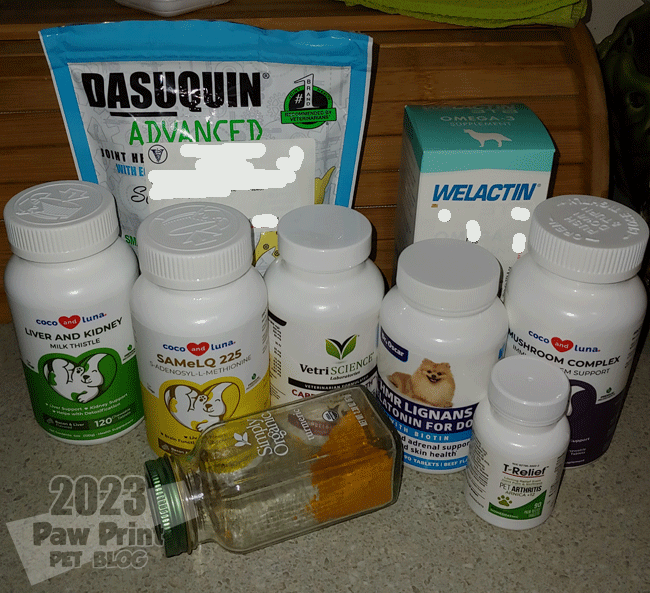
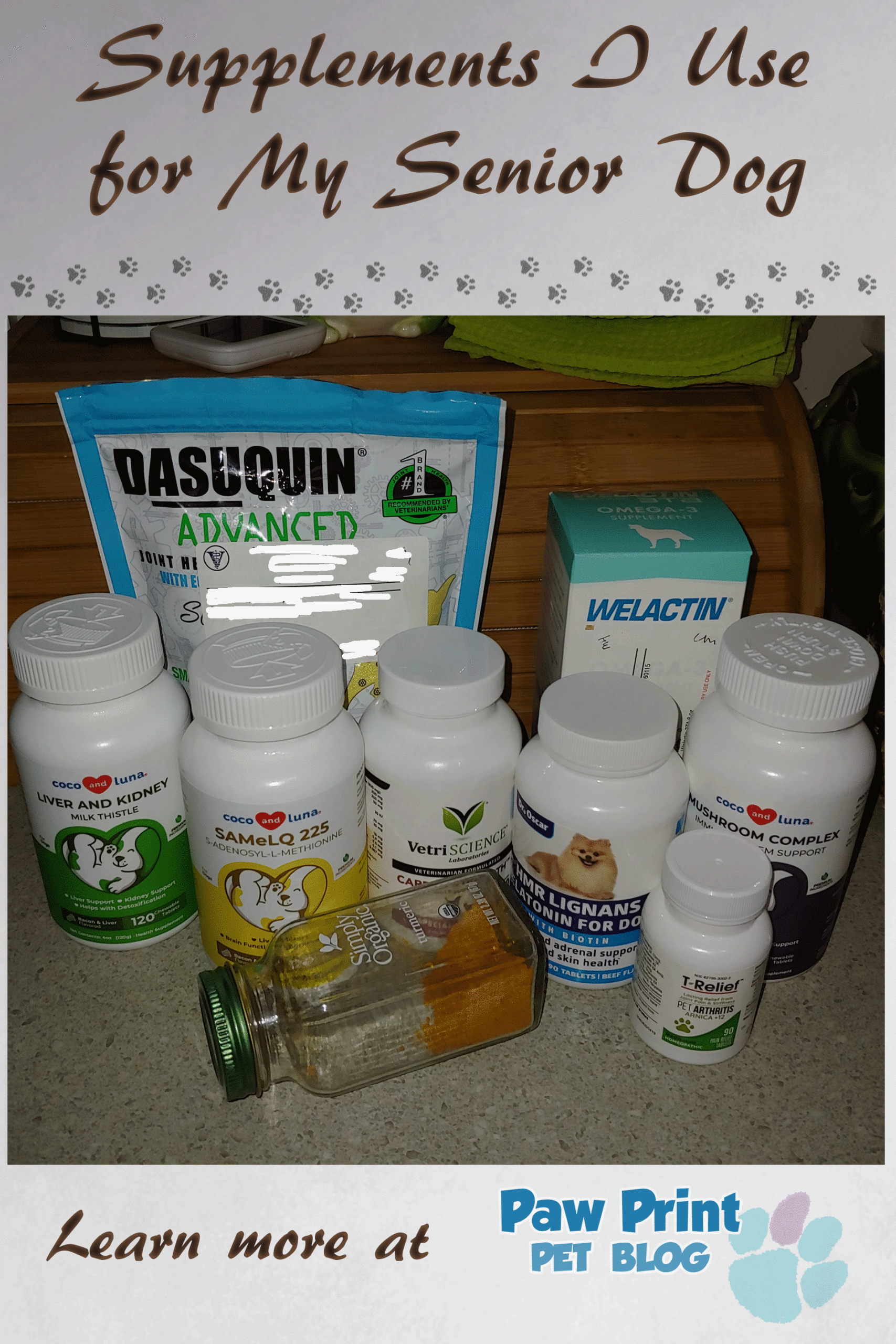
Coco and Luna Milk ThistleOpens in a new tab.: Milk thistle can help support the liver, kidneys, heart, skin and coat.  I started giving it to Kit after he had bloodwork done a few months ago that showed elevated liver enzymes.  I will update this post after his next blood work up.

Coco and Luna SAMeLQOpens in a new tab.: SAMe is a supplement that has been shown to improve liver, brain, joint, and cognitive health.  Like the milk thistle, I started Kit on SAMe to hopefully help support his liver.  However, SAMe is a supplement often recommended for senior dogs because of it’s agility to help preserve joint and cognitive function.

Dasuquin Advanced: This supplement we get from Kit’s vet.  It’s your basic Glucosamine/Chondroitin/MSM joint supplement.  The Advanced version of Dasuquin, available from vets, contains additional ingredients to support joint health.

WelactinOpens in a new tab.: Welactin is, basically, a fish oil supplement.  We were using another brand of fish oil before.  Kit’s vet recommended this one so we decided to give it a try.  Kit hasn’t been on it very long.  I’ll have to update at a later date about whether or not I feel like it helps Kit.

VetriScience Cardio StrengthOpens in a new tab.: I’ve used this supplement for general heart health since we originally learned about Kit’s heart murmur.  I guess I can’t say for sure whether this supplement is helping Kit or not but, I will say, that his murmur is very mild and, thankfully, so far has not gotten any worse over time.

Lignans & MelatoninOpens in a new tab.: Lignans and melatonin are commonly used to treat the symptoms of Cushing’s Disease.  They do not decrease a dog’s cortisol levels, but they can help manage symptoms.

Yes Still Going, More Supplements…

Coco and Luna Mushroom ComplexOpens in a new tab.: Unlike Kit’s other supplements, I give him mushroom supplements for general health.  I’ll have to write a post about the benefits of supplementing dogs with mushrooms sometime!  Lately I’ve been using this Coco and Luna supplement, however I’m not super brand loyal and have used other mushroom supplements in the past.

T-Relief ArthritisOpens in a new tab.: T-Relief is a holistic pain relief pill.  I think it’s either this, or the next supplement, or else a combo of the two, that has eliminated Kit’s arthritis pain!

TurmericOpens in a new tab.: I supplement Kit with turmeric by making him home made turmeric/golden paste treats.  You can read more about the benefits of turmeric for dogs hereOpens in a new tab., and see the recipe for the treats I use for Kitsune hereOpens in a new tab..  Turmeric had greatly improved what used to be Kit’s frequent GI issues, and I believe helped a great deal with his arthritis as well.  Turmeric is a supplement I’ll probably always give Kit, as long as it doesn’t conflict with any other medication he may need.

ProDen PlaqueOffOpens in a new tab.: I debated whether or not to consider this a supplement.  These are the dental chews that I use for both of my dogs.

supplements senior dog

Myos Canine Muscle FormulaOpens in a new tab.:  Myos is a highly recommended, although not cheap, supplement for dogs experiencing muscle loss/wasting for any reason.  In clinical studies, it has also been shown to help with arthritis.  I started supplementing Kit with Myos after we noticed some muscle loss during his recovery from IVDD.  Because he is 14 now, and muscle loss can also be common in older dogs, I’m planning on keeping Kit on Myos to support his continued health and mobility.

That’s a Lot of Supplements!

It doesn’t feel like that much when I’m giving Kit his supplements day to day.  We’ve fallen into a routine, so giving him all his supplements never feels like a big deal.  Some he gets in the morning with breakfast.  A few he gets in the middle of the day, some he gets with dinner, and the melatonin/lignans he gets right before bed.  He gets turmeric and T-Relief twice a day, but everything else just once a day.

I know some of you are probably thinking – all those supplements must be expensive.  Probably.  I’ve never sat down and added up the costs.  The way I look at it, it would be even more expensive if he was on prescription meds from the vet.  Then, on top of the medications, he’d need bloodwork done every 3 months to make sure the meds weren’t damaging his organs.  His supplements aren’t as risky, and, so far, have been effective in helping to deal with his various issues.  I know for sure that our supplement routine helps his arthritis.

Keeping this Post Updated

I’ll keep this post updated because, like I mentioned above, I very much base my dogs’ supplements on what they need at any given time.  Some supplements I give for a while then stop, others I will likely give Kit for the rest of his life.  I’m thinking of writing a more in depth post about each supplement I use, what it does, why I give it, and how I feel it’s helped my dogs.  Let me know if anyone would find something like that helpful.  This post is already getting long, so I didn’t want to include even more info here.

Always remember to talk to your vet before starting a new supplement.  Although many dog supplements are available over the counter, some of them can interact with either other supplements or with prescription medications.  Especially if your dog is a senior with multiple health concerns, and you are using multiple supplements, you want to take extra care to ensure that everything you are giving your dog is safe both on its on, and in combination with everything else your dog is getting.

Comment below!  What supplements, if any, do you give to your dog?  Have you noticed significant differences in their health since you started?

supplements senior dog

We’ve, unfortunately, been dealing with content scrapers stealing our articles lately. You shouldn’t be seeing this article on any site other than pawprintpetblog.comOpens in a new tab.! If you’re reading this article on any other site, we’d love for you to take the time to contact usOpens in a new tab. and let us know and, if you have the time, stop by and visit us on our official site! Thanks you.