Recent Posts

Kit & his “Wife” – The Most Epic Dog Toy Repair Ever!


Paws LoveWay back when, not long after I started attending college, I developed a bad case of puppy fever.  Of course, living in a college dorm meant, sadly, my dreams of owning an adorable little fuzzbutt of my own would have to wait.  At some point, I don’t remember exactly when, a few friends and I attended an event held by a local shelter.  They had pet products for sale, with the proceeds going towards helping homeless animals.  I bought a few things for my future puppy.  One of the things I bought was a “Snuggle Puppy”, a cute little stuffed dog that came with a little plastic red heart that made sounds to mimic a heartbeat.  My future puppy’s, Kitsune’s, first toy!

Disclaimer

dog toy repairSnuggle Puppy, Meet Real Puppy!

For the rest of the time I attended college the snuggle puppy called my dorm room home.  Flash forward to March of 2009, my partner and I were living in our first (pet-friendly) apartment together, and adorable, 9-week-old, Kitsune joined our little family.  I finally got my puppy!  The snuggle puppy was bigger than he was!  We used the heartbeat feature to comfort him in his crate at night, and anytime we had to leave him home alone.  He snuggled and played with his puppy every night, starting on his first night home with us.

An…Interesting…Friendship

It didn’t take long before he started displaying some interesting behaviors with his snuggle puppy (and a select few other toys).  I wrote about them here.Opens in a new tab.  He would suck on his toys, while at the same time “dancing” with them, or kneading them with his paws.  Between that and how often he’d lick his snuggle puppy, we came to refer to “her” as his wife.  Pretty much every single day, normally right before bed, Kit spends time kissing and dancing with his wife.  I think it helps relax him.  It’s been over 13 years now since Kit and his wife were first introduced, and he still to this day spends time with her every single evening.

The problem?

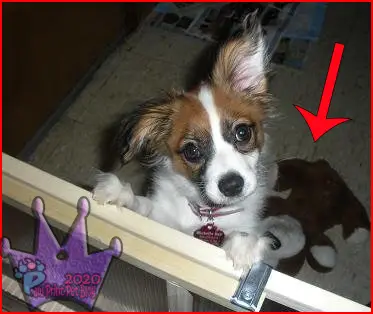
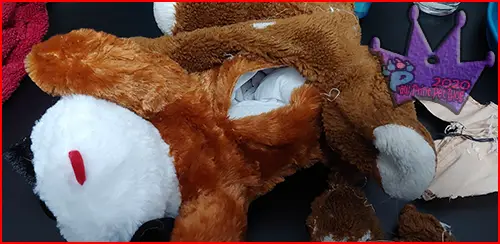
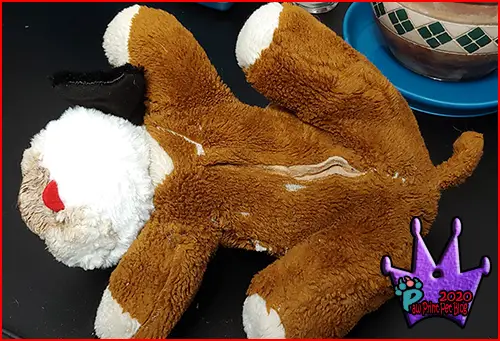
As you can imagine, after so many years of daily play, Kit’s wife looked about as good as you’d probably expect her too.  This was her right after we moved in September…

dog toy repairYeaaah….She was looking pretty rough.  I think that’s an understatement.  Kit still played with her, or perhaps I should say with pieces of her, every night.  I tried getting Kit a new snuggle puppyOpens in a new tab. to replace her, but it didn’t work.  He didn’t want much to do with the new one.  I think, at this point, he’s attached to the scent of his wife rather than what she looks like.  The new one just didn’t smell right.  It was time to break out my sewing kit and get creative!

dog toy repair

Puppy Toy Hospital!

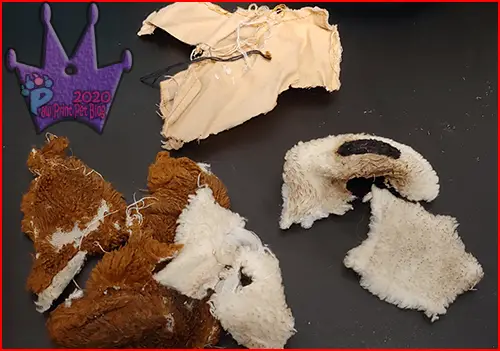
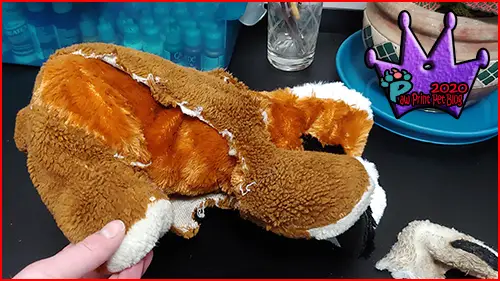
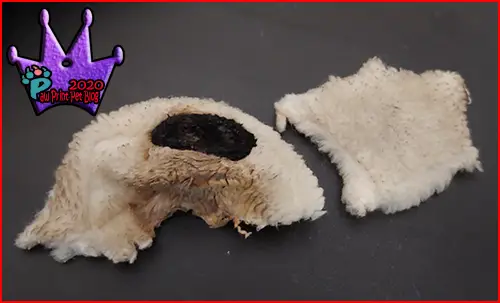
I started by trimming up what was left of Kit’s wife.  I set aside as much of her body as I could salvage, her nose and mouth, and the white patch from the top of her head.  Snuggle puppies have a Velcro opening on their tummies, so you can put the plastic hearts and heat packs inside.  Instead of those things, I filled the new snuggle puppy with pieces of the old one.  I figured the more pieces of the old puppy that could be “salvaged”, the more familiar it would smell to Kit.

dog toy repairNext I took what was left of the body of the old toy, and fit it over the new one.  Luckily, even though the new snuggle puppies don’t look exactly the same as the old ones did, it fit pretty well.

dog toy repair

I hand stitched the pieces of the old toy, as best I could, over the new toy.  Next up was her face.  My poor partner thought this was a bit gross, but I hand stitched the mouth and nose area, as well as a white spot from the top of the head of the old toy onto the face of the new one.  The mouth area has always been where Kit liked to hold/kiss his toy, so I thought that transplanting it onto the new one would probably be the key to getting Kit to accept the new Frankentoy.

dog toy pieces

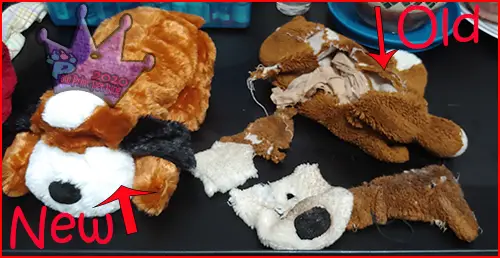
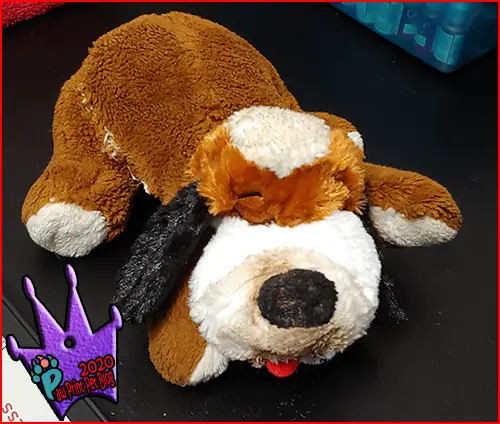
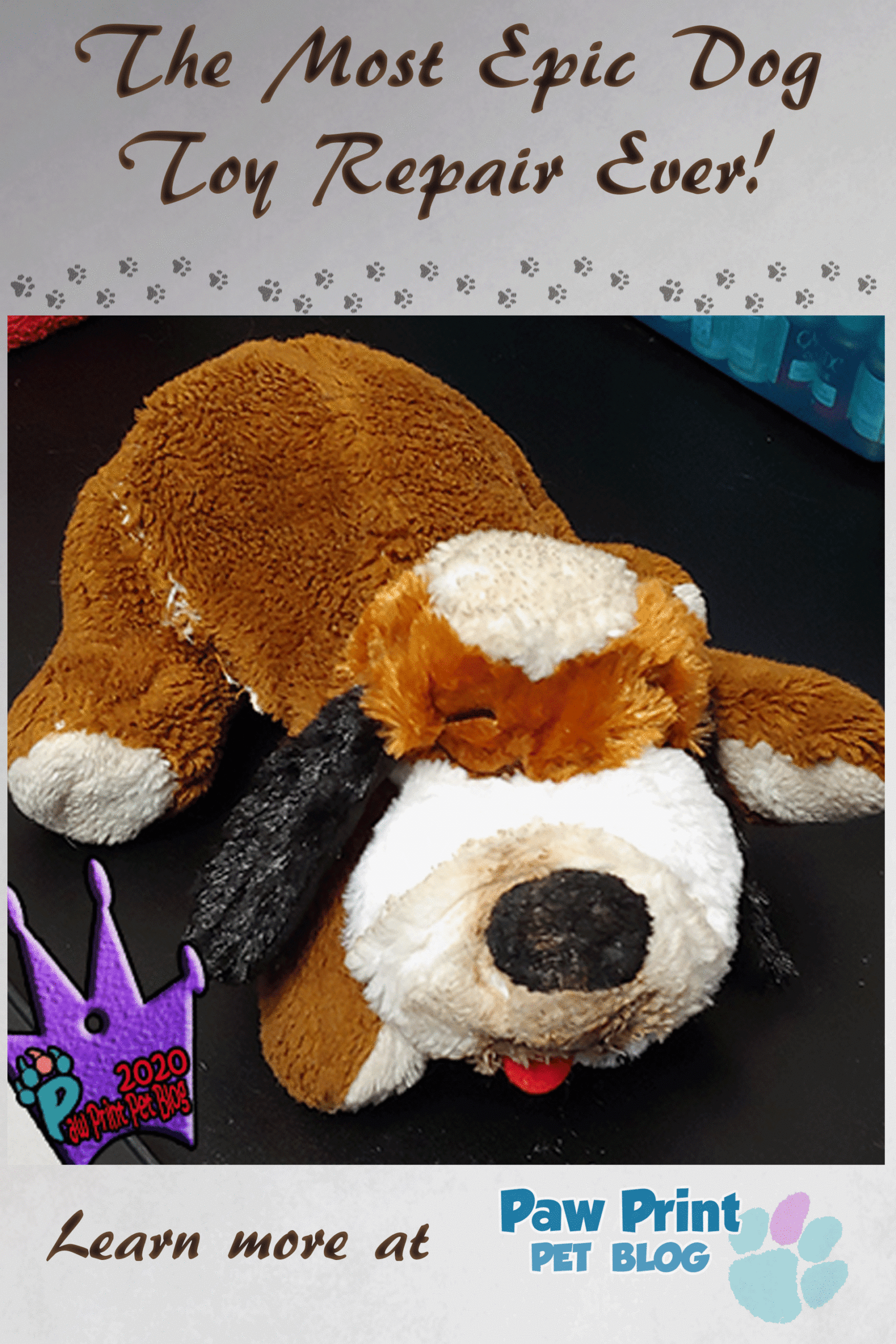
Here was the finished result.

A bit strange for sure, but not nearly as bad as I was expecting it to be…

dog toy repair

Fixed Snuggle PuppyNow the big question – was all this for naught?

Would Kit want anything to do with his wife post makeover!?

Yes!!  He immediately took to it like nothing at all had changed.

After a few days away from his wife, while I was working on fixing her, he got super excited when I gave her back to him.  He’s back to his nightly randevus with his lovely wife.  You can see in the video above, the white patch on the top of his wife’s head is already falling off, but I think that’s ok.  My guess is that now, even if pieces of the old toy fall off over time, he’ll be attached enough to the new one to not mind.  Luckily, for the most part, my repairs seem to be holding up well.

Was doing all this a little bit extra?

100% yes.  But when you have a senior dog, who you completely adore, you do what you can to keep him happy.  Kit only interacts with a very select few toys these days, and his wife has been his favorite for so many years.  Doing his nightly kneading ritual really seems to help him unwind at the end of the day.

Does your dog, or other pet, have a favorite toy?  Have you ever repaired a broken toy for your pet?  Comment below!  We always love hearing from our readers.

epic dog toy repair


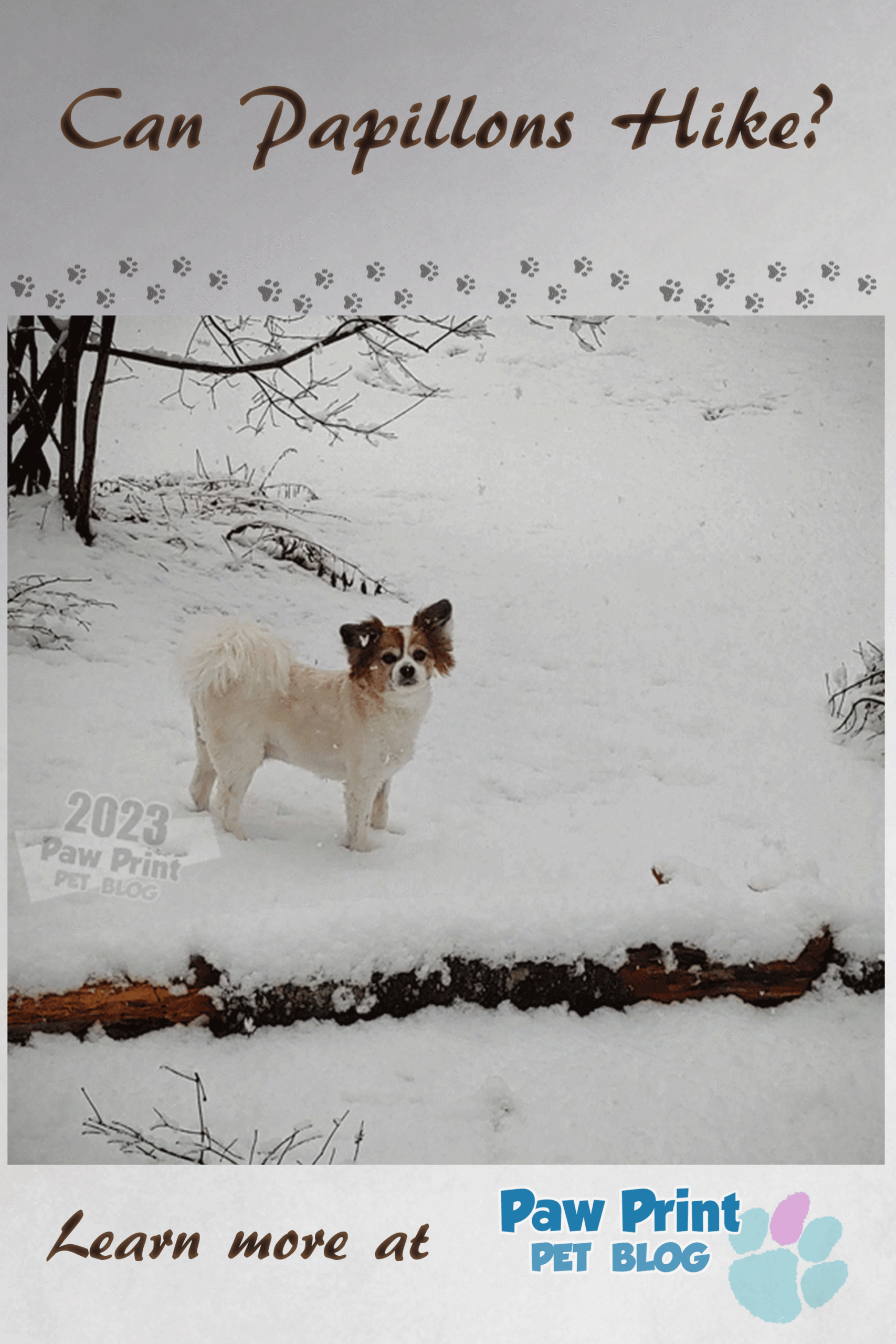
Can Papillons Hike?


Papillons are a toy breed of dogOpens in a new tab. that generally weigh under 10 lbs.  Small, especially toy, breed dogs are usually thought of as companion breeds.  They’re good for warming laps and keeping you company.  But a dog is a dog, no matter their size.  Small dogs are, unfortunately, often underestimated.  Despite their compact size, they can do many of the things that much larger dogs can do!  If you’re reading this post you are probably wondering, do papillons like to hike?  Is it safe to take your papillon hiking with you?

Papillons Can Make Amazing Hiking Companions!

Although small, papillons are athletic.  People often underestimate them, thinking they are getting an adorable lap dog when, in reality, papillons can be quite high-energy little dogs.  Sometimes nicknamed the “border collies of the toy dog world”, papillons can make excellent little sports dogs.  Besides having lots of energy, papillons are also considered to be the 8th smartest dog breed in the world.  This means that not only do they have the energy required to participate in activities, but they are generally pretty easy to train too!  Papillons excel at activities such as agility, obedience, nose work, and, yes, hiking!

Papillons, despite being a toy breed dog, can make amazing hiking partners!  They are an active, social breed that loves spending time outdoors with their pack.  Like with all dogs, no matter their size, you should accumulate your papillon to hiking slowly, over time.  Don’t expect them to be amazing outdoors dogs their first time out.  Work your way up, slowly, to longer and more challenging hikes.  Be especially cautious if your dog, papillon or otherwise, is very young or old. 

Hiking with My Papillon, Kitsune

Papillons HikeThroughout his life, my papillon has been an amazing hiking partner!  I really couldn’t have asked for a better little adventure dog.  He’s respectful and calm around other people, dogs, and wildlife we come across on the trail.  When he was a puppy, I spent a lot of time socializing him around both people and animals.  He’s always been especially amazing at finding the safest route down even the roughest of trails.  A lot of times, during hikes, I’ll let Kitsune lead the way and follow behind him.  He’s better than I am at picking the safest/easiest spots to walk on a trail!

I never worry about getting lost in the woods when I have Kitsune with me.  While we’re hiking, I can tell Kit that it’s “time to go home” and he’ll lead me back to our car, or to the house if we’re exploring the woods around our house.  Noticing how well Kit did at smelling his way back home again during our hikes is what eventually led me to starting nose work with him.

Kitsune is 14 years old now and was recently diagnosed with cervical IVDDOpens in a new tab..  So, as you can imagine, we’ve had to put hiking with him on hold while he recovered.  Now that he’s a few months out from his diagnosis, we got the ok from his vet to slowly start exercising him again.  We’ve worked our way up to daily 20 minute walks.  I’m planning on continuing to increase, slowly, the amount of exercise Kitsune gets per day.  We’re unsure right now whether or not we’ll be able to get back to taking him on long hikes again.  But, for now, we’re content with exploring the woods around our house.

My Papillon Never Had Any Issues Keeping Up During Hikes!

People seem to think that small dogs will have issues keeping up during hikes.  I’ve never, even now that he’s a senior and has health concerns, had that issue with Kitsune.  Most of the time, in fact, I find that I’m the one struggling to keep up with my small dogs!

senior dog rescues

Since owning my papillon, for almost 14 years now, I’ve met many amazing papillons and their people.  I’ve met papillons who compete in all dog sports, from agility to weight pull!  And yes, I’ve met lots of papillons who love hiking.  Papillons, with the proper training, can make amazing little hiking partners!  They are social, sweet, energetic, and, if you find yourself in a bind, small enough to easily carry out of the woods.  I couldn’t have asked for a better hiking companion than my papillon, Kitsune.

Comment below!  Do you hike with a small dog?  Tell us about your amazing small adventure dog in the comments below.

Papillons Hike

We’ve, unfortunately, been dealing with content scrapers stealing our articles lately. You shouldn’t be seeing this article on any site other than pawprintpetblog.comOpens in a new tab.! If you’re reading this article on any other site, we’d love for you to take the time to contact usOpens in a new tab. and let us know and, if you have the time, stop by and visit us on our official site! Thanks you.

How Long Should You Wait Before Getting Your Dog Fixed?


For many pet owners, getting their dogs spayed or neutered is a nerve-wracking experience.  It can be expensive, especially if you factor in things like presurgical bloodwork and pain medication.  For many people, getting their puppy fixed will be their first time experiencing putting their furry family member through surgery.  My  “puppies”, Kitsune and Fenrir, are 14 and 7 years old now.  But I can still remember how worried I was dropping them off for their neuter surgeries.  There are a lot of factors you’ll probably consider before deciding on getting your dog altered.  Not the least of which is figuring out the right time to get the surgery done.  Is there an ideal age when you should get your dog fixed?

I Wish I Hadn’t Gotten My First Dog Fixed Early

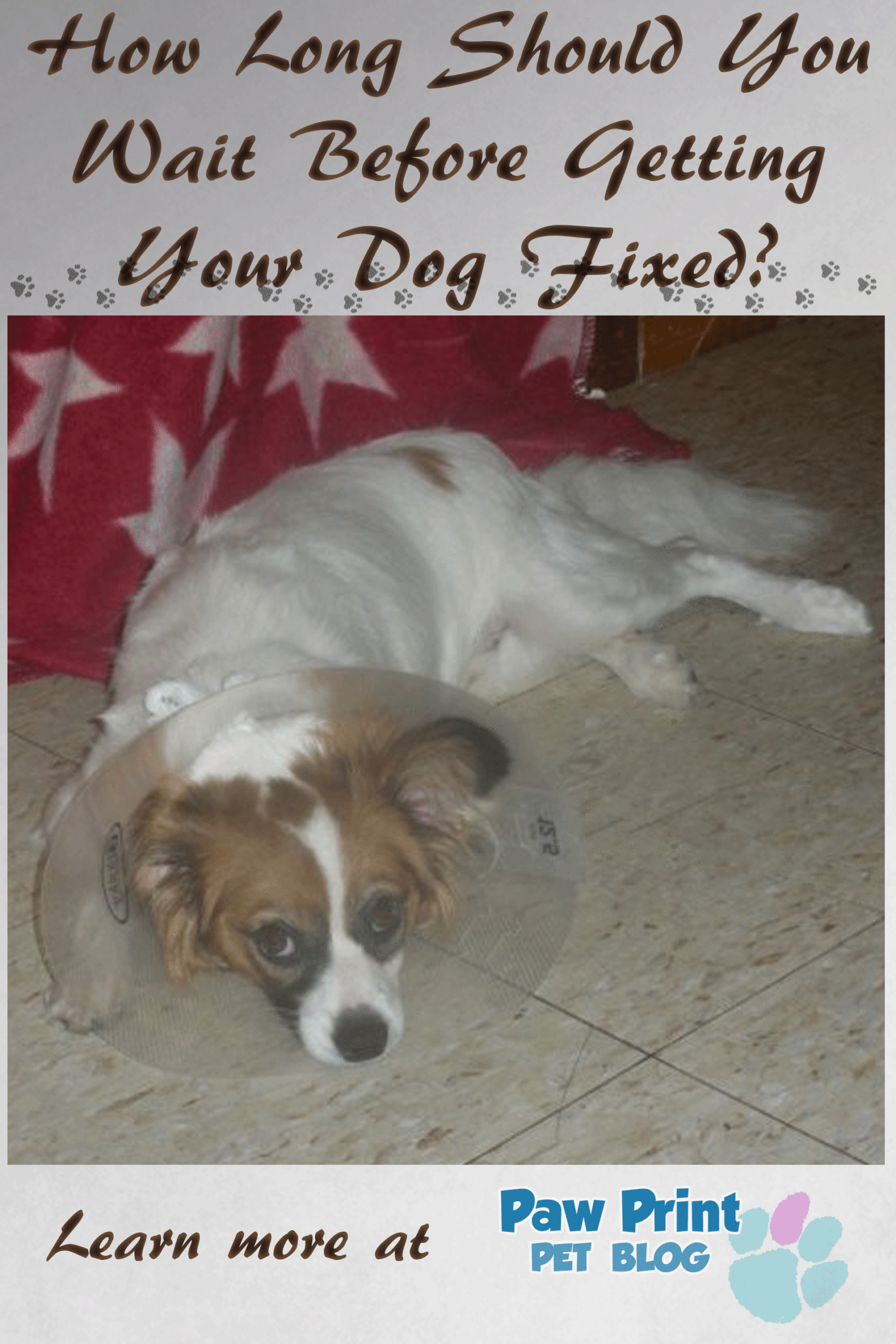
fixed dogKitsune is the first dog that my fiancé and I raised on our own.  I adore the dog he has grown to be.  But if I had the chance to go back in time there are things I would do differently.  I wish I had waited longer to get him neutered.  We had him fixed when he was 7 months old, before he was completely finished growing.  I didn’t know about the benefits of allowing dogs to finish growing before they are neutered.  The vet we went to when Kit was a puppy recommended getting dogs neutered at 6 months old.  So that’s what I did.

Those of you who know anything about Kit, probably know that he is an oversized Papillon.  PapillonsOpens in a new tab. typically weigh 10 lbs or under.  Because Kit ended up growing to be taller than normal for his breed, a healthy weight for him throughout his life has been between 18 and 20 lbs.  There’s no way I can say for sure that his unusual growth was caused by us getting him neutered young.  But I’m sure it didn’t help things any.  Sex hormones in dogs, as in people, play a big role in growth and development.  Dogs fixed early often times grow taller than their intact counterparts because they lack the normal flow of hormones to signal the timely closure of bone growth plates.

Kit’s size, which has put excess strain on his body throughout his life, may have contributed to him developing health issues, such as IVDDOpens in a new tab..  Again, there’s no way for me to know for sure whether neutering him early strongly contributed to health issues later in life.  But I can’t say for sure that it didn’t contribute either.

Doing Things Differently with My Second Dog

I learned a lot in between getting Kitsune and getting my second dog, Fenrir.  I decided to wait a bit longer before having Fen neutered.  This was complicated a bit by the fact that Fen had cryptorchidism, or an undescended testicle.  Undescended testicles are at a higher risk of developing cancer, so it was important to have Fenrir neutered.  However, I decided not to rush things and ended up having Fenrir fixed a bit after his first birthday.  I had his vet take X-rays first, so that we could be sure that his growth plates had enough time to close normally before his surgery.

fixed dog

Mixed Feedback

I got a lot of mixed feedback when people found out I waited so long to get Fenrir neutered.  Many vets still recommend getting pets fixed when they are around 6 months old.  Some people in the rescue community recommend having it done even younger.  Research I’ve done, on top of personal experience, has convinced me to wait longer before having my personal dogs fixed.

To be clear, I’m not against getting pets fixed.  In an ideal world every owner would prevent accidental litters, so fixing pets as a form of population control would not be necessary.  We don’t live in an ideal world, and the pet overpopulation problem is heartbreaking.  Fixing pets can also provide some benefits, such as eliminating certain types of cancers, reducing or eliminating your pet’s desire to roam (to find a mate), and it can help improve some behavioral problems such marking.

But it’s important to note that, as with most things, there are also cons to fixing animals.  While fixing prevents some types of cancers, it can increase the risk of other types – notable of osteosarcoma (bone cancer), and cardiac hemangiosarcoma (tumors in the heart).  Fixing dogs has been shown to triple the risk of hypothyroidism.  In male dogs it increases the risk of prostate and urinary cancers.  In female dogs spaying can cause an increase in urinary tract problems including infections, and spay incontinence.  Spayed and neutered dogs have an increased risk of developing orthopedic disorders.  They are more prone to displaying adverse reactions to vaccines.

Take Your Individual Situation into Account

So when should you get your pet spayed or neutered?  That can vary depending on your individual pet/situation.  Small dogs generally reach maturity before larger ones.  If you want to be sure your dog is done growing before you spay/neuter, you can ask your vet to use an Xray to look at his/her bone growth plates.  A dog who is not yet done growing will still have open growth plates.

Some vets may offer alternatives to traditional spays/neuters.  These include things like ovary sparing spays for females, and vasectomies for males.  At the end of the day, each owner will have to do their own research and, with the help of their vet, decide what is best for their particular dog.  Early spaying/neutering might be the right choice for an owner who doesn’t feel they’ll be able to successfully prevent unwanted pregnancies.

I will say that keeping Fenrir intact for as long as I did ended up being a lot easier than I originally thought it would be.  I don’t let my dogs spend time outside unsupervised, so making sure Fen kept away from any interested ladies was easy for us.  It will, most likely, be quite some time before I’ll have to deal with this issue again myself.  But I know that I don’t ever want to fix another one of my dogs before they are finished growing.

Start Your Research

If you’re reading this because you’re still in the research phase of trying to figure out when you want to get your own dog fixed, I can start you off with links to some studies that I found useful/interesting.

Comment Below!

If you have fixed pets currently, at what age did you have them spayed or neutered?  What factors did you take into account before deciding when you wanted to get your dog fixed?  If you know of any related studies that I didn’t like to above, let me know and I can add them to the list!

fixed dog

We’ve, unfortunately, been dealing with content scrapers stealing our articles lately. You shouldn’t be seeing this article on any site other than pawprintpetblog.comOpens in a new tab.! If you’re reading this article on any other site, we’d love for you to take the time to contact usOpens in a new tab. and let us know and, if you have the time, stop by and visit us on our official site! Thanks you.

Breaking the Stereotypes of Dog Muzzles


Pretend for a moment that you’re outside taking a walk instead of reading this.  You’re walking down the street – maybe on your own, with family members or friends, or perhaps you have your dog with you.  You turn a corner and see someone walking a dog who is wearing a muzzle.  What’s the first thing that pops into your head?  How do you react?

Many People View a Muzzled Dog as a Bad Thing

They assume the dog is vicious.  While some people, no matter what they think, will quietly walk past (perhaps crossing the road to give the dog in question a wider berth), others seem to feel the need to berate the owners of muzzled dogs.

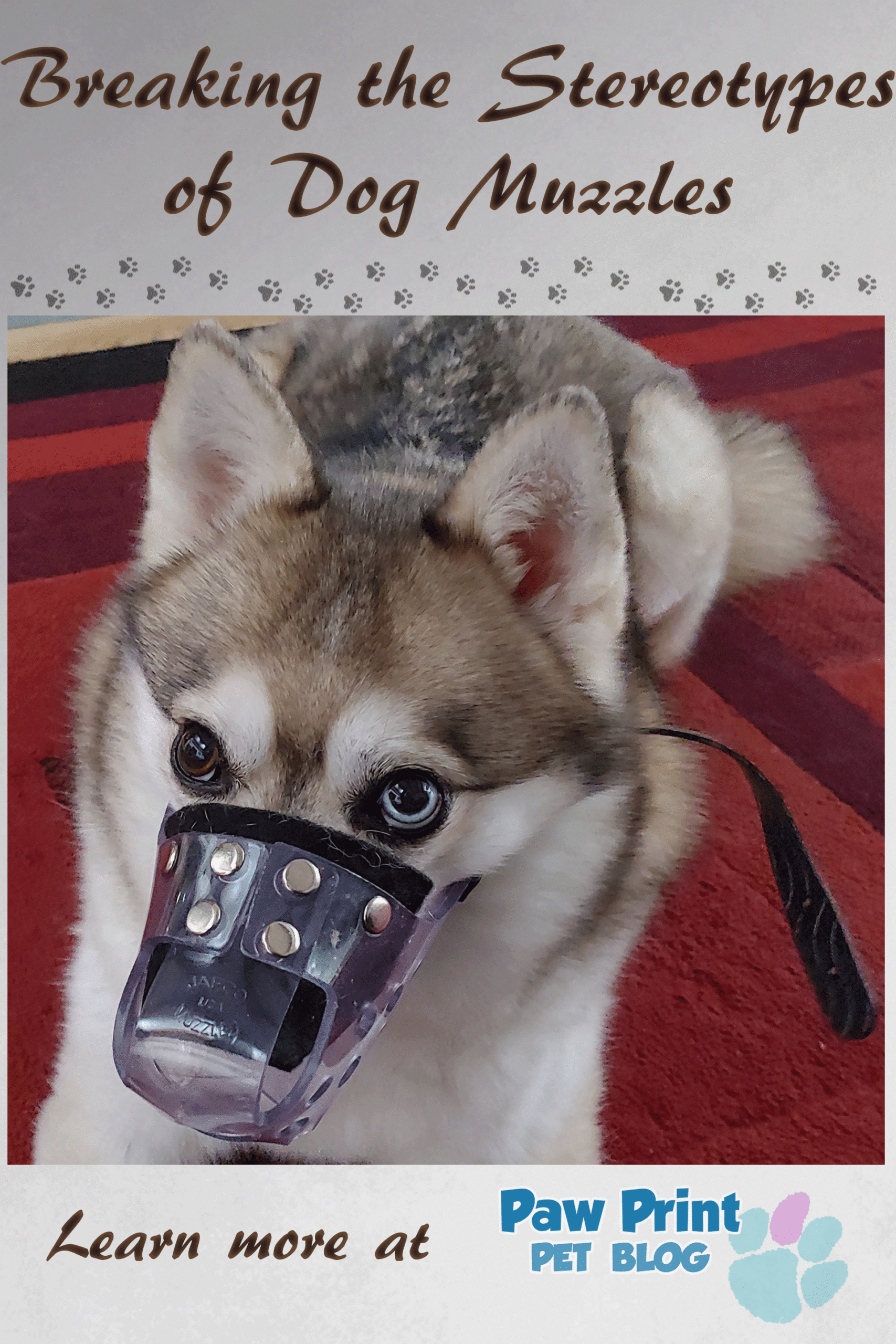
Would it shock you to learn that both of my dogs are muzzle trained?  Yes, these dogs…

dog muzzle

They are small.  Kitsune is just over 20 lbs and Fen is 18 lbs.  They are adorably cute.  Fen looks like someone brought a child’s plush husky to life and Kit has a face cuter than any Teddy bear I’ve ever seen.  But they are still dogs.  They are living beings who are not perfect, who inevitably feel uncomfortable in certain situations, and who have teeth.

I Believe that All Dogs Should be Muzzle Trained

My current dogs, and all of my future dogs, will be muzzle trained.  It doesn’t hurt your dog to be trained to happily accept a muzzle.  Learning that having something over their mouth is not something to be stressed or afraid of could prove valuable.  What if your dog gets hurt, and is already in a lot of distress, then needs to be muzzled to keep the people helping him/her safe?  Vets use muzzles often, as animals are especially prone to lash out when they are injured, stressed, and/or sick.

Not all dogs are bombproof in all situations.  Even if you have a sweet older dog, you may someday encounter a situation where your dog is nervous enough that he/she tries to bite.  You can’t always control everything in your dogs’ environment.  What you can do, however, is try to learn to read your dog and to utilize the tools available to you to ensure that a stressful encounter never becomes a worst case scenario.

Most of those tools are things that people wouldn’t think negatively about at all.  Things like a pocket full of treats, toys, a sturdy harness and leash, and a good foundation of basic obedience.  But, yes, muzzles are also one of those tools and I really, really wish that more people would learn to think of them in a more positive light!

dog muzzle

Muzzles are Misunderstood

When I lived in the city and I was working on muzzle training my dogs, I would often get negative comments from strangers.  I usually ignored them, because I’m, in general, a nonconfrontational person.  But here are some of the things I’d love to educate people about when it comes to muzzled dogs.

  • My dogs are not miserable!  I spent a lot of time training my dogs to happily wear their muzzles.  Both of them will gladly stick their noses into their muzzles on their own and wait for me to fasten them.  I use basket muzzles, so my dogs can still open their mouths to pant and drink.  Their muzzles don’t keep them from running, playing, enjoying walks and generally having fun.
  • Muzzles are not just for dogs who bite.  Sure, muzzles can prevent dog bites but there are other reasons why owners use them.  Kit has severe food allergies.  Eating things off the street can be very dangerous for him.  Muzzles can be used to protect dogs who are in danger of eating things that could make them very sick.
  • Even if muzzles are used to prevent biting, it doesn’t mean the dog is vicious.  Sometimes they are fearful, in pain, not feeling well, etc.
  • Sometimes muzzles are more for the owners than the dogs.  Handling a dog that has reactivity or other issues can put a lot of stress on the dog’s owner, even if said dog has never bitten.  As most dog owners know, our dogs feed off our emotions.  Muzzling a dog can sometimes help the dog’s owner’s stress levels, which in turn can decrease the dog’s stress too!
  • Muzzles are a good thing!  They mean that a dogs’ owner is being proactive.  He/she is thinking about the safety of their dog and others too.

The Next Time You See a Dog Wearing a Muzzle, Thank Their Owner Instead of Judging Them!

He/she is trying to ensure the safety of both their dog and you.  If the dog was taught positively to accept their muzzle, and the muzzle is an appropriate type that fits well, then you don’t have to worry about the happiness of the dog.  Dogs taught, using positive methods, to accept a muzzle are no more miserable then an average dog wearing a collarOpens in a new tab./harnessOpens in a new tab./etc.  It’s just another piece of gear.

If you feel uncomfortable around a dog in a muzzle, or the owner is clearly trying to get some distance, it’s fine to give these dogs/handlers their space.  It’s not ok, however, to act or say things that are judgmental or rude.  If you’d like to learn more about muzzles including how to train your dog to wear one, what types are available, and how you can help fight the sigma that muzzled dogs and their owners face, The Muzzle Up! ProjectOpens in a new tab. is an awesome resource.

I’d love to hear what you think!  If you have dogs in your life, are they muzzle trained?  Have you ever thought about muzzle training them?  Now that I’ve shared pictures of my boys wearing muzzles, share a picture of your furry friend (muzzled or not) in the comments below or over on our Facebook pageOpens in a new tab.!

dog muzzle

We’ve, unfortunately, been dealing with content scrapers stealing our articles lately. You shouldn’t be seeing this article on any site other than pawprintpetblog.comOpens in a new tab.! If you’re reading this article on any other site, we’d love for you to take the time to contact usOpens in a new tab. and let us know and, if you have the time, stop by and visit us on our official site! Thanks you.

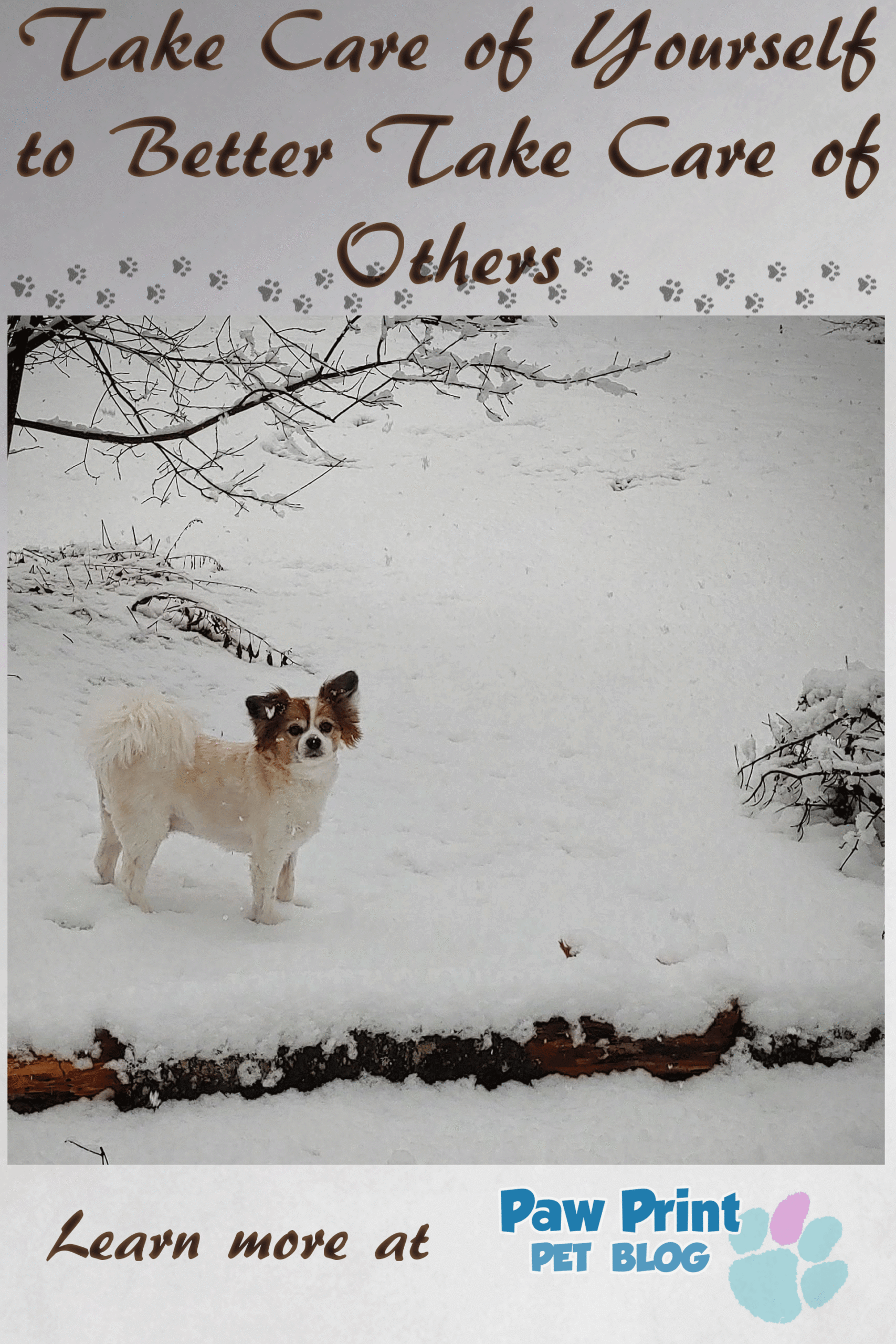
Take Care of Yourself to Better Take Care of Others


I hope everyone survived the holiday season intact!  I know the winter holidays can actually be a stressful time for a lot of people.  The two or so months before Christmas are the busy season for my job, so my life always feels extra hectic leading up to the holidays.  I just adore my two dogs, Kitsune and Fenrir, and I spend a lot of time playing with, training, exercising, and otherwise caring for them.  I also volunteer in my local community to help animals in need.  A lot of my time, money, and emotions get invested into my animal friends.  I’ve never regretted doing this, but I’ve been known to sometimes invest so much into my pets that I neglect some aspects of my own self care.

What is Compassion Fatigue?

self care petsWhat pet lover hasn’t spent sleepless nights caring for a sick, or seniorOpens in a new tab., pet, chosen pet food over new sneakers, taken Fido for just one more walk because he’s excited to go, even though you’re basically asleep on your feet?

Pets are amazing.  They become members of our families and can improve our lives in so many ways.  But caring for animals can sometimes be draining.  Much like life in general, as much as we want things to always go our way, owning pets isn’t always sunshine and butterflies.  It’s puppy snuggles and proud moments, but it’s also puppy poop and frustrating moments.

Compassion fatigue, sometimes called secondary traumatic stress, is, basically, burnout caused by investing so much of yourself into caring for others.  It’s a relatively common occurrence in people who work with people or animals, including veterinarians, paramedics, police officers, and animal welfare workers.  It can also occur in people who act as caregivers, such as people caring for chronically ill human family members or pets.  According to Banner HealthOpens in a new tab., symptoms of compassion fatigue can include things like physical, phycological, and emotional exhaustion, feeling helpless, hopeless, powerless, irritable, angry, numb, or sad, and even physical symptoms such as appetite and sleep disturbances, nausea, or dizziness.

Putting Our Pets Needs Above Our Own

I think it’s common for animal lovers to put the needs of their pets above their own.  Our animals didn’t ask to be our pets, after all.  By taking them into our homes we make a commitment to provide for them.  That, in most situations, wouldn’t be enough to completely drain someone.  We find time to catch up on our sleep after staying up to care for a sick pet, and buy those sneakers with our next paycheck.  But when we continuously make sacrifices for our pets, for our jobs, for human family members, then sacrifice even more to help animals in the shelter, all on limited sleep because we also have to work and just generally deal with everyday life, sometimes things can start to add up.

self care pets

Take Care of Yourself

It’s important, especially for those of us who care so much for others, to take time to care for ourselves!  It can be all too easy to overlook our own needs when we have so much other stuff on our plates.  But doing so often leads to a cycle of stress and frustration.  The more we ignore our own needs, the worse we feel, the harder/more stressful it can feel to devote ourselves to others.  If we’re tired and run down from not sleeping/eating/etc. well, or stressed and frustrated from a lack of down time, then we’re most likely not on top of our game when it comes to caring for those we love.  It’s not selfish to spend time taking care of your own needs, whatever they may be.  You have to take care of yourself to be at your best when it comes to taking care of others!

Eliminate Stress

I know my own stress for sure impacts my dogs and how we interact with each other.  I suffer from anxiety so stress is a pretty regular part of my life.  But lately I’ve been feeling worse than usual.  We have a lot going on right now, and working so many extra hours means I haven’t had much time to myself.  Before things got too bad I decided to take a step back, to try to figure out what I could do to eliminate some stress.

I’ve been trying to set aside a bit of time each day when I can forget about work, get a break from my partner and the dogs, and just relax.  It’s been nice to focus more on some of my passions that don’t involve caring for others, like reading and crafting.  I’ve been trying to cook healthier meals and set aside some time each day to exercise.  Having some time to really focus on myself, even if it’s only for 30 minutes a day, really helps me stay on top of my game when it comes to caring for others, my pets included.

I’d love to hear from you!  Comment below.  Does caring or making sacrifices for your pets ever cause you stress?  What are some things you enjoy doing for yourself to help combat the stress?

self care pets

We’ve, unfortunately, been dealing with content scrapers stealing our articles lately. You shouldn’t be seeing this article on any site other than pawprintpetblog.comOpens in a new tab.! If you’re reading this article on any other site, we’d love for you to take the time to contact usOpens in a new tab. and let us know and, if you have the time, stop by and visit us on our official site! Thanks you.

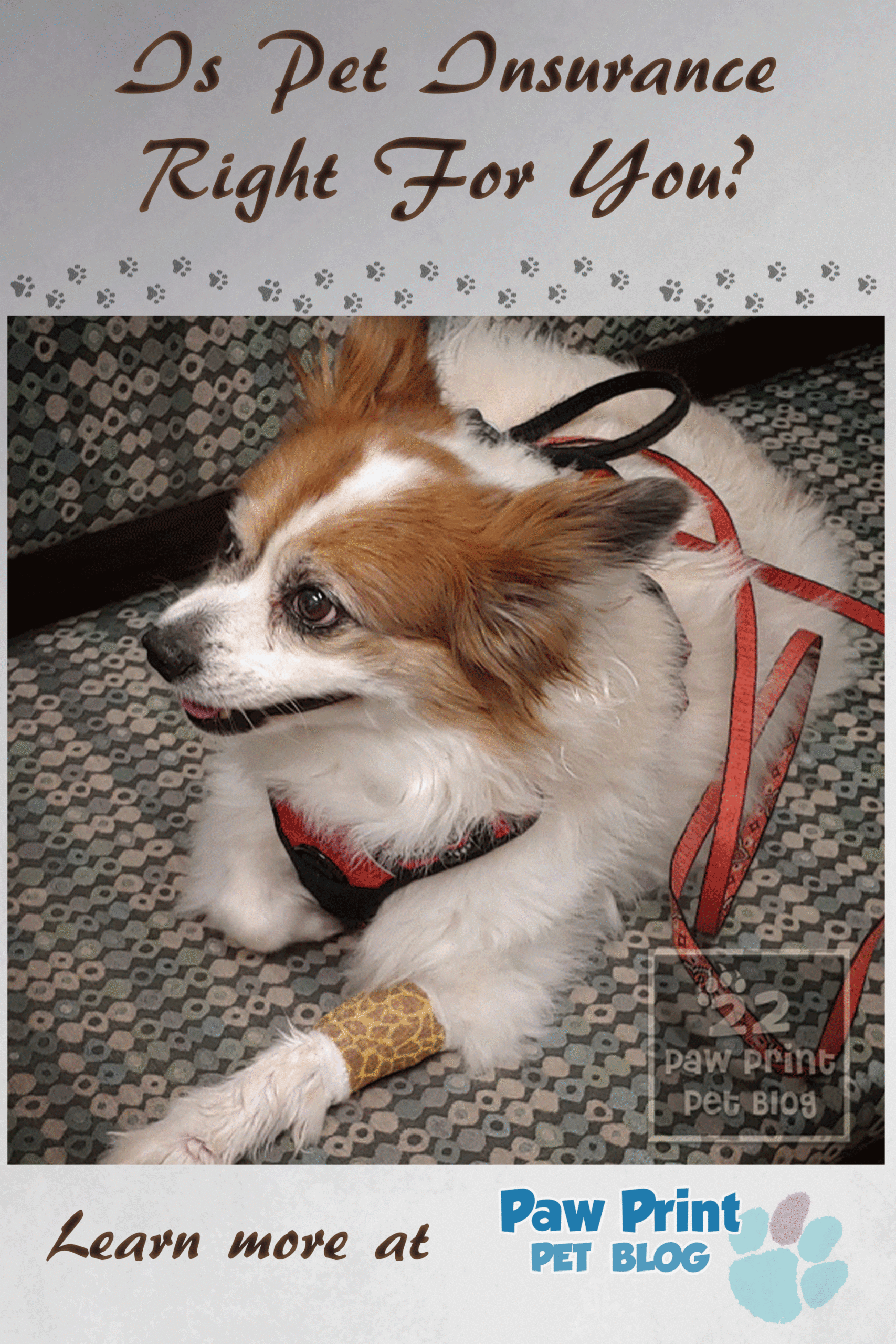
Is Pet Insurance Right For You?


I Changed My Mind About Pet Medical Insurance!
pet insuranceWhenever the topic of pet insurance used to come up, I was the person commenting that a pet savings account was better!  With a savings account, you get to keep all your money if you don’t use it.  You can use the same pool of money for multiple pets.  Pet insurance is frustrating because most of the time you still need to pay your vet upfront even if you have insurance.  So what’s the point?  If you have insurance, you still need savings too (or some other way to pay the bills)!?

But then, enter Covid.  Like many people, through no real fault of my own, I began to suffer some financial stress.  My hours were cut at work.  Then, in the midst of the pandemic, we found out that our landlord was selling our rental house out from under us.  We had to move, again, during one of the worst housing/rental markets I’ve seen in my lifetime.

We had no idea where we’d be living once the lease on our rental was up.  Having two dogs that we, of course, refused to move without made things even harder.  Moving is expensive!  Life, in general, was starting to get more expensive.

Oh, and I Also Have These Two Dogs Who I Absolutely Adore…

What would happen if one of them got really sick?  Or if BOTH of them got sick?  What if I was still having issues at work, and my savings account got low?  What if they required expensive treatment and I couldn’t afford it?  All the “what ifs” were running through my head during this difficult time.

It would break my heart to have to make medical decisions for my dogs based on finances, rather than on factors such as their quality of life.   To have to say “no” to a potentially life-saving treatment option, solely based on the associated price tag would be horrible!  I’m the type of person who would go above and beyond for my pets if it was somehow within my means.  And, of course, if I could continue to maintain their high quality of life.

pet insurance

The Problem with Having Only a Savings Account…

Don’t get me wrong, I’m not recommending against savings accounts!  However, a savings account alone is not always enough when it comes to medical expenses.  The sad facts are that veterinary care is expensive, and many medical conditions that animals face are not ‘one and done’ type situations.  One thing that some of the most expensive pet medical conditions, things like cancer, organ failure, etc., have in common is that they will require ongoing treatment.  Even treatments for more minor conditions, such as allergies, can add up to a lot over time!

What happens if you opt to treat an expensive illness, but the initial treatment is really expensive?  Maybe even expensive enough to drain your pet savings account.  Then you have to worry about how you are going to continue to afford ongoing care.  If you’re like me, and have multiple pets, you might also have to worry about what you’d do if you drain your account caring for one pet, but then the other also needs vet care.

In the past, before things like Covid and crazy inflation, I didn’t worry as much about draining my savings account.  Maybe I’m just getting more paranoid when it comes to my pets.  Caring for a senior dogOpens in a new tab. can do that to you!

How Pet Health Insurance Helps…

Enter pet insurance.  Yes, it’s another bill to pay and, let’s be honest, that kind of sucks.  But it’s hard to put a price tag on peace of mind.  With both insurance and a savings account, I worry much less about money being a deciding factor when it comes to making medical decisions for Kit and Fen.  When I have to pay a medical bill for my dogs, I have my savings account to pay with.  But now that I also have insurance, I’m able to file a claim with my insurance company and get a large portion of the money I spent at the vet back.  That means it can go right back into savings, ready for the next time I need it.

But What if You Can’t Fund Both Insurance and a Savings Account?

Not everyone has a well funded pet savings account, I know that!  Check out this previous post I wrote about getting financial help with veterinarian careOpens in a new tab..  If you don’t have a well funded savings, a high limit credit card, if you can get one, is a decent fall back.  I’ve had good experience with Care CreditOpens in a new tab..  Care Credit cards can only be used in specific situations, like to pay doctors and veterinarians.  Usually you’ll get some type of perk when using it for higher priced charges, such as 6 or 12 months interest free.  In my experience, Care Credit is good about raising your credit limit if you need more funds to pay for an expensive procedure.

You should use your insurance reimbursements to pay off your credit card right away.  This way you’ll avoid staying in debt, and paying potentially high interest rates.  Plus, once you pay your card off you’ll have the credit available again for the next time you need it.

If you can’t go this route, rarely some pet insurance companies will have the ability to pay your vet directly.  Usually this depends on your vet’s willingness to accept this method of payment.  Talk to your vet office about your options.  Kit and Fen’s vet also offers Scratch PayOpens in a new tab., which is basically a 3rd party company that can help you set up payment plans.

Is Pet Insurance for Everyone?

Of course not!  You really have to weigh the pros and cons, and take your unique situation into account.  If, for example, you’re not the type of person who would consider extensive treatment for your pet, insurance might not be worth it for you.  And hey, I get it.  Not all dogs, for example, would cope well with ongoing trips to the vet for invasive procedures.  It’s really all about what you, and your pet, are comfortable with.  If you have a lot of money saved, or no problem replenishing spent funds very quickly, then insurance probably wouldn’t be worth it in those situations either.

Also, for a lot of pets, it might not be worth it to sign them up for insurance after they’ve experienced a lot of health issues.  Any condition documented before you sign up for insurance will be classified as a preexisting condition, and will not be covered by insurance.

I Got Kit and Fen Pet Insurance!

I did a lot of research before selecting an insurance company.  It’s hard, because there are so many of them to choose from now!  In the end, I decided based on a number of factors.  One was that I really wanted to go with a company that offered unlimited coverage.  Some pet insurance companies have yearly limit caps of how much money, per year, they’ll pay out to you.  I really didn’t want to have to deal with that.

Another big factor for me was cost.  My dogs, sadly, aren’t puppies anymore.  With any pet insurance company, the older your dog gets, the higher your premiums are.  The insurance companies I looked at while researching let me plug in my information to get a free quote.  That way I could get a better idea of what each company offered, and how much I’d be charged for my two dogs.

Speaking of Coverage…

With our plan, I receive 90% reimbursement on approved claims.  Kit and Fen’s plan covers accidents, illnesses, cancer, hereditary conditions, surgeries, emergency care, prescriptions, exam fees, rehabilitation, acupuncture, and chiropractic.

When signing up for insurance, take a look at what each company offers as far as reimbursement percentages and deductibles.  You can usually lower your monthly costs by selecting lower levels of reimbursement, and/or higher deductibles.  I ended up going with a high level of reimbursement, but a higher deductible because it made my monthly premium much lower.

Thankful for our Pet Insurance Plan!

pet insuranceI signed Kit and Fen up for insurance in early 2020.  For over two years I never submitted a single claim to our insurance company.  Then, in late 2022, as many of you probably already know, the dog crap hit the fan, so to speak.  In a span of just a couple of weeks Kitsune was diagnosed with cervical IVDDOpens in a new tab., then Fenrir developed pancreatitis.  Talk about stressful!

I was SO thankful for our insurance.  IVDD can get really expensive to treat.  It’s a degenerative disease, so, although Kitsune is doing much better now, it’s something we may have to deal with again in the future.  Fen’s pancreatitis was a drop in the bucket compared to what we paid to treat Kit, but emergency vet appointments are never cheap.  Unfortunately, we’re still, in a way, dealing with the aftermath of Kit’s IVDD diagnosis.  He was treated with steroids that caused him to start showing Cushing’s Disease type symptoms.  We’re still not sure, yet, whether Kit is taking longer than normal to get over idiopathic (caused by steroids) Cushing’s Disease, or if he maybe has actual Cushing’s Disease that the medication just exacerbated.  More testing is in our future.  Thankfully, our insurance will cover that too.

Despite paying for, and not using, our pet insurance for over two years, having it there when we needed it made it feel more than worth it.  I was already stressed enough about my dogs being sick.  It was so nice to not have to worry about whether or not I’d be able to easily afford their ongoing medical care.

Pet Insurance Works Best if You Get it When You Don’t Really Need It!

Pet insurance seems to be one of those things that a lot of people don’t think much about until they wish they had it.  That was the case with me.  I’m just glad my “wish I had it” moment was due to me stressing about my finances, not due to dealing with a major pet medical issue and an onslaught of expensive vet bills.  If you’re thinking of getting pet insurance because your pet is seriously ill, then it’s unfortunately too late.  Pet insurance companies don’t cover preexisting conditions.  The best time to think about pet insurance is before you really need it.  Hopefully that’s the situation you find yourself in if you’re reading this now!

Comment below!  Do you have pet insurance for your dog, or are you thinking about getting it?
pet insurance

We’ve, unfortunately, been dealing with content scrapers stealing our articles lately. You shouldn’t be seeing this article on any site other than pawprintpetblog.comOpens in a new tab.! If you’re reading this article on any other site, we’d love for you to take the time to contact usOpens in a new tab. and let us know and, if you have the time, stop by and visit us on our official site! Thanks you.