Recent Posts

How I Set Up My Dogs’ Crates


My two dogs, Kitsune the papillonOpens in a new tab. and Fenrir the Alaskan Klee KaiOpens in a new tab., are both crate trained.  I know that crating dogs can sometimes be a fiercely debated topic, but my own dogs being crate trained has really come in handy over the years.  When Kitsune was diagnosed with IVDDOpens in a new tab. last September, for example, it was a blessing that he was already so comfortable with spending time in his crate.  We had to keep him on very reduced activity for 8 weeks to give the damaged disc in his neck plenty of time to heal.  I feel there are many benefits to crate training, and will always crate train my own dogs.  However, that doesn’t mean I believe that dogs should be forced to spend excessive amounts of time crated.  I only crate my dogs when it’s necessary, and I strive to make their crates a relaxing, pleasant place for them to be.

Learn More About Crating Dogs:

Making My Dog’s Crates Comfortable

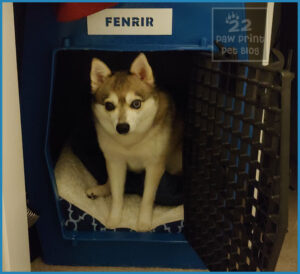
setting up dog crateHow you set up your dog’s crate will depend, at least in part, on your dog themselves.  Different dogs, in different situations, will do best in different setups.  Whenever I’m doing something for my dogs, like deciding on how to set up their crates, I try to cater to my individual dogs’ needs as much as possible.  However, when it comes to crates, Kit’s and Fen’s setups are pretty near identical currently.  I happened to find a setup that just happened to work well for me, as well as for both of my dogs.

I think it’s important to note that my dogs are full-grown, fully potty-trained adults.  If you are just starting out with crate training, raising a puppy, and/or using a crate to help with potty training your crate setup will most likely be different than mine.  But, for anyone interested, this is how I’ve been setting up my dogs’ crates.

No Crate is Complete Without A Comphy Bed!
setting up dog crateIt took me awhile to find the “perfect” crate beds for my dogs.  Kitsune is 14 years old now, and really needs comfortable, supportive sleeping surfaces.  He has IVDD and arthritis.  I’ve found that sleeping on the floor or other hard surfaces really seems to make him sore these days.  A lot of the dog beds I found that were designed to be used inside crates just did not offer the type of support I was looking for to keep Kit comfortable.

Luckily both of my dogs are pretty gentle with their bedding, so I didn’t have to worry too much about them scratching up or chewing whatever crate bed I decided to go with.

For awhile now I’ve been using these Brindle beds as crate beds for both Kit and Fen.  I admit that they don’t fit perfectly inside of our crates, but they’re made of memory foam so they have quite a bit of give to them.  I’m able to squish them down and kind of make them fit into the bottoms of the boys’ crates, if that makes sense.  I really like these beds because not only are they supportive and comfortable even for my old man Kitsune, but they are super easy to wash too.  They come with a water proof cover that can easily be removed and washed.

Kit and Fen have had their Brindle beds for a bit over 2 years now.  Even with frequent washings and being squeezed into my dogs’ crates they are still holding up really well!

Blankets Come Next

setting up dog cratesNot all dogs will do well with blankets in their crates, but mine do.  Kit likes blankets in his crate that he can ball up and use as pillows.  Fen, adorably, turns his into little nests and sleeps curled up in a ball in the middle.  I don’t really have any specific blanket recommendations.  As of late Kitsune has a few smaller fleece blankets in his crate.  Fen has been using an old camp blanket that he really seems to like.  Again, if you’re going to use blankets inside your dog’s crate make sure your dog is safe with them.  That means no chewing on them!  When Kit was going through his IVDD healing period I removed the blankets from his crate because I didn’t want him to hurt himself trying to rearrange them.

My Dogs Sleep with Plush Toys (Yes, It’s Adorable)

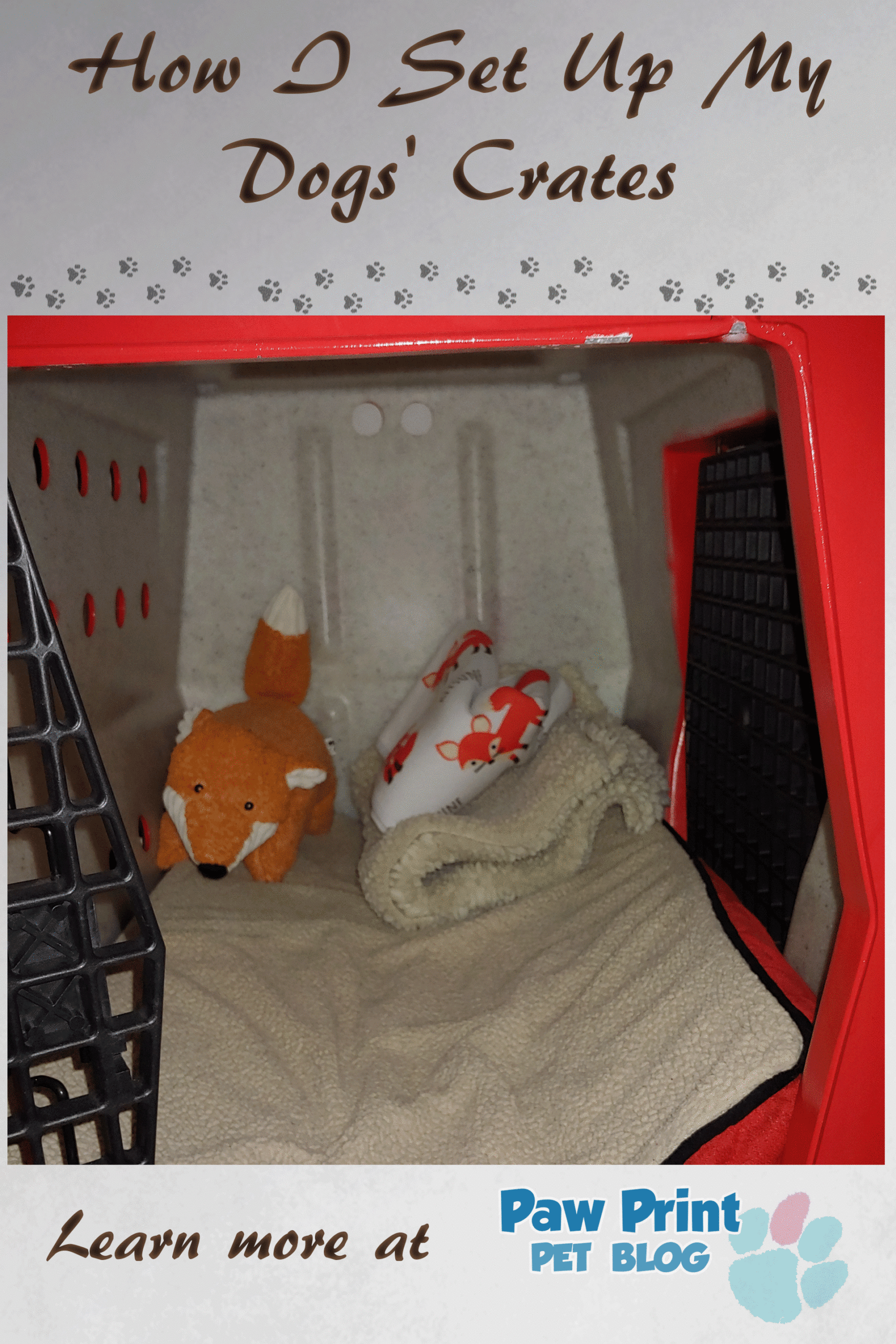
Each of my dogs’ also has one dedicated toy that I keep in their crate for them.  Kit currently sleeps with his HuggleHounds plush foxOpens in a new tab..  He likes to lay his head on stuff when he sleeps, so his fox toy doubles perfectly as a pillow.  Fen’s current crate toy is a cute little plush dinosaur.  Fen also has a habit of carrying toys around with him, so he’ll often bring other toys into bed with him too.

I don’t have my dogs sleep with toys just because it’s adorable (even though it is).  They serve a bit of a purpose too.

My Crate Cleaning Schedule

I clean my dogs’ bedding pretty often.  I try to get it done every other week.  That may sound like overkill, but fabric is really prone to holding in odors.  My dogs’ crates are in my bedroom and I’ve found that it just keeps things smelling fresher if I clean the boys’ bedding often.  But here’s where their bed buddies (toys) come in handy.  I don’t wash those.  Dogs rely on their sense of smell way more than humans do.  By washing their crates so often, I’m washing all their comforting scent off of their bedding.  You know, that scent that really tells a dog “this space is mine”.

I don’t wash their crate toys so that, even when I do wash all their bedding, I can put their toys back into their clean crates.  I think smelling their own scents in their crates really helps them relax and know that their crates are their own little special place.

The Crates Themselves…

My dogs currently each have large sized Ruff Land kennels.  I reviewed Ruff Land kennels previously hereOpens in a new tab..  The size large crates are for sure oversized for my small dogs.  When it comes to indoor crates, I’ve always felt like bigger is better, as long as you’re not working on potty training your dog.  I like to give my dogs extra space to move around and really stretch out and get comfortable.  What size crate you use will really depend things like your dog, what you are using your crate for, and how much space you have available.

That’s All She Wrote

And there you have it!  I was thinking of including some additional dog crate tips in this post, but I really did not expect this to get so long.  I think I’ll save those tips for another day.  If you’re looking for advice on anything crate related, comment below and I’ll try my best to help!  You can search for crate related posts by using the search bar at the top of the page, to the right of the social media icons.  Or click this link to see a  list of all my up to date dog crate related postsOpens in a new tab..  Thanks for reading!

setting up dog crates

We’ve, unfortunately, been dealing with content scrapers stealing our articles lately. You shouldn’t be seeing this article on any site other than pawprintpetblog.comOpens in a new tab.! If you’re reading this article on any other site, we’d love for you to take the time to contact usOpens in a new tab. and let us know and, if you have the time, stop by and visit us on our official site! Thanks you.

How is IVDD Diagnosed in Dogs?


Last September, my beloved senior papillon, Kitsune, was diagnosed with cervical intervertebral disc disease (IVDD).  I’ll be the first to admit that IVDD is a really stressful diagnosis to deal with.  My Kitsune, thankfully, never lost mobility.  But seeing how much pain he was in, and dealing with an 8+ week recovery period was hard.  Since his original diagnosis, I’ve learned a lot about IVDD.  I’ve been posting a series of articles here to help share what I’ve learned, to hopefully help support fellow pet owners who are going through something similar.  Today I wanted to write a bit about how, exactly, IVDD is diagnosed.

Here are some of my past IVDD posts if you’re just starting your IVDD journey and want to learn more…

So Your Dog is Showing Signs of IVDD

IVDDI wasn’t super familiar with IVDD when my dog, Kitsune, first started showing signs of it.  The night before we officially got his diagnosis I knew something was off with him, but I thought he just had a stomach ache.  Unfortunately, his symptoms progressed throughout the night, and by the next morning I knew that we were dealing with something more serious.
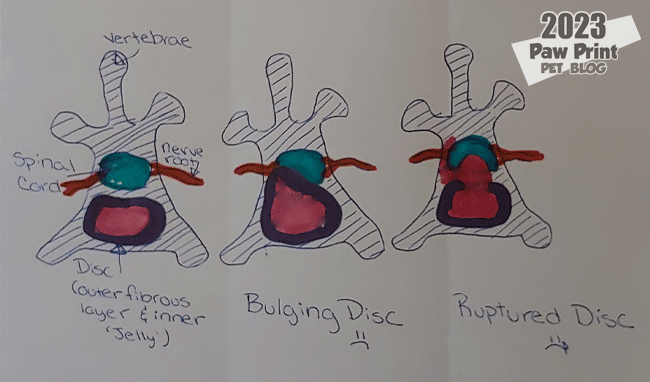
We were luckily able to get an emergency appointment with Kitsune’s regular vet.  If that’s not possible, you may need to visit your local emergency vet.  Especially if your dog’s mobility is affected, time is of the essence when it comes to getting an IVDD diagnosis and starting treatment.

IVDD, What Your Vet Looks For

When an IVDD dog presents to the vet, the vet won’t know they have IVDD yet!  They’ll typically start by getting your dog’s medical history, asking questions about what signs/symptoms you noticed, questions about when the issues started, and whether or not your dog was involved in any type of accident that may have caused the issue.

Your vet will probably want to observe your dog walking if he/she is still mobile.  They will likely gently feel along your dog’s back, limbs, and neck, looking to pinpoint the source of the pain.  When Kit presented with signs of cervical (neck) IVDD, his vet noted that he was particularly painful when she tried to gently move his head into certain positions.

Your vet will likely preform a basic neurologic exam.  They’ll want to look at things such as your dogs gait, reflexes, and pain response.  I remember Kitsune’s vet flipped each of  his paws over, so the top of his toes were against the exam table.  She was testing to see if he could feel/recognize that his paws were in the wrong position, to test whether or not he corrected his paw positioning, and how quickly he did so.  “Knuckling” (walking on or dragging the knuckles, not correcting the paw position quickly when the knuckles are placed against the ground) is a common sign of IVDD.

IVDD

Ruling Out Other Causes

Your vet may want to preform tests to help rule out health concerns other than IVDD.  After examining Kit, his vet was able to tell us that something was wrong with his spine.  However, IVDD isn’t the only thing that can affect the spine.  Because of Kit’s age, we were a bit concerned about the possibility that he could have had a tumor pressing against his spine.  Vets aren’t commonly able to visualize IVDD clearly on x-rays, but x-rays can be used to help rule out other possible causes of your dog’s symptoms.

Depending on your dog/situation your vet might want to preform additional tests such as blood work.  Blood work can help rule out back pain due to kidney failure and may help your vet decide what the best medications to treat your dog’s IVDD will be.

More Advanced Diagnostics

The best way to actually visualize IVDD is through advanced imaging, CT scans and/or MRIs.  MRIs are the gold standard when it comes to visualizing and diagnosing IVDD.  However, MRIs are also very expensive.  Depending on where you live, an MRI typically costs somewhere between $1,000 and $5,000.  CT scans are a bit cheaper, typically ranging between $500 and $3,000.

Because these types of advanced imaging are so expensive, many vets will only recommend them if your dog ends up requiring surgery to treat their IVDD.  MRIs can show your vet exactly what’s going on with your dog’s spine, and where.  However, if you opt to go with conservative treatment options, knowing the exact location of your dog’s bulging or ruptured disc isn’t usually super important.  Conservative treatment options don’t change based on what disc(s) are damaged.  The key to conservative treatment is keeping your dog calm and comfortable long enough for their disc to heal on its own.

IVDD in dogs

The Diagnosis is Only the Beginning

Once your dog is diagnosed with IVDD it’s, sadly, something you’ll have to stay on top of for the rest of your dog’s life.  In most cases IVDD is a degenerative disease, which means that your dog could suffer from reoccurrences again in the future.  Even if they don’t, the recovery time of IVDD is long, so you’ll likely become very familiar with your vet staff.  Finding the right medication to keep your dog pain free can sometimes take a bit of trial and error (it did for us) and your vet will want to follow up with your dog’s progress to ensure he/she is healing well.

IVDD is Not a Death Sentence!

But I’ve been ending all of my IVDD posts by saying that, as stressful as this disease is, going through the required treatment is worth it!  It was so hard for me to see how much pain Kitsune was in when he was first diagnosed.  It was hard to drastically restrict his activity for weeks and weeks afterwards.  I was constantly tired from having to wake up in the middle of the night to give Kit his medication at certain times.  But, as stressful as the whole experience was, it was more than worth it in the end.  It’s been almost 8 months now since Kit’s original IVDD diagnosis and looking at him today you would never know that anything was ever wrong with him.  He’s back to being his sassy, snarky, silly self.

Comment below!  Are you here because you have a dog who was recently diagnosed with IVDD?  Or do you suspect your dog might have it?  If anyone has any questions be sure to post them below, I’ll do my best to answer.  I’m planning on writing a few more IVDD related posts soon so be sure to check back here if this is a topic that interests you.

IVDD diagnosed dogs

How Do Small Dogs Deal with Snow?


If you follow us on any of our social media pages, either Kitsune’s or Fenrir’s Instagram or our Facebook pageOpens in a new tab., you would have seen lots of pictures of my boys in the snow this winter.  Our winter started off mild and not super snowy but lately, we’ve been getting lots of snow!  A handful of times now, after posting pictures of Kit and Fen out in the snow, I’ve received questions about how my little dogs deal with the cold weather, and especially the snow.  I figured it’d be a fun question to answer here.

small dogs snow

What Temperatures Dogs Can Handle is an Individual Thing

As I wrote in my post “how cold is too cold for dogs”, temperature tolerance can be such an individual thing.  Factors such as your dog’s age, coat type, health status, coat color, and yes, sometimes size, can all play a roll when it comes to your dog’s cold tolerance level.

But What About Snow?

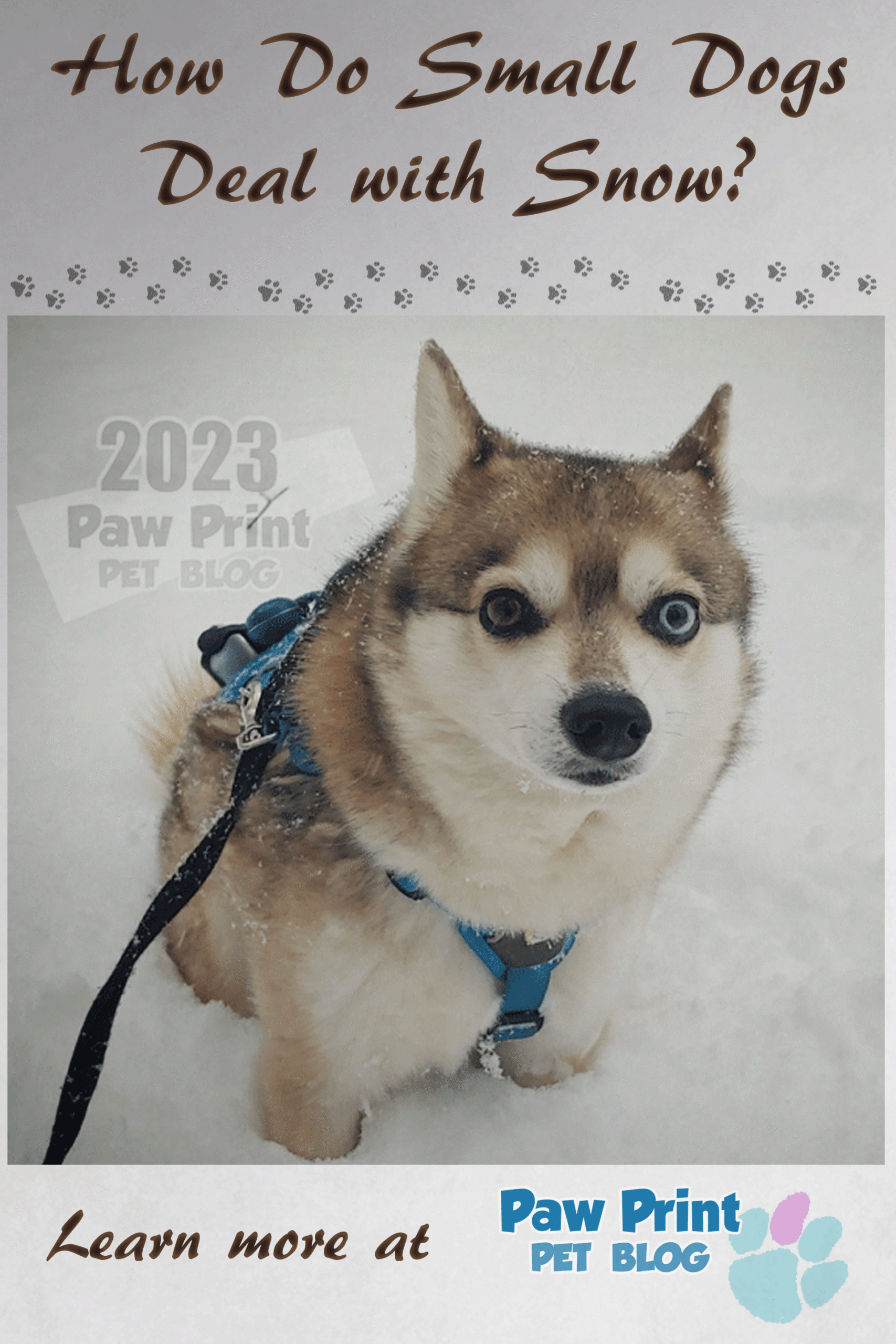
snow small dogsThe main reason I’ve found that small dogs sometimes don’t handle snow and cold quite as well as larger dogs is, quite simply, the fact that they are shorter.

Deep snow is harder for small dogs to walk through.  Often times snow totals that might not be a big deal for a large dog will be deep enough to touch a small dog’s chest and belly.  Not only does this make the snow hard for them to walk through, but more of their bodies come into direct contact with snow.  This can cause them to become colder faster, verses a large dog who might only have their paws and a bit of their legs coming into direct contact with the ice and snow.

Of course there are some other factors that come into play as well.  Many breeds of small/toy dogs are bred as companions.  Their coats are not designed for extreme temperatures.

But Small Dogs are Tough!

That doesn’t mean you should automatically count your small dog out when it comes to winter fun, however.  Small dogs get stereotyped a lot, and people seem to think they can’t do a lot of the things that big dogs can.  Height issues notwithstanding, many small dogs really enjoy playing in the snow!  Healthy, adult small dogs who are allowed to accumulate to colder temperatures might surprise you with how cold tolerant they can be.

My two dogs, Kitsune the papillonOpens in a new tab. and Fenrir the Alaskan Klee KaiOpens in a new tab., both do really well in the snow.  They love to run around and play in it, and far outlast me when it comes to cold tolerance.  When we come back inside after playing in the snow it’s always because I’m cold, not my dogs!

Helping Your Small Dog Deal with Snow

small dogs snowWhen the snow starts to get really deep where we live, I make sure to shovel out areas where my small dogs can play without having to struggle through really deep snow.

If your small dog seems a bit less cold tolerant, you can consider using clothing to help keep them warmer.  Functional articles of clothing such as jackets and sweaters not only look cute, they can actually help keep your dog warm.  Clothing can act as an insulating layer between your small dog and the snow.

No matter your dog’s size, keep an eye on them when they are playing outside, especially during extreme temperatures.  Learn your own dog’s cold tolerance level, and the signs of hypothermia (shivering, lethargy, pale skin and gums, lack of coordination, and reduced breathing rates).  Keep winter play time fun by being proactive about keeping your dog safe!

Comment below!  If you have a small dog, does he/she like playing in the snow?  Are there things you do to make navigating in the snow and cold easier for your furry friend?

small dogs snow

Helping Dogs Cope with Daylight Savings Time


Daylight savings time this year begins tomorrow.  If it wasn’t for my two dogs, Kitsune the papillonOpens in a new tab. and Fenrir the Alaskan Klee KaiOpens in a new tab., I don’t think daylight savings time would bother me at all.  I work from home and set my own hours, so if I need to sleep in a bit to make up for the lost hour it’s not a big deal!  My dogs, however, disagree.  Daylight savings time is a very big deal.

Can Dogs Tell Time?

daylight savings time dogsIf I had to go on personal experience alone, I’d say yes, my dogs can tell time!  But not in the traditional sense.  They, of course, don’t use clocks the way that humans do.  But just try and feed Kitsune more than a minute late and see what happens!

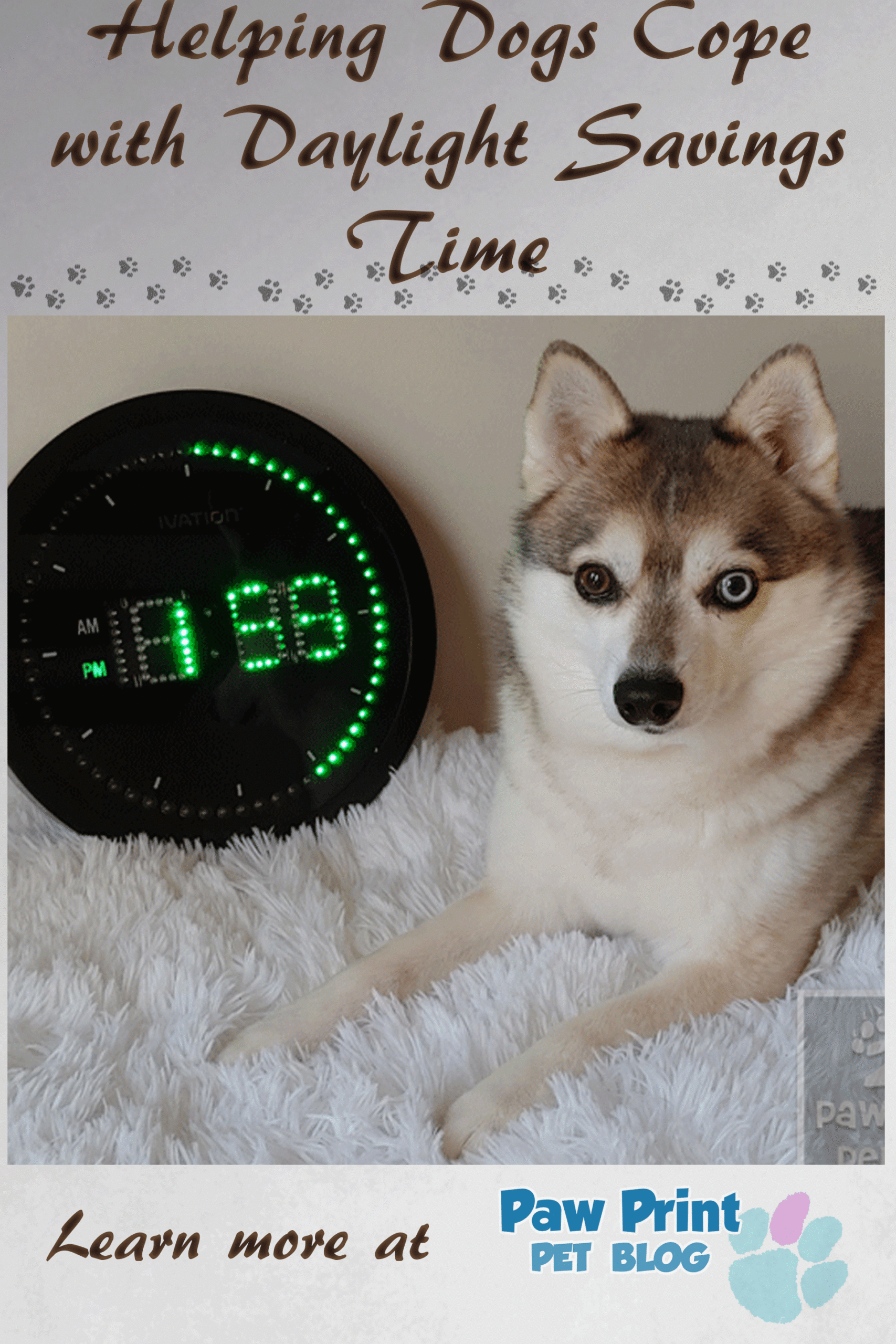
Dogs can be creatures of habit, probably due, in large part, to sharing their lives with us humans.  Over time our dogs learn our schedules and can begin to predict what we’re going to do, and when.  In most cases, dogs probably use cues from their environment to predict what’s going to happen.  If you always get up at sunrise to feed your dog, then over time they’ll associate sunrise with breakfast time.  These environmental cues may be so subtle that they may be things we humans would normally overlook.  Things like the amount of light coming in through the window, certain smells that may occur at only certain times, slight cues from family members, etc.

These cues aren’t always external either!  For example, dogs who are used to always being fed around the same time each day will likely begin to produce stomach acid, and feel hungry, around their scheduled meal time.  So time-related cues can be internal.

Animals, dogs included, also have an “inner clock”.  Have you ever settled into the habit of waking up at the same time each morning, maybe for school or work?  After a while, you don’t need your alarm clock to wake you up at that time anymore.  You just wake up at that time on your own each morning.  This is especially frustrating on the weekend or vacations when you’d be able to sleep late if you could.  Dogs likely experience this phenomenon too.  Their inner clocks help cue them in too when daily events should occur, such as sleeping, eating, bathroom breaks, etc.

daylight savings time dogs

Thus, Daylight Savings Time With Dogs Can Be Frustrating!

Spring time, when we ‘loose’ an hour, can be especially tough when you have dogs.  Dogs don’t understand daylight savings time, so their inner clock is essentially telling them it’s an hour earlier than it actually is.  If your dogs are anything like mine, after daylight savings time starts they’ll ask for everything an hour “early” – dinner, walks, bathroom breaks, bed time, etc.  This can be frustrating when it starts to disrupt our schedules.  Sometimes I’ll want to work until a certain time, for example, but won’t be able to get everything I need to done because Kit and Fen will be downstairs convinced that it’s time for their evening walk.

Helping Dogs Cope with Daylight Savings Time

Luckily there are some things we can do to help our furry friends adjust to the twice a year time change.

  • Adjust slowly, if needed.  With my own dogs, I found it helpful to adjust to the new time a bit slowly.  For example, I normally feed them dinner around 7pm.  After daylight savings time starts, instead of feeding them at 7, for the first week or so I’ll feed them at 6:30 instead.  This way, from their perspective, they’re only eating half an hour late.  After a week or so I’ll go back to feeding them at 7 again.  I do this with feeding time, walks, and bathroom breaks.  My dogs seem to take the slight schedule change better if I ease them into it more slowly over time.
  • Remember that your dog is loosing sleep too!  After daylight savings time starts, your dog may feel tired in the mornings for a week or so as they adjust to waking up essentially an hour earlier.  My Fenrir is not a “morning dog”.  After daylight savings time starts I’ve noticed that he’ll wake up with me in the morning, but after his morning walk and breakfast he’ll go back to bed.  Let your dog get some extra rest if they need it.
  • Help your dog settle into their new routine.  Depending on your dog, it may take a few weeks for them to fully adjust to the time change.  I know this can feel extreme when all we’ve done is moved the clock ahead, or back, an hour.  But it is what it is.  It may be annoying when your dog is begging for dinner or walks at the wrong time.  Have patience.  They don’t have the benefit of understanding why their entire schedule has shifted by an hour.

Thankfully, in time, dogs do adjust to the new time!  It may take a bit of patience and persistence on our parts, but they’ll get there eventually.  Despite some of the frustrations that come with daylight savings time, I never mind it too much.  It helps to remind me that spring, and longer days, are right around the corner!Opens in a new tab.

Comment below!  How does your dog handle the start of daylight savings time?  Is there anything special you do to help them adjust to the time change?

daylight savings time dogs


Spring Safety Tips for Pet Owners


Spring will get here…eventually!  This winter has felt especially long.  We’re well into March now and have still been dealing with pretty significant amounts of snow.  In between snow storms, however, our temperatures have been slowly trending up.  Judging by the amount of fur my Alaskan Klee Kai Fenrir’s been shedding, and the increasing number of times both of my dogs have been asking to go outside per day, Kit and Fen are pretty convinced that spring is well on its way.  I can’t wait to be able to spend more time outdoors with them without having to get all bundled up each time!Pet Spring Safety

But springtime isn’t all sunshine and walks.  There are some unique dangers this time of the year that pet owners should be aware of.  Luckily, knowledge is half the battle, and if you’re aware of some of the potential hazards that springtime can present to your pet you can take steps to avoid them.  I don’t know about you, but I’d much rather avoid whatever potential issues I can when it comes to my dogs!

Here are some spring time safety tips…

Keep ID on Your Pets During Spring Adventures: 

The start of spring can be the perfect time to make sure your pet’s ID(s) are up to date.  The two of you will most likely be spending more time outdoors, after all!  If your dog is microchipped, check that the information associated with their chip is up to date.  Once a year, I have my vet scan my dogs to ensure that their chips are still functional.  Check that ID tags are up to date, easy to read, and firmly attached to your pet’s collar or harness.

Spring Holiday Safety:

Earlier this month I wrote a post about Easter pet safety.Opens in a new tab.  Spring can be a fun time of year to celebrate in general.  But keep in mind that human treats such as chocolate, alcohol, and certain foods can be dangerous for our pets.  Make sure to contain pets if guests are coming and going, so Fido doesn’t accidently escape out an open door, and keep festive decorations out of your dog’s reach.  Check out my post about Easter safety for more spring holiday safety tips!Opens in a new tab.

Keep Bugs at Bay:

If you live somewhere cold like we do, you may not have to worry much about things like mosquitoes, fleas, and ticks in the winter.  But spring is a different story!  We live in an area where ticks (and Lyme Disease) are endemic and often times I’ll start to see ticks out again even before all the snow has all melted.  Intestinal parasites are something to consider, especially if your dog is exposed to other dogs or wildlife.  Some types of intestinal parasites can be transmitted to your pet by fleas, and potentially deadly heartworms are transmitted by mosquitoes.

Talk to your vet about what parasites are prevalent in your area, and what you should do to prevent them.

Spring Cleaning:

If you’re anything like me, you take spring cleaning seriously!  While it can feel great to have your home be extra clean, keep in mind that many cleaning products are actually toxic to animals.  This month is Poison Prevention Awareness MonthOpens in a new tab..  What better time to go through your cleaning products to ensure you are not using products that are dangerous to your pets, or that any potentially dangerous products are stored well out of Fido’s reach?  I like to use non-toxic, green cleaning products whenever possible.  When I do keep chemical cleaning products, I make sure to use and store them safely away from my dogs.

I love to open my windows and get fresh air in the spring.  If you do too, make sure that your windows have screens and that all screens are secured properly.

Garden Safety:

Pet Spring SafetyMoving my house plants outdoors, and working on my outdoor container gardens are some of the things I look forward to doing most in the spring!  However, quite a few dangers for our dogs can lurk in our gardens.  Many common garden plants are actually toxic to petsOpens in a new tab..  Even things like what type of mulch we use can have implications for our furry friendsOpens in a new tab.Many lawn and garden chemicalsOpens in a new tab. can cause health issues for our pets, so are best avoided if at all possible.
Spring Grooming:

While you’re at it with the cleaning, spring is the perfect time to make sure you’re keeping up with your dog’s grooming, especially if you have a double coated dog that will soon be blowing their coatOpens in a new tab.!  Grooming your pet regularly, especially through the warmer months, will keep them more comfortable.  Not to mention that it will also help to keep your house cleanerOpens in a new tab.!

Car Safety:

The warmer weather may mean you spend more time traveling with your pet.  Check out my post about dog car safety here!Opens in a new tab.

Spring Allergies:

Animals, like people, can suffer from allergies.  My papillon, Kitsune, is allergic to fleasOpens in a new tab..  Dogs can also be allergic to things like plant pollen and grasses.  Unfortunately, it’s not always easy to avoid allergens.  If you dog suffers from seasonal allergies talk to your vet about potential therapies to help keep them more comfortable.

Seasonal Storms:

It thunders more often in the spring.  Unfortunately it’s not uncommon for dogs to be fearful of thunderstorms.  Things you can do to help will depend on your situation and how fearful your dog is, and vary from simple home remedies like thunder shirts, white noise, and calming treats to prescription meds from the vet.  Don’t get caught unprepared.  If your dog needs help getting through storms make sure you stock up on whatever it is that helps them most before spring storm season!

Stay Hydrated:

Most people know how important it is to stay hydrated in the heat of the summer, but it’s important in the spring too!  An increase in activity, as the weather warms up, may mean that your furry friend will require more water.  Always make sure you’re providing fresh, clean water, no matter the weather!  Don’t forget to bring water for your dog during spring hikes and offer it to them often.

Comment Below!

Can you think of any spring safety tips that I missed?  What are your favorite spring time activities to do with your dog?  What are some things you make sure to avoid or stay aware of to keep them safe?Pet Spring Safety

Poison Prevention Awareness Month


March is Poison Prevention Awareness Month.  I, perhaps, should have posted this earlier in the month, but when it comes to protecting your family from exposure to poison the best time is now!

Alaskan Klee Kai snow nosePoison Prevention Awareness Month, from what I’ve seen, seems to be mostly geared around raising awareness about how to protect children from dangerous substances.  Things you may not normally think of as poisonous, such as common household cleaners, medications, and batteries, can all prove deadly.  I don’t have children, at least not any of the human variety.  Because my 7-year-old Alaskan Klee Kai, FenrirOpens in a new tab., is convinced that he’s still a 6-month-old puppy, making sure I keep my home pet-proofed is important.  Animals can’t speak for themselves, and they don’t always make the best decisions when it comes to deciding what qualifies as food/toys and what should be left alone.  It’s important for pet parents to be aware of the potential dangers lurking in their homes, and do their best to protect their furry friends from coming into contact with poisons.
It would be awesome if every potential poison came with a warning label, but unfortunately, most of them don’t.  When it comes to pets, everything from certain foods (like grapesOpens in a new tab., and chewing gumOpens in a new tab., for example), to plantsOpens in a new tab. can be dangerous.

With so many potential dangers, pet parents have to stay vigilant.  Learn all you can about what items could be dangerous to your pets, which may vary depending on what species he/she is.  Just in case, select an emergency vet that’s close to your home before you ever actually need one, and keep their contact information somewhere accessible.  Emergencies are stressful, and on top of dealing with a sick pet you don’t want to have to scramble to find a vet.

poison prevention month

Besides keeping the contact information of a local emergency vet clinic handy, you should also know the number for Animal Poison ControlOpens in a new tab. ((888) 426-4435).  Calling isn’t free, but it’s open 24/7 and the advice can prove invaluable in an emergency.

Have you ever had to deal with a situation where your pet came into contact with something poisonous?  Comment below!

poison prevention month