Recent Posts

The Potential Dangers of Wire Crates


Both of my dogs are crate trained.  I know not everyone agrees with using crates.  But for numerous reasons I will always crate train all of my personal dogs.  If introduced correctly, a crate becomes a dog’s ‘safe place’.  A crate is a comfortable area that belongs to your dog, where he/she can go to sleep or relax, and get away from the hustle and bustle of everyday life.  As such, we should do everything we can to ensure our dog’s crates are actually safe!  Are some types of crates dangerous for our furry best friends?  When my Alaskan Klee Kai, Fenrir, was a puppy we experienced something that made me start to wonder – are wire dog crates dangerous?

66

Fenrir was a dream to crate train, especially when compared to my papillon Kitsune.  I remember Fenrir’s first night home with us.  Much to my surprise, he almost slept through the entire night.  Fen seemed to love his crate from day one.  Even to this day, Fenrir is 6 years old now, he spends quite a bit of time each day napping or otherwise relaxing in his ‘room’, as we call it.  But when Fen was around 7 months old, something happened that caused me to ditch the wire crates forever.

What Happened to Make Me Ditch Our Wire Crates?
wire dog crates dangerous
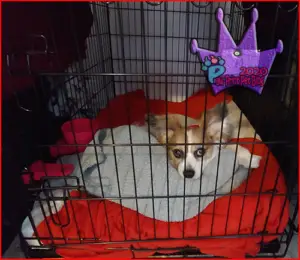
Kitsune relaxing in a wire crate, before we decided to get rid of them.

My partner had been away for a week on a business trip.  When he got home, the dogs were understandably excited.  A few hours after our reunion I thought everyone had calmed down enough that we could all relax and go to bed.  I took the dogs out, got Fenrir settled in his crate, then went into the other room to finish getting ready for bed.

I remember I was in the bathroom brushing my teeth when I heard Fen screaming.  Not his typical “hey I need to get out of here and use the bathroom” whine, but a panicked wailing.  I ran to the bedroom, where Fen was, and found that one of his paws had gotten caught in between two of the wire bars of his crate.

If he had remained calm I’m sure it would have been easy for him to free himself, but he was panicking.  Frantically trying to pull his paw out from between the wires, he was only making the situation worse.  One wrong twist and he could have broken his leg!

A Freak Accident?

We lucked out.  I was able to quickly free Fen’s paw, which was unharmed.  But the experience lead me to do some research and I found that we were not the only ones who have had this type of experience with wire crates.  I found reports of other dogs getting their paws/toes caughtOpens in a new tab., and even an old petitionOpens in a new tab. about a dog who got her teeth caught in her crate, broke her jaw, and had to be euthanized due to her injuries.

Scary, especially considering that many owners, myself included, leave their dogs crated when they leave the house.  I hate to think of what could have happened to Fen’s little leg had I not been able to quickly help him free it.  Hopefully he would have freed it on his own without hurting himself, but who knows.

This post contains affiliate links.  If you use one of our Amazon links to make a purchase, we will receive a small commission at no additional cost to you.  Please see our DisclaimerOpens in a new tab. page for more information.

If Wire Dog Crates are Dangerous, What Are Some Safe Alternatives?
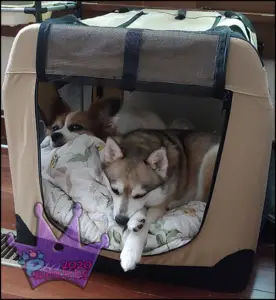
wire dog crates dangerousAfter that event with Fenrir, and the research I did afterwards, I decided not to use wire crates for my own dogs anymore.  Luckily I had a soft sided carrier/crateOpens in a new tab. on hand to use with Fen while I worked on deciding what type of crate I wanted to get him for more permanent use.  I ended up deciding on a plastic crateOpens in a new tab., which can be a good alternative for dog owners looking to avoid metal crates.  A lot of plastic crates do still have metal or plastic doors with grids.  You need to make sure the grid on the door of the crate you select is small enough that your dog’s leg/paw can’t fit through.

I actually ended up going with Ruff Land Kennels plastic dog cratesOpens in a new tab. for both of my dogs.  At least for indoor crating.  We use something else for traveling in the car with the boys, but that’s a post for another day.

Should All Dog Owners Avoid Wire Crates?

Part of me feels like this could be one of those “know thy dog” type of situations.  Maybe metal crates are just not a good fit for certain dogs.  On the other hand, it could take just a single incident to make dog owners regret using metal crates.  Even if your dog has been using them safely for years, that doesn’t guarantee that nothing bad will ever happen.

What do you think?  Has your dog ever gotten hurt on his/her metal crate?  After learning of the potential danger, would you stop using this type of crate?  Or do you feel the benefits outweigh the risks?


Reviewing Microsoft’s Dog Breed Recognition Website


Have you ever heard of the site What-Dog.netOpens in a new tab.?  It’s a website created by Microsoft that uses object recognition to attempt to determine a dog’s breed from a picture.  I wrote a review for What-Dog.net way back in 2016.  Since it’s been so long, I thought it might be fun to take another look at the site’s dog breed recognition capabilities.  Has it improved any in the past 6 years?  This post will be an update of my 2016 review!

The first thing I noticed is that the look, and display URL, of the website has changed.  What-Dog.net still directs to the dog breed recognition site, so that’s good.  It’s hard for me to remember exactly what the site looked like 6 years ago, outside of the screenshots I have saved, but from what I can tell it looks a bit more sophisticated now.  Change is good, right!?

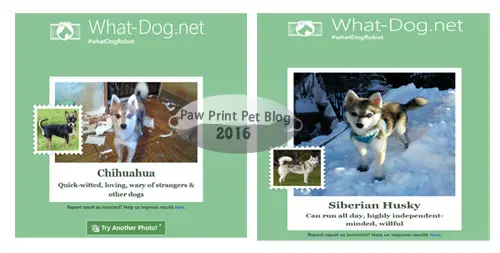
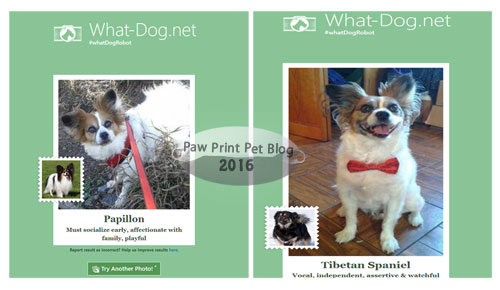
I only have my own two dogs to test the software on, so take that as you will.  A super small sample size is never a great thing.  Oh well.  First up we have my papillonOpens in a new tab., Kitsune.  He is indeed a purebred papillon, but he doesn’t always look like one.  He’s oversized and I often cut his hair, which isn’t typical for the breed.  Back in 2016, I found that the breed recognition software recognized Kitsune as a papillon 75% of the time, seemingly depending on what picture I submitted.  Here’s my old screen shot from when I was testing out pictures of Kit…

Dog Breed Recognition review

Testing the software with pictures of Kitsune now, it does seem to be more accurate!  I didn’t try a ton of different pictures, but out of all the ones I tried, there was only one where it listed two breeds instead of one – King Charles spaniel, and papillon.  I even dug up that old picture of Kit in a bow tie that I tested back in 2016.  Back then, using that picture, the software thought Kitsune was a Tibetan Spaniel.  With that same photo now, it guessed papillon!

Fen was always going to be the real test, though.  In 2016, the Microsoft software didn’t guess his breed correctly a single time.  My theory was that maybe it didn’t have Alaskan Klee Kai in its breed database.  In 2016, depending on what photo I used, it seemed to think Fenrir was either a chihuahua or a Siberian husky.kkk

Will it do better in 2022?…..

Dog Breed Recognition review

Not really.  In all the newer photos I tried of Fen it mostly guessed him to be a Siberian Husky or a Canadian Eskimo dog.  One time it guessed him to be a malamute.  Based mostly off of Fen’s colors, it does make sense to guess those breeds.  But Fen is only 15 lbs, a fact I guess the software can’t really determine from photos.

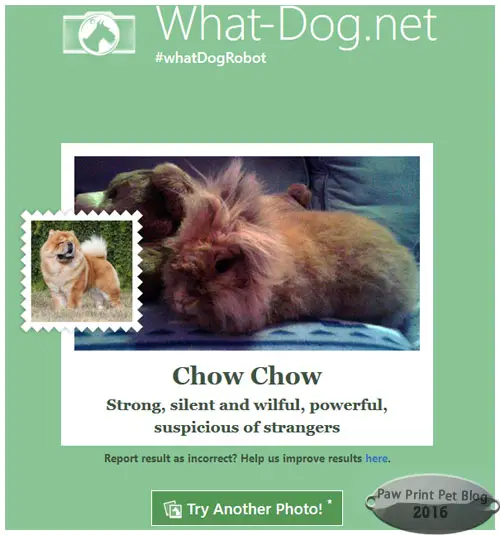
The Microsoft dog breed recognition software does seem to be a bit better at determining when there is no dog in a photo.  Back in 2016 it seemed to recognize one of my 2lb house rabbits, Barnaby (RIP), as a chow chow!

Dog Breed Recognition review

This time I tried photos of cats, to see what dog breeds they most closely resembled, but the software just displayed a message saying it couldn’t find any results.  I’m not sure whether that was because it couldn’t detect a dog in the photo, or it was just a coincidence.  Because strangely, there were a couple of photos of Fen that I received the same error message with.
Overall I’d say that the Microsoft dog breed recognition software does seem to have improved somewhat.  Still, I feel like programs that predict your pet’s breed from a photo are more of a novelty than something you should 100% rely on.  I wouldn’t base my dog’s breed solely on the results from this site, although I think the results can be interesting.  It’s also a fun website to play around with, if you have a bit of free time.

Have you ever used the What-Dog website or a similar photo app?  How accurate was it for your pet?

Heterochromia in Pets


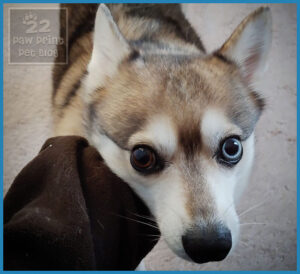
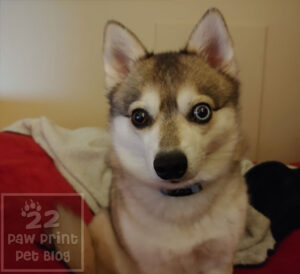
I’ve had my Alaskan Klee Kai, FenrirOpens in a new tab., for over 6 years now.  Since his debut on the blog, I get SO many questions about his eyes.  Fen has two different colored eyes, or heterochromia.  His left eye is a beautiful light/ice blue, while the right is a very dark brown.  Heterochromia is common in certain breeds of dogs, such as Alaskan Klee Kai, Australian shepherds, and huskies.  It can also be common in dogs with dapple, or merle coloration.

Different in Looks Only…

Heterochromia in dogsThe question I seem to get most often is whether or not Fenrir can see normally.  He can!  Both of his eyes are healthy and he can see just as well as any other dog.
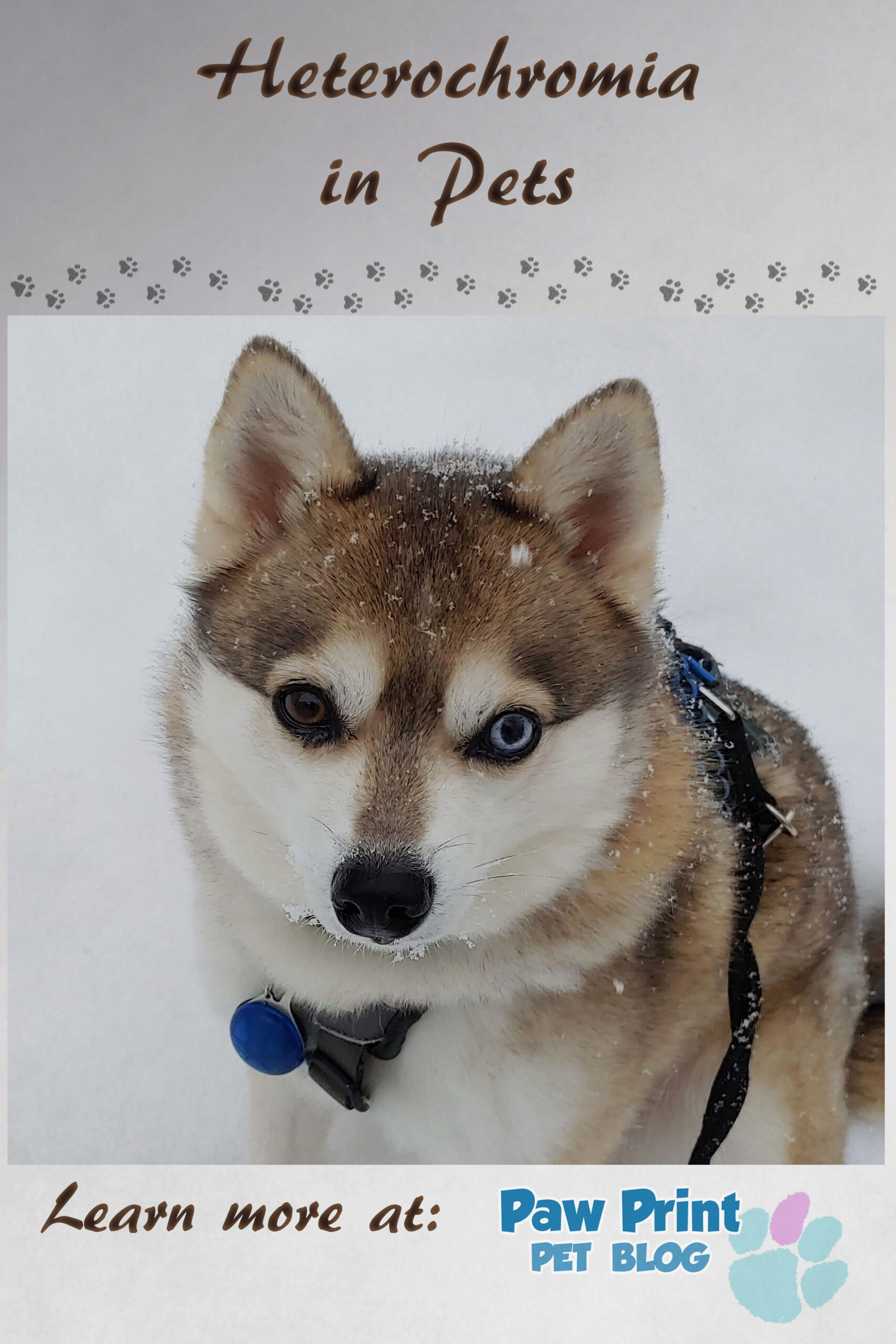

Heterochromia in dogs can occur for a number of reasons.  Sometimes it can be caused by an injury or defect in the eye.  In Fenrir’s case, it’s just genetics.  Dogs born with two different colored eyes are often referred to as being bi-eyed.  Scientifically, it’s called heterochromia iridum.

Fenrir has what’s called complete heterochromia, which means that his eyes are two completely different colors.  There are other forms of heterochromia where only parts of the eye differ in color.  Central heterochromia is the most common type.  That’s when the center ring of the eye, around the pupil, is a different color than the rest of the iris.  Sectoral heterochromia, which can also be common in certain northern breed dogs, is when one, or both, eyes have sections of different colors.

Heterochromia, although rare, also occurs in other animal species – humans included!

I love Fenrir’s eyes.  They were one of the first things that drew me to him when I saw him for the first time.  Once in awhile we get some negative comments about them but, in general, people seem to react positively to Fen’s unusual eyes.  Not that it matters what other people think.  What matters most is that Fenrir is a happy, healthy pup!

Comment below!  What color are your pets’ eyes?  Have you ever shared your life with an animal with heterochromia, or some other unique eye color?

Heterochromia in dogs

How to Brush Your Dog’s Teeth


Do you brush your dog’s teeth?  As caring pet owners, we do all we can to keep our pets happy and healthy.  But Dental care is an important part of our pets’ health that is often overlooked.  The American Veterinary Medical AssociationOpens in a new tab. recommends that a dog’s teeth be brushed daily.  Poor dental hygiene can lead to tooth loss, Periodontal disease, and even more serious health issues such as bacterial infections in major organs such as the heart or lungs.  Periodontal disease is one of the leading health concerns in dogs.

brush dog's teeth

Brushing your dog’s teeth might sound like a daunting task, but it isn’t really all that difficult. Make brushing your dog’s teeth part of your daily grooming routine. Start by keeping the brushing sessions short and pleasant for your pooch. Because you don’t want your dog to associate tooth brushing with anything negative, stay calm and be liberal with the praise!

This post contains Amazon affiliate links.  If you make a purchase using one of our links we’ll receive a small commission at no additional cost to you.  Please see our DisclaimerOpens in a new tab. page for more information. 

brush dog's teethGetting Ready:

First, you’ll need your supplies. There are a number of different styles of pet toothbrushesOpens in a new tab. you can buy, or you can simply use a child size soft bristle tooth brush. Buying toothpaste with a pleasant (for example, chicken or peanut butter) flavor can make your dog more excited about his or her dental health.

Make sure to use pet toothpasteOpens in a new tab., as dogs can’t rinse and spit after brushing the way that humans can, and swallowing human toothpaste can make your pup sick. Don’t be afraid to experiment with different types of toothpastes and brushes. Find the combination that works best for you and your pet!  If you need more help selecting dental supplies for your pet, check out our previous post Selecting the Right Dental Health Products for your Dog.Opens in a new tab.

How to brush your dogs teeth:

  1. The first step is to get your dog use to being touched around his or her mouth. Gently touch around your dogs mouth, open his/her mouth, and touch the teeth.
  2. Get your dog used to the taste of the toothpaste. Put a bit of toothpaste on your finger and let your dog lick it off. Praise him/her and act like the toothpaste is a treat. Within a few days, your dog will start looking forward to getting his/her tasty new treat.
  3. Next, instead of letting your dog lick the toothpaste off your finger, gently lift your dogs lip and press your finger, with toothpaste on it, against your dogs teeth and gums. If your dog is comfortable with that, you can start to move your finger around against his/her teeth in a way that mimics a toothbrush.
  4. Now introduce the toothbrush. Put the toothpaste on the toothbrush, much like you did with your finger, and let your dog lick it off. Eventually, repeat step 3 only with the toothbrush. Don’t worry yet about doing a good job at brushing your dogs teeth.  Just work on getting your pet use to the feeling of the toothbrush in his/her mouth.
  5. Start brushing! Concentrate on the areas along the gum line, and especially pay attention to the back and canine teeth, as they are often the teeth that start to develop tarter first. Brush in small circular motions. You can start by just brushing for a few seconds, but as your dog gets more used too and comfortable with the procedure, you can work up to spending about a minute a day brushing your dogs teeth.

If you follow these steps, your dog will be well on the way towards having a healthy smile!

I got both of my dogs used to having their teeth brushed when they were puppies.  But don’t get discouraged if you have an older pet.  It’s SO not true that old dogs can’t learn new tricks.  Each step might take a bit longer for an older pet than it would for a younger one.  Still, teaching an adult pet to allow their teeth to be brushed is still very possible.

Comment below.  Do you regularly brush your pet’s teeth?  What dental health products do you use most often for your own pets?

Why Do Dogs Have Such Expressive Eyebrows?


Fenrir’s (my Alaskan Klee Kai) eyebrows really crack me up!  Most of the fur around his face is gray, but his eyebrows are all white.  It gives him quite a distinct look.  I joke that if my dogs could talk, the one thing of Fen’s that my PapillonOpens in a new tab., Kitsune, would be jealous of would be his dignified brows.  Truth be told, despite not standing out quite as much, Kitsune’s brow game is pretty on point too.  Have you ever wondered why dogs have such expressive eyebrows when compared to most other members of the animal kingdom?

Did you know that dogs, like humans, use their eyebrows to express emotion?

Fenrir the Alaskan Klee Kai
See? Fen’s eyebrow game is always on point!

I suppose all dog owners will already know that, though.  Sad puppy dog eyes anyone?  Besides humans and other primates, there’s not a ton of animal species that use their eyebrows to outwardly express emotions.  Wolves, although social and highly communicative with each other, don’t express emotions with their eyes in the same way that our domestic dogs do.  In fact, domestic dogs have muscles in their eyebrows that don’t even exist in wolves!

That’s Evolution For Ya!

These muscles allow dogs to control their eyebrows in ways that wolves, and other animals, cannot.  Specifically, dogs are able to raise their inner eyebrows.  This movement opens their eyes wider, and makes their eyes appear larger – aka…puppy dog eyes!

Take a look at this study, Evolution of facial muscle anatomy in dogs, published in 2019Opens in a new tab..  If you scroll down a bit, to the results section, you can see a diagram that illustrates the difference in facial musculature between domestic dogs and wolves.

Basically, humans are suckers for puppy dog eyes.  Over time, we selected for dogs with more pronounced eyebrow movements.  Perhaps we can relate better to dogs who use their eyebrows in a similar way to how we use our own?  Or maybe we just find dogs who are more expressive to be cuter?

Having More Expressive Eyebrows Benefits Dogs.

Studies have suggested that shelter dogs with more expressive eyebrows are more likely to get adopted faster!
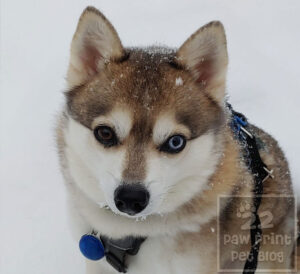
The study Paedomorphic Facial Expressions Give Dogs a Selective AdvantageOpens in a new tab. was published back in 2013, but the results are still really interesting today.  Researchers tested how facial expressions that enhance dog’s neonatal (childlike) appearance impacts how quickly they are adopted from shelters.  According to the study, dogs who raised their inner brows more often found new homes faster than their less expressive counterparts.  This is, theoretically, because manipulating their eyebrows in this manner effects their eye size and height, making them look more childlike, and thus cuter.

It seems like those puppy dog eyes, so famous for helping dogs to beg for bits of extra dinner, involve more than just the eyes themselves.  There’s some serious brow work going on too!

What do you think?  Comment below!  Does your dog use certain facial expressions to try to manipulate you?  Kit and Fen seem to have thoroughly perfected the sad puppy look.  It’s totally hard to resist giving them what they want when they give me ‘the look’.  I guess I have thousands of years of evolution to thank for that!

What Are Dog Licenses Actually For And Why Should Pet Owners Keep Them Up To Date?


I had a heck of a time getting KitsuneOpens in a new tab. and FenrirOpens in a new tab. licensed recently!  Since we moved, I had to get their licenses for the first time in our new town.  Thanks to Covid protocols, many municipalities are moving more towards completing business, such as dog license renewals, online.  Normally that’s something I’d be all for – getting stuff done without having to leave home or talk to anyone!?  Awesome!  However, technology doesn’t always work as smoothly as we would hope.  What should have taken me a few minutes online ended up taking over a week, multiple emails, and a few phone calls (eww) to straighten out.  Thankfully, after all that, Kit’s and Fen’s 2022 licenses/tags finally arrived in the mail last week.  Despite what a pain it ended up being to get my dogs licensed this year, I’ll still continue to license them yearly!

Fenrir the Alaskan Klee Kai.Fun fact – Fenrir is officially the first Alaskan Klee Kai to ever be licensed in our town!
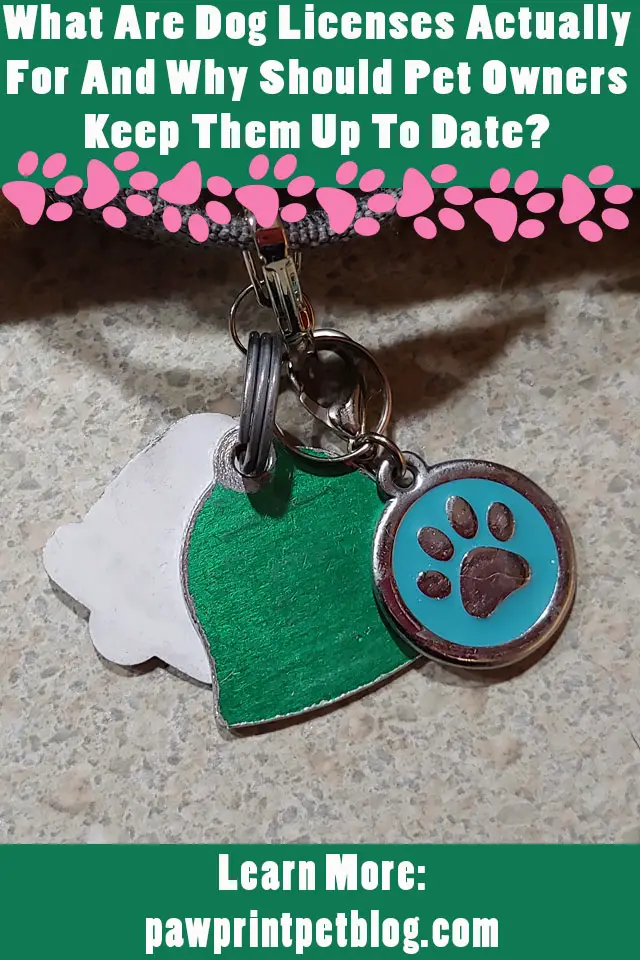
So what, exactly, are dog licenses anyway?

In many cities and towns throughout the US, it’s a law for dog (and sometimes cat) owners to obtain licenses for their pets yearly.  Licenses help municipalities keep track of what animals live where, and ensures that pets have received appropriate vaccinations.  In all the places I’ve lived, I’ve had to prove that my dogs are vaccinated against rabies to license them.  Rabies is essentially 100% fatal to both people and pets.  It’s easy to understand why it’s important to prevent its spread!

When you license your pet, you’ll usually receive an ID tag with a number on it to hang on your pet’s collar.  I’ve personally made it somewhat of  a game to attempt to get as low of a number each year as I can.  This year my plans were kind of foiled, though, thanks to the trouble I had getting my boys’ licenses online.

Most pet owners probably know they have to license their pet to follow local laws, and that it’s an easy way to prove that your pet has been vaccinated.  But did you know it provides other benefits to pets and the people who love them?

How Does Licensing Your Pets Benefit You?

  • Licensing your pet helps you avoid fines and fees.

Luckily, dog licenses are usually pretty cheap.  In the town I’m currently in, I paid $7.50 for each of my (neutered) dogs.  You know what’s a lot more expensive?  Late fees and fines!  Most cities/towns that require dog licenses also have a system of late fees and fines that are charged to owners’ who don’t license their pets, or who license them late.

Getting away with paying these fines isn’t always as easy as one might think.  Did you know that it’s common practice for veterinarians to send your pet(s) vaccination records to the town hall where you live?  More often than not, town officials will know you own a dog even if you don’t report it yourself.  If they have any record of you owning a pet, and you don’t get said pet licensed, you’ll more than likely get stuck having to pay a fine and/or late fees.  Just get your pets licensed on time – it’s cheaper!

  • License tags can help get your dog back to you quickly if he/she gets lost!

Remember that ID number I mentioned before?  Your dog’s ID number on his/her tag ties them to your information in your town hall’s system.  So, much like other types of ID tags, if your dog goes missing and ends up in the local police station or shelter, employees can use your dog’s license ID to look up your information and get your pet back to you as quickly as possible.

  • A dog license can serve as proof of ownership.

If there’s ever any doubt as to who owns an animal, the benefit of the doubt will usually go to whoever can prove that said pet is licensed under their name.  If you watch enough court TV, you can probably think of examples where this would come in handy.

  • License fees help support animal shelters and services in your local communities.

Have you ever wondered what your town does with all the money they make from selling pet licenses?  In most cases, these small fees are added together to help support local animal shelters, animal control, and services in your local community, such as low cost (or free) vaccine clinics, and low cost spay and neuter services, to name a few.  By licensing your pet, not only are you benefiting yourself and your own pet, you’re helping other animals and the people who love them in your community as well!

Dog Licenses Can Be Fun!

I always kind of like getting Kitsune and Fenrir licensed each year, even after how much of a pain it was get it done this year.  It makes me feel like I’m doing my part to keep my own dogs and my community safer.  Plus, getting new tags for the boys’ collars each year is kind of fun!  I’ve kept every license tag that my dogs have had inside notebooks with their medical records.  Especially now that we’ve lived in a couple different places, it’s fun to look back at all their old tags.  Am I just weird?  Probably, but that’s ok.

Comment below!  Do you remember to get your pet licensed every year?  Does your town have cute/fun tags or boring ones?  The last town we lived in had super cute license tags, in fun shapes and colors.  The tags we got this year, the first in our new town, were kind of plain/boring, but maybe we just caught them in an off year.  Thanks, as always, for reading!  You guys/gals are awesome.  Now get off your computer and go play with your pets!