Recent Posts

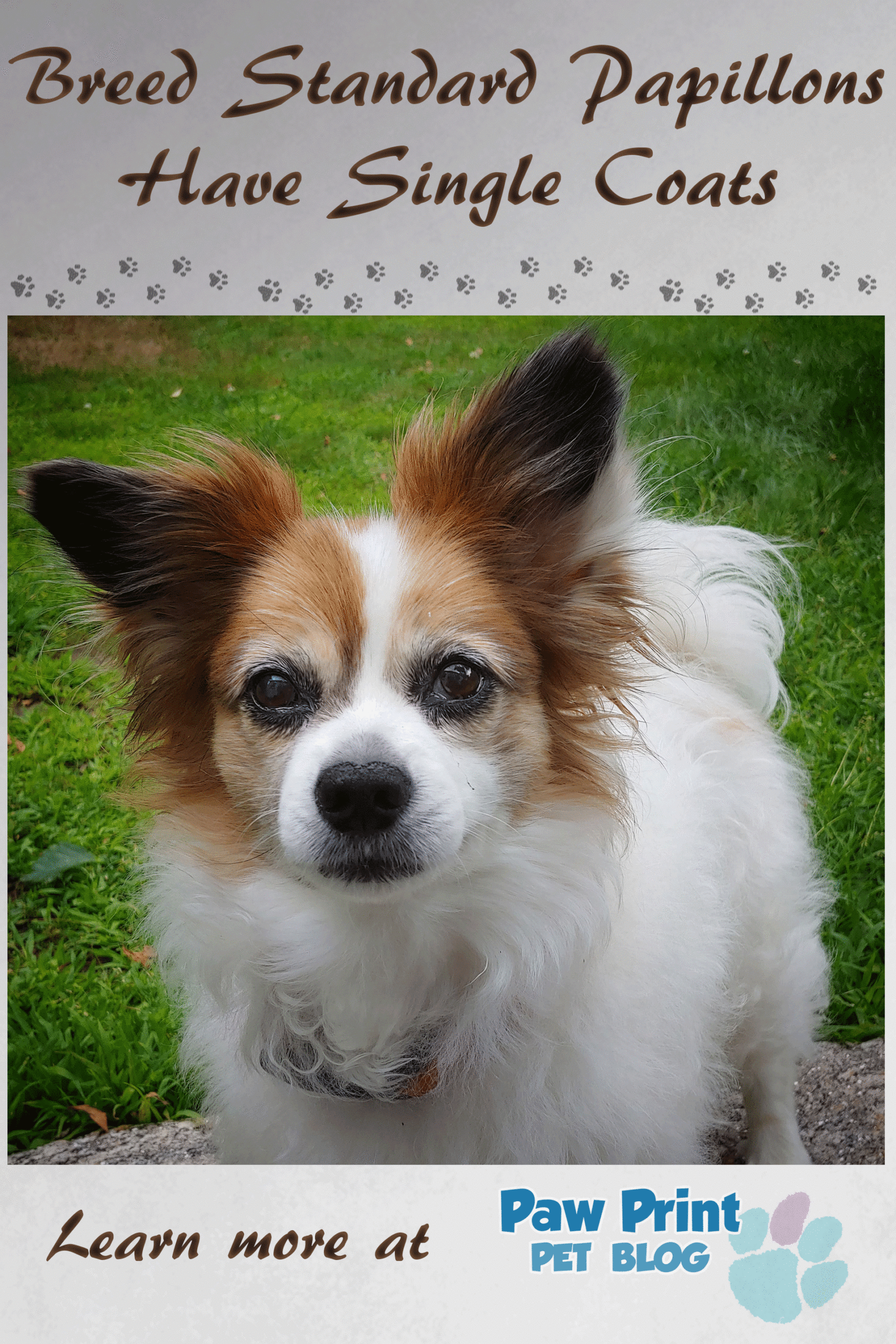
Breed Standard Papillons Have Single Coats


I’ve written about this before, in passing, in a couple of my other papillon postsOpens in a new tab..  Because it still shocks me how many people, even groomers and people who own papillons, don’t know that this breed is supposed to have a single coat, I was inspired to write a post about it.

Do papillons have a double coat?

Breed standard papillons should not have a double coat.  Papillons have a single coat, which consists of a topcoat only.  The undercoat on a double coated dog is the insulating layer of fur that naturally works to protect animals against extreme temperatures.  Papillons lack this layer.

You can check out the official AKC papillon breed standard hereOpens in a new tab..

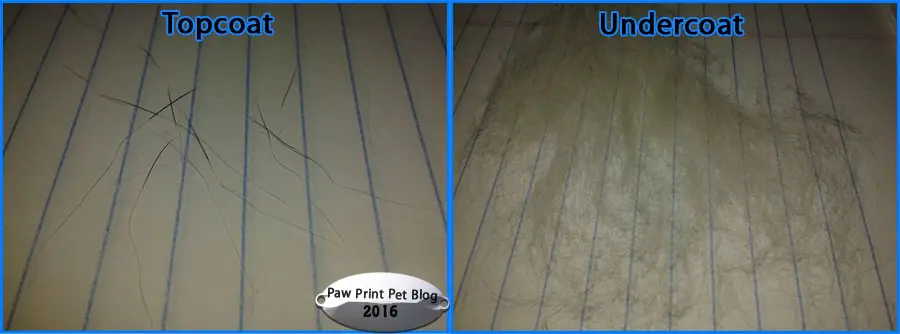
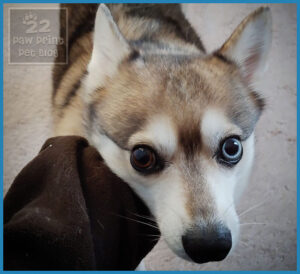
I wrote this post to help illustrate the difference between a topcoat and an undercoatOpens in a new tab..  It’s convenient that, besides my papillon KitsuneOpens in a new tab., I also have a double coated Alaskan Klee Kai, FenrirOpens in a new tab..  The following image shows the difference between Fenrir’s top and under coats.

Breed standard papillons have only topcoats.

I keep saying “breed standard papillons” because there are papillons out there with undercoats.  It’s not really normal or desired going by the breed standard, but that doesn’t mean that those papillons who have undercoats won’t still make awesome pets.

While, to pet owners, it may not matter much whether your dog conforms to the breed standard or not, I think it is important to know what type of coat he/she has.

There are some differences between double and single coated dogs and how they, and their fur, should be cared for.

papillons single coatsSingle coated papillons, for example, may not deal with extreme cold as well as a double coated dog would.  As I already stated above, they lack the insulating undercoat which serves to keep double coated dogs warm in the winter.  I always keep a close eye on Kitsune when the weather is extreme.  During our winter adventures I sometimes put a coat on him to help keep him warmer.

Kit sheds a lot less than double coated Fenrir does, which is a nice perk to him not having an undercoat.  In addition, because Kitsune has a single coat, I’ve never had any issues trimming his fur.  This is a hot button issue among “papillon people”.  I’ve gotten a lot of criticism over the years for clipping Kitsune’s fur, even though doing so does not hurt him nor damage his fur.

I always have to mention, though, that I don’t recommend shaving even single coated dogs down to the skin.  While a single coat may not do as much to protect dogs from extreme temperatures, guard hairs (topcoats) do protect the skin from sun exposure.  Dogs, like humans, can suffer from sunburn if their skin is exposed to the sun’s rays.

Papillons are well known for their long, silky, flowing coats.  They are often referred to as a “wash and wear” breed, because their fur doesn’t normally require any special care.  Papillons should be brushed regularly, however, to ensure their beautiful fur doesn’t mat.  Pay special attention the the fur on and behind the ears.  This fur is often especially soft, and more prone to developing tangles.

Comment below!  Does your dog have a single or double coat?  What are some things you do to keep your dog’s fur healthy?

papillons single coats

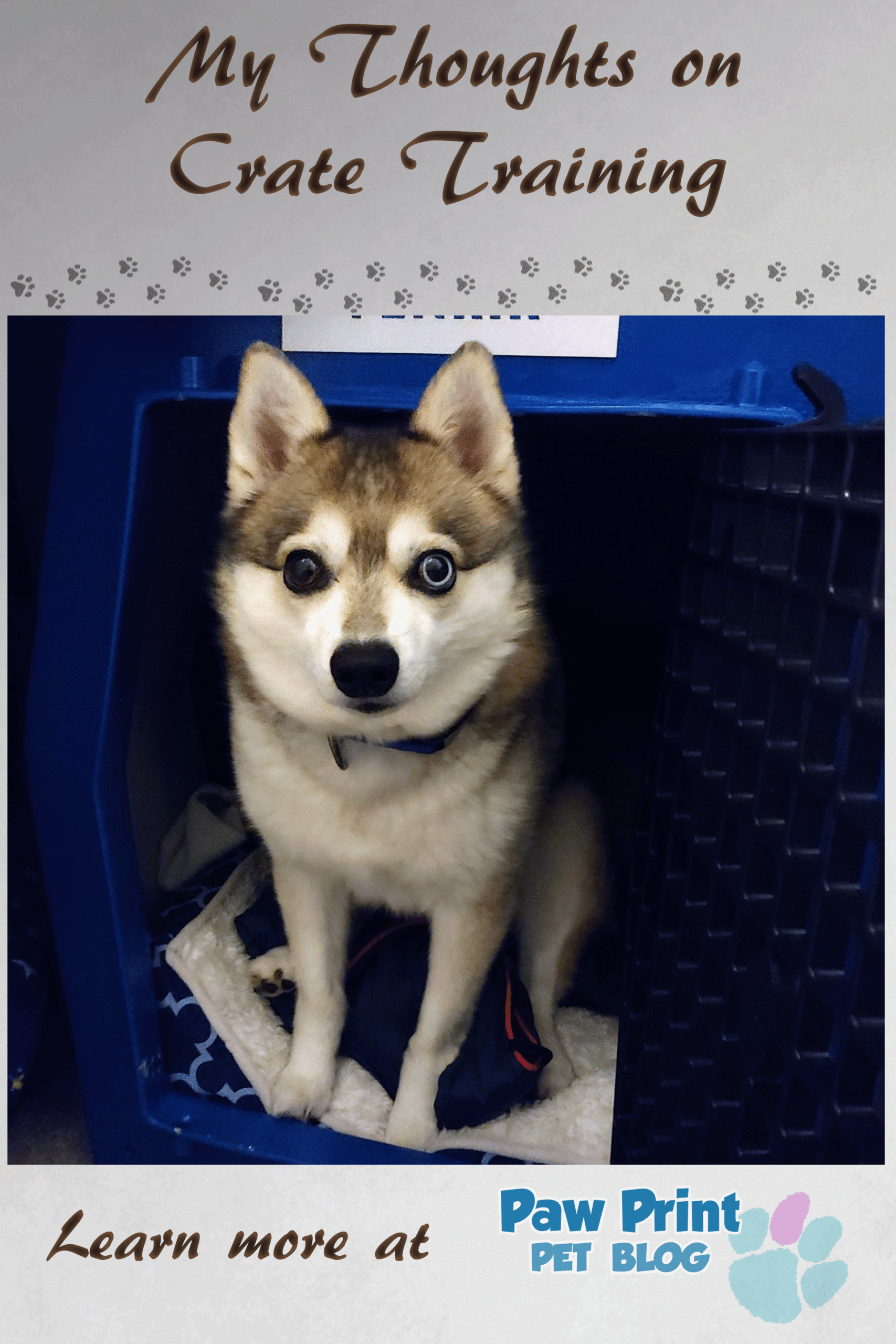
My Thoughts on Crate Training


Crate training can be a pretty polarizing topic among dog lovers.  Some owners swear by it, others feel that it’s cruel.  I’ve received quite a few questions/comments about crate training since I posted a picture of Kitsune laying in an open crate on his Instagram accountOpens in a new tab..  I decided to write a post that outlines my current thoughts regarding crate training.

There.  My dogs in a crate.  I guess that pretty much sums up my thoughts?

crate trainingTo elaborate – I’ve always loved animals.  For the past 13+ years I’ve shared my life with dogs.  Before them, though, I kept small/exotic type pets.  Most exotic pets aren’t the types of animals you can let free range around your entire house.  Even my house rabbits, who were fixed and litter box trained, had a large cage.  They were only allowed to explore our apartment under strict supervision.

So I came from a background of utilizing cages for pets, mostly for their own comfort and safety.  Awesome, decked out, usually pretty over the top cages – but cages nonetheless.  Then enter Kitsune, my first dogOpens in a new tab..  I’m pretty sure he was the most adorable puppy ever…

crate training

But puppies, even the cutest of them, are pretty much drunken, incontinent, sugar high toddlers X 1,000.  I’m supposed to let this little beast roam around my house, doing whatever it wants 24/7!?  I kind of want my security deposit back when I move, and I kind of like all my belongings intact.  Most importantly, I need to make sure my new little beastling stays safe.  Commence the crate training!

A crate is a tool.  Like other tools, it can be used correctly or incorrectly.

When used correctly, for many dogs, a crate can be a safe, comfortable retreat.  It can be used to teach your dog proper house manners, such as not relieving themselves indoors.  It can be used to keep them safe when you aren’t able to directly supervise them.

Using a crate correctly, in my opinion, means actually crate training your dog.

It means building up a positive association with being inside their crate, not just sticking them in there and walking away.  It means knowing your dog and being able to recognize if he/she is uncomfortable with being crated for any reason.  Because, as you will probably see me write over and over again on this blog, all animals are individuals.  Just because I say that crate training worked for my current dogs doesn’t mean I’m saying it will work for 100% of dogs.  It’s up to each owner to decide what’s right for their individual dog and situation.

Related Posts:

Being comfortable in a crate can be a good skill to have.

There are situations when your dog may need to be confined in some way.  During an extended stay at the vets, for example, if you ever have to evacuate your home, or during travel.  Situations like these can be stressful enough on their own, without the added hardship of being crated for potentially their first time.  Being able to remain calm, even to relax and sleep, while crated is an important skill for a dog to have.  It’s a skill that can really come in handy in emergency situations, and make otherwise stressful circumstances a bit less traumatic.

I will say that crate training has been a positive experience for both Kitsune and Fenrir.

crate trainingI crate trained Kitsune when he was a pup.  He’s a very very smart dog.  When he was just around a year old he really didn’t need to be crated anymore.  He was 100% potty trained and respectful of our home and the stuff in it.  Despite the fact that he no longer needed to be crated, we kept his crate set up in our bedroom.  Over the first 10 months of his life we had worked to build a positive association with his crate.  The sentiment stuck.  Kit still to this day (he’s almost 14 years old now) likes to relax and sleep in his crate.

FenrirOpens in a new tab. still sleeps in his crate at night.  Despite being 7 now, he’s never mastered the art of sleeping outside of his crate without waking everyone up multiple times a night.  Fen will often even put himself to bed at night.  He goes upstairs to sleep in his crate on nights when my partner and I decide to stay up later than usual.  Fen also naps in his crate, with the door open, during the day.

We live in a rental house.  It’s in our lease that our dogs are not to be left unsupervised if we’re not home.  Hey, I get it.  Sadly, some pet owners give the rest of us a bad rap, and landlords feel like they’re taking a risk renting to people with pets.  My partner and I both work from home, so our dogs are not left home alone often.  In the rare occasion that they are, we tuck them peacefully into their crates for a short nap until we get home.

Crates can be abused/overused, I’m not naïve to that fact.

I hate hearing stories of dogs who are forced to spend a majority of their lives locked away in a crate.  However, that doesn’t mean crate training is inherently a bad thing.

I personally think it’s important to give dogs a space of their own, where they can go when/if they feel like they need some time too themselves.

I relate it to a person having their own bedroom – a safe space they can retreat too when they’re feeling overwhelmed with life and need some quiet time, or maybe just want to relax and take a nap.  While crates are not the only way to accomplish this for our dogs, they are a good way to accomplish it – especially if, like us, you live in a home where space is at a premium.  It’s a rule in our house that if our dogs are inside their crates they are to be left alone.  They know that their crates are safe spots, a place they can retreat too when they, for any reason, need a bit of down time.

Crates may not be appropriate for all dogs but where appropriate and when used correctly, they can become safe retreats for beloved dogs.  They can be used to protect your pet from stressful or potentially dangerous situations, or just to give your furry friend a comfortable place to call his own.  It’s important, if you choose to use a crate for your dog, that you take the time to properly crate train and never force your dog to spend extended amounts of time in his/her crate.

I’d love to hear from you!  Comment below – if you have dogs now or have in the past, did you crate train them?

crate training

Ruff Land Kennels Dog Crate Review


I feel like, when it comes to certain dog products, I’m always on the lookout for the “perfect” dog item.  One such dog product has been dog crates.  Both of my dogs, Kitsune the papillonOpens in a new tab. and Fenrir the Alaskan klee kaiOpens in a new tab., are crate trained.  I know not everyone supports using crates for dogs.  Suffice it to say, I am pro crate as long as they are used responsibly.  But that’s a post for another day.

Our crates of the past…
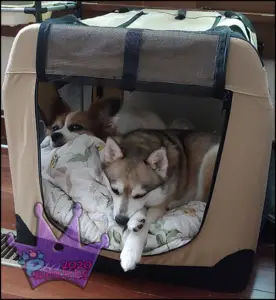
My Kitsune is 13+ now.  Over the years, we’ve tied quite a few different crates.  Wire crates are probably the most popular for in home use, but we had an incident with FenOpens in a new tab. in one when he was a puppy that turned me off from wanting to continue using them.  We have a soft sided crateOpens in a new tab. that works pretty well.  Both the dogs really seem to like it, and often nap in it (with the door left open) during the day.  But it’s not the most secure.  I worry that if one of the boys ever scratched at the fabric of the soft sided crate, they’d be able to tear it and escape, potentially hurting themselves in the process.

Back when we got our car, we bought the boys Gunner KennelsOpens in a new tab. for traveling.  Gunner Kennels are one of the very few dog carriers to actually be crash tested!Opens in a new tab.  With their double rotomolded walls and locking doors, these crates are super secure.  They are also bulky, heavy, and, judging by the fact that Fen refuses to sleep in his in the summer, hot.  I still highly recommend, and continue to use, Gunner Kennels for travel (in an air conditioned vehicle).  But I decided that they probably weren’t the most ideal type of kennel for crating indoors.

When looking for indoor crates there were a couple of, mostly superficial, things I was searching for.

First and foremost, I wanted crates that were sturdy and secure.  I wanted crates that came in larger sizes, because, despite having small dogs, I prefer their indoor crates to be roomy.  I didn’t want to go with wire crates, but I needed something with good ventilation that wouldn’t be uncomfortable for Fen in hot weather.  On the more superficial side, I would have loved to find crates that came in a verity of colors, with removable doors, that were rectangular with flat tops so that they would look nice sitting next to each other.
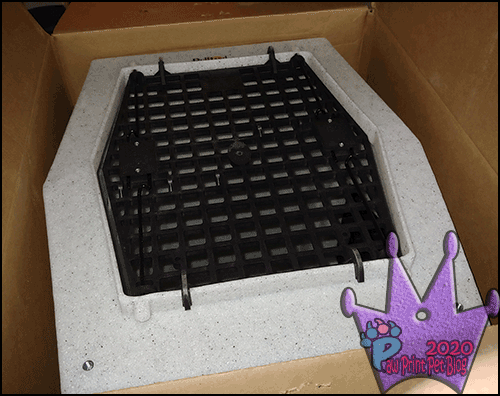
Ruff Land KennelsSo what kennel try next?

I began to hear a lot of buzz about Ruff Land (formally Ruff Tuff) KennelsOpens in a new tab..  There were/are a couple of things I liked about them.  First, while still not cheap, they are a bit more budget friendly compared to other high end kennels.  They come in a verity of sizes, from small to extra large.  Their doors can be opened from either the left or the right, and can also be removed completely.  I really wanted a crate with that feature, so that I can leave the doors off most of the time and allow the dogs to go in and out of their crates as they please, without having swinging doors getting in their way.
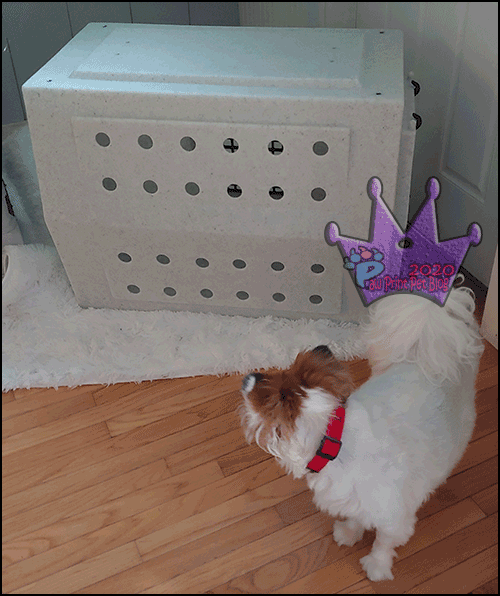
Ruff Land KennelsRuff Lands are made from a single layer of plastic, which seems to make them a bit cooler than the double walled Gunners.  For the most part Ruff Lands come in three basic color options, but once in awhile the company offers limited releases of specialty colors.  The tops of these kennels are relatively flat, and they’re stackable which I think is a cool feature, even if I don’t plan on stacking mine.  The sides are at a bit of an angle, so they’re not perfect rectangles, which I don’t love, but from what I read on their site this design gives the crates more impact absorbing flexibility, which, in theory, would help keep your dog safer in a car accident.
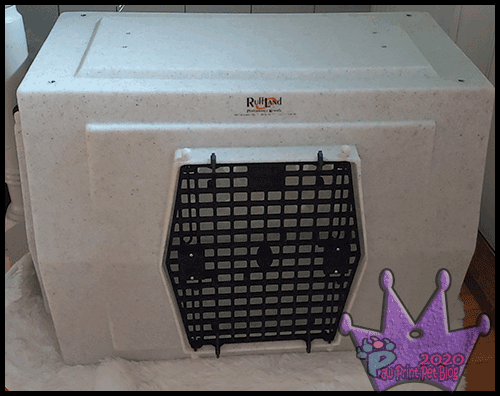
I decided to try Ruff Land Kennels for my boys.

I ordered Kit a large sized kennel with two doors, one on the front and one on the right side.  Fen’s has doors on the front and left side.  The ability to add extra doors where you want them is another cool feature.  I was originally going to go with just the standard door placement, but decided to add an extra door on the side in case I ever decide I want to orient the crates another way.
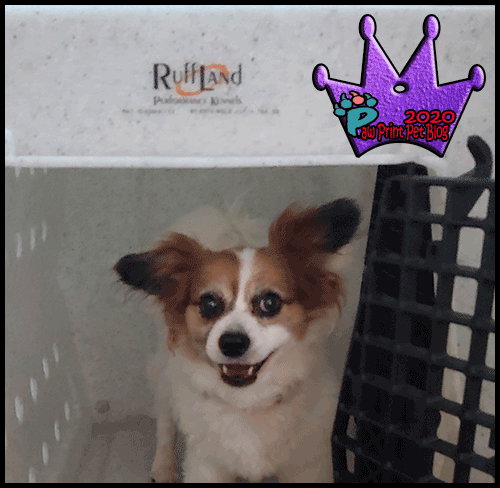
Ruff Land KennelsIt took 10 days for my crates to ship after I placed my order.  That was for a standard white colored crate with an extra door.  From what I’ve heard, shipping times can depend a bit on what you order, with specialty colors and additional customization taking longer.  Our crate arrived in good condition, and I’m happy with the size.  My dogs for sure would have fit in a smaller size, but since these will be their indoor crates rather than being used for travel, I wanted to give them more space.

Why it took us so long to review our crates…

I originally purchased our Ruff Land Kennels back in June of 2020!  So why am I just getting to a review now?  Firstly, it took me quite awhile to actually try out the crates because I wanted to customize them first.  The spoiled Paw Pack pups can’t be spending time in such basic kennels, after all!  I spray painted Kitsune’s crate red, and Fen’s blue.  You can read more about the process here.  Opens in a new tab.

Of course, go figure, around the 4th of July this year Ruff Land Kennels released special edition “patriotic” colored crates in, you guessed in, red and blue.  Almost the same exact shades of red and blue as I painted our crates!  If only I had known, I would have saved myself the work and just waited to buy the special edition kennels.  Oh well.

The crate pictures in this post are from before I painted them.  One thing to also note is that our crates are the old edition crates.  Ruff Land Kennels recently released their “Gen II” design which, although similar, apparently feature a few changes.

Soon after I painted our Ruff Lands Kennels, we ended up moving.  I ended up posting about painting our crates, but never the actual review of the crates – until now!

What I like about our Ruff Land Kennels…

  • Competitive pricing: Ruff Land Kennels, while not cheap, are often considered to be a budget option as far as high quality dog crates go.
  • Door options: I love that, when ordering, you can customize where you want doors on your Ruff Land crate.  The doors open in both directions, and can also be completely removed.
  • Light weight: Despite the fact that I ordered large crates for my small dogs, the crates are not super heavy.  I can lift and move them short distances myself.  When I want to move them further, I enlist my partners help, but more because the crates are large/bulky than because of their weight.
  • Air flow: My double coated, heat hating Fenrir seems perfectly content to sleep in his Ruff Land Kennel even on the warmest of nights.  It doesn’t seem to retain too much heat and, especially if you get one with multiple doors, seems to have good air flow.

What I don’t like about Ruff Land Kennels…

  • The doors: I have a love hate relationship with the doors on these crates.  I love the features I mentioned above, but wish they were more secure.  Kitsune has escaped from his crate a few times, seemingly by popping the door off.
  • Failed crash testing: These crates failed crash testingOpens in a new tab..  The tie down brackets and the door failed during the test.  People always like to point out that you can purchase a door latch accessory, that makes the doors more secure, separately.  But you have to drill into the crates to install the door latch, which voids your warranty.  I also just feel like when you’re spending this much on a crate, the least the company should be able to do is ensure they are safe for travel without having to purchase and install separate accessories.
  • The new design: I’m not sure whether I would have bought a Ruff Lands Kennel if they had rolled out their new, Gen II design before I ordered.  I like the flatter top, and the inside floor of the older design more than the new one.
  • Colors are limited: With how popular the specialty colors are, it’s frustrating that each color is only out for a limited time.  They do often bring back colors yearly.  But a dog crate isn’t something you want to wait a long time to buy if you need one.  I’ve heard quite a few accounts of the specialty colors taking a really long time to ship as well, when you can actually get one in the first place.

So are Ruff Land Kennels the “perfect” dog crate?
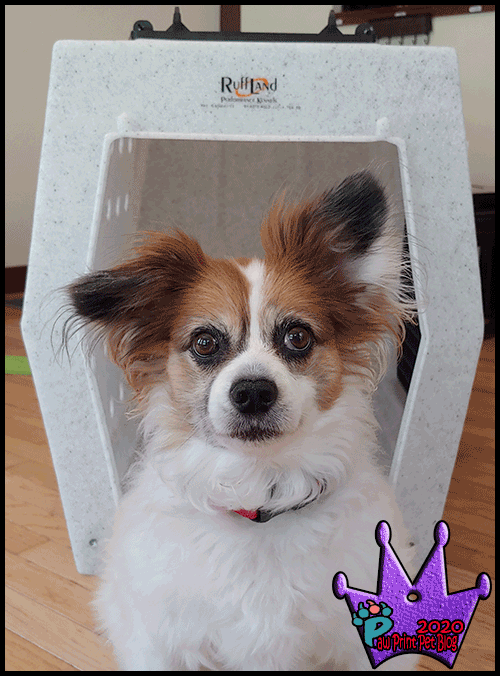
Ruff Land KennelsNo.  Not for my pack at least.

But they are pretty close as far as house crates go!  Our Ruff Lands Kennels will continue to be used as indoor crates only.  I have no desire to modify the doors on ours to make them safe for travel.

I love our painted Ruff Land cratesOpens in a new tab. and my boys really like them too.  Most of the time, since my partner and I work from home, I just remove the front doors of Kit and Fen’s crates and let them come and go as they please.  Fen especially loves sleeping in his.  I like that even the larger sized Ruff Lands Kennels are on the lighter side, and get good enough air flow that my dogs are comfortable using them in the heat of the summer.

However, if for some reason I ever needed, or decided, to replace or Ruff Lands crates, I think my quest for the perfect crate would continue.  But, just because they aren’t my “perfect” crate doesn’t mean they won’t be yours!  Everyone looks for different things when it comes to pet products.  What do you think?  Have you ever tried a Ruff Land Kennel for your dog?  What is your current favorite brand of dog crate?
Ruff Land Kennels

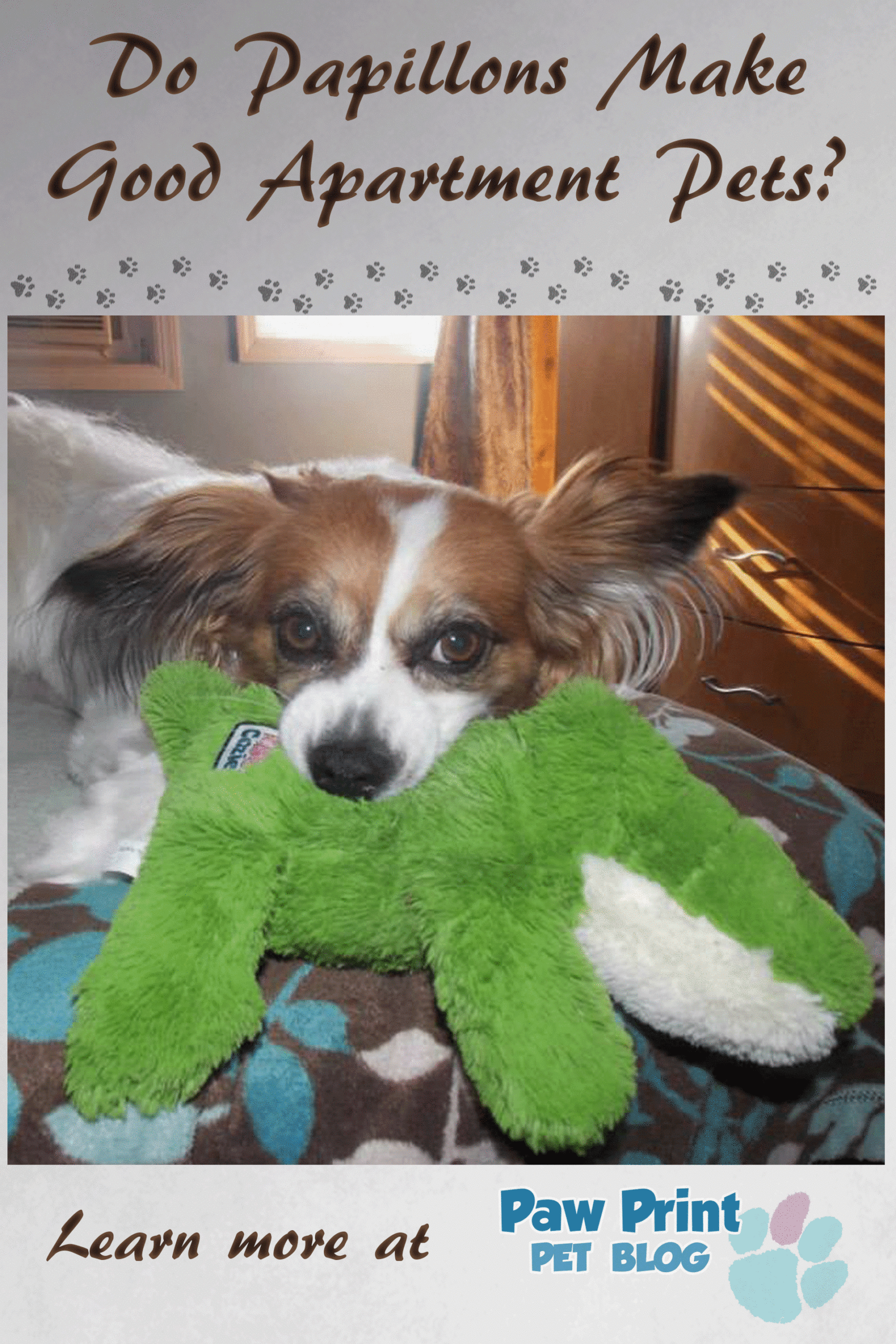
Do Papillons Make Good Apartment Pets?


papillons apartmentI wrote the other day about the perks of raising dogs in the cityOpens in a new tab..  Although we don’t live in the city anymore, for the first 11 years of my papillon’s life we lived in a third floor walk up apartment.  It was my partner and my first place together.  One of the reasons we picked that apartment was because it was pet friendly, and I really, really wanted a dog.  I fell in love with papillons when I first discovered them, in a dog breed book, when I was around 8 years old.  So, needless to say, when it came time to select the breed I wanted my first dog to be, there was no contest – a papillonOpens in a new tab.!

Any breed of dog can make a good apartment pet.  I’ve found it’s not so much the breed of the dog that matters.  The behavior and personality of the individual dog and, more importantly, an owner’s commitment level towards ensuring that their dog is set up to succeed are much more important.

What to look for when searching for an apartment dog

Living in the city as long as I did, I came across all kinds of dogs living successfully in apartments.  Everything from tiny little chihuahuas, to one person I knew who kept two huge great Danes in an apartment!  Some basic factors to consider before bringing a dog to live in your apartment with you include…

  • Activity level.  While being high energy doesn’t preclude a dog from making a good apartment pet, caring for them properly in a small space can be more difficult.
  • How social a dog is.  Living in an apartment usually means living in very close proximity to other people and, sometimes, other pets too.  Dealing with a dog who is fearful, reactive, or just otherwise doesn’t like being around strangers can be really stressful in an apartment setting.
  • How loud a dog is.  This is probably one of the first things people think about when trying to select an apartment pet.  Neighbors and landlords don’t appreciate excessive noise.  A dog who likes to bark at his own shadow, with an owner who doesn’t want to take the time to train them out of this, probably wouldn’t make the best apartment dog.
  • Behavioral issues.  A dog with unresolved separation anxiety, for example, could be difficult to manage in an apartment.

A lot of people would add size to this list, but I’ve found that there are lots of large, lazy breeds that do really well in small spaces.  Alternatively, a highly active small breed dog could feel cramped in an apartment without enough mental/physical stimulation.

It all comes down to how committed you are to your apartment dog!

papillons apartmentA lot of these factors can be negated by a committed dog owner!  Most dogs, especially puppies, aren’t born perfect apartment pets.  They need caring owners to teach them how to appropriately behave.
I lived for years in a city apartment with two high energy dogs.  I selected high energy breeds to fit in with my active, outdoorsy lifestyle.  Although we didn’t have a yard we could use in our apartment, we spent a lot of time walking, hiking, at the beach, etc.  I walked with my dogs multiple times a day, and provided them with lots of mental stimulation and activities to keep them occupied too.

Part of finding the perfect apartment pet for you, is just finding the “perfect” dog to match your lifestyle!   If you’re active and like spending time outdoors like me, and enjoy playing with your dog and providing them with lots of activities, than even a high energy breed can be happy in an apartment.  If, however, you work full time and like to come home and relax indoors, than a high energy breed probably isn’t for you.  Think about how much time you want to invest in training your dog, too.  While any dog can develop behavioral issues such as excessive barking or separation anxiety, some breeds are more prone to them.

So, can papillons make good apartment dogs?

Yes!  Papillons, when trained and cared for properly, can make amazing apartment pets.  Papillons are, generally, high energy, intelligent, happy go lucky little dogs.  Keep in mind that they will require more mental and physical stimulation verses some other dog breeds.  Papillons are social butterflies who normally thrive in busy apartment buildings.  They are so smart that any behavioral issues you run into will usually be able to be resolved through training.

The biggest challenges of keeping a papillon in an apartment

Like I mentioned in my list of papillon pros and consOpens in a new tab., this tends to be a barky breed.  But that’s countered by the fact that papillons are considered to be the 8th smartest dog breed.  With time and persistence, it is possible to train papillons not to bark in inappropriate situations.

However, being so smart isn’t all good when it comes to apartment life.  It means that papillons are crazy good at figuring out new and exciting ways of getting themselves into trouble.  They are also a high energy breed.  If they aren’t provided with enough mental and physical stimulation, they will turn the art of destroying your stuff into a fun new game!  You’ve been warned.

Papillons are quite social and love being with their people.  This can make them great apartment pets, because they’ll generally love socializing with neighbors, but it can also make them prone to separation anxiety.  Again their intelligence level and training will come in handy here.

Lastly, papillons are NOT a breed for the lazy.  They are beautiful, and small, but they aren’t referred to as the “border collies of the small dog world” for nothing!  These little dogs have lots of energy, and need to be provided with appropriate outlets for that energy if you want to live happily in an apartment with one.

My experience keeping a papillon in an apartment

Kitsune was an amazing apartment dog!  I walked, trained, and did activities with him a lot (and still do!), so he’s not usually overly hyper when we’re inside.  I’ve always kept him well groomed, so excess shedding and odor have never been an issue either.  When we lived in the city, Kit loved to say hello to the other tenants in our building, and neighbors we met out in the street.

Although I said that I believe that (almost) any dog can make a good apartment dog with the right level of commitment from their owner, I love that papillons are small.  It meant that we had plenty of space, even in our small city apartment, to play with Kit indoors on rainy days.  Papillons can make amazing apartment pets for the right people.  While they will not be the perfect breed for everyone, I couldn’t have asked for a better first dog than Kitsune!

Comment below!  What do you look for in an apartment pet?  Have you ever lived in an apartment with a papillon? 

papillons apartment

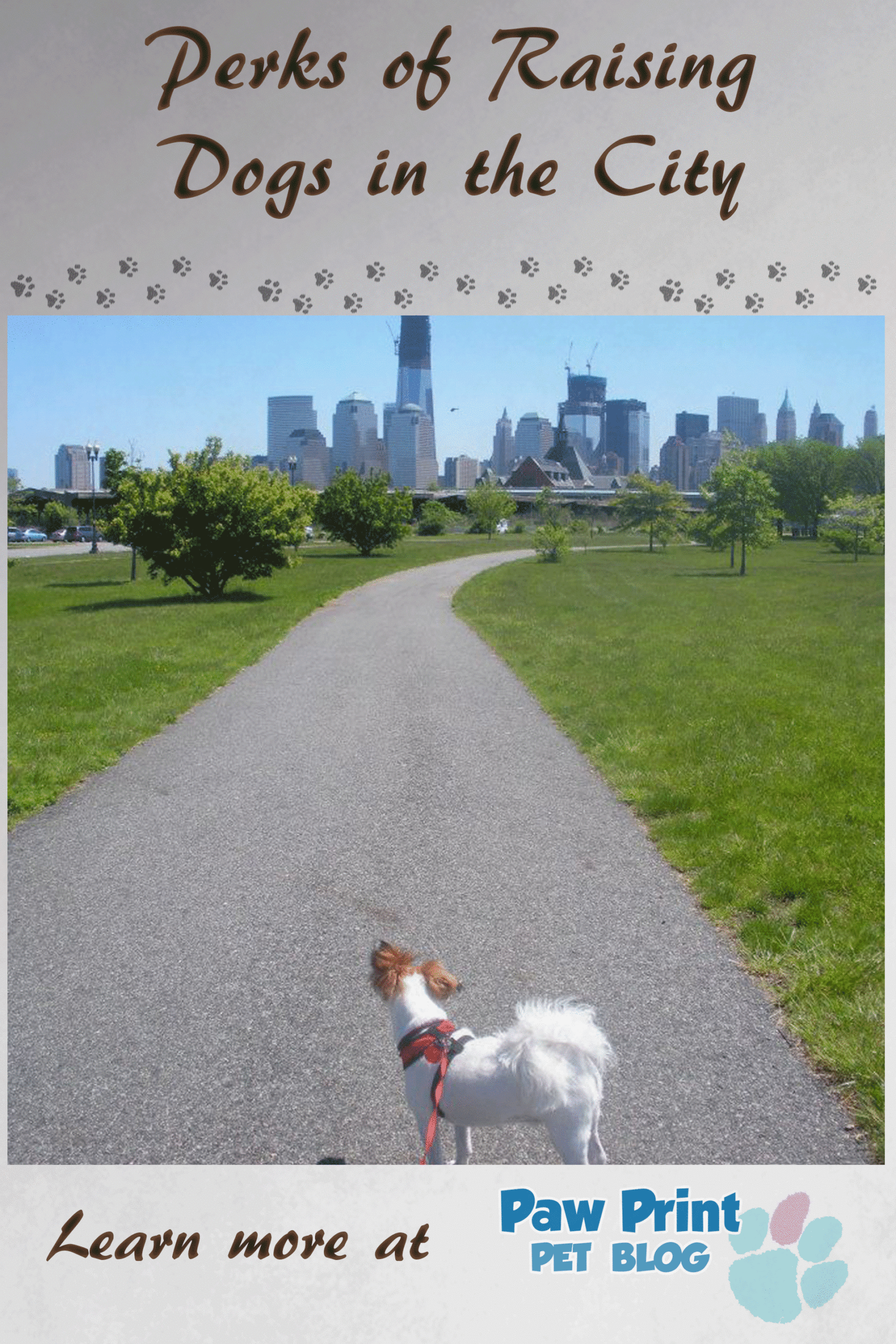
Perks of Raising Dogs in the City


KitsuneOpens in a new tab., and to some extent FenrirOpens in a new tab. too, grew up as city dogs.  Kitsune joined our pack in March of 2009.  From then until late 2019, we lived in a third floor  walk up apartment just outside of NYC.  Fenrir joined us in September of 2015.  Although he didn’t live in the city as long as Kitsune did, his formative first years of  life were spent there.  I didn’t like living in the city, and neither did Fenrir!  I very much prefer our new, quiet country life.  But I have to concede that there were some benefits to raising dogs in the city.

  • Friends: There’s no lack of people, or dogs, in the city.  It can be awesome if you have a particularly social dog, like my Kitsune.  Even if you need to be selective about what types of people/dogs your dog spends time with, there’s so many people around that you’re likely to find at least a few compatible friends.  This is one thing that I, surprisingly, miss now that we moved away from the city.  Kitsune, the social butterfly that he is, was so well known by everyone who lived around our old apartment.  He had dog friends who he loved to visit and play with.  A few people in local shops kept a stash of treats on the ready for Kit’s visits.  Where we live now, we almost never run into other people or dogs during our daily walks.

raising dogs city

  • Staying Active: People who live in apartments, without access to a fenced in yard, sometimes catch flak in the dog world.  But when we lived in our apartment, even going out for a simple bathroom break would entail gearing up, trekking through our building, then walking around outside.  On a normal  day I was walking around 5 times a day, sometimes more with my dogs.  Yes, having a yard is easier.  It also makes it much more tempting to just let your dog go out in the yard for a bathroom break, verses actually walking them.
  • Fun Things to Do:  In the city, there’s always something going on!  Many events are dog friendly.  Kitsune used to love attending local events, such as festivals.  The city we lived in had a few restaurants and stores that allowed dogs inside too.  It was easier to find dog themed events without having to travel very far.  We used to have a park within walking distance from our house.  My dogs both loved walking to the park.  They liked to play in the fields, or walk on the boardwalk to the beach.
  • Convenience: Living in the city, I never had to worry much about where to buy Kit’s specificity food, or finding a vet that was open.  Pretty much everything you could ever need is close by.  There were 3 separate pet stores in my city, even more if you travel a bit outside of the city.  Kit and Fen’s vet was close enough that we could walk there in about 10 minutes.  Their vet was also staffed 24/7.  I never had to stress about where I would take them during an off hours emergency.  Now, their vet is around a 20 minute drive away.  They aren’t open evenings or weekends, and the emergency vet is even further away.  We don’t have a single pet store in our new town either.
  • Lots and lots of Training Opportunities: I often wonder what Fen would have been like if we didn’t live in the city while he was a puppy.  Fenrir has always been a dog that gets stressed easily.  In the city, I pretty much had no choice but to expose him to lots of other people and animals.  I worked hard on training him so that the hustle and bustle of the city was something he could cope with.  I think, perhaps, if I had raised Fen in a less populated area it would have been much easier for me to just ignore some of his fear issues.  In some ways that may have made my life easier.  But I think it’s been for the best that I was able to expose my dogs to lots of different people, animals, places, things, etc.  I think they’re better dogs for it, and I a better trainer.

raising dogs city

If you’re also a city dweller with pets, what other pros can you think of?  If you live in a more rural area, what challenges and perks has living in that type of environment presented you with? 

raising dogs city

Fen’s Pineapple Apple Cake! Dog Cake Recipe


Today, August 1st, 2022, is my Alaskan klee kai FenrirOpens in a new tab.‘s 7th birthday!

I decided to make this weekend a long one and take today off.  No, I didn’t tell my boss it was so I could celebrate my dog’s birthday.  But our dog birthday cake recipe wasn’t going to write itself, and I promised the birthday pup a nice hikeOpens in a new tab. and extra snuggle time!
Last week I was trying to come up with a new recipe to make, and share, for Fen’s birthday.  I wanted to make a healthier dog birthday cake and was thinking about using applesauce in the mix.  I sometimes replace oil in (human) baked good recipes with applesauce, so that’s where my original idea came from.  We also happened to have a pineapple that was ready to cut sitting on our counter.

I was running a few recipe ideas by my partner.  When he mentioned adding pineapple to my apple cake we both started laughing.  Do you guys remember that silly “Pen Pineapple Apple Pen” song that went viral a couple of years ago now?  Well “pen” sounds so similar to “Fen”, that Fenrir got stuck with the wacky nickname “Fen pineapple apple Fen!”.

What’s better for our Fen pineapple apple Fen on his 7th birthday than a pineapple apple cake!?

dog cake recipeI’ve written about apples being dog friendly before.  Opens in a new tab.I haven’t written a post about pineapples (yet), but it is also dog safe.  Pineapples are a whopping 82% water, so they can help keep your pup hydrated.  They also contains antioxidants, vitamins C and B6, and minerals that can help maintain a healthy skin and coat, among other things.  Fresh pineapple is high in natural sugars, so it should really be offered to dogs in moderation.  But in our case, when it’s being used in a doggy cake, we’re going to use those natural sugars to our advantage!

I also added a little bit of cinnamon to help flavor Fen’s cake.  Cinnamon is nontoxic to dogs, and is thought to also have some health benefits.  Cinnamon is an anti-inflammatory, is antioxidant-rich, and can help regulate blood sugar and blood pressure.

But everyone knows that birthdays aren’t really about being healthy!  Bring on the cake!

Fen Pineapple Apple Cake – Dog Cake Recipe

I used this recipe to make 12 pineapple apple dog cupcakes.

Ingredients:
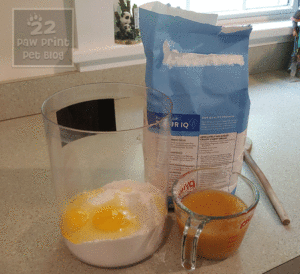
  • 2 cups of flour
  • 2 eggs
  • 1 cup of applesauce (dog safe!  I used homemade.  Check the ingredients list if you’re using store bought applesauce.)
  • 1/2 cup pureed pineapple
  • (Optional) A small amount of cinnamon and
  • (Optional) Larger slices of pineapple to decorate the top of the cupcakes

dog cake recipe

You will also need…
  • A blender
  • A mixing bowl
  • A mixing spoon, or a whisk
  • A cupcake pan
  • Cupcake pan liners
Instructions:
  1. Preheat your oven to 350*F.
  2. I started by using my blender to make 1 cup of applesauce, and a half a cup of pineapple puree.  For the ‘applesauce’ I just blended two apples with water until I had an applesauce consistency.  I did the same with the pineapple.  If your purees are a little bit chunky that should be ok.  If you’re using store bought applesauce, make sure to double check the ingredient list to make sure it doesn’t contain any unwanted ingredients.  The more natural/simple the applesauce, the better.
  3. Mix your applesauce and pineapple purees together with 2 cups of flour, and 2 eggs.  The resulting dough will be on the thicker side, so it may take a bit of extra elbow grease to thoroughly mix.  If you’re really having a hard time mixing, you can add a bit of water.  I didn’t have to do this, but my applesauce was on the watery side.
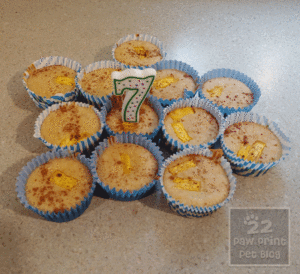
  4. Put your paper cupcake liners into your cupcake pan, and fill each liner up to around 3/4 of the way full.  When I made this recipe, it was enough dough to make 12 capcakes.
  5. (Optional) Since this is an unfrosted cake, you can get creative and decorate the tops a bit.  I decorated each of my cupcakes with pieces of pineapple and a small sprinkle of cinnamon.dog cake recipe
  6. Bake your dog cupcakes in a 350*F oven for 30 minutes.  These are a pretty soft treat.  When they’re done baking, the tops of the cupcakes should feel spongy and dry.  The inside will be more moist, thanks to the fruit.
  7. Let your cupcakes cool before offering one to your pup!  Because these treats do not contain any preservatives, store any extras in the refrigerator.

Let cool and enjoy!

dog cake recipeMy birthday pup Mr.Fenrir can be a really picky eater.  He’s an Alaskan klee kai, after all, a breed that’s pretty notorious for being food snobs.  I have to admit, I was worried I’d do all this work to come up with a dog birthday cake recipe just for Fen and he’d turn his nose up to it.  I was a bit hopeful, though, because Fenrir does like apples.
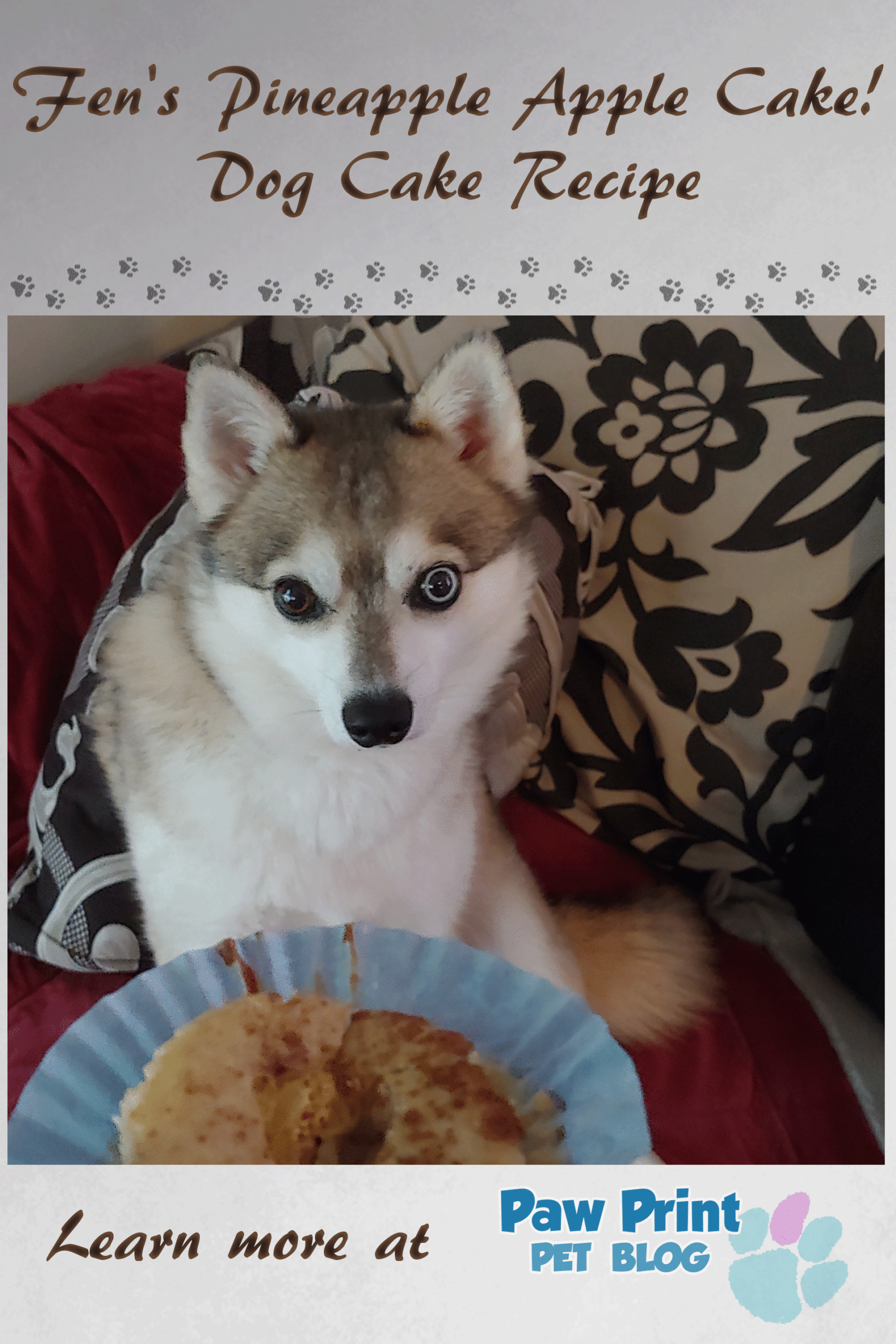
Thankfully, to my pleasant surprise, Fenrir seems to really like his apple pineapple cupcakes!  My other dog, KitsuneOpens in a new tab., really likes them too.  That’s not saying much, though, because Kit will eat almost anything!

Well that’s it for today.  The birthday pup and I have a lot of snuggling to do!  I’ll try to get Fenrir’s yearly birthday video up on our YouTube channelOpens in a new tab. later this week, as is tradition.  If anyone tries out our recipe you’ll have to comment and let us know how it goes!

Happy 7th Birthday, Fenrir!

dog cake recipe