
Recent Posts

How To Tell If A Dog Has A Single Or Double Coat


Does your dog have a double or a single coat?  My Kitsune is a PapillonOpens in a new tab., a breed that is often described as being “wash and wear”.  Unlike some other breeds, Papillons, even when they are being shown, are not heavily groomed.  Their fur is left long and flowing, although it is normal to neaten up the fur on the paws, hocks, and personal areas.

Despite this, I have trimmed Kit’s fur short, to one degree or another, since he was around a year old.  He always seems to feel more comfortable with shorter fur. His shorter fur is less messy and easier to maintain, and my fiance and I both like the way Kit looks after his trims.

Sometimes “Experts” Don’t Even Know The Difference!

Over the years I’ve gotten mixed feedback over Kit’s fur style.  Most people comment that he’s adorable and that his fur looks nice, clean, and is very soft.  My harshest critics, however, always seem to be other Papillon owners.  Last week I talked to a groomer who also happened to own a Papillon.  To say she didn’t like Kit’s haircut would be an understatement.  She informed me that dogs with double coats should never be trimmed, and Kit’s fur would never grow back the same.  Of course she ignored me when I told her I’d been trimming his fur for going on 8 years without any issues at all.  I also tried to politely inform her that Papillons actually have single coats, not double coats, to which she replied that they have double coats because they shed.

Coat Type Isn’t Determined By Whether Or Not A Dog Sheds
It shocked me that a groomer wouldn’t know the difference between a double and a single coat.  It’s not determined by whether or not a dog sheds.  The encounter made me wonder.  If a groomer didn’t know how to tell the difference between a double and a single coat, how many other people would?

Double Coats

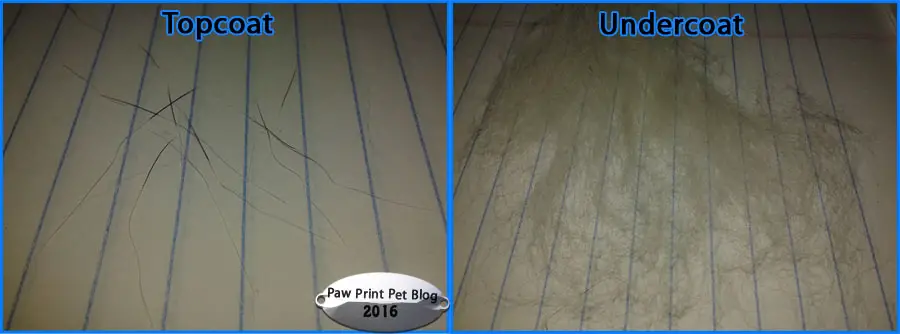
So I enlisted the help of my 11 month old Alaskan Klee Kai, Fenrir.  He, no doubt about it, has a double coat.  A few strokes with a slicker brush over his back and this is what I get…
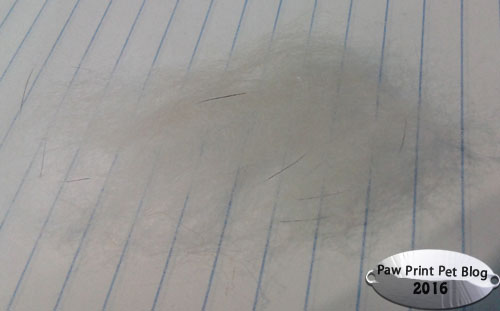
At first glance, you might notice that it looks like there are two types of fur there.  I broke it down even further…
Dog single and double coats

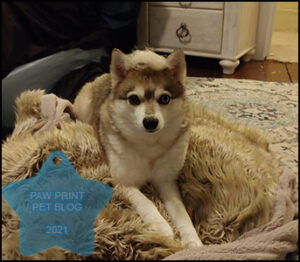
Fen clearly has two types of fur.  His topcoat, sometimes referred to as guard hairs, are straight and thick.  They are mostly white but the tips, the parts that would be furthest away from Fen’s skin, are black.  If you look at the picture I posted of Fen above, these guard hairs are what gives him his grey/black coloration.

The second type of fur is his undercoat.  It’s all one color, kind of a creamy white color in Fen’s case.  You can probably tell that the texture of his undercoat is not the same as his topcoat.  It’s much softer, and doesn’t naturally lie as straight.

When Fen sheds, especially when he blows his coat, it’s mostly his undercoat that he’s losing.  But, as you can see from the pictures above, he also loses some of his guard hairs.

Single Coats

Papillon single coat fur
Kit’s fur which, as you can see, looks similar to Fen’s topcoat. Note the lack of abundant, fluffy undercoat.

Most Papillons, those with the breed standard single coat, only have guard hairs.  This doesn’t mean they don’t shed because, as demonstrated by Fen, guard hairs can be shed.  What it does mean, and I’ve experience this first hand with Kit, is that dogs with single coats may shed a lot less than dogs with double coats.  When Fen sheds he’s losing a small portion of his guard hairs, plus a ton of fluffy undercoat.  When Kit sheds he’s only losing a small portion of his top coat – it’s barely noticeable.

If anyone is interested I can write more about the role of each type of fur, and why it’s generally ok to trim the fur of a single coated dog, but isn’t usually recommended (although it isn’t as much of a sin as people will have you believe) for a double coated dog.  This post is getting a bit long, so I’m going to leave those subjects for another day.

Comment below!  What type of fur does your dog have?  Does he/she shed a lot?

Originally posted 7/15/2016.  Last updated 1/18/2022
Review Update: Yaheetech Dog Playpen 2021


Some of my readers may remember that last January I posted a review for Yaheetech dog playpensOpens in a new tab..  Although we were really happy/impressed with our pen, I felt like maybe my earlier review didn’t do the best job of showing it off.  This past winter was long, and especially brutal here.  Not long after we received our playpen, good ol’ Mother Nature decided to drop 4 (yes 4!) feet of snow on us at once.  As you can probably imagine, with that much snow on the ground it was hard just walking around outside, forget attempting to build and utilize a new dog penOpens in a new tab.!

Since My Last Review…

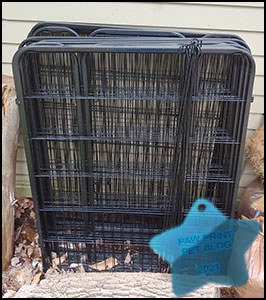
I tried my best to share the features of the Yaheetech dog playpenOpens in a new tab. without being able to actually assemble the full pen.  To be honest, after taking pictures for January’s review I basically collapsed the pen and let it sit outside behind our house.  Winter sloooowly gave way to spring.  All that snow melting meant that our yard has basically been a giant mud pit.  Finally, this past weekend, I found both the motivation, and a dry spot in our yard, to get outside and set up our pen!

We received our Yaheetech dog playpen for free in exchange for our honest review.  As always, we strive to share only products we feel would be of interest to our readers.  All opinions expressed are our own.  This post contains affiliate links.  If you make a purchase using one of our links we will receive a small commission at no additional cost to you.

First Impressions…

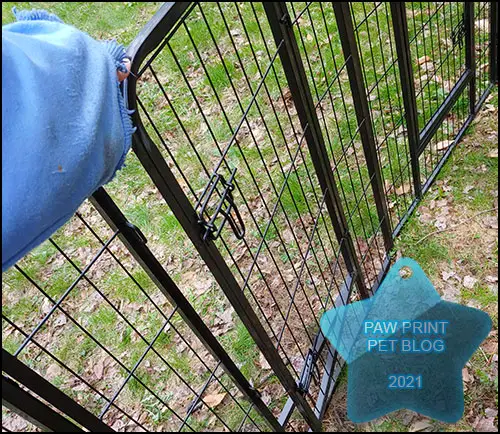
Right off the bat I was super impressed that the pen panels I had left outside in the elements for 5 months were still in perfect condition.  Besides being a little bit muddy, they looked just as good as they did the day I unboxed them.  Building the playpen was super easy, which I was especially thankful for because I seemed to have misplaced the instructions that came with it.  Our playpen is the 16 panel 40 inch modelOpens in a new tab., so it’s a pretty good size especially considering that my dogs are on the smaller side.  These pens are super modular.  They do come in sets that include more panels, which would make a larger pen.  Alternatively, it would be really easy to buy another set of panels later on and add them to your existing pen, if you ever decided you wanted to expand it.
Setting Up Our Pen

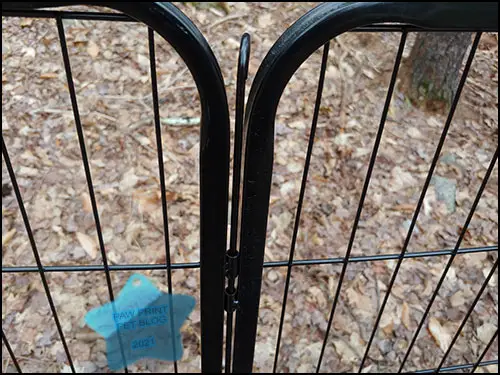
The pen panels basically attach together with metal stakes.  You slide the stakes down through alternating holes in the fence panels.  I don’t remember if this was in the instructions or not, but I pushed the stakes down further so that the ends of them went into the ground.  I’m sure the pen would still be secure if you didn’t, or couldn’t, do that, but I liked the idea of potentially being able to give our playpen a bit of added stability.

I like the door on our Yaheetech pen too!  You can set it up to swing in whatever direction works best for you.  Our pen came with two doors.  I set them up to swing in opposite directions because I wasn’t sure which way I’d like them best.  The door being smaller means I can easily slip in and out of the pen without having to worry as much about my dogs (Fenrir!) trying to escape.

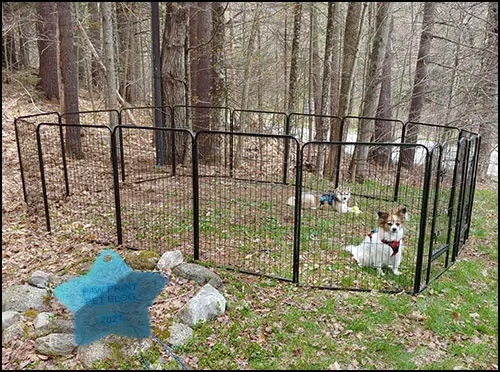
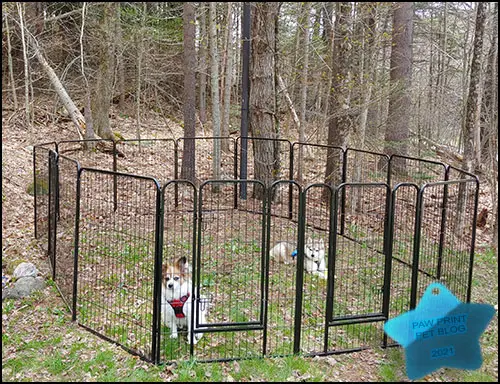
Here’s probably what most people will want to see most, the completed, full size, pen!

Probably the most important part of any dog product review – do my dogs like it!?

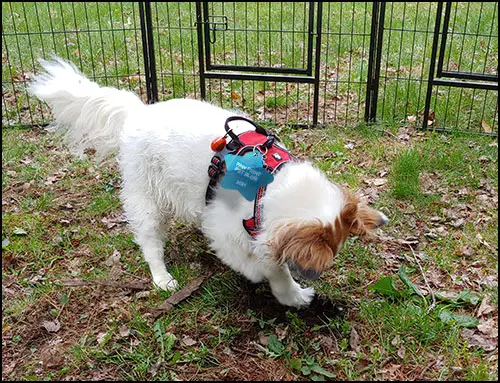
Kit, as you can maybe tell from those pictures, was a bit unsure of it at first.  Usually, when I take him out in the yard, I stay with him and just let him wander.  At first, after I put him in the pen, he kind of just sat near the edge looking out at my partner and I.  But eventually he did start feeling more comfortable about the whole thing and got right down to business – the business of digging for worms!

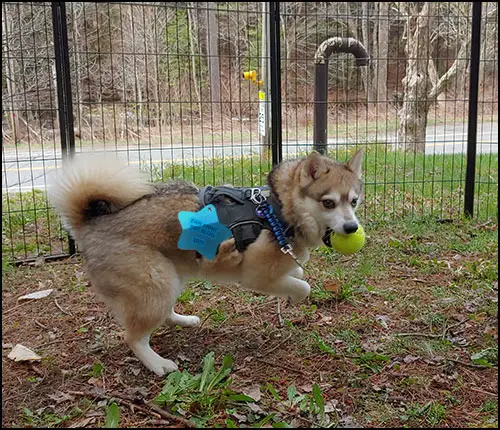
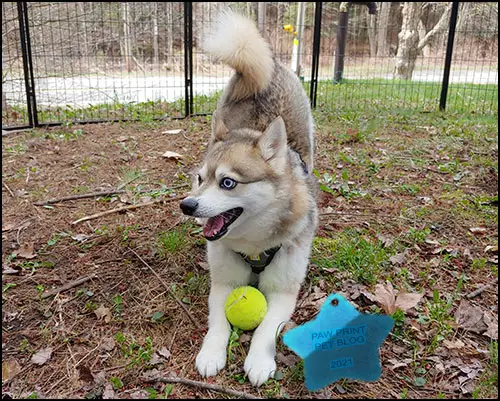
Fen, on the other paw, was pretty excited about the playpen right from the start.  Anyone who knows anything about Alaskan Klee Kai knows that the breed isn’t known for being great off-leash.  Our yard isn’t fenced, so when I want to give him more freedom to run outside I usually just use a long line.  I don’t think I even need to write too much about how much fun Fen has been having being able to run around off-leash.  I’ll just let these pictures speak for themselves…

Great For Playing Off-leash!

Now almost every time I take Fen out in the yard he tries to drag me over to ‘his’ playpen so he can go inside and play fetch.  The pen has also been super convenient for times when I want to have the dogs outside with me, but I can’t give them my full undivided attention.  It keeps them safe and contained while I get other things done, like working on the car or yard work.

If you want more details on our Yaheetech dog playpen you can check out my first review hereOpens in a new tab..  Of course also be sure to check out the Yaheetech websiteOpens in a new tab.!  Besides dog pens, they also sell other pet productsOpens in a new tab. as well as other types of products too.  I’ve totally been eyeing some of their gardening supplies!

Thanks so much for reading!  Comment below!  Have you ever used any type of outdoor pen for your pets?

How Often Do Dogs Need Bathroom Breaks?


I have the pleasure (and curse – when you work from home, you’re always at work!) of working from home, so taking my dogs out regularly has never really been an issue for me.  Maybe it’s because they’re small dogs, or perhaps I’m not the best puppy trainer, but both Kit and Fen were pains to potty train.  Luckily, now that they’re older, they’re both awesome at only going outside.  My dogs rarely actually ask to go out, unless it’s really an emergency.  They normally wait until I take them out to use the bathroom.  How often do you take your dogs out for bathroom breaks?

What I Do With My Own Dogs

I take Kit and Fen out, on average, once every 5 hours or so during the day.  They go longer than that overnight.  I don’t like making them wait too long between trips outside.  Holding pee too long can lead to heath issues such as urinary tract infections, bladder, and kidney problems.  Holding poop for extended periods of time can cause constipation, which isn’t fun for anyone!

How Often Do YOUR Dogs Need Bathroom Breaks?

how often do dogs need bathroom breaks?
Kitsune patiently waiting to go out.

The answer can depend on a lot of factors, including (but not limited too) your individual dog, his/her age, diet, activity level, and general health.  A general rule for puppies is that you can take their age, in months, and add 1.  That’s how many hours they can be expected to be able to hold their bladders for.  So an 8 week (2 month) old puppy can generally go around 3 hours between bathroom breaks.

A general time frame I’ve seen for adult dogs is anywhere between 4 – 10 hours between bathroom breaks.  I do wonder, though, if the higher estimate is based more on people’s work schedules than it is on maintaining pets’ comfort.  Both of my small dogs can go 10 hours without using the bathroom, but I really don’t like making them wait that long and would only do so under rare, extenuating circumstances.  Bathroom breaks every 5 or 6 hours seems to really be the sweet spot for my duo.

I understand that not everyone has the luxury of being able to work from home.  People who work long hours can, and do, make awesome dog owners too.  Often this entails enlisting the help of a dog walker, doggy daycare, family members, neighbors, etc, to ensure their dogs get not only regular bathroom breaks, but attention during the day.

Comment below!  If you have a dog, how often to you take him/her out to use the bathroom?  What do you feel is an acceptable amount of time between bathroom breaks for an adult dog?

Post last updated: 1/18/2022

List of Subscription Boxes for Pets


Monthly subscription boxes can be a fun, unique way to spoil your pet!  Over the years, my dogs and I have reviewed quite a few different pet boxes.  Since this list continues to be one of our most popular blog posts, I regularly edit it to included any new pet subscription boxes we come across, and to remove ones that are no longer available.

** Post last updated 1/19/2022 **

When I originally posted this list, it was rather short.  Its grown a lot over the years!  If you know of any pet subscription box services that I neglected to add to my list, please feel free to comment below!  I’ve organized the list into categories based on what types of pets they are for, to make it easier to find boxes for each particular type of pet

[AdsWithin]

Boxes for Dog

  • Pooch PerksOpens in a new tab.:  Pooch packages start as low as $21.15 per box and include high quality toys and treats.  The treats, and many of the toys, are made in the USA.
  • Bully BundlesOpens in a new tab.: A bit different then your average dog subscription box, Bully Bundles sends your dog monthly bundles of long lasting, high quality bully sticks!  Choose between 6” and 12” bully sticks – pricing ranged from $18 to $132 per month.
  • BarkBoxOpens in a new tab.: BarkBox was the first pet subscription box we ever heard about!  We actually had a subscription with them for about 8 months.   Pricing is as low as $23 a month (if you purchase a 6 month subscription).
  • PupBoxOpens in a new tab.:  This is a monthly development box for your puppy.  As your puppy grows, the products included in each month’s box will change.
  • PupJoyOpens in a new tab.: This box has single or multi dog options that include hand selected items such as treats, and toys personalized for your dog’s size.
  • The Dapper Dog BoxOpens in a new tab.: Treats, toys, and bandanas for your best furry friend in every box.
  • TreatLuvOpens in a new tab.: A monthly surprise box containing 5 – 7 natural treats each month.
  • Wigglebutt boxOpens in a new tab.: Boxes contain treats, chews, food, and toys.
  • Daisy-CareOpens in a new tab.: Options such as an annual holiday box, a treat box, or a toy box.
  • Wigglebutt BoxOpens in a new tab.: Boxes are tailored to dogs size.  Treats are high quality and sourced from the USA, Canada, Australia, and New Zealand.
  • Gnaw BoxOpens in a new tab.: Boxes for small or medium/large dogs contain Nature Gnaws chews and treats.
  • Pup Mom CrateOpens in a new tab.: Spoil your dog and yourself for $39.99 per month.
  • Willie & RooOpens in a new tab.: The health, wellness, and fun box for dogs!
  • Real Dog BoxOpens in a new tab.: The freshest dog treats on the planet!  Treat and chew boxes available.
  • Get Wagging Collar BoxOpens in a new tab.: Starting at just $20 a month, new collars can be sent monthly or quarterly.
  • Dog Mom BoxOpens in a new tab.:  The sub box for dogs and their moms!
  • Kong BoxOpens in a new tab.: What dog guardian isn’t familiar with Kong?  They have a sub box now too!

Boxes for Cats

  • MeowboxOpens in a new tab.:  Meowbox is a goodie box for cats that contains fun toys, and high quality treats sourced from the US and Canada.  Picky kitties can opt to receive boxes that contain extra toys in place of treats.
  • KitNipBoxOpens in a new tab.:  KitNipBox is a subscription box created especially for cats!  Prices range from $19.99 to $29 per month.   These boxes include awesome cat products such as toys, healthy treats, and health and hygiene products.
  • Cat Lady BoxOpens in a new tab.: A monthly box not only for cats, but for the ladies who love them too!
  • Purrfect PacksOpens in a new tab.: A monthly cat box that contains things like natural treats and toys.
  • Purr BoxOpens in a new tab.: Cat boxes that can be ordered as a monthly subscription or one time.
  • Cattitude BoxOpens in a new tab.: Sub boxes for cat ladies!

Boxes for Both Dogs and/or Cats

  • Rescue BoxOpens in a new tab.: Spoil your pet while helping animals in need!
  • Vet Pet BoxOpens in a new tab.: Boxes for dogs or cats full of goodies hand selected by veterinarians.
  • Jadey’s JuJu: Ethically sourced pet treats, products, supplements, and other goodies.  Boxes available for dogs, cats, or horses.
  • Pet TreaterOpens in a new tab.:  Want monthly treats, toys, and supplies for your dog or cat?  Pricing starts as low as $15 per month.
  • Chewy Goodie BoxesOpens in a new tab.: The ever popular Chewy offers goodie boxes for dogs of various sizes, as well as cats.

Boxes for Other Pets

  • Squawk BoxOpens in a new tab.: A monthly box of 4 to 6 goodies for birds.
  • Feathered Fun BoxOpens in a new tab.: Monthly boxes for small or large birds.
  • Polly Wanna Bird BoxOpens in a new tab.: A busy bird is a happy bird – treat your flock to a box of goodies monthly.
  • Henny+RooOpens in a new tab.: A box for backyard chicken keepers!
  • Rat PackOpens in a new tab.: Monthly goodies for rats or guinea pigs.
  • Bunny BoxOpens in a new tab.: Based in the UK.  A box for bunnies!
  • BinxBoxOpens in a new tab.: A monthly sub box for bunnies, guinea pigs, and more.
  • Happy Bunny ClubOpens in a new tab.: A monthly box of toys, treats, and guaranteed bunny fun!
  • Dook BoxOpens in a new tab.: A sub box for ferrets.
  • Hamster MailOpens in a new tab.: Another hamster box!
  • Pocket Pet PouchOpens in a new tab.: A sub box ideal for hedgehogs and other small pets.
  • Hermie’s Kitchen: Homemade treat subscription boxes available for not only dogs and cats, but hedgehogs, hermit crabs, and rats as well!
  • PETure PerfectOpens in a new tab.: A box of goodies, personalized with your pet’s picture!  The boxes are listed on the site as being for cats or dogs.  However, the company will accommodate for any type of pet!

————————————————————————————-
Whew that’s a long list!  Did we forget one?  Have you tried any of the pet subscription boxes listed above?  Is there one in particular you’d like to see us reviewOpens in a new tab.?  Comment below and let us know!

Are Silica Gel Packets Toxic to Dogs?


What happens if dogs eat silica gel packets?  Are they actually toxic to dogs?  Now that my dogs are older, 12 and 5, you would think they’d be past the “eating things they’re not supposed too” stage.  You’d be wrong, at least when it comes to Fenrir.  He doesn’t so much eat things he’s not supposed too, to be fair.  He mostly just chews up, or otherwise destroys things.

Earlier this week, if you can’t already tell by my blog title, Fen’s latest victim was a silica gel packet.  You know, those little packets that come inside things you buy that are clearly labeled “Do not eat”.

Well, Dogs Can’t Read.

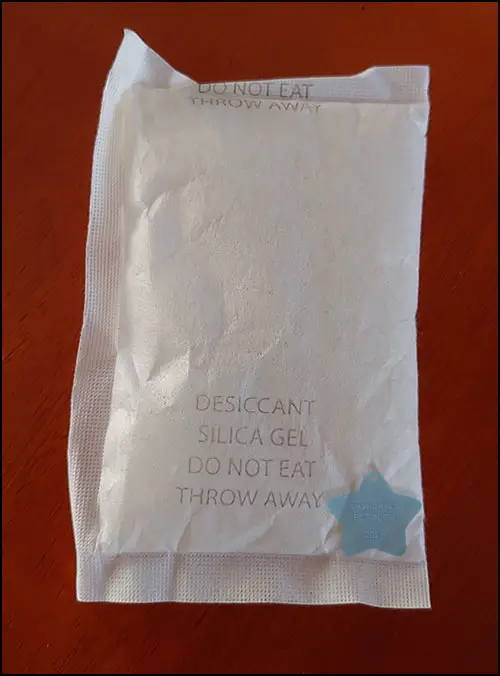
silica gel packet We had purchased some new pillows that were sealed up in plastic with silica packets inside the packaging.  I didn’t notice that one of the silica packets had fallen down in between our couch and the computer desk.  Fen didn’t have any trouble finding it, though.
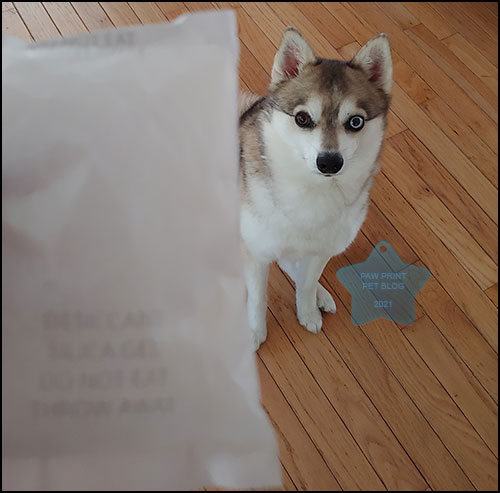
I heard my partner calling me from the other room.  I found him down on the floor, picking tiny little balls up off the rug.  Oh no…what did Fen get into now!?  Luckily silica packets are usually pretty clearly labeled, and Fen didn’t actually eat the packet, he just ripped it open.

Your dog possibly eating something with a bold label stating “Do not eat” is pretty concerning.  Fen is just a little thing too.  It would take less of a toxic substance to affect him than it would a much bigger dog.  Knowing Fen, I was pretty sure his intentions were to destroy the packet and not to actually eat it.  But there was no way for me to know for sure whether he had accidentally ingested any of the little silica balls or not.

What, Exactly, Is Inside Those Silica Packets?

Silica gel, in the form of little balls or beads inside silica packets, is silicon dioxide.  Silicon dioxide in nature can be found in sand, glass, and quartz.  Silica beads are usually clear or white.  However, it’s common for the silicon dioxide to be mixed with a moisture indicator that may make the silica appear to be blue, pink, green, or orange.

Silica is commonly used inside product packaging because of its ability to absorb moisture.  Each little bead can absorb about 30 percent of its weight in water, essentially helping to protect products from excess moisture and humidity.

Are Silica Packets Toxic?

Good news – silica itself is inert and non-toxic.  You can basically think of it as man made sand.  Silica absorbs moisture but the beads do not expand in size.

However, that’s not to say silica packets are 100% harmless. If the silica was mixed with a moisture indicator (typically cobalt (II) chloride or Methyl Violet), these ingredients can be problematic in large doses.  You also have to pay attention to what type of product the silica packet was inside.  If it was something harmless, such as pillows, then you generally don’t have much to worry about.  However, if it came into contact with a non-pet friendly item, such as medication, chemicals, toxic food items, etc, then that’s cause for more concern; not because of the silica itself, but because the ingested silica may have contained trace amounts of the product it was packaged with.

In addition, the more silica that was ingested the higher the chance you’ll run into complications.  It will heighten your pets exposure to potential toxins contained in the silica (moisture indicators), and potentially dangerous products the silica was packaged with.  In large amounts silica can lead to dehydration.  Large quantities of ingested foreign objects can also cause obstructions.

Believe It Or Not, It’s Not Usually The Silica Beads Themselves That Cause Problems.  It’s The Packets They Come In.

Ingesting the porous packets that contain the silica beads can cause choking, or a blockage of the intestinal tract.  Again, the risk level increases if larger amounts of a foreign material are ingested.  Generally a single, small silica packet won’t do any major damage to your dog.  But if they somehow gets more than one packet, the likelihood of negative symptoms increases.

Watch Out For Potential Symptoms.

Mild GI upset after consuming silica packets is not rare.  However, it’s important to monitor your pet.  Watch out specifically for symptoms of dehydration and/or intestinal obstructions.  These include things like vomiting, diarrhea, lethargy, loss of appetite, excess panting, sunken or dry looking eyes, dry gums, and loss of skin elasticity.

It’s important to contact your veterinarian if your dog has eaten a silica packet and displays any symptoms of distress, if the silica gel in question is colored (indicating that it’s not pure silicon dioxide and may contain toxins), or if the silica was packaged inside a potentially dangerous product such as medication.

Fen Is Just Fine After His Silica Mishap!

Silica gel packets are labeled “Do not eat” because they are often included inside food and pill packages.  While silicon dioxide itself is not toxic, that doesn’t mean that consuming silica packets is without risks for our pets.  It’s important to be vigilant and keep foreign objects away from curious pets.
This is a do as I say, not as I do, type of situation.  I’m not convinced that Fenrir ate any of the silica beads he got into.  I found the packet torn up on the living room rug.  I think he just ripped the packet open.  He really enjoys destroying things!  Luckily Mr. FenOpens in a new tab. experienced no ill effects from his escapades.  Going forward, I’ll be even more careful to ensure that all packaging makes it to the trash before my little trouble maker gets to it.

Accidents can happen to anyone, though.  In the case of any potential medical emergencies, it’s important to stay as calm as possible.  If your pet ingests a foreign material and you’re not sure whether or not it’s toxic, call your vet or the Animal Poison Control HotlineOpens in a new tab. as soon as possible.  While some commonly ingested foreign objects, like silica, are generally pretty harmless, others can be deadly.  How quickly you get your pet the proper treatment can make all the difference.

[AdsWithin]

Dog Bath Time: How Often Is Too Often?


How often do you bathe your dogs?  Whenever I see this question asked, answers seem to run the gamut from incredibly often, to barely ever.  I have to admit I’ve always erred on the side of bathing my dogs often.  For many years I bathed KitsuneOpens in a new tab. every week.  He has a lot of allergies, many of which cause him skin irritation.  Frequent baths have always gone far when it comes to keeping those types of issues at bay.  I also allow my dogs to have pretty much free reign of our home, furniture included.  Who wants a dirty dog rolling all over their nice clean sheets?

Mud Season!?

how often bathe dog
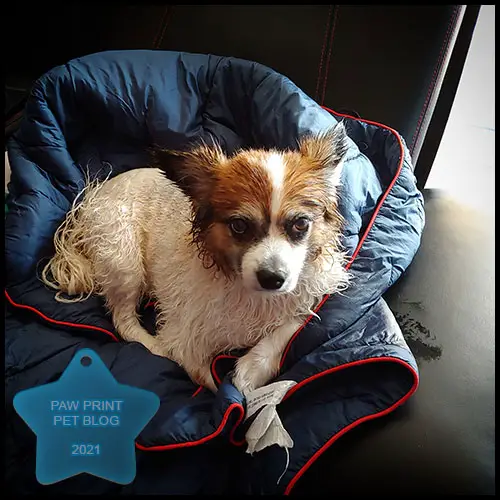
The look on Kit’s face tells you all you need to know about what he thinks of baths!

We finally seem to be at the tail end of ‘mud season’ here in new England.  For anyone not familiar, although I guess it’s pretty self explanatory, the aptly named ‘mud season’ occurs around the end of winter/beginning of spring.  The snow that piled up all winter starts to melt.  The ground begins to thaw, and your yard basically turns into one giant mud pit.  If you have dogs, mud season turns your regular cleaning routine into an extreme sport.  The less mud you have in your house, the more points you accumulate.  But it’s impossible to have a perfect score.  It’s never been done before.  I’ve spent so much time the past couple of weeks mopping muddy paw prints off my kitchen floor.  But I digress…

An Individual Thing…

I know a lot of dog owners are opposed to bathing pets often.  I’ve had fellow dog owners lecture me about bathing Kitsune too much.  But I’ve talked to others who bathe their furry friends just as often, or even more so, than I do Kitsune.  The fact of the matter is that there are no set in stone guidelines for how often dogs should be bathed.  How often is too often for your dog can depend on a number of different factors – each dog is an individual!

how often bathe dog
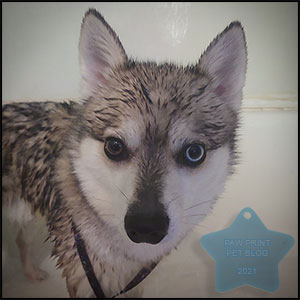
Bath time for Sir Sheds-A-Lot, aka Fenrir.

Things such as your dogs’ fur type, where you live, what type of activities you and your dog are involved in, human preferences, etc, can all impact how often your furry friend needs to be bathed.  Since we moved out of the city, I’ve been able to switch my own dogs from weekly baths to every other week.  I guess all the pollution they were exposed too impacted their skin and fur more than I had realized.  Kitsune’s skin allergies have also greatly improved since we moved, so I don’t have to bathe him as often because of them.  But we do spend a lot more time playing outside now, and I enjoy when the dogs smell fresh and clean instead of like dirt.  Bathing them every other week seems to, currently, be the Goldilocks number for us – not too clean, not too dirty, juuuuust right!

This post contains affiliate Amazon Links.  If you make a purchase using one of our links, we will receive a small commission at no additional cost to you.  Please see our DisclaimerOpens in a new tab. page for more information.  Thank you!

The Products You Use Matter!

The biggest argument against bathing dogs  super often is that, in some dogs, it can cause skin issues such as irritation and flaking.  My dogs have never experienced negative symptoms despite being bathed often, but that’s not to say that weekly (or even every other week) baths would work for every dog.  I personally feel that one of the biggest factors you want to take into account if you want to bathe your pet often is what type of shampooOpens in a new tab. you use.

I’ve always used high quality, detergent/soap free dog shampoos on my own dogs.  Soap free shampoos still get your pooch nice and clean, but are less drying and don’t strip away as much of the furs’ natural oils.  You don’t want to use human (even baby) shampoo on your dog because of the pH differences.  I know Dawn is a popular choice when dealing with fleas.  It shouldn’t be used for regular bathing because it’s very drying.  High quality dog shampoos may be more expensive than other options, but a little bit goes a long way.  A 16oz bottle of dog shampoo lasts each of my dogs a good 6 + months.

So really what you should take from this post is that there really is no concrete number for how often you should bathe your dog.  It can depend on a lot of different factors.  If, like me, you do decide that you’d like to bathe your pet often, it’s best to use high quality products to avoid drying out your pets fur and skin.  What do you think?  How often do you bathe your own pet(s)?

how often bathe dog
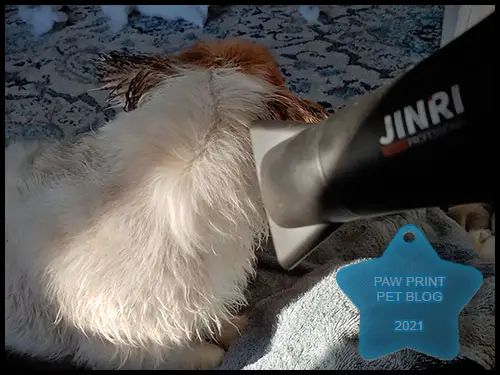
Kit’s favorite part of bath day – getting dry again after!!