
Recent Posts

Moving Prep with Pets: Tips to Combat Stress While Preparing to Move


moving stress petsWe are in the final stretch of prepping for our move!  We’ve been living in our current apartment for over 10 years.  The whole moving process has felt a bit foreign.  This is also the first time ever that we’ve had to move with dogs.  Our oldest dog, KitOpens in a new tab., joined our pack just a few months after we moved into this apartment.  He’s lived in the same apartment with us since he was 9 weeks old, and he’s almost 11 now!  Throughout the moving process I’ve stayed pretty vigilant when it comes to my dogs.  Moving can be a big source of stress for pets, as well as their people!  Luckily my boys are pretty resilient, and I’ve followed a few tips that I feel have helped to keep their stress levels at a minimum during our moving prep.

Try to Maintain Your Regular Routine.

If you’re like most pet owners, you and your pets are used to following a certain schedule.  Animals can be creatures of habit, and breaks in their normal, everyday, routines can be big sources of stress.  My fiancé and I have been super busy; running around to get moving stuff done, tying up loose ends at work, and visiting with friends and family before we leave.  Despite all that, I’ve tried hard to make sure I keep my dogs’ schedule as consistent as possible.  You know Kit knows exactly when it’s dinner time, and he’s not a happy camper when it comes late!

Keep Comfort Items Out for Your Pets.
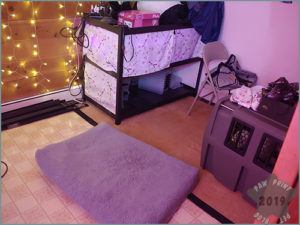
moving stress petsSince we’re so close to moving at this point, I’ve packed quite a bit of my dogs’ belongings, including most of their bedding and toys.  I think it’s important, though, to make sure you leave them with access to at least a few comfort items.  My dogs each have a few favorite toys, and I’ve made sure to leave those out for them.  I also left out their favorite dog bed, and Fen’s crate.  These items have been especially useful in our case, since we decided to sell off most of our furniture and start fresh in the new place.  I didn’t want Kit especially, with his arthritis, to be left without a comfortable place to relax.

Set up a “Quiet Zone” Where Your Pets Can Stay Safe and Stress Free.

In the past couple of weeks we’ve had quite a few people coming and going from our apartment – Friends visiting, people picking up furniture we sold, etc.  We’ve also been breaking down some furniture, and moving around really heavy boxes.  There have been quite a few times when, for everyone’s safety, it has been best to not have to worry about my dogs getting underfoot.  To protect your pets from getting hurt or bolting out open doors, it’s a great idea to create a nice relaxing ‘quiet zone’ for them.  If you can, set aside a room in your house just for your dogs.  If you don’t have the space to set aside an entire room, consider using a crateOpens in a new tab. to confine your dog during times when it may be unsafe or stressful to have him/her running around.

Don’t Bother Going Crazy Cleaning.

When we first started packing, I went into crazy cleaning mode.  I had plans to clean everything, or at least almost everything, before packing it away into boxes.  It’s important to remember, though, that sense of smell is more important to pets than it is people.  Bringing items that smell like home into your new house when you move can be really comforting to dogs especially.  I decided not to go so crazy with my cleaning, and am even packing a lot of bedding dirty on purpose for the dogs.  I can always clean everything later, after everyone gets settled into the new place.

Get Plenty of Exercise!

Believe me, I know, you’re going to want to use moving as an excuse to not exercise your pet as much, at least if you’re anything like me.  I’ve been SO sore lately from moving heavy stuff around, plus extra tired because I’ve been so amped up that I haven’t been sleeping very well.  Running around at the park is one of the last things I’ve been wanting to do.  But I do it for my dogs.  Exercise really does help reduce stress!  Getting excess energy out in appropriate ways will help ensure your dog isn’t getting into trouble while you’re trying to pack.  It can also just be a great way to get out with your dog, to take everyone’s mind off of the craziness of the move even if just for a little while.moving stress pets

Try To Stay Stress Free Yourself.

moving stress petsEasier said than done, I know.  Don’t forget that our pets, dogs especially, look to us for ques on how to react in new situations.  They feed off of our emotions.  If you’re super stressed out, believe me, your pets are going to know it.  Despite everything going on here lately I’ve been reading quite a bit, and snuggling with the dogs often, as these are some of the things that help me to destress.  Moving is so hectic, it’s important to remember to look out for not only those who you care for (such as pets), but for yourself as well!

Try to have fun! 

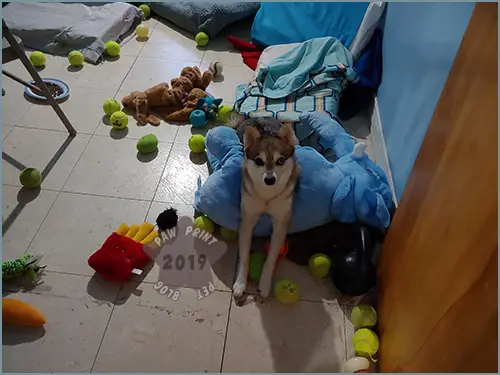
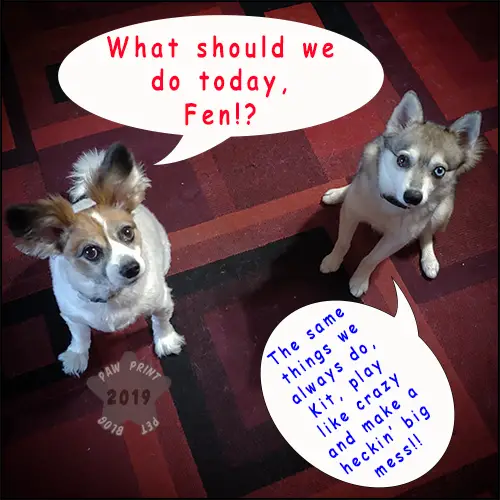
Packing isn’t fun for everyone, I get that, but there’s no better way to fight off moving stress for our pets than with fun!  My younger dog, FenrirOpens in a new tab.‘s, favorite part of packing so far was when we were getting ready to sell our couch, and found just how many toys had been hiding under there.  So many tennis balls!  I’ve been taking plenty of breaks from packing to play with the dogs, even just to roll a tennis ball around the newly empty rooms for a few minutes with Fen.  A few minutes of fun here and there can really help to lighten the mood of the move – for us and our pets!
moving stress pets

Can you think of any tips that I didn’t post here?  What are things you do to help keep your pets stress free in a stressful situation, whether it be moving or something else?

Thank you SO much to everyone whose wished us luck with our move!

Things are still going well, and before we know it I’ll be blogging from our new home.  I have a few more moving themed posts planned, hopefully no one minds.  I’ll be sure to keep everyone updated on our progress.  Please don’t worry about us if we go radio silent for a bit at some point.  It most likely just means that we’re in our new place, working on getting everything back up and running again.  Thank you all so much for reading!  All of you are part of what helped to make this next step in our journey possible and I am so thankful for each and every one of you! 🙂

This post originally went up on September 10th, 2019.  It was edited and reposted on August 24th, 2022.  We successfully moved from our city apartment, to an amazing rental house in the country back in 2019.  Moving with pets can cause stress, but this move was a huge upgrade for us.  Kit and Fen have both been loving life as country dogs! 
moving stress pets

Are Papillons Hypoallergenic?


There are so many things to consider when you’re thinking of adding a new member to your pack!  Papillons are an amazing small, but mighty, breed of dog Opens in a new tab.that can make awesome pets for the right people.  I’ve been writing quite a bit about papillon’s coats lately, including this post about papillons having single coatsOpens in a new tab., and this one about whether or not papillons shedOpens in a new tab..  But one question I see asked often is whether or not papillons are hypoallergenic.

What, exactly, does hypoallergenic mean?

Papillons HypoallergenicFirst thing first, to determine whether or not papillons are hypoallergenic it would help to have a good understanding of what hypoallergenic means, and how it relates to dogs.  The Merriam-Webster definition of the word hypoallergenicOpens in a new tab. is “having little likelihood of causing an allergic response”.  So, basically, a hypoallergenic dog breed would be one that has little likelihood of causing an allergic reaction in people impacted by dog allergies.

What causes dog allergies?

A lot of people associate dog allergies with dog’s fur.  However, according to the Asthma and Allergy Foundation of AmericaOpens in a new tab., “When you have a pet allergy, you are not allergic to the pet’s hair, fur, or feathers. You are allergic to the protein that is found in the pet’s dander (dead skin cells) saliva, and urine”.  This is why people can still be allergic to dog and cat breeds who don’t have fur.

Fur can, however, trap allergens.  Exposure to a high concentration of trapped allergens can trigger allergy symptoms in people who are allergic to dogs.  Common dog allergy symptoms can include a stuffy or runny nose, sneezing, coughing, hives, and swollen and/or itchy eyes.  Pet allergies can sometimes progress to asthma, which can include more serious symptoms such as difficulty breathing.

Are there any truly hypoallergenic dog breeds?

Unfortunately, there are no truly hypoallergenic dog breeds.  Since dog allergies are caused by proteins found in dogs’ dander, saliva, and urine, all breeds of dogs will, to some extent, impact a person with dog allergies.  However, there are some breeds of dogs that produce less dander.  These breeds have no, or non-shedding, coats and may not trigger allergies as strongly in some people.  It’s important to note, however, that even breeds in these categories can still cause allergic reactions.  A lot of it comes down to your individual allergies, how sensitive to dog allergens you are, and how much effort you put into keeping your dog and environment as allergen free as possible.

Are Papillons Hypoallergenic?

No, papillons are not hypoallergenic.  Papillons are not on the list of dog breeds who have no, or non-shedding, coats.  This breed does shed.  They do not produce a lower amount of dander compared to other dog breeds.  No dog breed is truly, 100% hypoallergenic, but papillons are also not on the list of dogs that may be less likely to cause allergic reactions for some people.  If you suffer from dog allergies, a papillon will probably not be the right breed for you.

Papillons are amazing little dogs, but will probably not be the right breed for someone who suffers from dog allergies.  But that’s ok!  Learning what breeds, or types of pets, aren’t for you is an important step in your journey towards finding your ‘perfect’ animal companion.  Comment below!  Do you suffer from dog allergies, or are you allergic to any other type of pet?  What are some of the things you do to help mitigate, or deal with, your allergies?   

Papillons Hypoallergenic

Nationwide Low Cost Spay and Neuter Programs


Millions of homeless pets are euthanized in animal shelters each year. One sure way to make sure that your beloved pets do not contribute to this tragic number is to get them spayed or neutered. However, depending on where you live and what type of pet you have, the surgery to have your pet fixed can be quite expensive.  Luckily, there are a number of different programs that offer lower cost spaying or neutering services.

What programs are available to you will most likely depend on factors such as what type of pet you have and where you live.

While there are some nation wide assistance programs, there are many more location specific programs that you may qualify for.  This post is going to focus mostly on nation wide programs.  However, if for some reason any of the organizations listed here can’t help you don’t give up hope!  Your local veterinarian or animal shelter should be able to advise you about any programs specific to your area.

  • Friends of AnimalsOpens in a new tab. offers a national low cost program.  You can purchase a low cost certificate from their website and use it as payment for your pet’s surgery with a participating veterinarian.
  • Spay USAOpens in a new tab. is a nation wide referral program that works to help connect pet owners with local low cost programs.
  • Most states will have local low cost spay and neuter services available to residents of that state.  There’s too many to list here!  If you are searching for a program in your area, besides talking to your local vet/animal shelter and doing a general Google search, you can also check out the search tools offered by the ASPCAOpens in a new tab., and/or The Humane SocietyOpens in a new tab..

Spaying/neutering is a surefire way to make sure your pet doesn’t contribute to the insane pet overpopulation problem.  However, I think it’s important to note that, as with anything, fixing your pet comes with both pros and cons.  Do your research when deciding how long you should wait before fixing your pet.  Personally, going forward, I will always wait until my pets are fully mature before fixing them.  However, what’s right for you and your pets will depend on your individual situation!

If you are aware of any nation wide low cost spay and neuter assistance programs that I left out please comment below!  I will add them to our list.

low cost spay and neuter

Review of the Dyson DC41 Animal Complete Vacuum


pppp

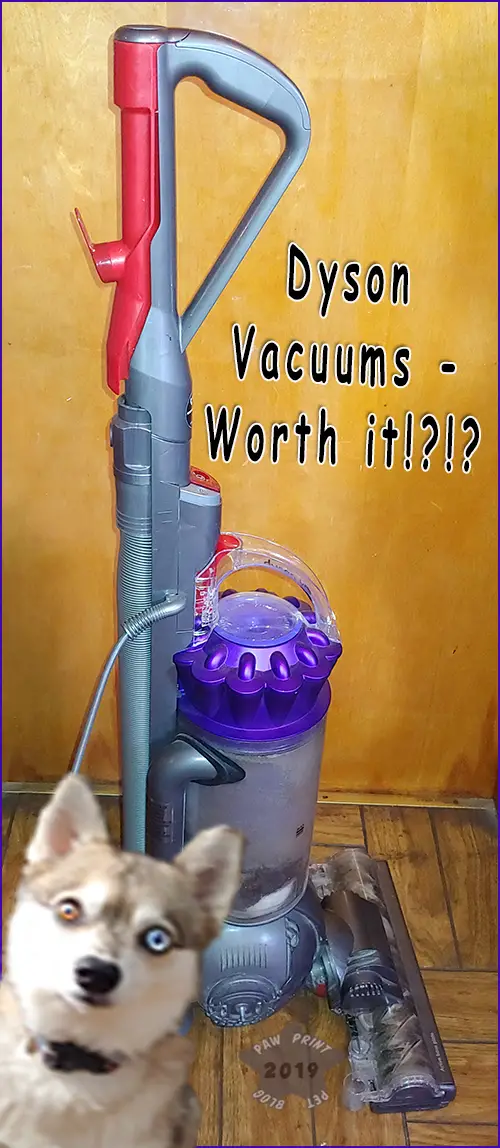
Ah vacuums!  I feel like every dog owner out there is on a never ending quest to find “the” holy grail vacuum.  You know the one.  The one that isn’t insanely expensive, that sucks up all that dog hair with ease, without getting clogged.  The one that isn’t too heavy, too fragile, so on and so forth.  For years now, in dog groups, owners have been recommending Dyson vacuums.  I tried out the Dyson DC41 Animal Complete vacuum.  For just over 5 years it was my only vacuum.  I hated it.  There, I said it.  Well, wrote it at least.

Not worth the price (in my opinion)

Dyson VacuumI bought my Dyson animal vacuum way back in 2014.  It (thankfully) came with a 5 year warranty.  Almost exactly 5 years after I purchased it, and right before we moved, I ditched the Dyson.  With the state it was in, it just wasn’t worth it to me to go through the trouble of bringing the Dyson along on our move.  I know that people always seem to rave about Dyson vacuums, especially pet owners.  But after 5 years of using ours I’m not sure I’d be quick to invest in a Dyson again.
Dyson vacuums are worth their inflated cost, or at least I don’t think they are.  I found the Dyson DC41 Animal Vac on Amazon for $800Opens in a new tab., even though I’m pretty sure that the DC41 is now an outdated model.  Looking at the Dyson website, their updated version of this vacuum seems to be the Dyson Ball Animal 2.  It currently (at the time of this post) retails at $599.99.

Get the warranty!

Over the 5 years of using my Dyson I was SO thankful that it came with a warranty.  The first time I needed to use it was about a year in.  The acclaimed ball on my vacuum kind of just…fell apart…and I had to have it repaired/replaced.  I remember the Dyson rep didn’t want to let me ship my vacuum in to be repaired.  At the time I didn’t have a car, so I wasn’t able to take the vacuum in to a repair shop.

Despite its high cost, most of the parts of my Dyson seemed to be made of cheap plastic, which made it prone to breaking.  Over the 5 years I had it, I basically rebuilt my entire vacuum, piece by piece, as each piece broke and had to be replaced.

My Dyson lost suction.

I’ll admit that when we first got it, our Dyson vacuum did an amazing job of getting all the pet hair off my rugs.  Five years later though, it did a horrible job.  If I went over the same spot on my rugs about a million times, I could get them to look pretty clean.  However, upon close inspection I could always see remaining bits of dog fur and such (see the photo below, it was taken right after I vacuumed!) stuck to my rugs.  This was especially true when I didn’t have a ton of time and only went over the rug once or twice, instead of a million times.

Dyson Vacuum

The ball is destructive

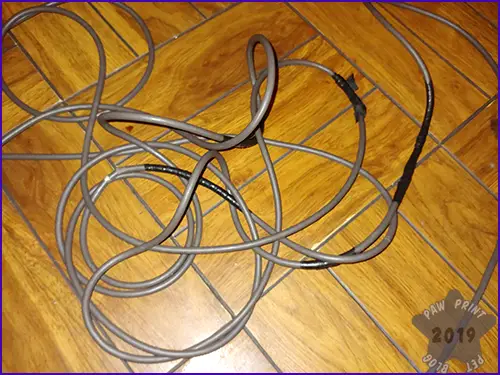
I found the wand, and to some extent the vacuum itself, clunky and awkward to maneuver.  The ball on the vacuum is supposed to improve maneuverability, and I felt that to some extent it did, however it doesn’t come without its share of problems.  Perhaps you can chalk this up to human error, but I sometimes ran over the cord of the vacuum with the ball and nothing good has come of it.  The cord was so damaged that I began to question whether or not it was safe to continue using the vacuum.

Dyson Vacuum

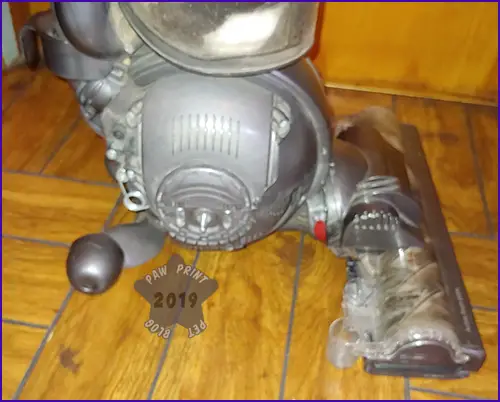
Besides the cord looking like that, the ball on my vacuum was missing one half of the cover because it fell off and I couldn’t figure out how to reattach it securely.

Dyson Vacuum

I will 1,000% be the first to admit that I’m rough on my vacuums.

I mean, I don’t use them as punching bags or anything crazy, but I use them a lot, usually at least once a day, and I’m not always super strict about keeping up on maintenance when it comes to deep cleaning each part.  But for $500 plus, I expect a product to have some longevity.  While I did still have a semi-working vacuum after 5 years, like I mentioned above, at that point so many of the parts had been replaced that it was essentially not the same vacuum it was when I bought it.  Despite many of the parts being newer than 5 years old, what I was left with didn’t work all that well anymore.

Personal Preference?

I don’t want to discount all the accounts I’ve heard/read of people having excellent experiences with Dyson products.  Perhaps a lot of my issues come down to user error, and/or personal preference.  I think the main con, to me, is just that these vacuums, at regular price, are so expensive.  To pay that much for a vacuum with parts that break often is frustrating to say the least.  There are quite a few competitive brands out there that are a lot more affordable.  From my experience, they also seem to be more durable.  If you’re lucky you can find a Dyson on sale.  Then perhaps the cheaper price point makes any issues later on a bit more tolerable.

The 5 year warranty on new machines does help lessen the blow a bit when you need replacement parts.  However, at least on the machine I had, it’s a limited warranty so not everything was covered.  If you need a replacement part that doesn’t happen to be covered, it probably won’t come cheap.  And that’s not even taking into account the fact that, whether you get it under warranty or pay for it out of pocket, getting replacement parts shipped, or a repair, means you’ll have downtime which, in a house with a heavily shedding or otherwise messy pet, isn’t very fun.

Are you supposed to use the warranty this often!?

While I was appreciative of Dyson’s warranty, I had to use it SO many times over the course of 5 years.  I feel like using a warranty on a product should be the exception rather than the rule.  It’s nice to have if you need it.  But when you pay so much for an item you don’t usually expect to have to replace parts so soon, or so often.

I’ve had much better luck with much cheaper vacuums.

I think the main con of the Dyson vacuum I tried just keeps coming back to it’s price.  After we moved, sans the Dyson vacuum, I picked up a much cheaper $150 vacuum during an Amazon sale.  I don’t even remember the brand of the top of my head.  I just really needed  a new vacuum, and didn’t want to pay a ton for it.  Three years later that cheapo sale vacuum is still going strong.  I still use it almost daily, and have never had a single issue with any of the parts breaking.  It’s crazy to me that a cheap, no frills vacuum has been holding up way better than my Dyson did!

What do you think?  Have you ever tried a Dyson product?  Was your experience similar or different to mine?

Dyson Vacuum

Are Papillons Cuddly?


I fell in love with papillonsOpens in a new tab. when I was around 8 years old.  I first learned about the breed in one of my sister’s dog breed books!  Of course reading about a dog breed in a book and actually living with one are two different things.  I made sure to do lots of research before finally deciding that yes, papillons are the right dog breedOpens in a new tab. for me!  Before getting a papillon of my ownOpens in a new tab., there were a lot of things I wanted to learn about these special dogs.  While most dogs are friendly, especially with their people, I really wanted to know whether or not papillons are cuddly!  Small dogs often get categorized as companion, or lap, dogs.  But in reality, not all small dog breeds like to snuggle.

Papillons are a high energy breed!

papillons cuddlyPapillon owners sometimes refer to these dogs as the “border collies of the small dog world”.  Not only do they have a lot of physical energy, but papillons are also the 8th smartest dog breed in the world!  That amazing combination of energy and smarts means that papillons are always on the go, go, go!  They need ample amounts of both mental and physical exercise.  At least they do if you have any illusions of keeping them out of trouble.

One of the many things that originally drew me to papillons is what amazing adventure buddies they can make.  I love spending time outdoors, hikingOpens in a new tab. or otherwise just enjoying the great outdoors.  I wanted a dog that would enjoy adventuring with me, but, for many reasons, preferred a small breed dog.  Papillons seemed to fit the bill.  But the breeds energy level left me wondering whether I’d be able to enjoy doggy snuggles during our downtime.

What do I mean by “cuddly”?

papillons cuddlyI think most people would have a similar definition of what makes a dog cuddly, although I suppose peoples’ perspectives could differ.  Dogs can be affectionate without being snuggly.  To me, a snuggly or cuddly dog is one that enjoys laying in my lap or next to me, receiving attention, for an extended period of time.

Does “cuddly” mean the same thing to you?  I’d be interested to hear if other people would define a cuddly dog differently.

My personal experience with my own papillon…

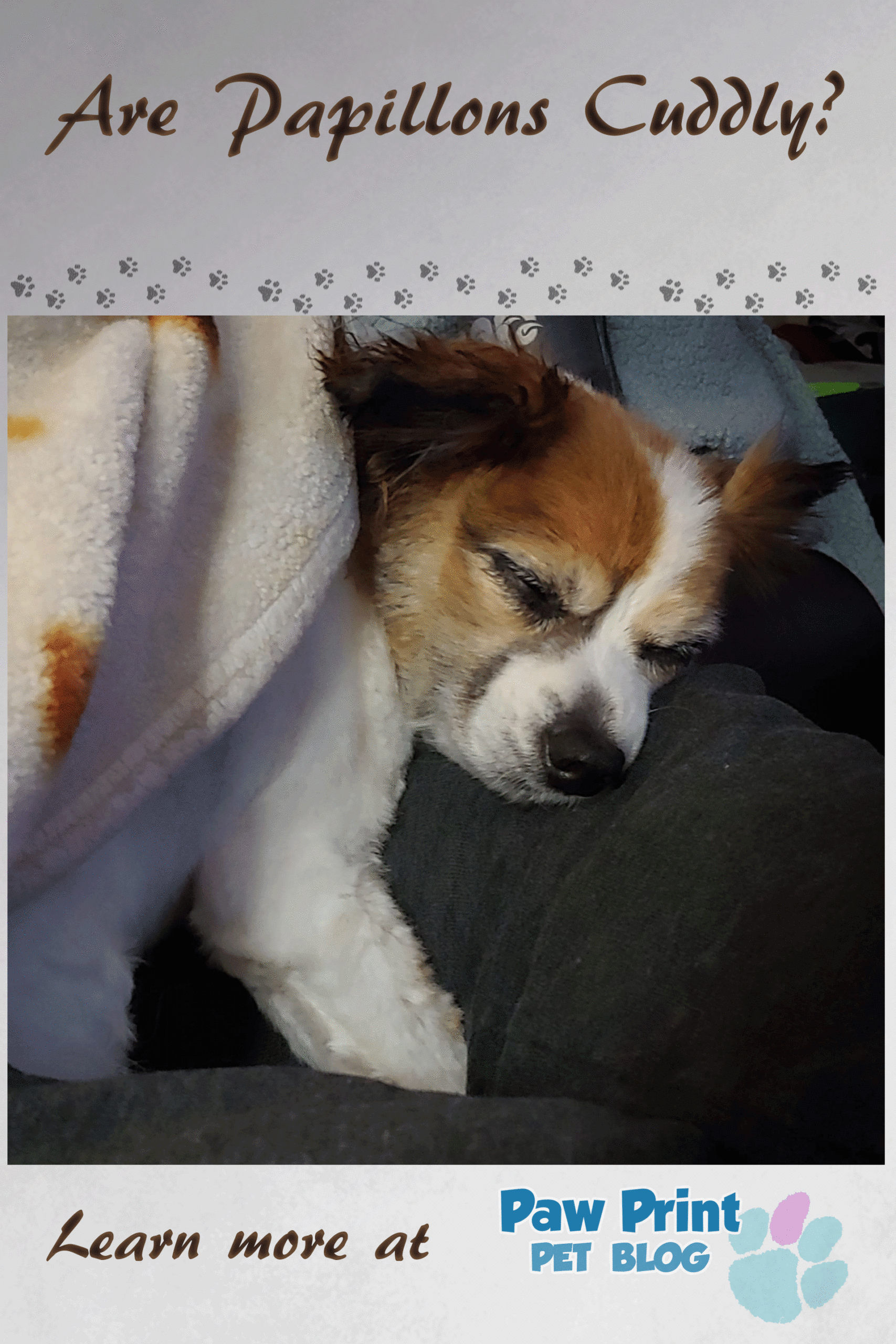
My papillon, KitsuneOpens in a new tab., is super snuggly!  Ever since he was a puppy, he’s loved cuddling up with my partner or I, ideally both of us at once, while we relax and at night.  Yes, Kit sleeps in bed with us.  Kit loves to cuddle so much that he’s very much earned the nickname “the snuggle king” around our house!  In fact, if anyone at our house sits down, even just for a few minutes, chances are it’s not going to take long at all before Kitsune is in your lap.  He is an equal opportunity snuggler!

But that doesn’t mean that all papillons are cuddly.

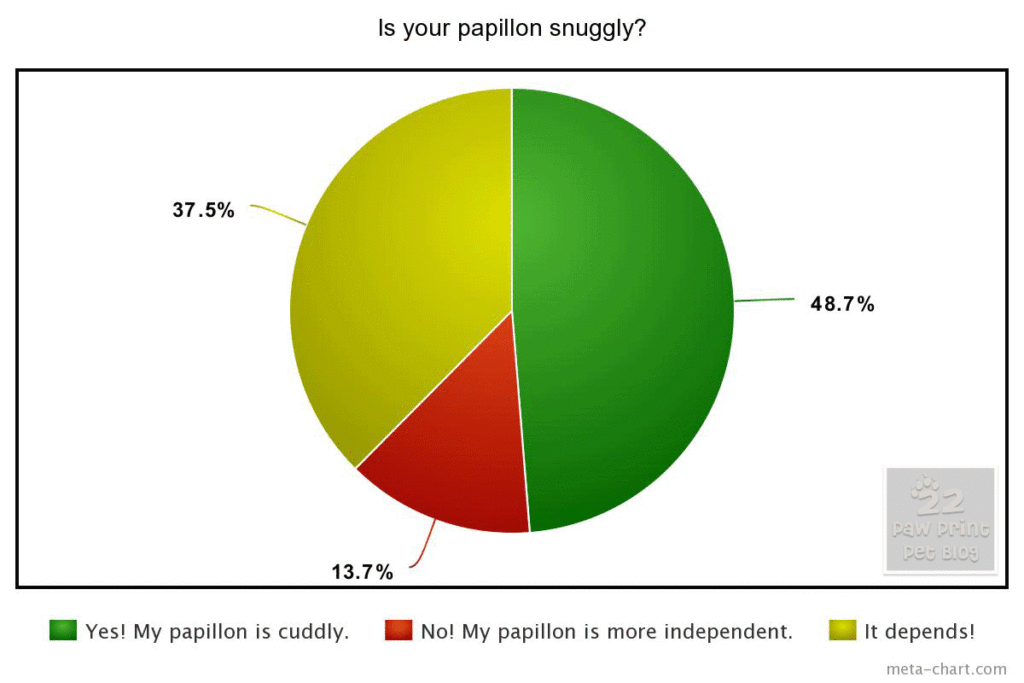
Of course my account of my one papillon being cuddly doesn’t really answer the question of whether or not members of the breed in general like to cuddle.  I thought it would be interesting to poll some other papillon owners to see what they said about their own dogs.  These were the results…

papillons cuddly

48.7%, almost half, of the papillon owners I surveyed said that yes, they also have cuddly papillons.  13.7% said that their papillons were more independent, and don’t really like to cuddle.  What surprised me the most was that a whopping 37.5% of owners couldn’t definitively answer yes or no, and said that “it depends”.  Most of the people who answered this way said that their papillons are sometimes cuddly.

The biggest factors that these people reported that influence whether or not their papillons were cuddly included their dog(s) mood, and the time of day.  Apparently, it’s quite common for papillons to enjoy snuggling with their owners in the mornings and evenings, but not as much during the day.  I wonder if this could have to do with papillons’ high energy levels.  It makes sense that they may be more likely to cuddle during more relaxed times of the day, while the rest of the day they work on burning off all that energy!

Other factors to take into account

papillons cuddlySome other things I took note of while discussing this topic with fellow papillon owners was that, in general, owners reported that their male papillons are more snuggly than their females.  However, this was not consistent across the board.  A few owners even reported the opposite; that their females were more cuddly.  Also, in general, people with younger papillons were much more likely to report that their dog(s) didn’t like to snuggle due to their high activity levels.

Conclusions

My personal experience has been that papillons are, indeed, a very cuddly breed of dog.  However, that is not true across the board.  Not all owners report that their papillons like to snuggle, and for many dogs whether or not they cuddle with their owners seems to depend on factors such as their mood, activity level, and the time of day.  Younger papillons seem to be less likely to stay still long enough for a good cuddle, which makes sense.  Papillons are a high energy breed, especially when they’re young.  Like most things when it comes to dogs, whether or not your dog likes to cuddle may just come down to their unique, individual personality.  While it does seem like a majority of papillons do enjoy snuggling with their owners, not all of them do.  This is something potential owners should keep in mind when deciding whether this breed is right for them.

Comment below!  Do you prefer cuddly dogs, or dogs who are more independent?  Does your dog like to snuggle?  Have you ever had the honor of snuggling with a papillon?

papillons snuggly


Why Do Dogs Eat Grass?


My papillon, KitsuneOpens in a new tab., is the ultimate foodie!  If he thinks something is even remotely eatable, he’ll eat it!  Weather dependent, I’ve been trying to spend as much time as possible lately outside with my two dogs, Kitsune and FenrirOpens in a new tab..  When we’re outside, I have to keep a close eye on Kitsune.  While Fenrir enjoys playing fetch and relaxing in the sun, Kit likes to try to spend a majority of his yard time grazing on the lawn!  This led me to ask the age old question.  Why, exactly, do some dogs eat grass?

Soothing an upset stomach?

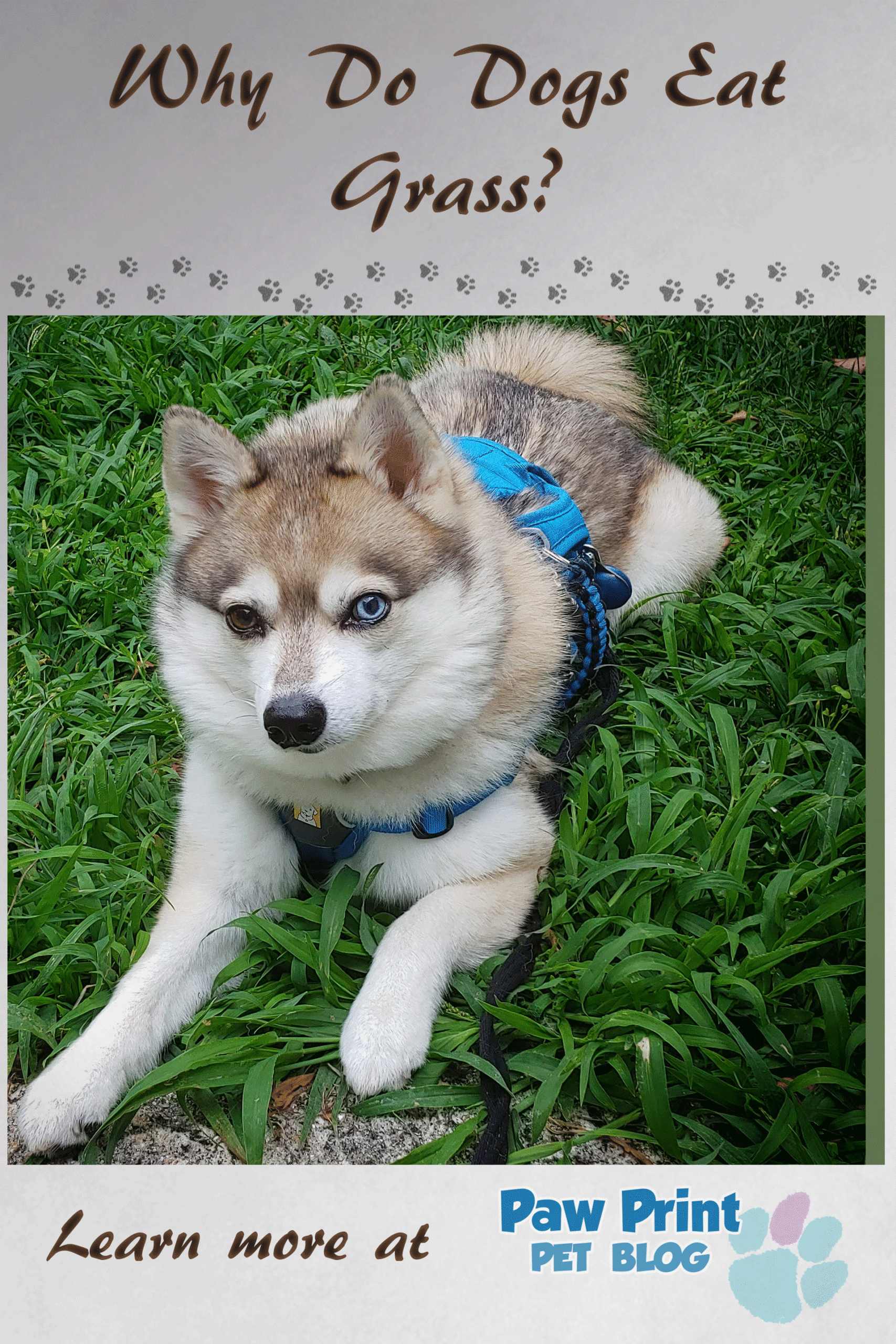
dogs eat grassWhile Kitsune will try to eat grass almost every time we go outside, my Alaskan klee kai Fenrir almost never does.  In fact, Fen showing any interest in eating grass has always been a sure fire sign that he’s got an upset stomach.  I’ve always heard that dogs eat grass when they aren’t feeling well, perhaps to make themselves throw up.  While Fenrir does seemingly eat grass to help sooth an unset stomach, he almost never throws up afterwards.
There seems to be anecdotal evidence that some dogs, including my Fenrir, do eat grass as a result of an upset stomach.  However, soothing an upset stomach can’t be the only reason why dogs eat grass.  My Kitsune eats grass all the time, pretty much every time he goes outside, and there’s no way he is experiencing stomachaches that often.  He’s healthy, active, and playful, with no health issues or symptoms that would indicate he is experiencing constant stomach upset.

Making up for a diet deficiency?

Another theory as to why some dogs eat grass suggests that they might be trying to obtain nutrients, or perhaps fiber, that they are lacking from their regular diet.

An interesting paper by Kang et al, from 2007Opens in a new tab., discussed the case of a miniature poodle who was reported to have consumed grass daily for 7 years.  The dog’s owner was directed to switch their dog to a high fiber diet.  After doing so, the poodle was reported to have ceased eating grass.  Although this case only discussed one single dog, it seems to suggest that, at least for some dogs, eating grass is an attempt to make up for dietary deficiencies.

I don’t think this is the case with my own dogs, however.  Both of my dogs are on a well balanced diet.  In the case of Kitsune, I actually have tried feeding him a higher fiber diet.  Doing so did nothing to curb his cravings for grass.

Instinct?

dogs eat grassCould dogs eating grass be an ingrained instinct that goes back to their wolf ancestors?
The stomach contents of wolves have been found to contain 2-10% plant matter.  However, this plant matter is thought to mostly come from the stomachs of herbivores that the wolves eat.  But examining the stool samples of wolves has seemed to suggest that some wolves do, at least occasionally, consume grass.

For attention? Or boredom?

Yet another theory suggests that some dogs might consume grass for physiological reasons, such as to illicit attention from their owners, or because they are bored.  It may also be a nervous habit, similar to how some humans will chew on their fingernails or inappropriate objects when they are stressed.

While I can’t speak for all dogs, of course, I don’t feel these reasons resonate with my own dogs.  Kit and Fen find spending time outside anything but boring.  I usually make sure to keep them engaged when we’re outside.  We play with toys, work on training, or go for a hike.

To relieve health issues?

I haven’t come across any evidence that grass eating can help elevate health issues such as internal parasites/worms.  I have seen it suggested that this could be a cause for grass consumption, though.

Do dogs just like eating grass?

After all of that this, I think, is the most likely reason why my dog Kitsune eats so much grass.  Plain and simple, I think he enjoys it.  He seems to, often times, take great care in walking around the lawn looking for choice pieces of grass to eat.  He’s a grass connoisseur!  Anyone who knows Kit would probably agree with me.  He’s one of those dogs who is obsessed with eating and that obsession, apparently, extends to eating grass.

An individual thing!

Like most things related to dogs, there doesn’t seem to be a one size fits all answer as to why some dogs eat grass.  There are many theories as to why, including that grass eating can help relieve health issues, that they do it for attention or to relieve boredom, that eating grass is instinctual to dogs, that it can help make up for dietary decencies, or sooth an upset stomach.  The fact of the matter is that some dogs might also just enjoy eating grass! 

Comment below!  Do you have a dog that eats grass?  Why do you think your individual dog does it?

Sources:

Kang, B. T., Jung, D. I., Yoo, J. H., Park, C., Woo, E. J., & Park, H. M. (2007). A high fiber diet responsive case in a poodle dog with long-term plant eating behavior. Journal of Veterinary Medical Science, 69(7), 779–782. https://doi.org/10.1292/jvms.69.779Opens in a new tab.

dogs eat grass