Recent Posts

Don’t Forget to Renew Your Dog’s Rabies Vaccine


With more holidays right around the corner, pet vaccination schedules are probably one of the last things on most people’s minds!  However, with the new year quickly approaching, and pet license renewals looming in the near future for many pet owners, it’s important to make sure your dog is up to date on their rabies vaccine!

It’s the Law

Although there is data to suggest that most vaccines protect our pets for many years, US state laws still require dogs and cats to be re-vaccinated against rabies often.  Without proof of an up-to-date rabies vaccine, or (in some states) a waiver from your vet, pet owners will be unable to obtain yearly pet licenses.  These licenses are required by law in most US cities and towns.

How Often Does Your Dog Need a Rabies Vaccine?
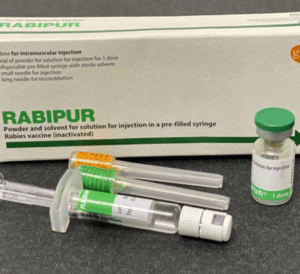
This file is licensed under the Creative Commons Attribution-Share Alike 4.0 International license. Photo Credit: Whispyhistory.

How often your pet is vaccinated against rabies can depend on how diligent owners are about keeping their pet’s vaccines up to date, and your local laws.  If re-vaccinated before their current vaccine expires, most pets, after receiving an initial 1-year vaccine, will be able to receive a 3-year rabies booster rather than having to receive the vaccine annually.  All US states now allow 3-year rabies vaccines.  However, some individual cities/towns may still require annual or 2-year rabies vaccines instead.  Check with your local government if you are unsure of the rabies vaccination rules in your town.

If you allow your dog’s rabies vaccine to expire your pet will not be able to receive the 3-year vaccine.  In order to legally receive the 3-year booster, you must re-vaccinate your pet before his/her current vaccine expires.

Is Less Best?

For most owners, 3-year vaccines will not only save you money and extra trips to the vet.  It is also healthier for your pet.  Reactions to rabies vaccines are relatively common and can include everything from lethargy to death.  Although vaccines are designed to help our pets, over-vaccinating our furry family members is thought to potentially trigger health issues.  There is some evidence now that suggests that rabies vaccines can protect our pets for longer than 3-yearsOpens in a new tab..  However, currently laws still require that rabies boosters be given at least once every 3-years.

There are currently 19 states that allow medical exemptions in place of rabies vaccinations.  These states include Alabama, California, Colorado, Connecticut, Delaware, Florida, Illinois, Maine, Massachusetts, Maryland, New Hampshire, New Jersey, Nevada, New York, Oregon, Pennsylvania, Vermont, Virginia, Wisconsin.  Delaware also allows for a medical exemption.  But the exemption must be accompanied by a rabies titer test showing protection against rabies from prior vaccinations.  Medical exemptions must be written by a vet.  This is usually done for pets who are too medically fragile to be safely vaccinated.

Care for Cats
Dog rabies vaccine
This file is licensed under the Creative Commons Attribution-Share Alike 4.0 International license. Photo Credit: www.scientificanimations.com/

If you own a cat especially, make sure to talk to your vet about what rabies products are right for your pet.  Cats seem to be much more prone to developing sarcoma, or cancer, at injection sites.  Rabies vaccines containing an adjuvant (used to increase vaccine effectiveness, rabies vaccines for dogs contain adjuvants because dogs seem to be less likely to developing injection site cancers), such as the current 3 year rabies vaccine for cats, have been linked to higher instances of cancers in cats.  There is now a rabies vaccine for cats that does not include an adjuvant, making is safer, but it is currently only approved for annual use.

My Rabies Approach

Rabies is essentially 100% fatal to both pets and people.  It’s not something you want to mess around with!  I tend to be a bit of a minimalist when it comes to giving my dogs vaccines.  But my two dogs are vaccinated against rabies every 3 years.  The last time Kitsune was vaccinated he had a mild reaction (swelling) to the vaccine.  It was luckily nothing serious enough for me to consider not giving it to him again in the future.  Rabies is just never something I would feel comfortable risking!  Don’t think you’re safe if you live in the city, away from wildlife!  Back in 2014 I personally had a run in with rabiesOpens in a new tab., and we lived in the city at the time.

Do your own research, and talk to your pet’s vet, to decide what vaccine schedule is right for your pet.  No matter what vaccine schedule you choose,  follow local laws.  Keep your pet’s rabies vaccine up to date to avoid possibly receiving fines from your city/town, and to make sure your pet is protected in case of a bite incident.
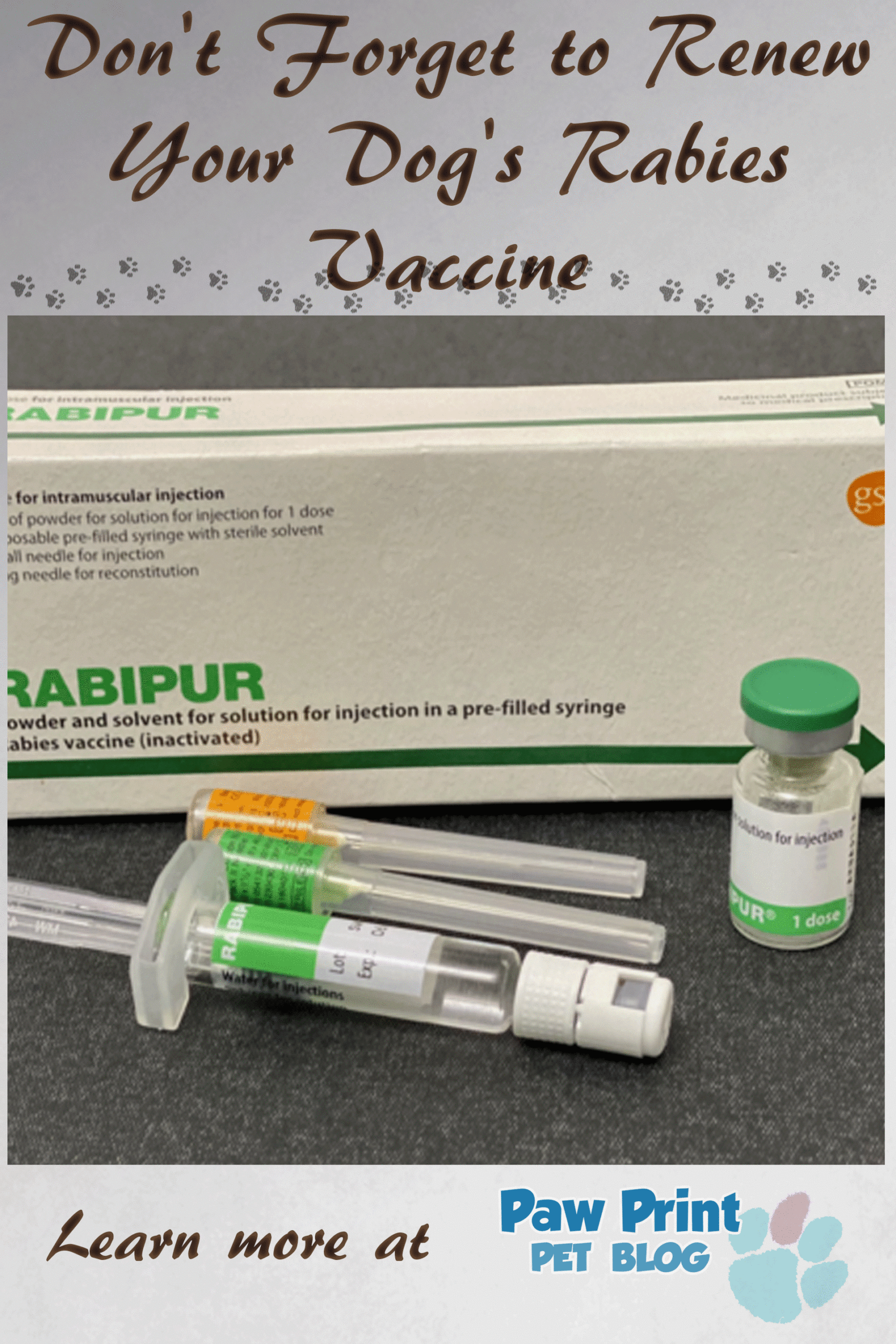
Dog rabies vaccine

What Dogs are Thankful For


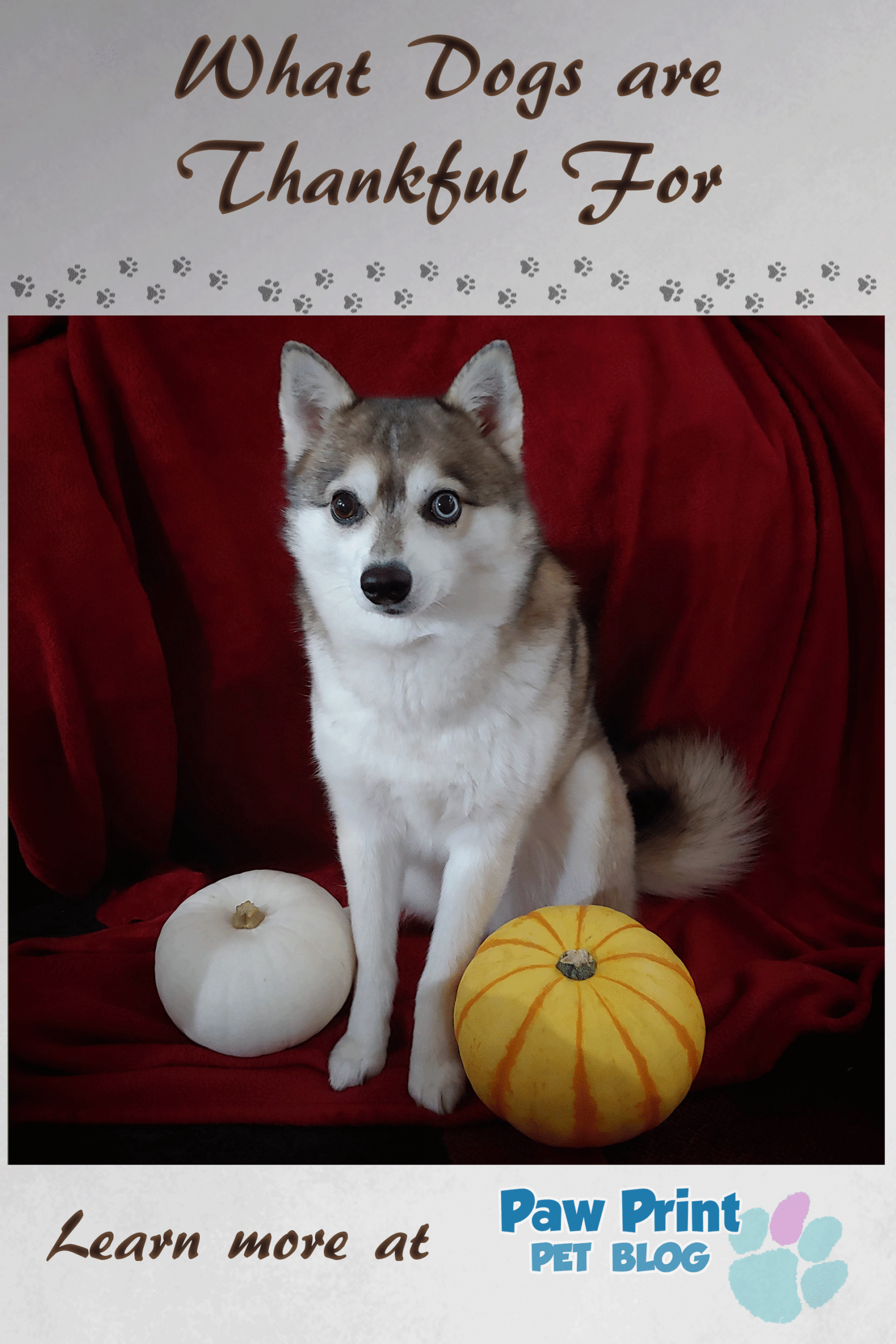
Happy Thanksgiving to everyone celebrating today!  I hope everyone not celebrating, or reading this sometime after Thanksgiving, has an awesome day too!  My partner and I usually keep Thanksgiving pretty low-key.  We have a lot to be thankful for, but I’m more of a give thanks everyday type of person.  I know some people have a tradition of going around the table and saying things they are thankful for on Thanksgiving.  Undoubtedly many of us would say that we’re thankful for our dogs!  They give us unconditional love and companionship and ask for little in return.

dogs thankful

If someone asked your dog what they are thankful for, what do you think they would say?

Although they don’t speak, pets show us their thanks every day.  They show it with their puppy dog smiles, in their contentment with a new toy or treat, with the affection they give us.

Animals are experts at enjoying the small pleasures life has to offer – a full belly, warm bed, the love of their families.   My dogs are pretty spoiled it’s true, but you don’t have to spend a lot of money to make your pet happy.

Most of all, they just want your time.

It’s normal for our lives to get hectic at times, especially around the holidays.  I know that’s true for me!  My job always gets super busy around Thanksgiving and Christmas time, so I work a lot of extra hours.  Hey, someone has to pay all the vet bills my dogs have been wracking up latelyOpens in a new tab.!  I don’t usually get a lot of time off around the holidays.  This year I do have Thanksgiving off, but it’s right back to work the day after!  Luckily I work from home, so I get to sneak in some puppy snuggles and walks during my breaks.

I know many people travel for Thanksgiving, or spend the day entertaining.  If you can, try to spend some extra time with your pet this holiday.  It can be as simple as a few extra minutes spent snuggling your dog, an extra trip to the park, a few extra tosses of the tennis ball.  New toys and treatsOpens in a new tab. and special mealsOpens in a new tab. are awesome, but what most pets would probably be most thankful for is your time!

Comment below!  If you celebrate, what are some of your favorite Thanksgiving traditions?  Do you do anything special to somehow involve your pets in the holidays?  Once again the Paw Print Pet Pack would like to wish everyone a fun, happy Thanksgiving!  May you all always have lots to be thankful for. 🙂

Fun Thanksgiving Posts to Check Out:

dogs thankful

Oversharing Our Pets Online – Where Do You Draw the Line?


Like many people these days, I probably spend more time on social media than I should.  Facebook especially is the one I have a harder time staying away from.  Over time I’ve joined so many animal/pet-related groups.  No surprise there I’m sure!  Facebook can be a fun place to chat with other like-minded animal lovers, or to kill some time looking at adorable pet photos.  I love sharing dog-themed content, including pictures and updates of my two dogs KitsuneOpens in a new tab. and FenrirOpens in a new tab., on our Paw Print Pet Blog Facebook pageOpens in a new tab..  But, in this social media age, when does sharing things about our pets enter into the territory of oversharing?

Interesting Territory…

oversharing petsI used to be quite active in rabbit rescue, and for many years shared my life with house rabbits in addition to my current dogs.  After my last house bunny, Barnaby, passed away in 2017 I decided to take a break from keeping rabbits.  But still, I stayed in a handful of rabbit-themed FB groups.  It made for quite an interesting FB feed, being deeply involved with both a predator species (dogs) and prey (rabbits).  I joined a number of raw feeding groups for my dogs.  It became strangely commonplace to scroll down my FB feed and see pictures of adorable pet rabbits nestled in between posts about people discussing feeding rabbits to their dogs.
Just the other day I came across someone posting an image of their deceased dog.  A bit unorthodox, perhaps, but I’d say the particular image posted wasn’t horrible.  Some people seemed to view the post as a heartfelt memorial.  Others argued that posting images of a pet’s body is disrespectful and wrong.

When it comes to our pets, how much sharing is too much?

oversharing petsIs there a line?  Are there things about your own pet that you would feel uncomfortable sharing on social media?  Or that you would disapprove of if you saw being shared by someone else?  Surely our pets don’t care one way or the other.
I feel like I’ve seen everything from one end of the spectrum to the other, with no apparent general consensus about whether or not some pet related things are inappropriate to post online.  I know someone who won’t post pictures of her dogs online without using Photoshop to censor their ‘private’ parts.  But I’ve seen my fair share of doggy ‘junk’ posted on social media too.

This issue comes up quite often in regards to online animal activism.

When you’re trying to raise awareness about abused animals, etc., exactly how far can you go before you’re accused of taking things too far?  I guess the answer really would depend on who you ask.  I’m usually all for presenting people with reality, but on the other hand I can also understand not wanting to be continuously bombarded by images of neglected and abused animals.

I don’t know if there really are any answers here, other than to say that it’s probably safe to assume that no matter what, someone on the internet is going to be offended.  It’s an interesting question to ponder nonetheless, especially these days with so many people taking to social media.  As for me, I’ll continue to use my best judgement when it comes to what I share about my dogs.  I respect my animals, but also strive to be honest and real about what sharing my life with them is like.  What do you think?  Where is your line when it comes to what you share, and what you feel is oversharing, when it comes to pets?    

oversharing pets

Pets Can Be Inconvenient


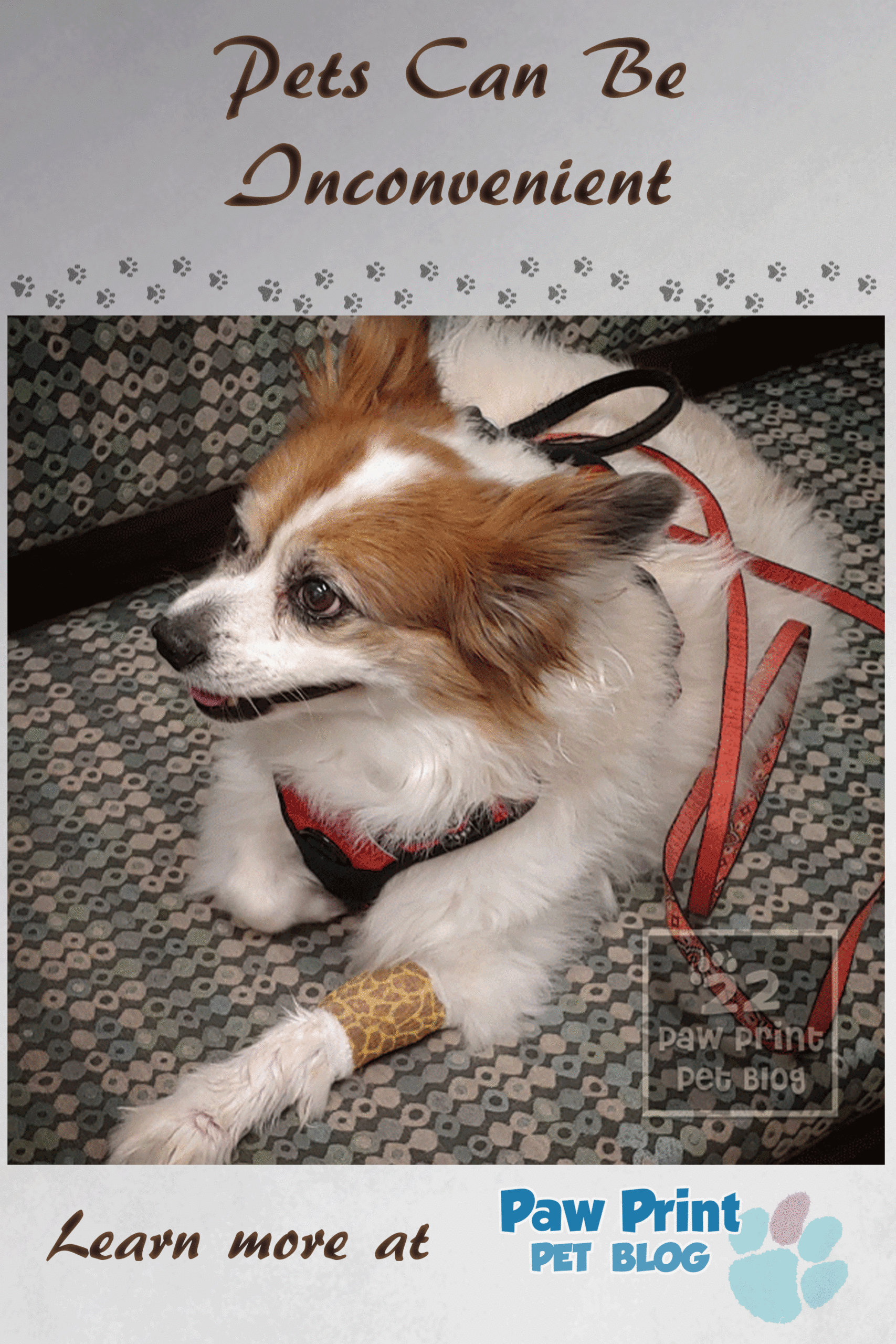
My partner and I have had a bit of a rough couple of months when it’s come to our two dogs, Kitsune the papillonOpens in a new tab. and Fenrir the Alaskan Klee KaiOpens in a new tab..  We’ve been to the vet so many times lately that we jokingly call it our “second home”.  First, Kitsune was diagnosed with cervical IVDDOpens in a new tab..  Then Fenrir developed pancreatitis.  Then, as we were finally nearing the end of Kitsune’s 8-week IVDD recovery, he started to develop another issue that was tentatively diagnosed as idiopathic Cushing’s disease caused by the medication we used to treat his IVDD.  Pets can be inconvenient.

Inconvenient, Indeed.

Pets InconvenientIn the last couple of months, we’ve had to disrupt our work schedules to make emergency vet trips.  We’ve spent way more money than we planned on the dogs.  I’ve had my sleep interrupted more times than I care to count.  I had to set multiple timers on my phone to remind me to give Kit, and for a short time Fen, medications at the correct times.  Kitsune’s Cushing’s symptoms mean I have to stop whatever I’m doing many times a day to bring him outside.
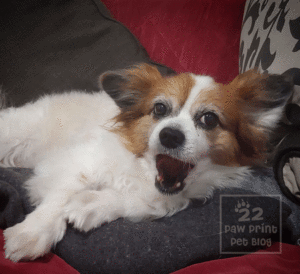
As much as I love having dogs, I’ll freely admit that sometimes having them means having to make the best out of a less-than-ideal situation.  Pets are fun, and family, and love…but they can also be frustrating.  They are walks in the woods and always having someone to snuggle with, but are also expensive vet bills and waking up early when you’d much rather sleep in.

And that’s okay.

Quite often I talk to dog owners who are having issues with their pups and seem to feel infinitely guilty as they hint at the fact that their pet is frustrating them.  As if they feel that if they admit that their dog is inconveniencing them in some way, it instantly makes them not as good of a pet owner.  I’ve occasionally felt this way myself, especially since I’m a pet blogger.  I try to set a good example for people who visit my blog.

Making Lemonade

Pets Inconvenient

I’m the type of person who tries to turn my frustration into something positive.  I make training sessions as fun and stress free as I can, and use them as opportunities to bond with my dogs.  If I’m upset about having to shell out a lot of money to the vet then I figure maybe it’s time to readjust my budget, throw a bit more money into my pet savings fund each month so that the next time a big bill shows up it hurts just a little bit less.

That’s the (potential) good thing about frustration.  If we’re willing to admit to it, we can use it as a catalyst to initiate positive change.

But Pets Can Be Unpredictable

Not that this will work for all things, unfortunately.  Pets are living, unpredictable, beings that sometimes seem to be experts at throwing wrenches into our plans.  Luckily most pet owners figure that out pretty quickly and learn to roll with the punches.  Our pets, like ourselves, aren’t perfect even if we like to think that they are.  Admitting this fact does not impact our ability to care for them.  In some cases, being able to admit and come to terms with our dogs, and our own, challenges can lead to positive results.  In the very least it gives us animal guardians something to commiserate about!

My dogs are Perfectly Imperfect

So is the life we share together.  As inconvenient as my dogs can be sometimes, the roller coaster of pet ownership is a ride I very much enjoy.  The things that make my dogs difficult are also some of the things that make them who they are.  If I wanted a totally predictable companion, one that gets up late every morning, never gets sick, and behaves perfectly all the time, I would have gotten a robot dog.  I don’t want a robot.  I want warm doggy snuggles, early mornings, muddy paws and all.

Comment below!  Do you ever feel guilty admitting that there’s something about your pet that maybe you don’t like?  Or something that frustrates you?  What are some of the biggest challenges involving pet ownership that you’ve faced?

Pets Inconvenient


Why I Don’t Refer to My Small Dogs as “Big Dogs in Small Packages”


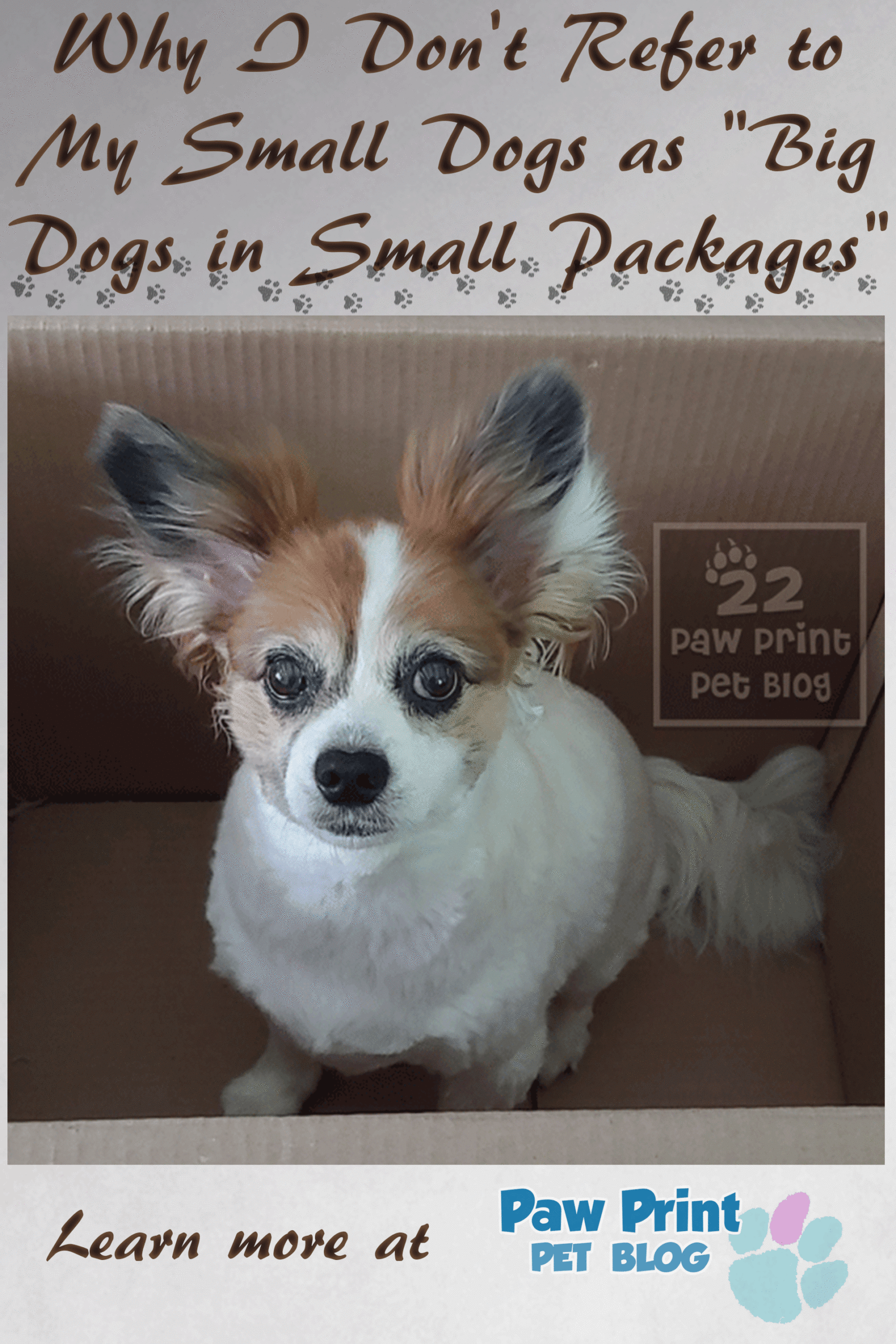
All dogs are awesome, but I’ve personally, for lots of reasons, always been more of a small dog person.  I currently share my life with Kitsune, a papillonOpens in a new tab., and Fenrir the Alaskan Klee KaiOpens in a new tab..  Although small, papillons and Alaskan Klee Kai are both rather high-energy, versatile dog breeds.  I feel like papillons especially are often referred to as being like “big dogs in small packages”.  But describing small dog breeds this way has always kind of bothered me.  I purposely avoided using this type of terminology when I wrote my own papillonOpens in a new tab. and Alaskan Klee KaiOpens in a new tab. breed profiles.

Little Dogs are Awesome Too!

The “big dog in a small package” description seems to often be applied to small dogs who are more driven, energetic, active, etc.  I’ve also heard it being used to describe small dogs who have even, friendly, confident, happy-go-lucky temperaments.  Basically, personalities that are outside of the norm of the small dog stereotype.

Stereotypes Suck!

Big Dogs in Small PackagesI’ve always hated how often small dogs are stereotyped.  But that’s (mostly) a topic for another post.  I will say that I have two small dogs now.  They are not ‘yappy’, nor will they bite your ankles.  No, they are not perfect – what dog is?  I do training sessions with them daily to work on behaviors I want to improve.  Papillons are known for being somewhat on the loud/barky side, for example, but I’ve worked hard to help mine develop an off switch for his barking.  It’s funny how small dogs who alert bark are “yappy”, by the way, while big dogs who do it are “just protecting their property/family/what have you”.  Double standard much?
Small Dogs Can Do the Same Things Big Dogs Can!

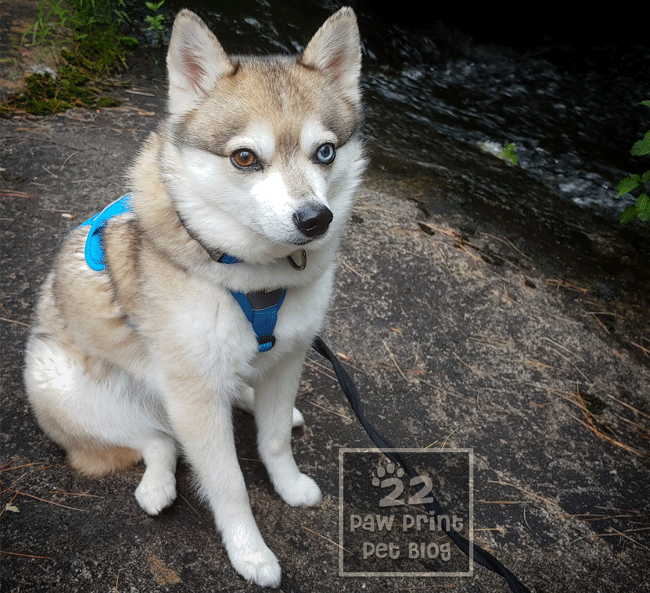
My small dogs are versatile, and will happily spend time snuggled up on the couch.  They also love spending time outdoors.  Both my small dogs love hiking with me.  Kitsune loved agility in his younger days.  Now that he’s a senior, we stick to lower-impact activities.  He loves nose work and most recently I’ve been working on training him to find deer sheds (antlers).  I do doggy dancing/freestyle with Fenrir.

Big Dogs in Small Packages

Over the years I’ve had the pleasure of spending time with so many amazing small dogs and their owners!  I’ve met some incredible little dogs.  A few of my favorites included a chihuahua who through hiked the Appalachian trail, and a papillon who competed in weight pull.

My Dogs are Not Big Dogs in Small Bodies!

Big Dogs in Small Packages

“Good” dog traits such as being versatile, friendly, driven, confident, etc., should not only be associated with big dogs!  Small dogs can, and often do, have these traits as well.  It doesn’t mean they are “big dogs in small bodies”.  It means they are amazing dogs.  Size has nothing to do with it.

I see no reason why my dogs’ positive traits should be attributed to them being something they are not.  People seem to have no issues associating negative traits with small dogs, so why not, at least, acknowledge that they can independently have positive traits as well?  Traits that have nothing at all to do with size.  My dogs are not big dogs in small packages.  They are small dogs in adorably small packages!  I work hard to train and manage them in a way that allows their positive traits to shine.

I also appreciate, respect, and love my dogs for exactly who, and what, they are.  Small dogs!  Seeing them behaving well, or doing something impressive, then comparing them to big dogs never feels like a compliment to me, even when it’s meant as one.  Imagine if we complimented humans the way people often do small dogs.  It would be considered offensive.

Changing the Way People Think About Small Dogs

I apologize if today’s post seemed like a rant.  Things like this are such a pet peeve of mine.  Kit, Fen, and I are all about breaking the negative stereotype that’s often associated with small dogs!  While it may not seem like a big deal, part of that is changing the way people talk about small dogs!

Comment below, if you have small dogs has anyone ever referred to them as ‘big dogs in small packages’?  How do you feel about that term?

Kitsune’s IVDD Recovery Diary – Weeks 7 & 8


This is a post I’ve been SO looking forward to!  As of November 12th, my papillon KitsuneOpens in a new tab. has officially completed his mandatory 8 weeks of restricted activity for cervical IVDD recovery.  It’s been a long, challenging, 8 weeks.  Unfortunately, our “adventures” in health issues with Kitsune aren’t quite over yet.  I’ll explain more below.  But Kit, in general, is doing really well!  After a few months of dealing with health issues with him, we finally feel like we can see a light at the end of the tunnel.

Follow Kit’s Previous IVDD Recovery Diaries

Saturday, October 29th – Friday, November 4th

IVDD recoveryWeek 7!  By now, as you can read in our previous IVDD recovery updates, Kit was doing really well!  He has officially been off of all his IVDD medications as of October 26th (week 6).  During his 6-week recheck, the vet gave us the go-ahead to, very slowly, start introducing exercise.  We started with slow, 5-minute walks on flat ground.  Kit did really well with that so during week 7 we increased his walks to 10 minutes once a day.
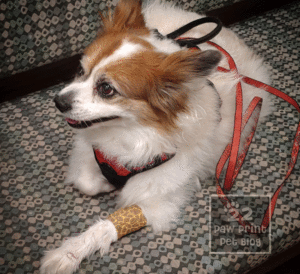
He also got a bit more freedom around the house.  Kit still wasn’t allowed to jump on/off furniture or use the stairs, but he was spending most of his time outside of his crate.  We set up a bunch of dog beds and blankets throughout the different rooms of our house.  So no matter what room we were in Kit could be with us and have a comfortable place to relax.

The most concerning issue during week 7 was that we were growing increasingly concerned that, despite being off of Prednisone since October 26th, Kit still seemed to be experiencing side effects from it.  The shakiness in his legs that we noticed in the weeks prior resolved rather quickly once he was off all his meds, but he continued to drink and pee a lot more than normal.  We discussed things with the vet and were able to rule out a UTI.  We made a game plan to give Kit a bit more time, then investigate further if his Prednisone side effects didn’t start to decrease.

Saturday, November 5th – Friday, November 11th

IVDD recoveryI was so excited to be on week 8 of Kitsune’s IVDD recovery!  The end was finally in sight.  This week ended up being a rather stressful one, however.  Kit’s frequent drinking/urination were still not fully returning to normal.  Then I noticed that, despite being on a pretty strict diet, Kit actually gained a bit of weight.
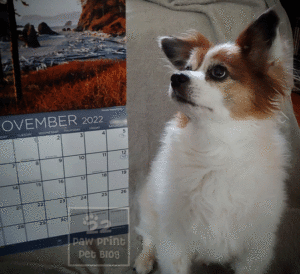
As much as I didn’t want to have to spend more at the vet, we needed to get to the bottom of what was going on.  The vet drew blood and collected urine to start the process of trying to figure out why Kit seemed to still be suffering from side effects of prednisone.

Idiopathic Cushing’s Disease

All the testing we’ve had done thus far ruled out quite a few potential causes of Kit’s frequent drinking/urination.  He (still) doesn’t have a UTI.  His kidneys are functioning normally and he does not have diabetes.  The only real abnormality on his bloodwork was elevated liver enzymes (ALP).

Elevated ALP is commonly (but not exclusively) seen in dog’s suffering from Cushing’s Disease.  An increase in ALP can signify other conditions, such as liver disease.  However, because Kit’s symptoms very specifically started while he was taking prednisone, our tentative diagnoses is that he’s suffering from idiopathic, sometimes also called false or pseudo, Cushing’s Disease.

Luckily, the treatment for idiopathic Cushing’s Disease is basically just to wean your dog off of steroids.  We’ve already done that with Kitsune, but our vet said it can take around 6 weeks before symptoms start to dissipate.  This studyOpens in a new tab. agrees.  In the meantime, we’ll be keeping a close eye on Kit!  He’ll be going into the vet again soon to get another round of bloodwork done.

But He Does Seem to be Improving!

IVDD recoveryFor the past three nights, Kit didn’t wake me up a single time to go outside!  That’s a big improvement from even just a couple of days ago, when he was getting me up at least once or twice a night.  I’ve also noticed that he’s for sure spending less time at the water bowl.  I wouldn’t say that he’s 100% back to normal yet, but he for sure seems to be improving!
I didn’t want to turn our IVDD recovery post into a post about a totally different disease.  Especially not our final, week 8 of recovery post!  But it seems that Kit’s idiopathic Cushing’s diagnosis is a part of our IVDD journey.  I didn’t want to hold anything back when sharing our experience.  In the future, if Kit ever does have another IVDD flare, I’ll for sure be avoiding giving Kit steroids again if at all possible.

I’ll keep you all updated on Kit’s health and his recovery from the idiopathic Cushing’s.  I’ll most likely post it as a basic update and not as another IVDD diary.  Current issues aside, I am very, very happy that we can start to put IVDD behind us!  I’m keeping my fingers crossed that we’ll never have to deal with it again!  We’ll be continuing to take some precautions to hopefully help protect Kit’s back going forward.

I’m planning on, eventually, writing up some more educational posts about IVDD.  This will (hopefully) be our last IVDD recovery diary though!  Big thanks, once again, to everyone who wished Kit well over the last 8 weeks!  If you’re reading this because you’re going through IVDD with your dog, I wish you all the best!  IVDD recovery is long and can be stressful, but of course it’s well worth it to see your dog get back to their happy, silly self.  🙂

IVDD recovery