
Did you know there are ways you can register your pet’s microchip for free? Read on to learn how!
We’re moving….again. Ah the joys of renting. Although I didn’t write about it here, the whole process has been really stressful! By the time you read this post, though, we’ll be in our new place! We were very lucky to, after quite a long search, find an adorable little single family house with an amazing yard to rent. I SO wish we had been able to buy instead. The current housing market coupled with the fact that we weren’t really expecting to have to move right now left us unprepared.
Moving is a lot of work! Besides all the packing and physically moving, we have to worry about stuff like setting up utilities, and updating all our accounts with our new address. Kit and Fen will need new ID tags, new licenses, and I’ll have to update their microchip information.
The 411 on Microchips
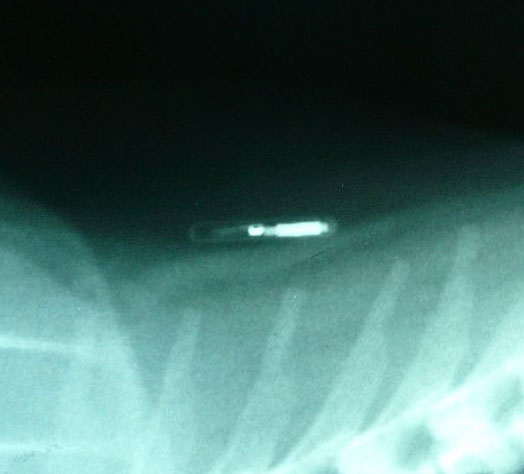
As most pet owners know, a microchip is an excellent means of permanent ID for our pets. They are about the size of a grain of rice, and in cats and dogs are normally inserted under the skin between the shoulder blades. Microchips themselves do not store any information besides a unique 9, 10, or 15 digit number. These numbers can be read by microchip readers most commonly by veterinarians or animal shelter staff.
When your pet is scanned and determined to have a microchip, the screen on the chip reader will display your pet’s unique microchip number, as well as who the manufacturer of the chip was. The chip number can also be searched on the AHAA Universal Pet Microchip Lookup website . The AHAA website displays registries that a chip number has been registered on, in order of the most recent registration first. Those registries can then be contacted and, as long as they have updated information on file, a missing pet’s owner can be contacted!
[AdsWithin]
Registering Microchips
Microchips are useless if they are not registered! An unregistered microchip will mean that there is no owner information connected to that chip. Most microchip companies have their own registry. Most of them include the initial registration of your chip into the price of getting your pet microchipped. They then charge a fee later if you ever need to update your information. Others charge an annual subscription fee.
For example, my older dog, Kitsune, has a microchip from the company 24PetWatch. Way back when he was a puppy I got him microchipped during a clinic held by a local animal shelter. The price I paid to get him microchipped included registration. However, 12 years later, if I want to update my address through 24PetWatch I will have to pay to purchase a 24PetWatch membership. It’s $29.95 for the first year, then $19.95 a year after that. Or I could pay $94.95 for a lifetime membership.
Sadly, there is no universal microchip database. I wish there was, that would make things so much easier!
Free Microchip Registries
There are, however, a couple of free microchip registries.
- Found Animals Registry: From the research I did, the Michelson Found Animals Registry might be one of the closest things to a universal national registry, and registering your pet’s microchip through them is free.
- Free Pet Chip Registry: I have never used this registry myself, but they are also a free pet microchip registry.
What I recommend When It Comes to Registering Microchips
Free registries are awesome, but having your contact information updated through a free registry only will be useless if the vet/shelter scanning your found pet doesn’t do enough digging to discover what registries you used. Microchip scanners display not only your pet’s unique ID number, but the chip manufacturer as well. Some shelter workers, busy as they are, don’t always go beyond calling the chip’s manufacturer. That sadly means that you could have your updated information saved on as many registries as you want, but if it’s not updated through the chip’s original manufacturer, and that’s the only company the shelter calls after scanning your pet, then you’d be out of luck.
I know no one wants to spend money if they don’t have too. If you can, I recommend registering your pet’s microchip through their chip’s manufacturer. The free registries can be great as back up or secondary registries, or as a way to update your information quickly until you can afford to pay to also update them with the chip’s manufacturer.
Microchips Should Not Replace Traditional ID Tags
If my pet is already microchipped, and the chip is registered, why would they also need a traditional ID tag? Microchips are not the end all be all to recovering lost pets. Updated ID tags are still the best way to get your lost pet returned to you as quickly as possible. Reading your phone number and/or address off an ID tag is so much easier than having to take a pet to a shelter or vet to get him/her scanned for a chip.
Now to find some cute new tags for Kit and Fen! That’s one of the fun parts of moving, after all. Comment below and let me know if you recommend any specific brand of ID tags for small dogs. I’d also love to hear your experience using one of the free microchip registries, if you’ve used either of them before.
Recent Posts
While domestic mice and rats can make good pets, nobody enjoys having wild mice and/or rats living inside their home. They steal our food, can spread fleas and disease, and leave their droppings all...
Do you ever look outside, only to find your canine companion happily grazing on your lawn? Is your pooch famous for his or her cow impersonations? Why do some dogs eat grass anyways? No one...